
Network switch port mapper tool helps network engineers identify the switch port to which a device is connected and thus eliminates the need of manually tracing the network cables. The switch port management tool discovers the devices plugged into each port of a specified switch.
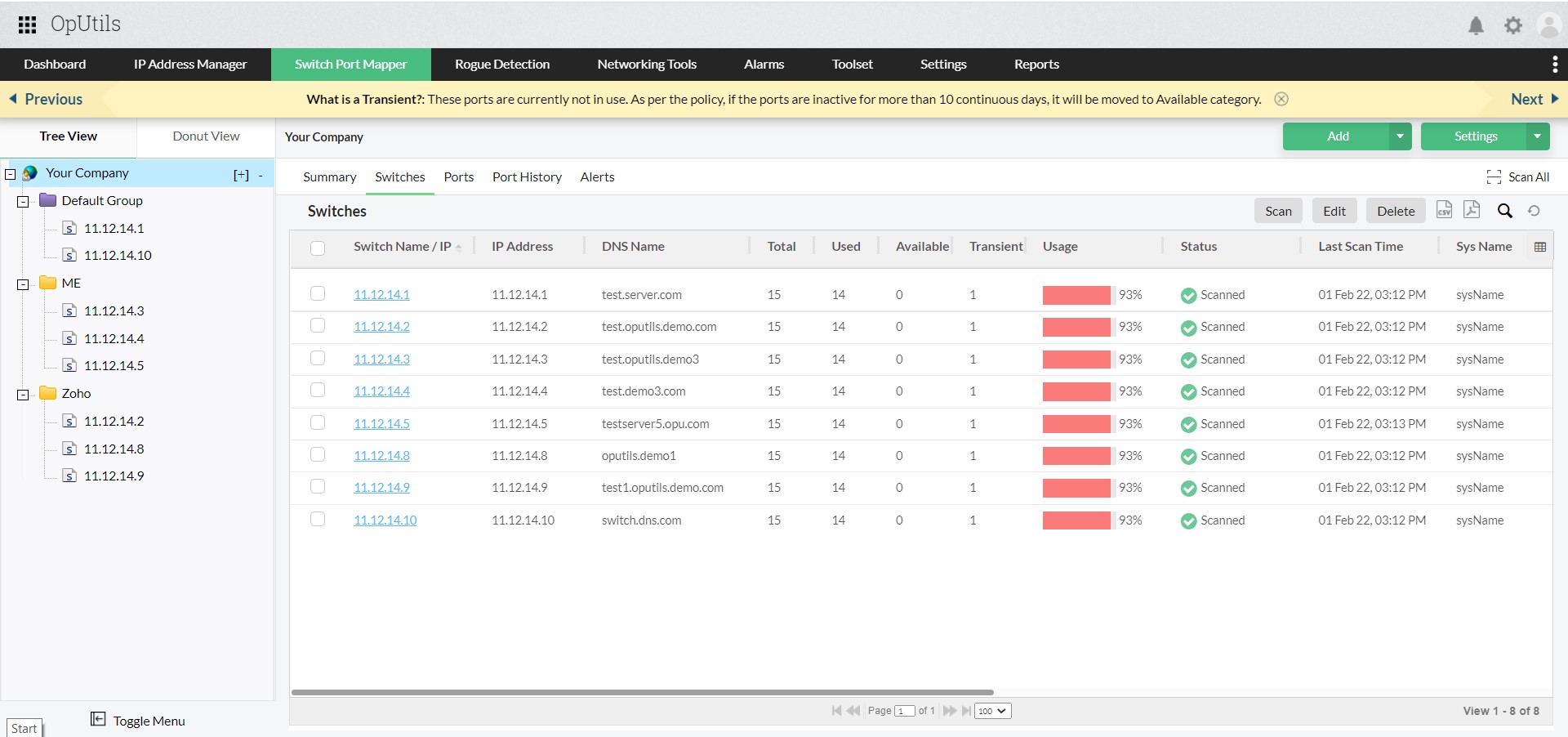
The Switch Port Mapper utility of OpUtils software discovers the devices plugged into each port of a specified switch with its port scanner capability. The tool is useful for system and network engineers to gain visibility into the IP, MAC, status and availability of ports. Since this is a real-time discovery you can also view the operational status and port speed of each port. The Network Switch Port Management mainly consists of features such as
The Switch port management tool provides an end-to-end mapping by advanced port scanning with an option to include mapping of physical ports to switch ports. The administrator can provide the mapping of the physical ports and switch ports in a CSV file, which can be imported to the Switch Port Mapper results. This does not need any change as long as there is no change in the physical mapping. The network switch port management tool automatically retrieves the VLAN details, Virtual IP Addresses of a device, and detects all the devices connected to a port. The Switch Port Mapper also allows the administrators to add their own columns to store user-defined values. Columns can be created both at the switch-level and at the Switch Details level. Switch port management software uses a Multi-vendor switch support like CISCO, HP, 3com, Nortel,etc. Switch port mapping displays all the MAC addresses connected to the port like computers, IP phones ., etc and has ability to Add Custom Fields on the Fly to Store User-defined Values.
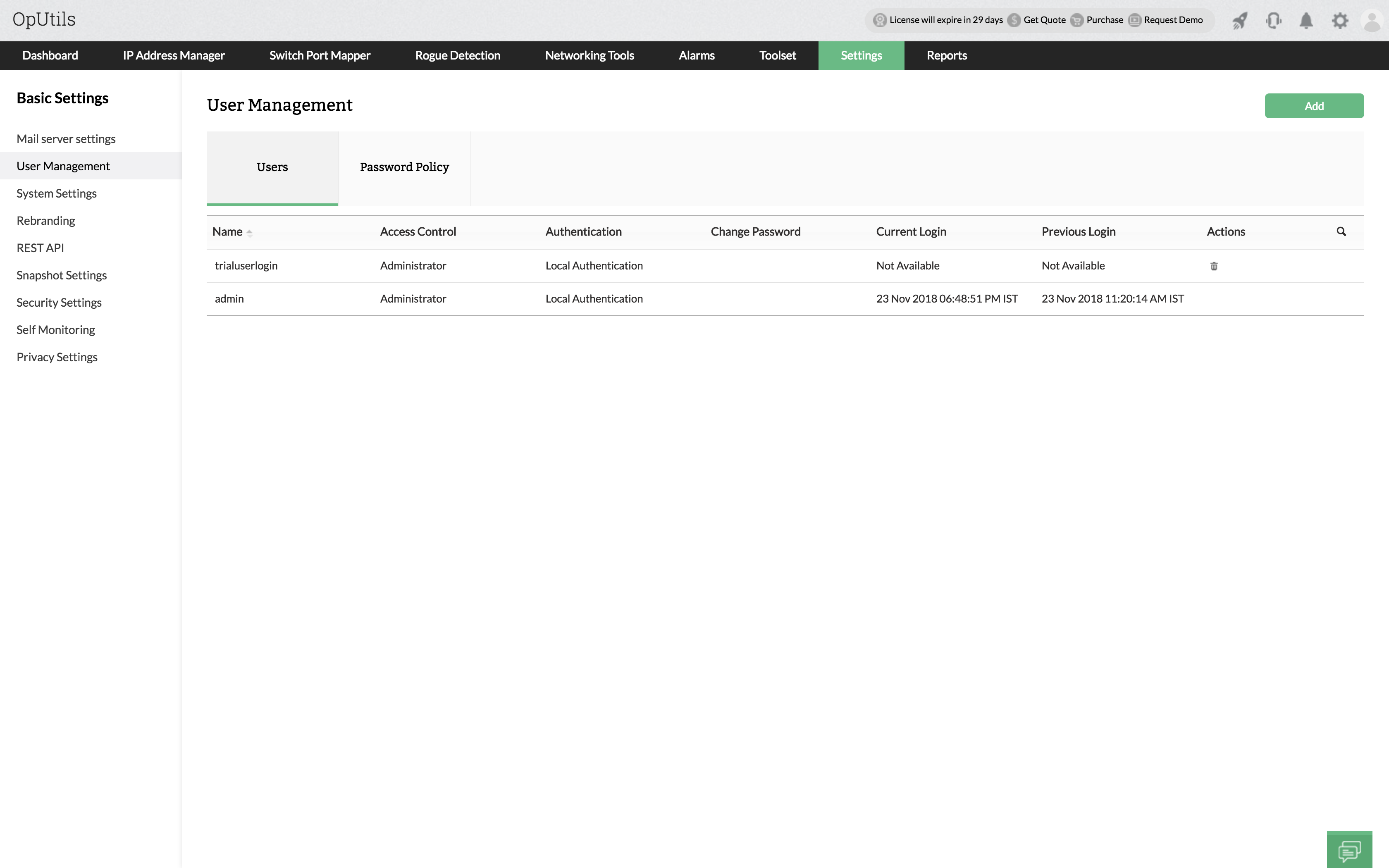
Role based administration in network switch port management software helps administrators to exercise more control by creating users with Administrator or Technician Roles. While users in Administrator Role will have complete access, users in Technician Role will only have read-only access.
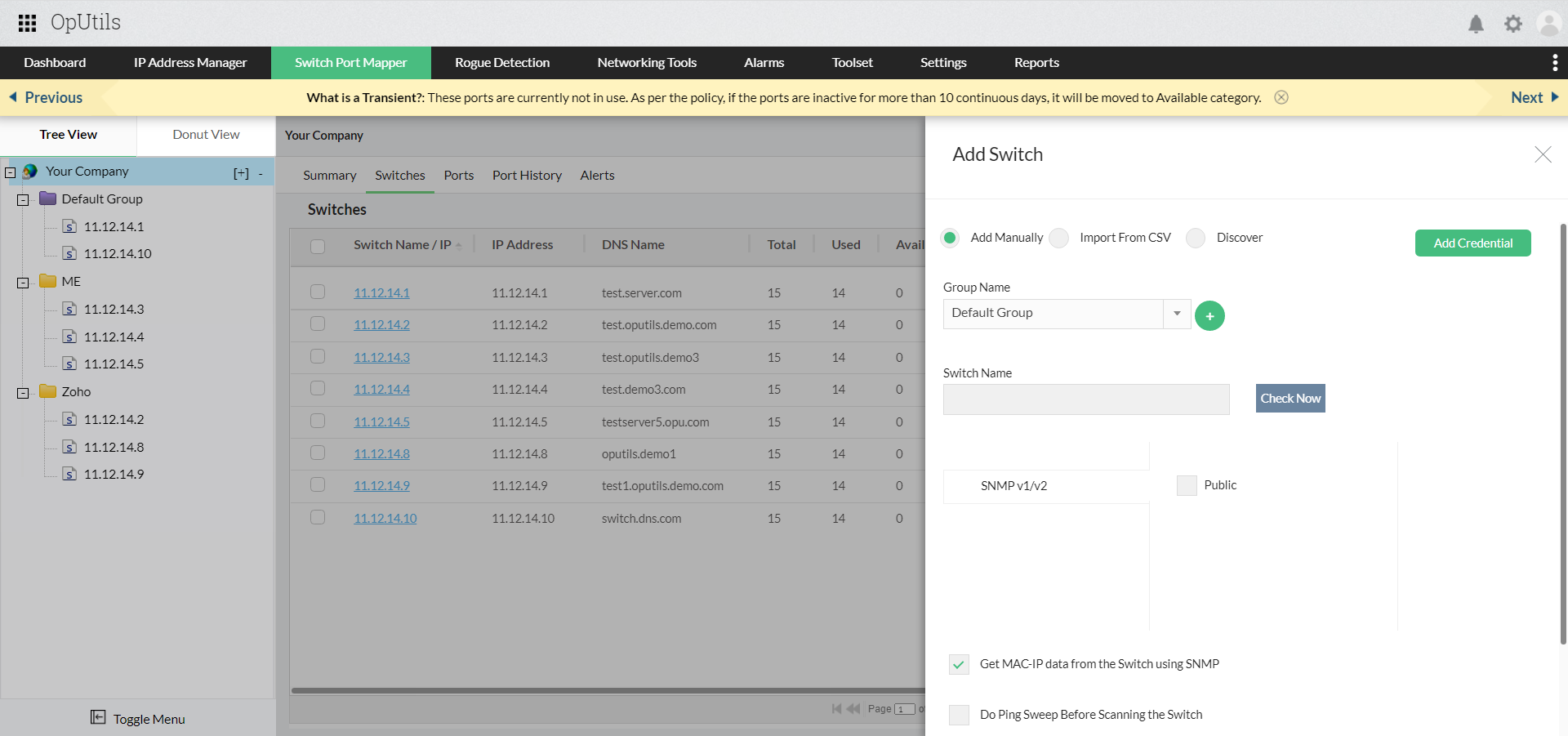
Adding switches to the switch port mapping tool of the switch port management software can be either manual or by importing the Switch inputs from a CSV file. The CSV file should contain the Switch Name / IP Address, Switch Community, Router Name / IP Address, and Router Community as comma separated values. Once the switches are added in the switch port mapper software, they are automatically mapped in the background. Optionally, the administrators can also specify the associated subnets to sweep prior to scanning of a switch. The switch port management tool will make the switch learn all the MAC addresses of the connected devices, which will be retrieved and shown in the results.
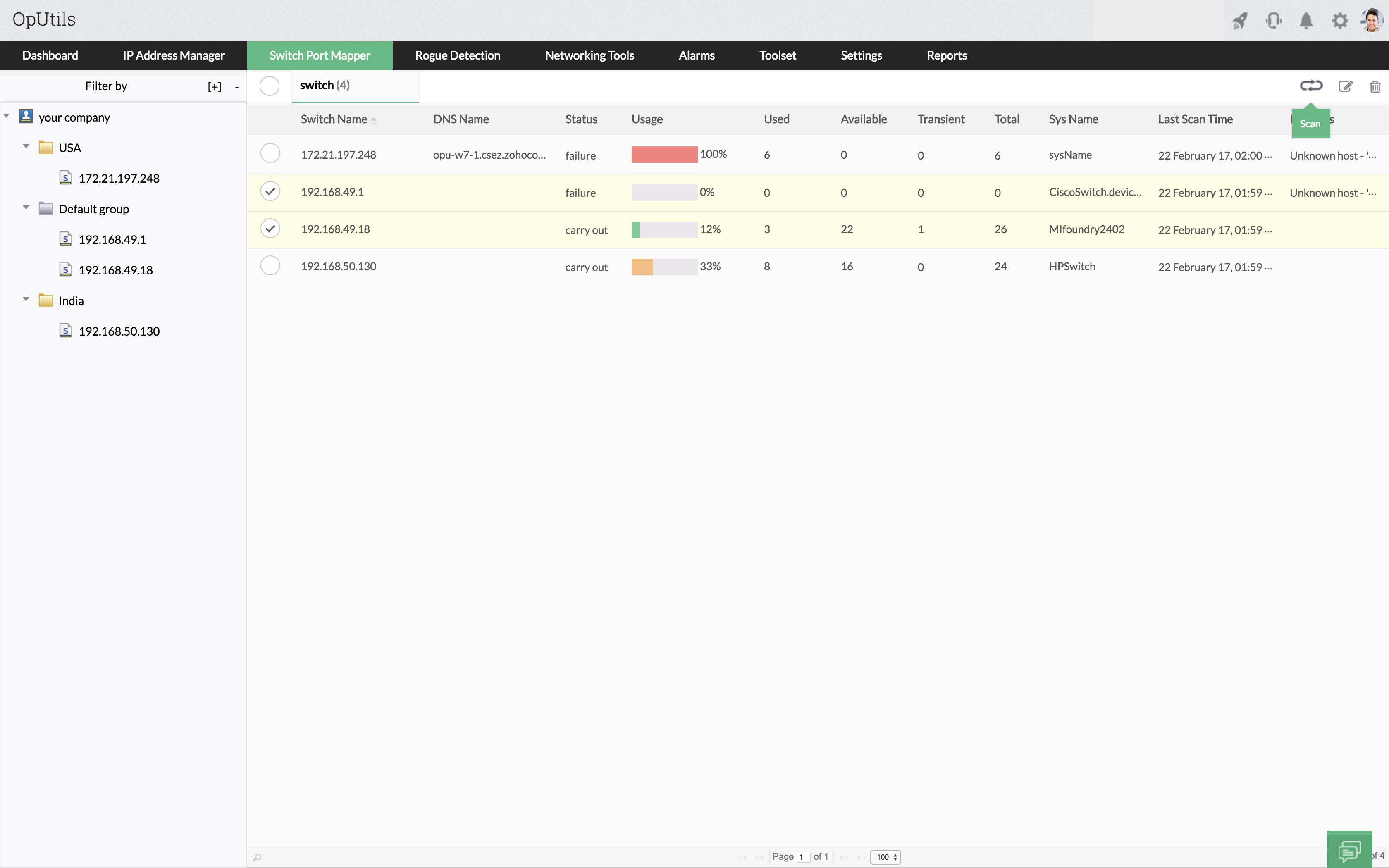
Switch port Mapper software allows to create different groups based on the location or building. The Switches can seamlessly be moved within groups anytime in switch port management software. Switches in different groups can be scheduled to run at different times. Whenever a switch is mapped, the results are automatically published as a CSV file that can directly be opened in Microsoft Excel. In the Switch port management software, the history can also be viewed from the OpUtils user interface. This helps administrators to get the details of the devices that are connected to a port in the given period and vice versa. It maps the details stored in the database and provides the mapping history. Switch port mapping also maps multiple switches simultaneously and schedule the scanning of switches such that switches in different groups can be scheduled separately.
When it comes to managing the switch ports, auditing is utmost important to know who did what and when. Switch Port Mapper logs all the events performed using the tool with the name of the OpUtils User and the date and time of the event. This helps administrators to track and audit the changes made using Switch Port Mapper. The administrators will also be able to track the device that was previously connected to a switch port from the previous scan results that are saved in the history. Switch port mapping tool audits and tracks the changes made to the Switch Port Mapper tool. It views the previous scan results from history.
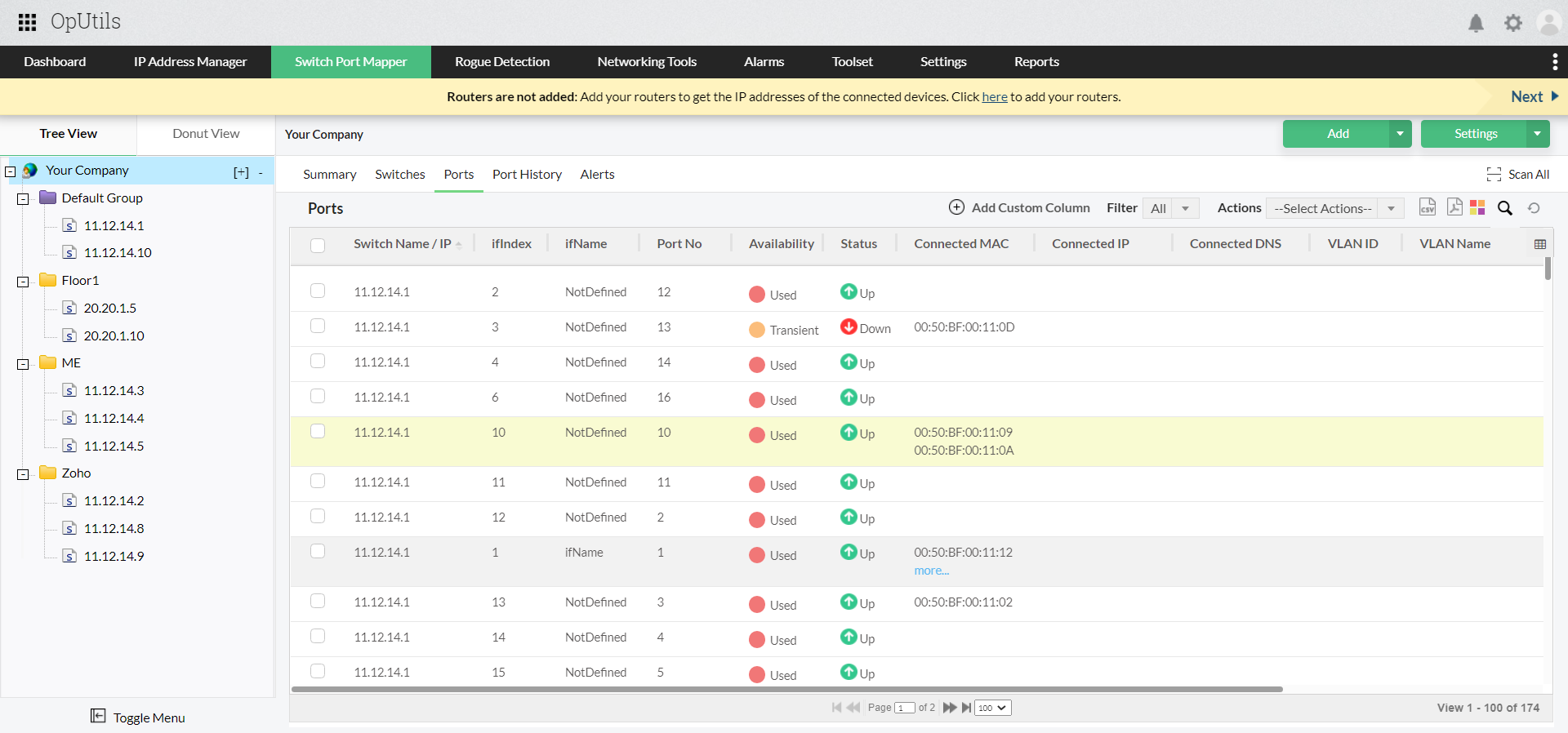
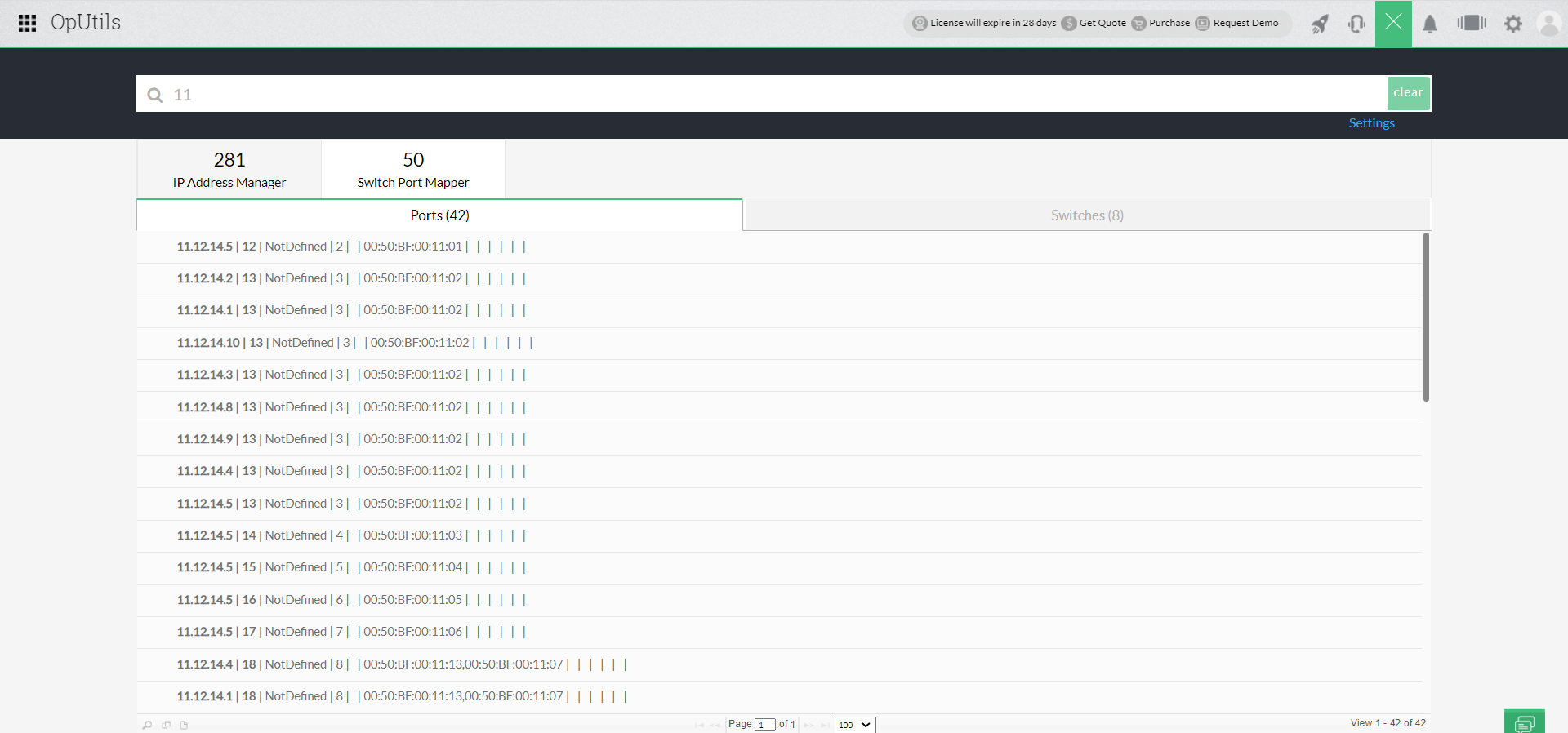
The Switch Port Mapper software can map multiple switches simultaneously. The administrators in switch port management tool can add all the switches in their network and map them all at once. This gives a complete port status of each of the switches. To locate where a specific device is connected, the administrators can simply search using the MAC, IP Address, DNS Name, or the Location of the device.
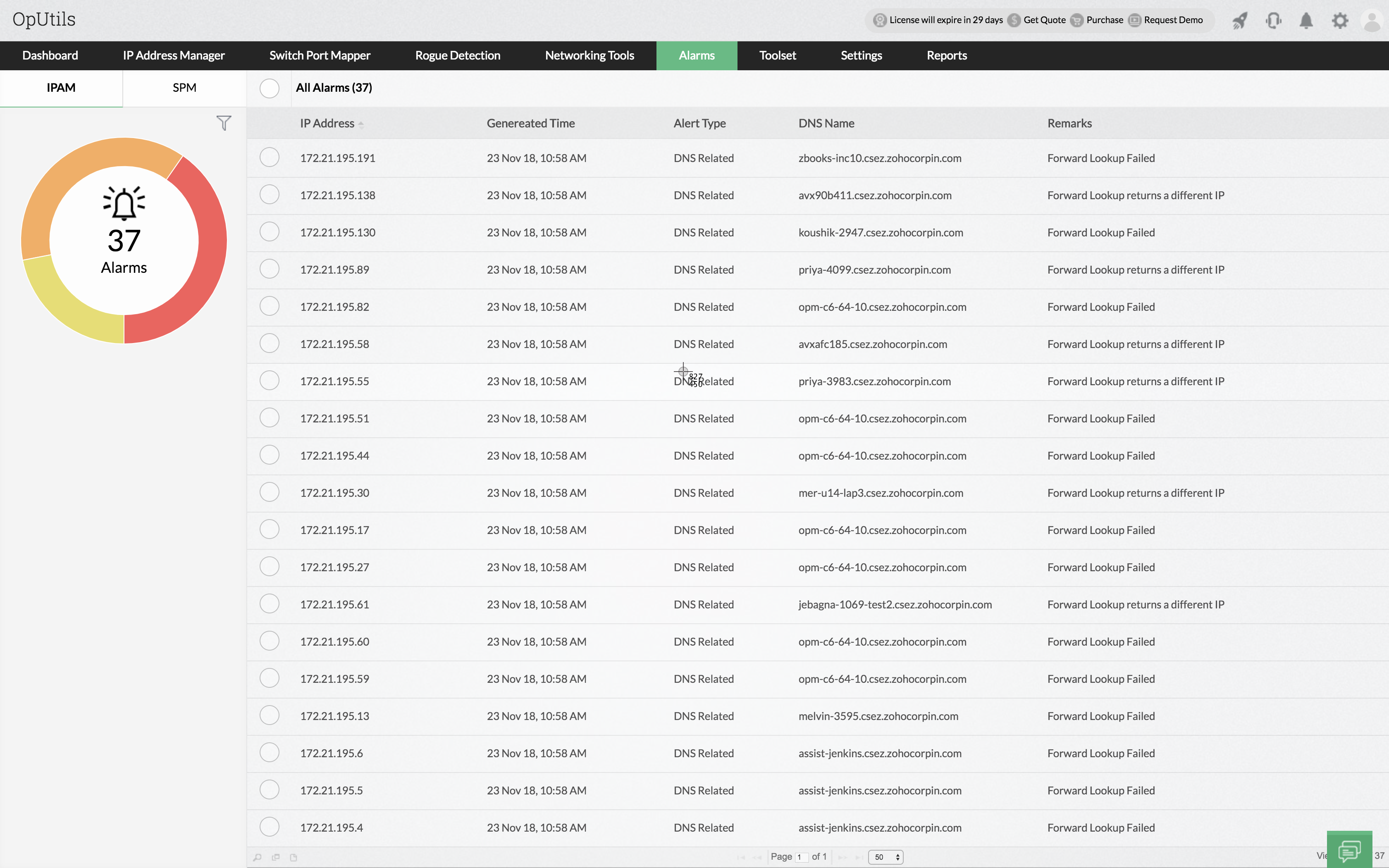
The Switch Port Mapper software provides an option to notify the administrators about the change in state of a switch port by email. Switch Port Mapper software generates alerts when:
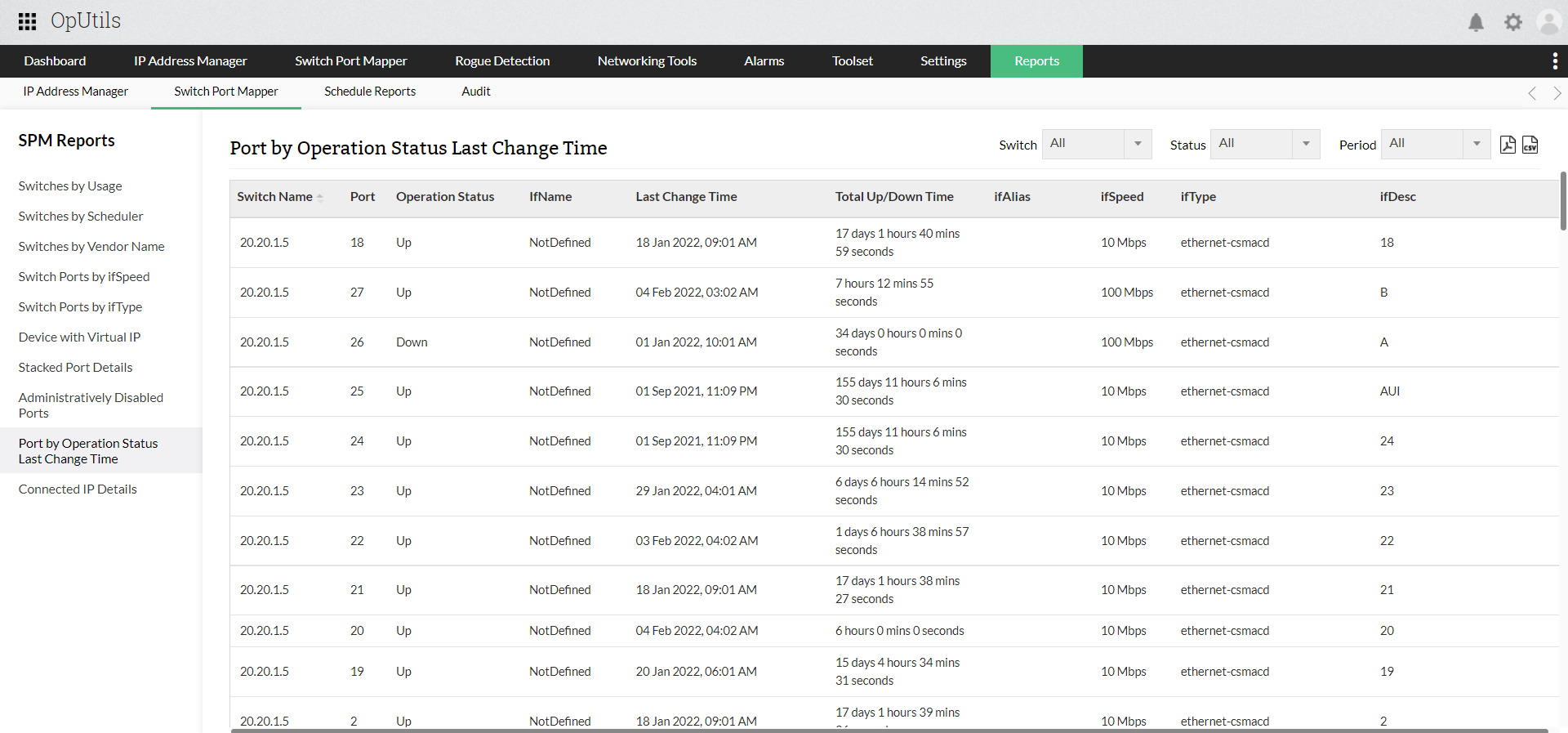
OpUtils, based on the Switch Port Mapper software results, provides the Port Availability Report of the network. Switch port mapper software maintains a policy to declare non-responding ports as available ports. Ports that are not active beyond 10 days are shown as available ports. This can also be configured to a desired value. The Port Availability Reports of OpUtils include: Available Ports, Used Ports, and Stacked Ports. It auto-publish the results to a CSV/ XLS. In addition to the Port Availability Reports, it also provides various reports on port usage, speed and type:
In addition to mapping switch ports to devices, OpUtils allows administrators to block or unblock a switch port from within this tool. A switch port can be made administratively up or down through SNMP using the SNMP write community string of a switch. This is very useful to block the unwanted traffic from a particular port due to a virus attack or hacking.
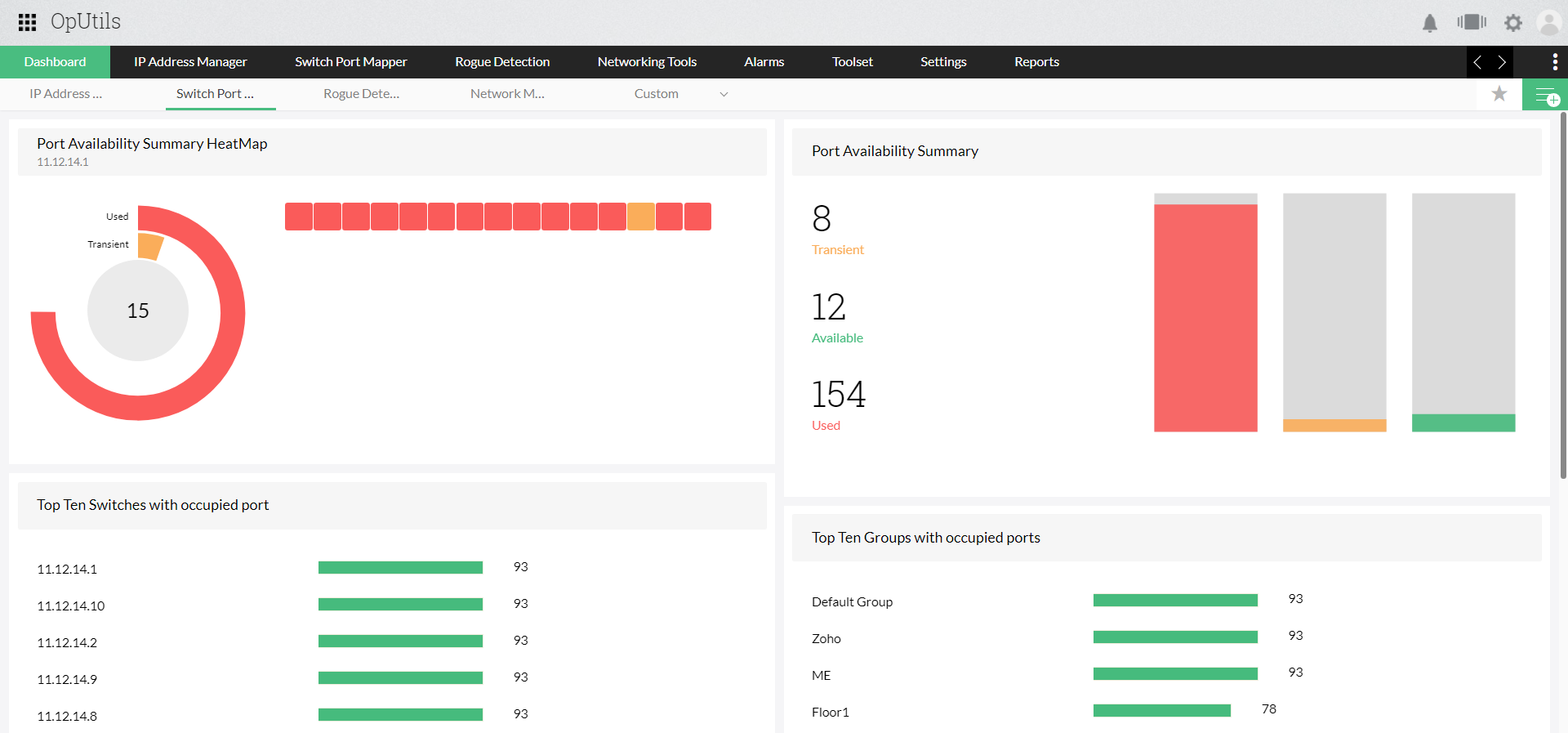
In most cases, administrators might also want to get the current status of the switches. From the port details view, they can perform the following actions:
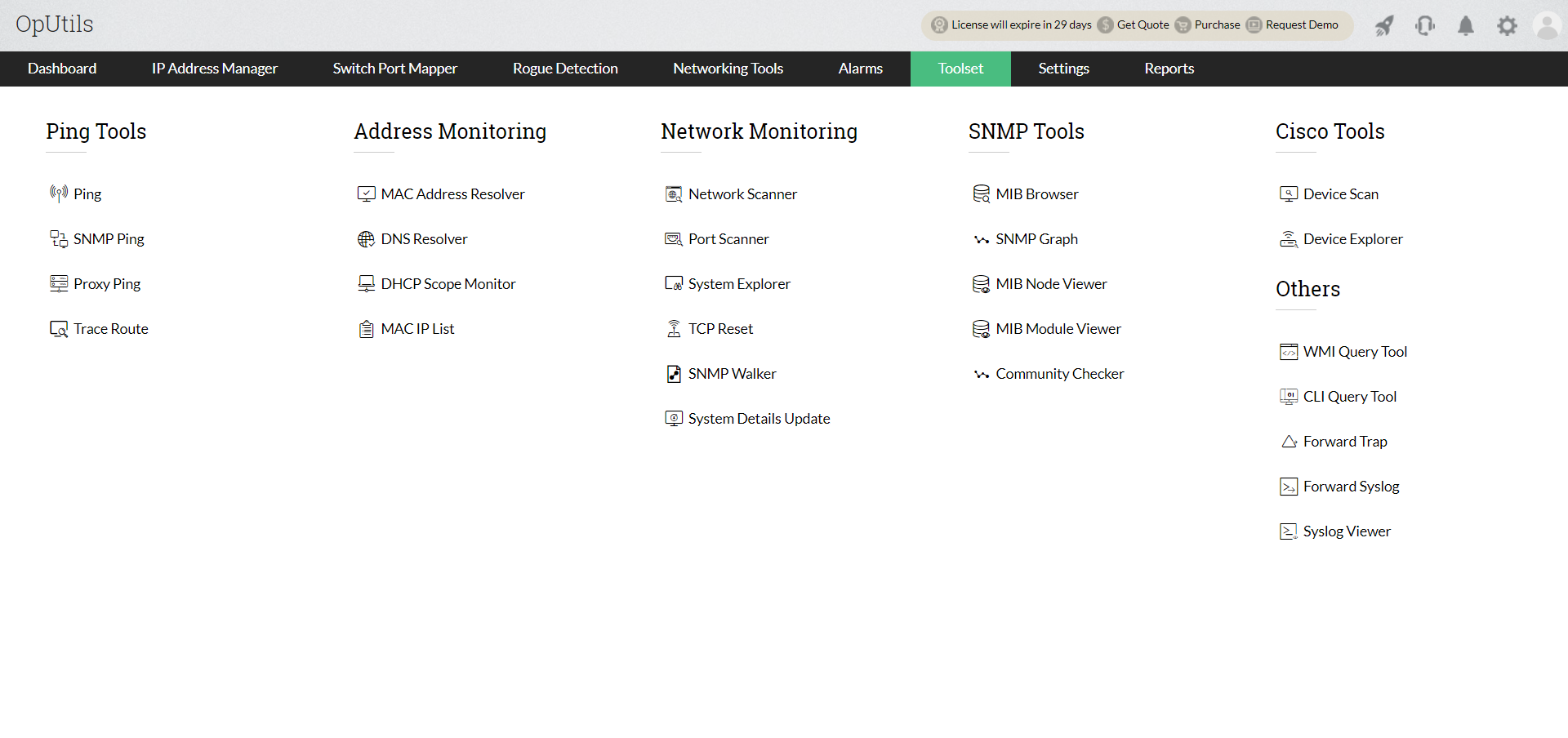
The Switch Port Mapper tool is tested to support switches of the following vendors:
| Cisco | Nortel | HP |
| Foundry | Extreme Networks | Dell |
| DLink | Huawei 3com | Allied Telesyn |
| Alcatel | Force 10 |
Other than the switches mention above, the Switch Port Mapper tool supports all the SNMP-enabled devices.
The Switch Port Mapper tool can be used to map a single switch in the OpUtils Free edition. For more details on tools available in Free edition, refer to Free Network Tools.
For more details, refer to the Switch Port Mapper Tool topic in the online help. Refer to the Switch Port Mapper Knowledge Base for troubleshooting tips.