Why your cloud budget is broken—and
how to fix it
April 03 · 8 min read

Your personal cloud storage plan is straightforward: You pay for a fixed amount of storage, but you may or may not use the full capacity. What matters is that you always have a clear view of how much you've used. Keep the family photos and lose the countless GIFs and WhatsApp forwards. Now, scale that scenario to your company’s cloud environment: an expansive, unorganized landscape filled with data of all kinds. Without clear visibility over what’s being stored, how much is actually needed, and what’s just sitting there unused, costs can spiral out of control. The key is to organize, optimize, and only pay for what truly adds value.
This is where a structured approach to cloud cost management becomes essential. As cloud adoption has grown, so have the associated costs, often in unpredictable ways. Organizations struggle with hidden costs, inefficient resource utilization, and budget overruns. Businesses and organizations need a way to bring financial accountability to cloud spending without stifling innovation or agility.
FinOps has emerged as a critical framework for managing cloud costs. Over time, cloud expenses have been steadily increasing, creating a need for a unified approach to tracking and optimizing cloud-related spending. This is where FinOps originated—to provide a common forum for finance, operations, and IT teams to collaborate on cloud cost management.
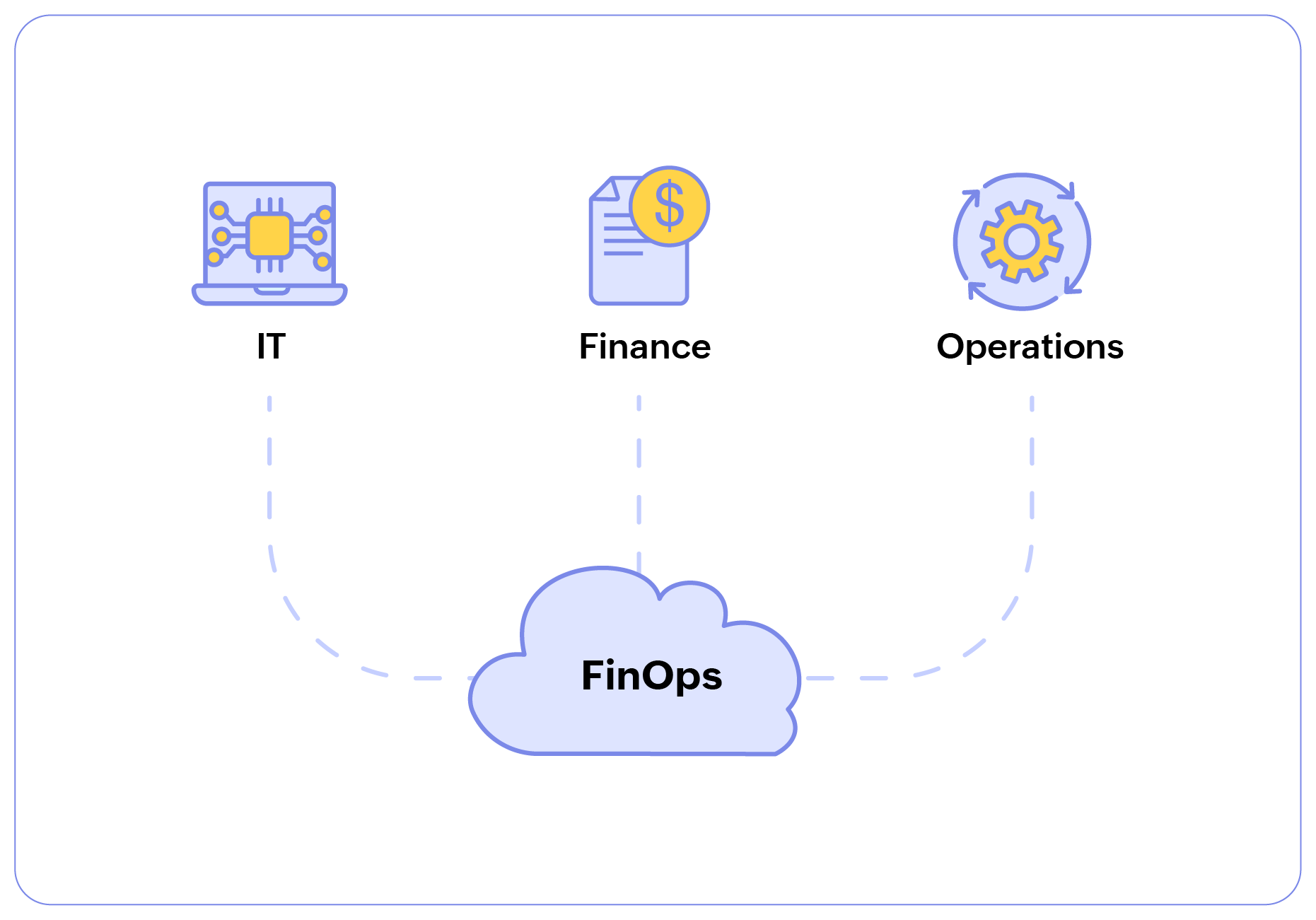
When organizations adopt cloud services, they often face challenges such as losing track of expenses, cloud wastage, and unexpected cost spikes. These issues can significantly impact budgets and builds. FinOps addresses these challenges by bringing together three key departments: finance, operations, and technology.
Why FinOps matters for IT leaders
IT leaders are feeling the heat as organizations increasingly lean on cloud infrastructure for operations. Finding the balance between innovation and financial security is a constant struggle—one that forces leaders to reevaluate their strategies.
The root of this problem lies in the transition from traditional capital expenditure models to cloud-based operational expenses. Unlike fixed, up-front investments, cloud costs fluctuate in real time based on usage, making financial oversight far more challenging. Every decision made by IT teams—whether provisioning new services, scaling compute resources, or adjusting storage—directly impacts cloud spending. To tackle these challenges, IT leaders need a smart, strategic approach—one that lets them get the most out of the cloud without breaking the bank.
This is where FinOps serves as an important concept for IT leaders. FinOps is not just about tracking expenses or setting budgets; it’s a strategic approach that aligns financial accountability with technical decision-making. It bridges the gap between the technical and financial sides of an organization, enabling real-time, data-driven decisions that balance cost, speed, and quality.
IT leaders must first cultivate a culture of shared accountability. This means breaking down silos and encouraging collaboration across product, finance, business, and technology teams. When these groups work together cohesively, they can make informed decisions about cloud spending that align with broader business objectives. Additionally, tools and methodologies that support this collaborative culture can further enhance efficiency and drive business value.
The 3 phases of FinOps
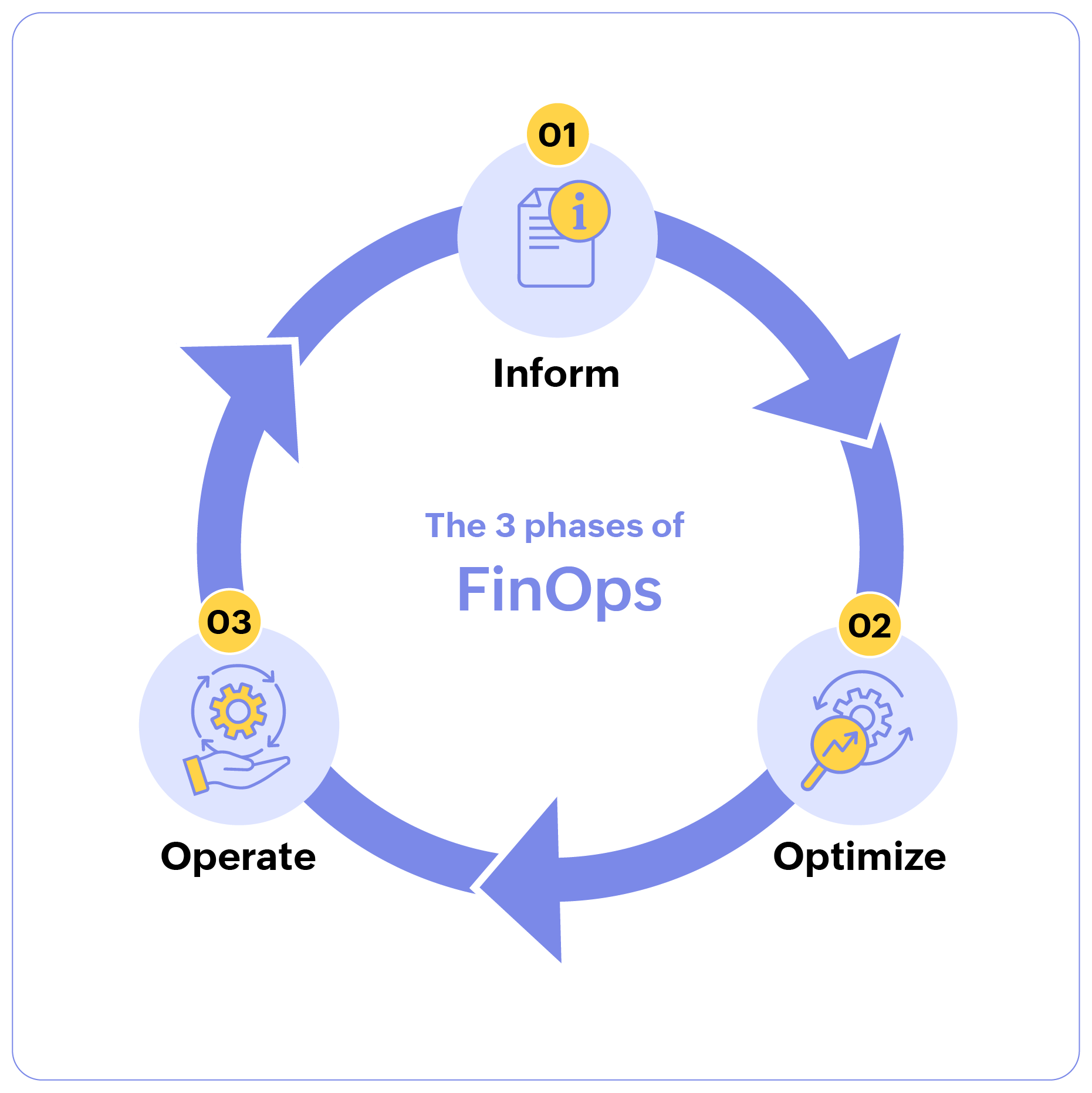
The FinOps life cycle works in three repeating phases. For FinOps to succeed, teams across verticals must work together and align with the goals set by a central team. These goals typically focus on optimizing cloud spending, enhancing financial accountability, improving forecasting and budgeting, and maximizing cloud efficiency. This often requires a cultural shift within the company.
Once teams start collaborating better, engineers and product owners can take the lead in managing cloud costs. They should treat costs as an important metric, just like performance or efficiency, to ensure the business gets the most value from its cloud investments.
Let’s break down the three phases.
Phase 1: Inform
The first step is to provide stakeholders with clear information about cloud usage and costs. This helps them make smart, data-driven decisions. For example, FinOps tools give IT teams better visibility over which cloud resources are being used and which ones are available but not yet deployed.
With this information, teams can:
- Track how much each department is spending on the cloud.
- Trllocate cloud resources more effectively.
- TrCompare performance and predict future costs.
This phase also helps teams understand the flexibility of cloud services, including pricing changes and discounts. Having accurate, timely information ensures the organization stays within budget, predicts spending, and maximizes its return on investment.
Phase 2: Optimize
In this phase, the focus is on finding ways to save costs. Teams analyze cloud usage patterns to uncover efficiency opportunities. For example, they might move a virtual machine to a cheaper server or take advantage of discounts based on usage.
However, cost-saving decisions aren’t always straightforward. Sometimes, switching to a seemingly cheaper option might require additional licensing fees, which could end up costing more. Teams need to carefully evaluate these changes to ensure they actually save money.
Phase 3: Operate
The final phase is about measuring performance and making improvements. Teams assess whether they’ve met their initial goals for cloud cost management. If not, they reevaluate their processes and investments to find ways to improve. Automation plays a big role here. Organizations can use automated tools to enforce policies that optimize cloud usage without sacrificing performance.
To make this work, a central team (often called a center of excellence or CoE) is needed to monitor cloud costs, set policies, and ensure that the organization gets the best value from its cloud investments. For instance, the CoE can implement a policy that automatically deletes idle or unused resources after a set period (e.g., 30 days). This can reduce resource utilization without affecting development.
Different teams may be at different stages of the FinOps cycle. For example, an engineering team optimizing compute resources may be in phase 2 (optimize) while the finance team is revisiting budgets in phase 1 (inform). This means the organization as a whole can be in multiple phases simultaneously.
As organizations scale their cloud infrastructure, they often encounter challenges. These hurdles can lead to financial strain, operational inefficiencies, and misalignment between cloud usage and business goals. Let’s explore how FinOps addresses these common pain points and empowers organizations to take control of their cloud spending.
Smart cloud cost management with FinOps practices
Problem 1:
A lack of visibility over cloud spending
In many organizations, cloud spending is distributed across multiple departments, each using resources for different purposes. Without a centralized view of expenses, it becomes difficult to track how much each team or project is contributing to the overall cloud bill. This lack of transparency often leads to overspending and makes it challenging to allocate budgets effectively.
Solution:
Centralized cost tracking
Organizations can implement FinOps practices by adopting a cloud cost management tool that provides a unified dashboard for all cloud expenditures. This tool breaks down costs by the department, project, and individual services, offering a clear picture of where the money is being spent. With this visibility, finance teams can allocate budgets more effectively and hold teams accountable for their cloud usage.
Problem 2:
Budget overruns and a lack of control
Cloud budgets can quickly spiral out of control if teams are not mindful of their resource usage. For example, development teams might leave virtual machines running after completing a project, or data analytics teams might over-provision resources for short-term tasks. Without real-time monitoring, these inefficiencies often go unnoticed until the monthly bill arrives, leading to budget overruns and financial strain.
Solution:
Real-time budget monitoring and alerts
To address this, organizations can set up budget thresholds for each department using FinOps tools. Automated alerts notify team leads when spending approaches predefined limits. For instance, if a team is about to exceed its monthly budget, the tool sends an alert, allowing the team to scale down resources or pause nonessential services. This proactive approach helps organizations avoid budget shocks and maintain financial discipline.
Problem 3:
Cost spikes due to misconfigurations and inefficiencies
Cloud cost anomalies, such as sudden spikes in usage, can be disruptive and often signal inefficiencies or misconfigurations. For example, a misconfigured data pipeline or an unattended instance consuming resources excessively can lead to significant unnecessary costs. Without real-time monitoring, identifying and resolving these issues can take days or even weeks, resulting in financial waste.
Solution:
Anomaly detection and rapid response
Organizations can implement anomaly detection capabilities through tools that continuously monitor cloud spending patterns. These tools flag unusual spikes in real time, enabling IT teams to investigate and resolve issues immediately. For example, if an unattended instance starts consuming resources excessively, the team receives an alert within minutes and can shut it down before it impacts the budget. This minimizes financial waste and improves operational efficiency.
Problem 4:
Inefficient resource utilization
Provisioned cloud resources frequently remain underutilized or idle. For example, high-performance instances might get allocated for short-term projects but don't get decommissioned afterwards, leading to unnecessary costs. Over time, these inefficiencies can add up, consuming a significant portion of the cloud budget.
Solution:
Optimization recommendations
Leverage platforms that provide actionable insights into resource utilization. These platforms identify underutilized or idle resources and recommend optimization strategies, such as rightsizing instances or scheduling automated shutdowns. By acting on these recommendations, organizations can reduce cloud waste significantly, freeing up the budget for more strategic initiatives.
Problem 5:
The complexity of multi-cloud management
Many organizations operate in multi-cloud environments, using a combination of AWS, Azure, and Google Cloud. Each platform has its own pricing models and cost management tools, making it difficult to compare expenses or identify cross-platform savings opportunities. This complexity often leads to inefficiencies and missed opportunities for cost-optimization.
Solution:
Unified multi-cloud cost management
Cloud cost management platforms consolidate all associated costs onto a single dashboard, providing a comprehensive view of multi-cloud spending. These tools also offer insights into how different teams are utilizing resources across platforms and suggest cost-optimization strategies tailored to each provider. This simplified approach enables organizations to make informed decisions and maximize the value of their multi-cloud investments.
Closing thoughts
Managing cloud costs effectively means making smarter, more strategic decisions. Strong governance frameworks help organizations gain visibility and control over cloud usage, ensuring resources are optimized, waste is minimized, and costs align with business goals. With tools like AI-driven analytics software, businesses can automate cost-optimization and drive savings without the need for constant manual oversight.
Beyond governance, embracing cost-minimizing practices like cloud unit economics allows IT leaders to connect cloud spending with real business value. By understanding the break-even point and shifting from a consumption-based model to a demand-driven approach, organizations can ensure their cloud investments are both efficient and profitable. Ultimately, fostering a culture of financial awareness and collaboration across teams helps businesses get the most out of their cloud strategy, driving innovation while keeping costs in check.
