Navigating the human impact of AI at work
Oct 22 · 7 min read
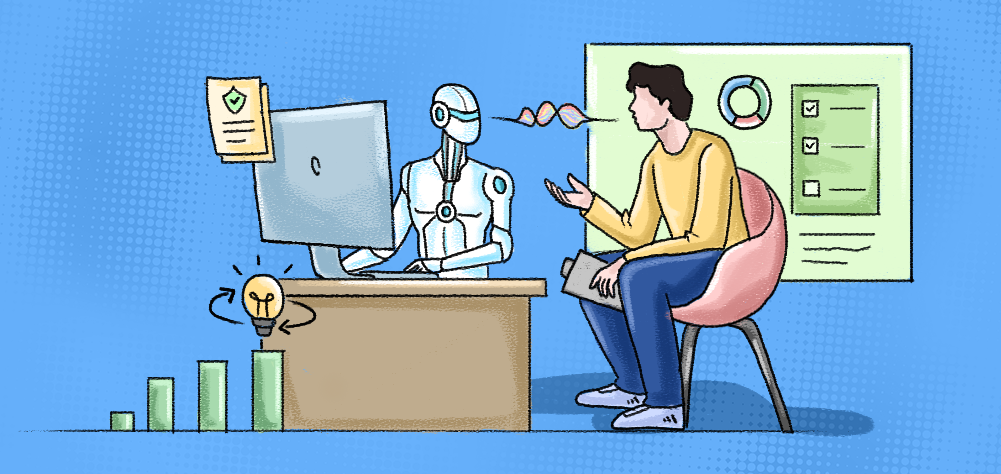
We know what you're thinking. Not another AI blog!
Don't worry—this isn't one of those "leveraging AI" or "how AI-powers everything" blogs. Instead, we are focusing on a critical but often overlooked aspect of AI adoption: the human experience and its potential challenges for employees.
With AI now deeply integrated into IT operations, hiring expectations among enterprises are shifting. It's no longer a question of whether employees use AI, but how effectively they do so. People are now expected to be more productive with the help of AI tools—with a caveat. Developers must enhance code efficiency while adhering to security protocols. Customer support teams should use AI chatbots for routine queries, but ensure responses align with company policies and provide accurate, context-aware solutions.
The impact? Instead of viewing AI as a handy tool, employees may view it as a threat. While AI promises efficiency, automation, and enhanced productivity, it also brings uncertainty about job security and the future of work. Many worry that AI will render their skills obsolete. A constant influx of fear-driven narratives and skepticism online can further fuel anxiety, making employees raise questions about workplace dynamics.
Unchecked, these concerns can erode productivity and morale. Employees may leave the organization, driven by uncertainty about their future. Leaders who overlook these fears risk creating an atmosphere of instability that can hinder organizational growth.
Addressing a cultural shift
Leadership plays a crucial role in shaping how AI is introduced into the workplace, ensuring that employees feel supported, valued, and empowered rather than threatened.
Conduct implementation surveys
Understanding the employee perspective is crucial to build a positive AI culture. Employees need to see AI as a tool that supports rather than replaces them. To understand the current attitudes around AI, gathering insights on how many employees use AI tools and how deeply involved these tools are in their roles is a good start. Leaders can ask questions that focus on:
- Concerns: What aspects of AI integration worry you the most (e.g., job security, skill gaps, workload changes)?
- Training needs: What areas do you need support or training in?
- Perceived benefits: In what ways might AI improve your work?
Support transparent communication
Employees need to understand why AI is being introduced, how it will affect their roles, and what the company’s long-term vision is. At Zoho Corp., we conduct a series of town halls, both at the organization-level and at the product-level, where leaders share their strategy for incorporating AI into our solutions. For example, Zoho Corp.'s Chief Scientist Sridhar Vembu conducts weekly tech town halls to discuss the progression of AI usage, how employees can upskill, and other advances in the tech world.
While AI excels at automation, human skills like empathy, ethical judgment, and problem-solving remain irreplaceable. Leaders must highlight how AI adoption will shift job responsibilities toward higher-value, more fulfilling work. They must emphasize AI as an enhancement, not a replacement.
Invest in upskilling and reskilling
Structured learning is a great way to help employees become proficient in AI-driven tools relevant to their roles. This could include in-house training, online courses, or mentorship programs. Zoho Corp. encourages internal tradeshows from product teams, technical blogs, and sessions on the inner workings of our AI tools and features.
In addition to technical skills, leaders should also emphasize the development of soft skills that will become increasingly valuable in an AI-enhanced workplace. When employees feel that they are growing with technology rather than being left behind by it, they are far more likely to embrace AI and find ways to use it effectively in their work.
Establish AI policies
Leaders can establish policies that dictate allow-listed AI tools, how they can enhance existing roles, and what platforms and practices employees must avoid. The core function of an AI policy is to differentiate between user roles and AI roles, i.e, what AI can automate and what remains human-led. These policies should also explicitly outline the organization's commitment to human oversight. Establishing that AI will assist teams, not make final decisions, ensures employees feel valued and involved in decision-making processes.
Recognize adaptability
Leaders should celebrate AI success stories. Showcasing how AI has helped teams or customers achieve better results reassures employees that learning AI skills can lead to career growth, not destruction. Public acknowledgment, promotions, incentives, or simply verbal recognition can go a long way in reinforcing the idea that adaptability and continuous learning are highly valued within the organization. Remember, a mindset change is the foundation for long-term development.
The knowledge paradox
Did you know that many viral posts on LinkedIn are actually AI-generated? That's another human impact businesses may worry about—overreliance.
We asked a leader at Zoho Corp., with decades of coding experience, to test an AI-powered development tool. While it successfully generated code, he identified several issues that required manual intervention and took hours to resolve. The AI tool itself was unable to assist in fixing these errors. Despite this, he appreciated how much progress the tool helped him achieve.
Experienced senior engineers can leverage AI tools effectively, using their expertise to identify and correct issues that AI may overlook. However, an inexperienced developer or a non-developer facing the same situation might struggle to diagnose the problem and find a solution. As AI-generated code becomes more prevalent, developers must navigate an increasing volume of unfamiliar code, which adds complexity rather than reducing it.
This paradox highlights a key challenge: while AI can accelerate development, it also demands a deeper level of expertise to refine its output effectively. When AI handles too much of an employee’s workload, it can lead to skill degradation, new employees that can't handle challenges on their own, and even compliance risks. When your employees become passive users rather than active thinkers, your organization loses the foundational knowledge required for success. Striking that balance between reaping AI’s benefits while maintaining core competencies is a challenge for leaders.
So, what can you do?
Power up your people
Critical tasks, such as troubleshooting systems, verifying AI-generated insights, or handling customer issues, should require employees to demonstrate knowledge without relying on AI. Leaders should prioritize the need for manual proficiency for new employees. Additionally, all employees can take up periodic, non-AI exercises to ensure they retain their ability to perform critical tasks and problem solve. For example, analysts should manually interpret data sets, writers should draft content without AI suggestions, and designers should sketch concepts before using AI-powered tools.
Mentorship programs are a great way for new employees to work alongside experienced colleagues. This can help them pick up traditional skills that a heavy reliance on AI might otherwise bypass. These programs should also include scenario-based learning where employees are exposed to situations where AI tools are unavailable or produce incorrect outputs, pushing them to utilize their problem-solving skills.
The bottom line: AI needs you
AI is powerful, but it's not infallible. In a successful workplace, employees understand that AI can suggest actions, but they remain responsible for final decisions. For leaders, this means setting clear boundaries, providing opportunities for growth, and promoting human oversight.