
Protect customer privacy, streamline
data management, and reduce the risk
of data breaches.


The Digital Personal Data Protection Act, 2023 (DPDPA), is India's data privacy law that aims to protect individual's privacy rights and establish a framework for the lawful processing of personal data. It defines how digital personal data must be collected, used, protected, and governed across the country.
Any personal data processed within the Indian territory, regardless of how it is collected (online or offline), that is subsequently digitized will be subject to this law. The DPDP Act is also applicable to data processed outside India if it is in connection with any activity relating to the offering of goods and services to individuals within India.
The release of the DPDP Rules, 2025 on 13 Nov. 2025 marks India’s transition to a fully
enforceable data-protection framework. Along with the DPDP Act, 2023, it defines how digital
personal data must be collected, used, protected, and governed across the country.
Here are some other compelling reasons why you should start preparing for compliance.
A failure to implement security safeguards that prevent breaches of personal data could result in a penalty.
Attract privacy conscious customers and gain a trust worthy reputation.
Implement safeguards to minimize operational disruptions caused by security incidents or a data breach to ensure better business continuity.
The law introduces an eighteen-month period for phased compliance.
Full compliance obligations begin 18 months after publication (13 Nov. 2025).
That means likely mid-2027 for complete operational compliance.
Activates the regulator and overall enforcement setup.
Switches on a limited set of rules early, mainly the rules tied to Consent Managers and the Board's power to recognize and regulate them.
The real compliance obligations kick in, everything from consent and user rights to security, children's data, breach reporting, international transfers, and penalties becomes enforceable.
Being GDPR compliant doesn't mean that you're DPDPA compliant.
Here are the differences
Practical steps IT teams must take to implement the DPDPA
Get ready for DPDPA
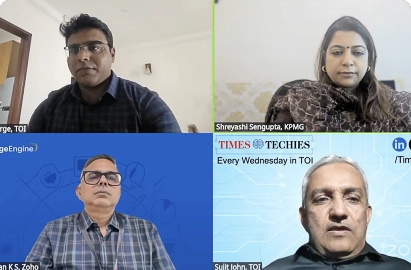
A Times of India webinar where compliance experts break down consent, data sovereignty, and what it takes to build a DPDPA-ready organisation.
Watch Video
A legal expert breaks down the practical implications of the DPDPA for Indian businesses.
Watch VideoManageEngine's suite of IT management solutions can help your
organization prepare for DPDPA compliance. Manage and secure
data throughout its life cycle, from data collection, processing,
transfer, and storage with the help of our solutions.
In the following section, we outline how our IT solutions can assist
your organization in addressing certain technical and
organizational control requirements under DPDPA.

As per Rule 6, organizations must safeguard all personal data it controls or processes by implementing reasonable security measures to prevent breaches.
Meet this requirement with ManageEngine:
Protect personal data by enforcing strong encryption, controlled access, and selective data masking across identities, endpoints, infrastructure, and IT operations.
Meet this requirement with ManageEngine:
Strict, end-to-end control over access to computer resources by enforcing identity-based access controls, least-privilege principles, and continuous oversight across users, administrators, endpoints, and privileged systems.
Meet this requirement with ManageEngine:
Continuous and auditable visibility into how personal data is accessed by collecting, correlating, and analyzing access-related events across identities, endpoints, applications, networks, and data flows.
Meet this requirement with ManageEngine:
Maintain the availability of systems processing personal data by combining reliable backup mechanisms, rapid recovery capabilities, and operational resilience controls to minimize downtime and data loss.
Meet this requirement with ManageEngine:
Enables organizations to meet log-retention obligations by enforcing configurable, long-term storage of access logs and audit records related to personal data, while preserving integrity and ensuring retrievability for review and investigation.
Meet this requirement with ManageEngine:
Supports data fiduciaries in operationalizing contractual requirements by providing centralized contract governance, traceability of data processors, and technical controls that enable verification and enforcement of agreed security safeguards.
As per Rule 7, upon becoming aware of a data breach, the data fiduciary is required to notify the affected data principal in a concise, clear, and plain manner.
Such notification shall also include the measures implemented or proposed, if any, to mitigate the associated risks, the remedial steps taken to prevent recurrence of the breach, and a report detailing the intimations provided to the affected data principals.
Meet this requirement with ManageEngine:
Detect personal data breaches early, manage them through governed incident workflows, and generate clear, auditable information required for timely and compliant breach notifications.
Meet this requirement with ManageEngine:
Recover from personal data breaches quickly, remediate root causes, and produce clear, auditable evidence of corrective actions required for breach notifications.
Meet this requirement with ManageEngine:
Generate, preserve, and review verifiable evidence logs required to substantiate breach notifications, mitigation disclosures, and regulatory reporting.
As per Rule 8, the Data Fiduciary is obligated to retain all personal data it processes along with the associated traffic data and processing logs for a minimum period of one year. After this mandatory retention period, the Data Fiduciary must ensure that such personal data and logs are erased, unless their continued retention is required for compliance.
Meet this requirement with ManageEngine:
Systematically discover, classify, and map where personal data resides across endpoints, file systems, databases, and removable media thereby forming the foundation for compliant retention and deletion.
Meet this requirement with ManageEngine:
Apply classification-driven controls that support mandatory one-year retention of personal data and systematic deletion thereafter, unless continued retention is legally required.
Meet this requirement with ManageEngine:
Identifies inactive users and stale data, supporting lawful minimization and deletion of personal data after the mandatory one-year retention period.
Meet this requirement with ManageEngine:
Retain processing and traffic logs for the mandated minimum period and ensure their timely, lawful erasure thereafter.
Download the guide to explore how ManageEngine products can support various technical and organizational measures required for DPDPA compliance.
The complete implementation of the DPDPA requires a combination of governance, policies, people, processes, and technical and organizational measures. The features and capabilities described above represent some of the ways in which our product may support customers in meeting certain requirements under the DPDPA. Organizations must conduct their own independent assessment of ManageEngine’s features and determine the extent to which they can help achieve compliance with this law.
This material is provided for informational purposes only and should not be construed as legal advice or a guarantee of compliance with the DPDPA. We make no warranties, whether express, implied, or statutory, regarding the information in this material. Please consult your legal advisor to understand how the DPDPA applies to your organization and the steps required to comply with its obligations.