AI-powered IT solutions: Transforming IT operations and business outcomes

Summary
AI-powered IT solutions are redefining enterprise technology by shifting IT operations from reactive management to proactive, intelligent decision-making. Leveraging machine learning, natural language processing, and predictive analytics, these solutions streamline workflows, optimize resource utilization, and enhance security. While challenges such as data quality and cybersecurity risks remain, adopting best practices like careful solution selection, robust data governance, and continuous monitoring ensures maximum ROI. For CXOs, AI-driven IT is a strategic enabler of agility, efficiency, and competitive advantage.
In recent years, we've moved beyond the era of rigid automation, where IT solutions were limited to following pre-defined instructions. Today, AI-powered IT solutions are rewriting the playbook for modern enterprises. These platforms aren't just tools; they're dynamic, intelligent systems that use machine learning, natural language processing, and predictive analytics to continuously learn, adapt, and deliver powerful insights.
For CXOs, this isn't just another tech trend; it's a fundamental shift in how businesses operate. According to a report by McKinsey, 92% of companies plan to invest in generative AI over the next 3 years. AI has evolved from a simple enabler of efficiency to a strategic asset that drives operational resilience, fuels competitive differentiation, and provides the insights needed for truly informed strategic decision-making. From predicting and preventing system failures to intelligently automating service delivery, AI is now a core component of any enterprise looking to thrive in a digital-first world.
How AI-powered IT solutions work
At their core, AI-powered IT solutions rely on data-driven algorithms that learn and improve over time. Key technologies include:
- Machine learning (ML): Enables IT systems to detect anomalies, predict failures, and optimize resources based on historical and real-time data.
- Natural language processing (NLP): Powers chatbots, virtual assistants, and self-service portals that streamline IT support and user interactions.
- Predictive analytics: Anticipates potential issues in networks, applications, or infrastructure, allowing proactive remediation before disruptions occur.
- Generative AI: Utilizes large language models (LLMs) to create new content. In an IT context, this can mean automatically generating troubleshooting guides or summarizing complex incident reports into a clear, concise format. GenAI can also enhance user experience by providing more human-like, conversational support in chatbots and virtual agents.
- Agentic AI: This is an advanced form of AI that goes beyond content generation. Agentic AI systems are designed to operate autonomously with a specific goal in mind. In IT operations, an agentic AI system could be given the objective of "resolve a network outage." It would then autonomously break down the task into sub-goals, such as diagnosing the root cause, communicating with relevant systems to initiate fixes, and even generating an incident report at the end, all without constant human oversight.
For example, in IT service management, AI-driven virtual agents can automatically resolve common ticket requests like password resets, while predictive models flag unusual login patterns that might signal a security breach.
Core benefits of AI-powered IT solutions
Implementing AI-powered IT solutions offers a powerful competitive advantage, moving beyond simple automation to create a more resilient, efficient, and intelligent enterprise. These systems deliver tangible benefits that translate directly to the bottom line, from enhancing operational performance to securing a faster return on investment.
- Improved efficiency and automation: AI excels at taking on repetitive and time-consuming IT tasks. By automating things like incident triaging, patch management, and service ticket routing, AI frees up valuable human resources. This not only reduces operational overhead but also significantly accelerates issue resolution, improving overall service delivery and freeing your team to focus on strategic initiatives. For example, AI-powered systems can automate the routing of IT tickets for hospital staff. A request for a password reset from a nurse can be instantly handled by a virtual agent, while a more complex issue with a medical imaging server is automatically routed to a specialist, reducing resolution time and ensuring critical systems remain operational.
- Enhanced strategic decision-making: AI provides a level of insight that traditional analytics cannot. Using advanced algorithms, AI platforms can analyze vast datasets to uncover hidden patterns and predict future trends. This empowers CXOs to make data-driven decisions on everything from identifying cost optimization opportunities and forecasting future infrastructure needs to strategically allocating resources for growth.
- Proactive security and threat detection: Speed is critical in today's threat landscape. AI-powered security solutions continuously monitor network traffic, user behavior, and infrastructure components for anomalies. For example, AI can detect a server's CPU usage suddenly spiking at 3 AM and determine if it's a legitimate, scheduled task or an unauthorized process that may signal a security breach. These models can detect and respond to suspicious activities, like a new type of malware or an unauthorized access attempt, far faster and more accurately than a human team could, significantly strengthening your organization's cyber resilience and security posture.
- Superior scalability and adaptability: As modern IT environments become more complex, especially with the rise of hybrid and multi-cloud ecosystems, AI ensures they remain agile. AI-powered solutions can dynamically allocate resources to handle fluctuating workloads, ensuring optimal performance and uptime without the need for constant manual intervention. This adaptability is key to maintaining business continuity and supporting rapid growth.
- Accelerated ROI and innovation: The combined effect of these benefits is a clear and measurable return on investment. Companies that integrate AI into their IT operations report a notable reduction in operational costs, a decrease in downtime, and a faster time-to-market for new products and services. This operational efficiency and accelerated innovation cycle create a powerful financial incentive for adoption.
Common challenges with AI-powered IT solutions
While the benefits of AI-powered IT solutions are significant, their implementation isn't without its challenges. For CXOs, it's crucial to acknowledge and proactively address these potential hurdles to ensure a successful and secure deployment.
- Data quality and governance: The performance of any AI system is fundamentally dependent on the data it's trained on. Poor quality, incomplete, or biased data will lead to inaccurate predictions and flawed insights. To overcome this, organizations must invest in robust data governance frameworks to ensure the data is clean, consistent, and relevant.
- Emerging cybersecurity risks: While AI is a powerful tool for enhancing security, it also introduces new vulnerabilities. Malicious actors are increasingly using adversarial AI attacks to deceive and manipulate AI models, and model poisoning to corrupt the training data. This means that a proactive defense strategy must include new measures to secure the AI models themselves, not just the systems they protect.
- Integration complexity: Integrating new AI solutions into existing IT infrastructure, especially in enterprises with a long history of legacy systems, can be a major challenge. These older environments may not have the architecture or computing power needed to support resource-intensive AI workloads. This often requires a significant and costly effort in re-architecture and modernization before AI can be effectively deployed.
- The talent gap: The specialized skills needed to manage and maintain AI-powered IT ecosystems are in high demand but short supply. From data scientists and AI engineers to IT professionals with a deep understanding of machine learning operations (MLOps), finding and retaining the right talent is a significant hurdle. This talent gap can slow down implementation, limit the full potential of the technology, and increase operational costs.
Implementing AI-powered IT solutions: A CXO's guide
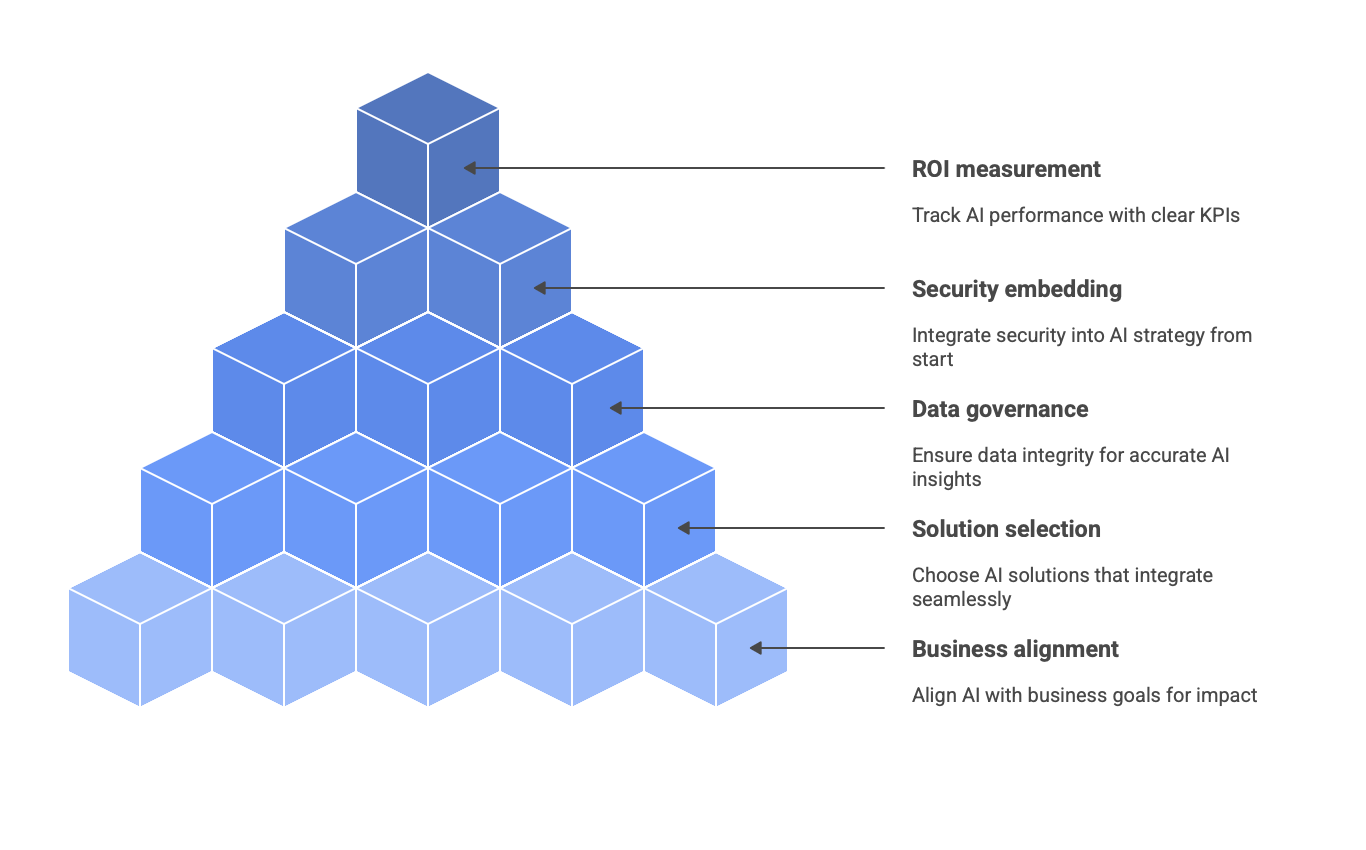
For CXOs planning the adoption of AI-powered IT solutions, a strategic approach is essential to maximize value and minimize risk. Simply deploying technology isn't enough; success hinges on a clear roadmap and a focus on measurable outcomes.
- Align AI Adoption with business goals: Begin by identifying the specific business challenges that AI can solve. Instead of adopting AI for its own sake, pinpoint where it can deliver the most significant impact, whether that's reducing operational costs, enhancing customer experience, or strengthening risk management. Prioritize use cases with clear outcomes and a quicker time to value to build early momentum and demonstrate tangible ROI to stakeholders.
- Select the right solutions: The market is full of AI tools and platforms. The key is to choose solutions that don't just promise efficiency but also integrate seamlessly with your existing IT ecosystem. Opt for platforms that are interoperable and avoid those that would require a complete and costly re-architecture of your infrastructure.
- Ensure strong data governance: AI is only as good as the data it learns from. Poor or incomplete data will lead to inaccurate predictions and flawed insights. Invest in robust data pipelines, cleansing processes, and continuous monitoring to ensure the integrity of your training data. A strong data governance framework is the foundation of any reliable AI system.
- Embed security from the start: While AI can enhance security, it also introduces new risks. You must embed security into your AI strategy from day one. Apply zero-trust principles to all AI systems, encrypt sensitive training data, and continuously monitor your AI models for drift, malicious attacks (like model poisoning), or misuse.
- Measure ROI continuously: To justify and expand your AI investments, you must continuously track their performance. Establish clear Key Performance Indicators (KPIs) like Mean Time to Resolution (MTTR), system uptime, or cost-per-incident. Regularly validating these metrics ensures that your AI solutions are delivering on their promise and providing a clear return on investment. This data-driven approach allows you to refine your strategy and scale successful deployments.
Future outlook: What’s next for AI-powered IT solutions
AI adoption in IT is moving from reactive automation to predictive and prescriptive intelligence. Emerging trends such as AIOps (Artificial Intelligence for IT Operations), autonomous remediation, and AI-augmented security will further reduce manual intervention while increasing reliability and scalability.
For CXOs, the future is about trustworthy AI: ensuring transparency, explainability, and compliance as AI decisions directly affect business outcomes. Organizations that embrace AI-powered IT solutions strategically will not only optimize operations but also unlock new opportunities for innovation and growth.