Web Isolation
Open risky websites in a virtualized, disposable environment so malicious content never reaches the device.
About
About Web Isolation
Browsers are essential to modern work, and also a direct line of exposure to online threats.
What it does
Web Isolation provides a critical layer of protection by creating a virtualized browsing environment that isolates malicious content from user devices, reducing the risk of malware infections and data breaches.
How it works
Working of Web Isolation
Virtualization and sandboxing keep risky sites from ever touching the real device.
Virtualization and sandboxing
Web isolation uses two primary methods to protect users — virtualization and sandboxing — to prevent malicious content from reaching a device. It's like a quarantined area for websites, where everything is wiped clean after browsing, leaving no trace of potential threats. It also protects user privacy by isolating certain websites and preventing cache, image files, and cookies from being stored on the local machine.
Browser Security Plus's Web Isolation protects devices from malware and data breaches by segregating personal and business websites, isolating malicious sites in a virtual environment so they can't infect devices or access sensitive data. When a user visits a malicious website, web isolation prevents the malware from infecting their device.
Configuration
Implementing Web Isolation
Pick which sites open in isolation, then decide how persistent and embeddable that isolated session should be.
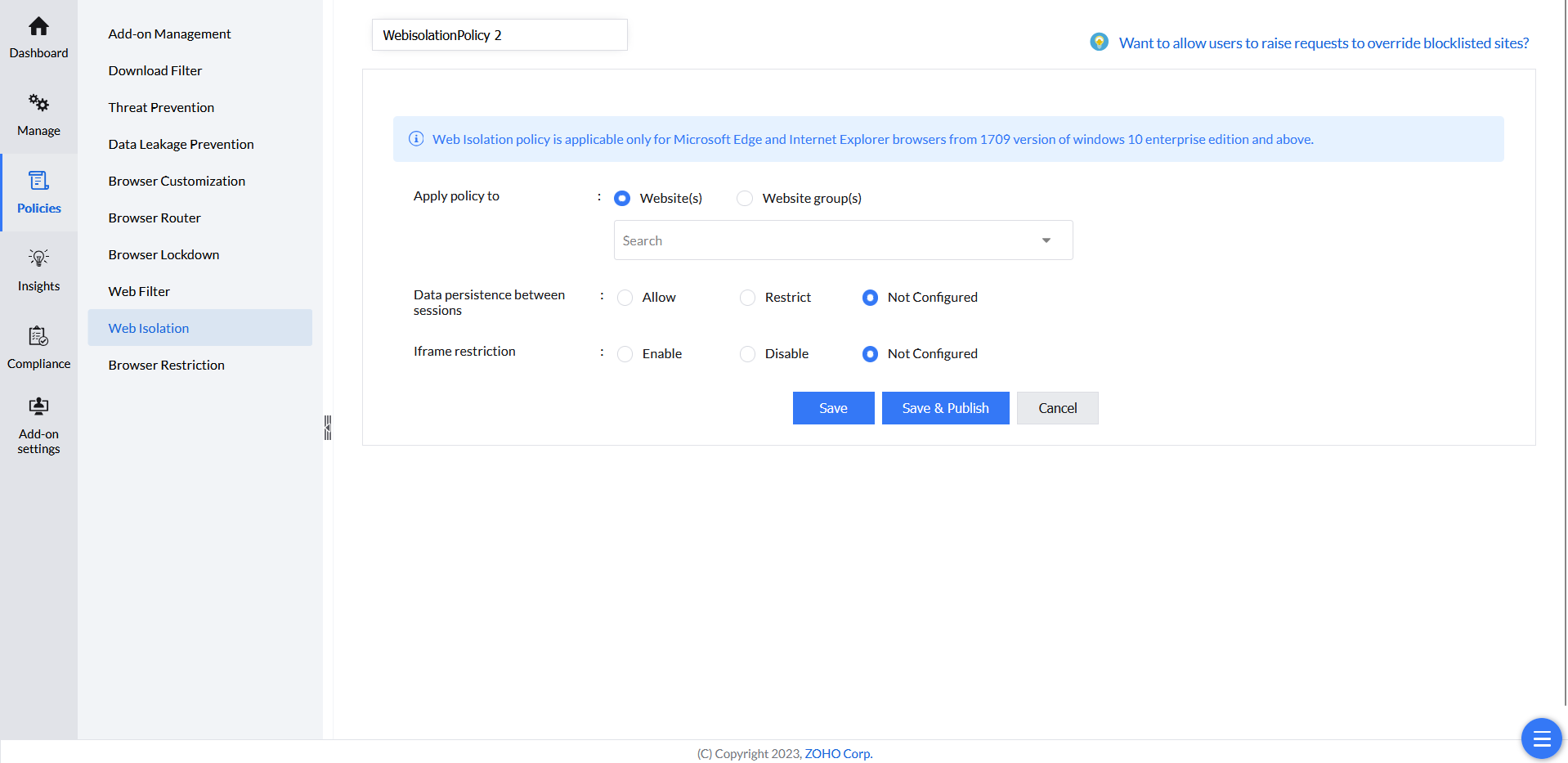
Create and deploy a Web Isolation policy
- Open the Browser Security Plus console and go to Browsers → Policies → Web Isolation.
- Click Create Policy.
- Give the policy a name.
- Enter the web applications or website groups that should open separately, in isolation.
- Click Allow for Data persistence between sessions to retain site data across different browsing sessions.
- Click Allow for iFrame Restriction to limit or prevent isolated sites from embedding content from other sources via iFrames.
- Click Save & Publish to save the policy.
- Deploy the policy with the computers or groups where web-application isolation should take place.