How to Configure MS SQL Server Database for the Central Server
Table of Contents
1. Prerequisites for the migration process
In the Microsoft SQL Server used for migration, make sure that the following conditions are satisfied:
- Hardware Requirements for the MSSQL Server
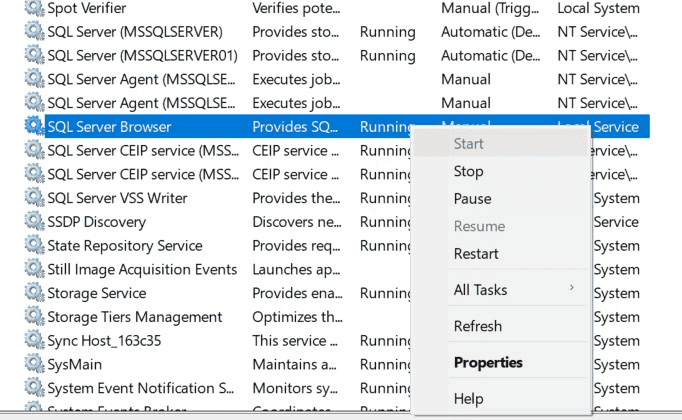
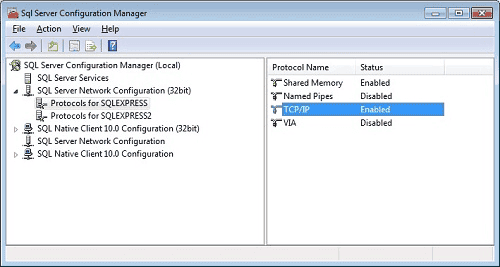
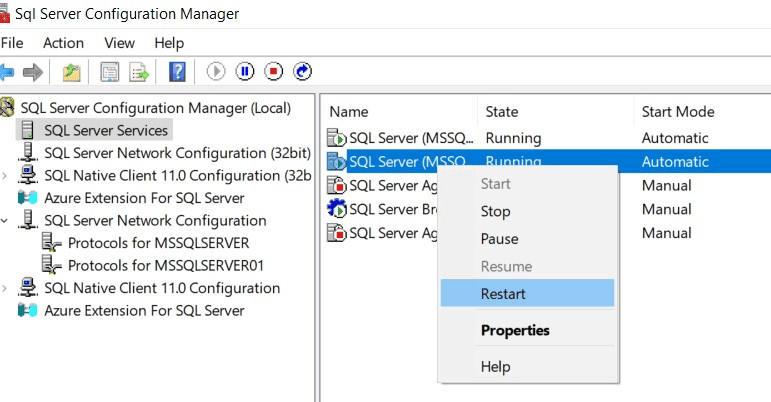
- The SQL Server browser must be up and running
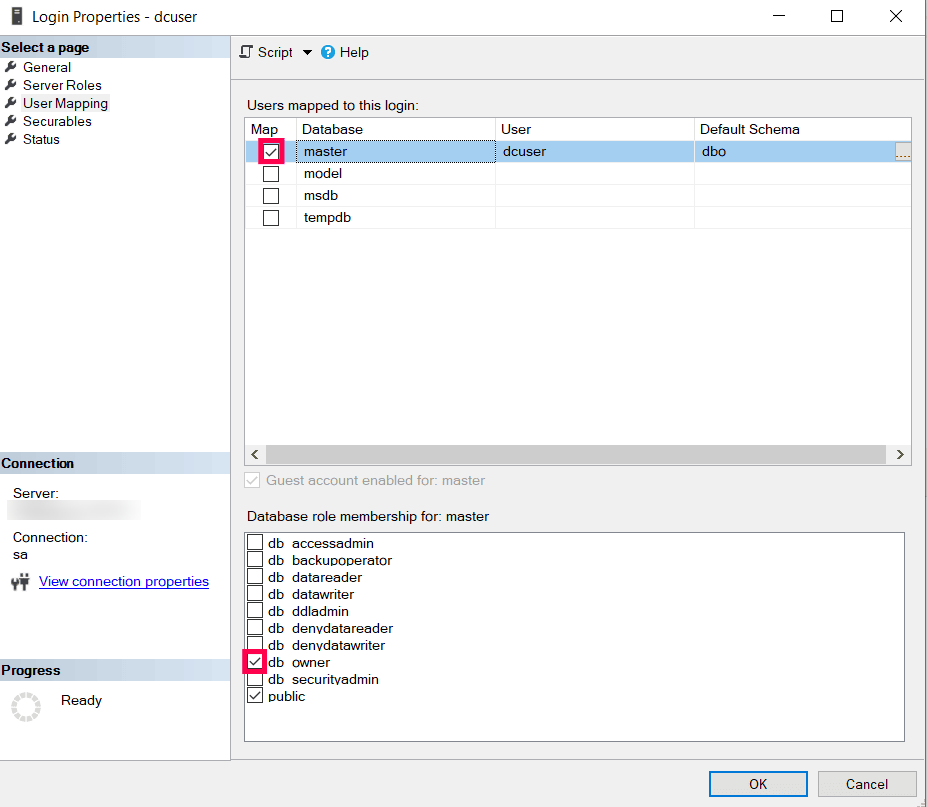
- Microsoft SQL Server access must be delegated to a user with db_creator and db_owner permissions at the database level
- For databases using the Full or Bulk-Logged recovery model, back up the transaction logs regularly to avoid data loss and prevent the transaction log from filling up. Learn more.
- The Central Server supports MSSQL 2008 or later versions.
- Use the Central Server’s backup method to ensure an uninterrupted workflow.
- This migration is applicable only for Central Server build 10 or above. Upgrade your server before proceeding.
- If you are using a Failover server, additional steps are required.
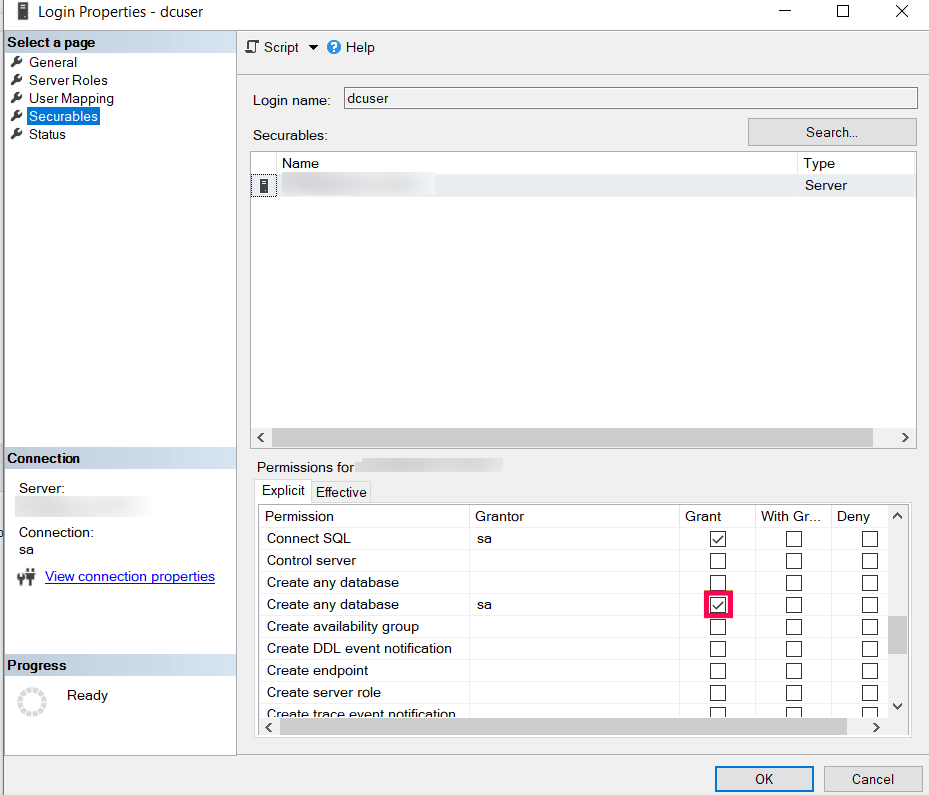
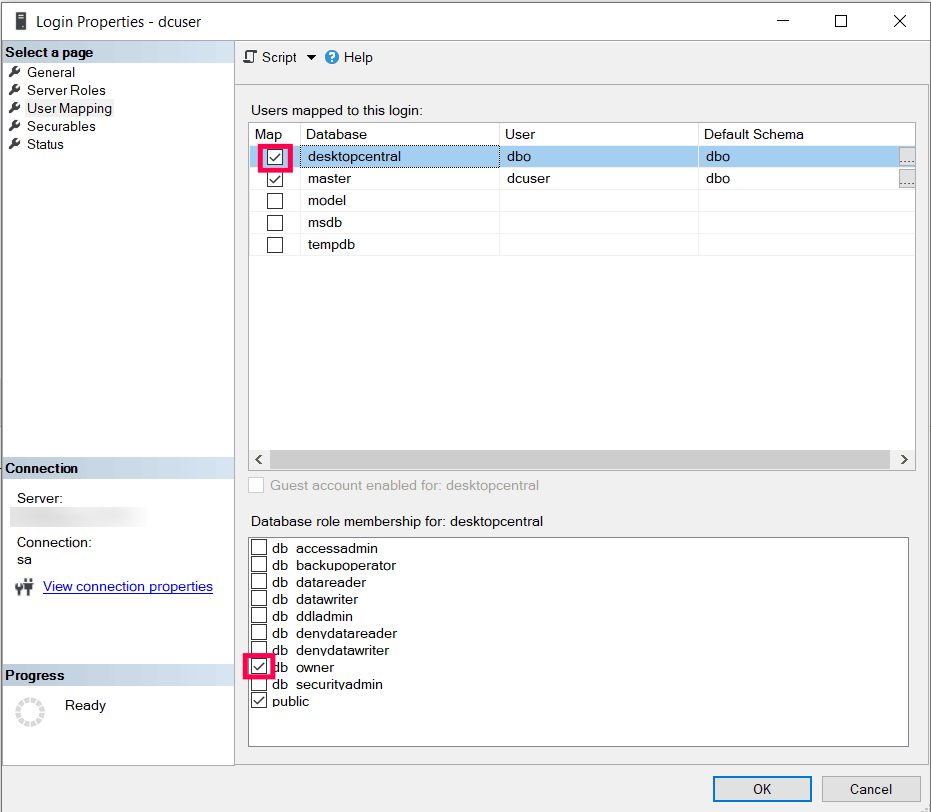
2. Change SQL Server Machine Name/IP in the Central Server (Without Migration)
To update the machine name or IP address in the Central Server without migrating the database:
- Stop the Central Server.
- Open the
database_params.conffile located at<UEMS_CentralServer>/conf. - Replace the old SQL Server IP/hostname with the new one:
url=jdbc:sqlserver://Old_Server_Name:SQLPort;DatabaseName=desktopcentralurl=jdbc:sqlserver://New_Server_Name:SQLPort;DatabaseName=desktopcentral
- Save the file and start the Central Server.
3. Migrate the Central Server Database from PGSQL to MSSQL
This section explains how to migrate the Central Server database from PostgreSQL (PGSQL) to Microsoft SQL Server (MSSQL). Follow these steps carefully to ensure a smooth migration:
- Stop the Central Server: Shut down the Central Server service.
- Run the Migration Script:
- Navigate to
<UEMS_CentralServer>/binand run thechangeDBServer.batscript. This launches the Database Setup Wizard. - Example:
C:\Program Files\UEMS_CentralServer\bin\changeDBServer.bat
- Navigate to
- Select SQL Server:
- Choose SQL Server as the database type.
- Enter the hostname where SQL Server is installed.
- Select the appropriate instance from the list.
- Authentication:
- Select either Windows Authentication or SQL Server Authentication and provide the necessary credentials.
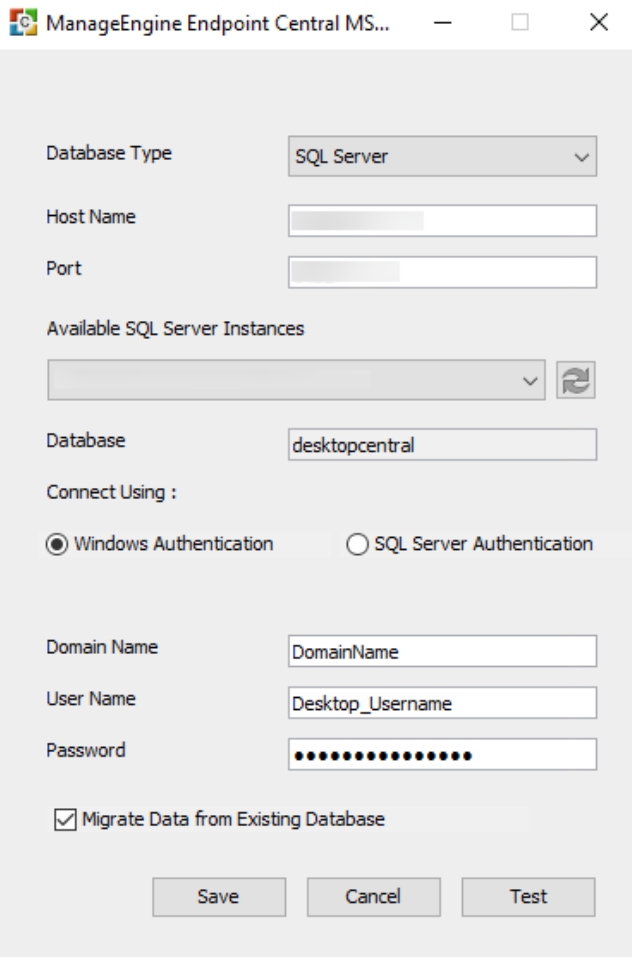
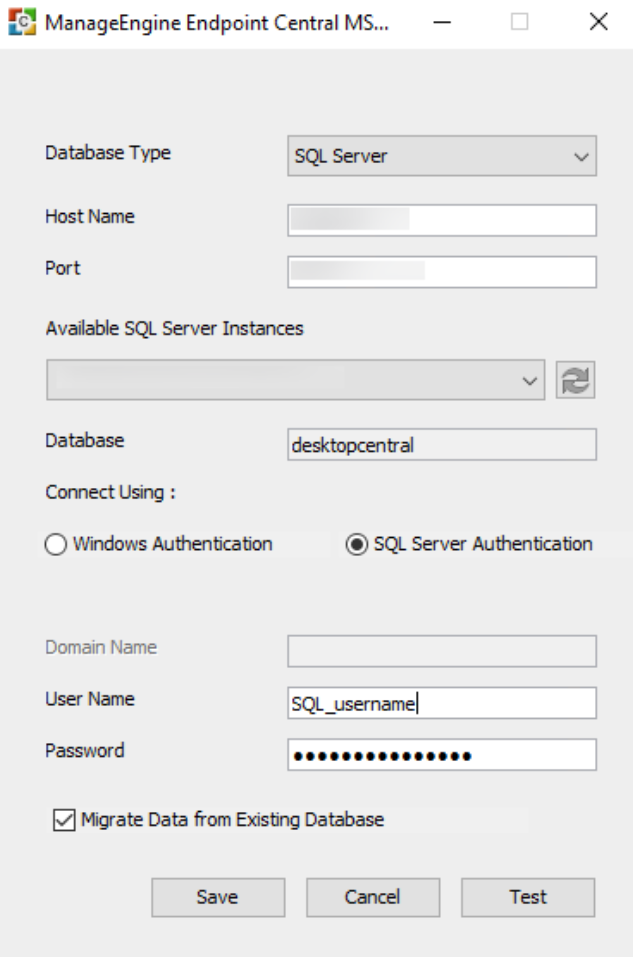
- Enable Data Migration:
- Ensure the "Migrate Data from Existing Database" checkbox is selected to migrate data from your current database to the new MSSQL database.
- Test Connection:
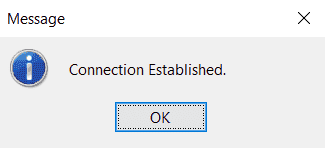
- Click the Test button to verify the connection. A pop-up message will confirm the connection is established.
- Complete Configuration:
- Click Save to complete the SQL Server configuration.
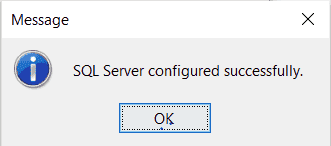
- A confirmation message will indicate successful SQL Server setup and data migration.
- Note: Migration duration depends on the amount of data and machine performance. Please wait until completion.
- Additional Steps for Failover Server:
- Stop both the Primary and Secondary Servers.
- Copy the
database_params.confandServer.starttimefiles from theconffolder. - Move them to the corresponding location on the Secondary (failover) server.
- Start the Primary Server first, followed by the Secondary Server.
Once migration is complete, you can begin using the Central Server with the new configuration.
To configure SQL Server Always On functionality, refer to: SQL Server Always On
Frequently Asked Questions (FAQ)
How to find the Port Number?
What should you do if the database migration fails midway?
What if the migration is stuck at 99%?
What happens if "Enable Data Migration" is not selected?
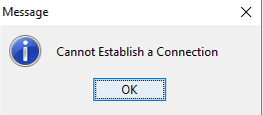
What to do if you see "Cannot Establish a Connection"?
Can I migrate the database while the product is running?