

On this page
In the digital age, every interaction becomes a thread in the vast web of personal data. With privacy increasingly under scrutiny, the balance of power shifts towards individuals reclaiming control over their data. Transparency, trust, and consent are not just ideals but essential elements, redefining how organizations respect and protect the sanctity of personal information.
The role of consent management in data privacy
Consent management is more than a check box on a digital form—it is a commitment to ethical data handling. At its core, it involves obtaining, managing, and complying with user consent for the collection and use of personal data.
In an era of increasing reliance on data-driven technologies, businesses must prioritize consent processes to ensure compliance with laws like the DPDP Act while fostering user trust. By empowering individuals—referred to as Data Principals under the DPDP Act—organizations create a foundation for transparent, respectful, and meaningful interactions.
Transparency and user empowerment
Consent management places control firmly in the hands of users. It enables them to decide how their data is used, for what purpose, and by whom. This aligns seamlessly with the DPDP Act, which ensures that the rights of Data Principals in India are safeguarded.
Under the Act, consent must meet specific requirements, including being:
- Freely given
- Specific to the purpose
- Precise and unambiguous
- Fully informed
- Unconditional
Individuals also retain the right to withdraw consent at any time, ensuring their personal data remains under their control. Organizations must make withdrawing consent as easy as providing it, fostering trust and accountability.
Building a privacy-first culture
To embed privacy into their DNA, organizations must adopt two key principles:
- Data minimization: Collect and process only the personal data necessary for achieving a specific purpose. Avoid excessive data collection.
- Employee training and accountability: Train employees on privacy best practices and implement systems for monitoring compliance.
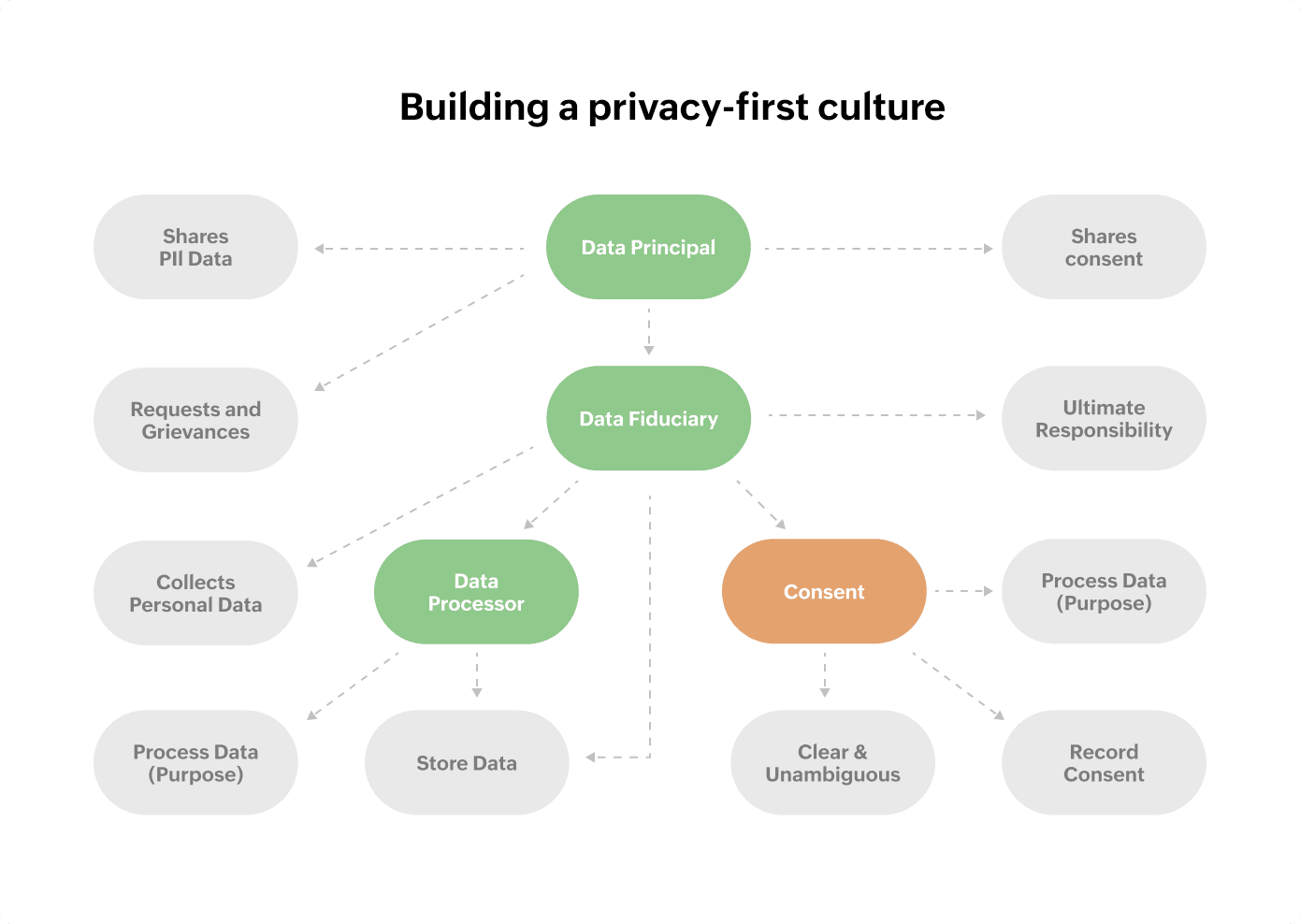
The above image depicts functions of the Data Fiduciaries, Data Processors, and Data Principals, and how consent is managed between them.
Legal foundations of consent under the DPDP Act
Under Section 6 of the DPDP Act, affirmative consent is at the heart of ethical data handling. It requires users to understand exactly what they are consenting to, ensuring that approval is tied to the specific intended purpose of data processing. Coercion of any kind is strictly prohibited, and organizations are required to issue clear, detailed notices each time consent is requested.
Even if consent was obtained before August 11, 2023 (the day the Act received Presidential assent), businesses must ensure compliance with new provisions, including clear notices and transparency. These notices must clarify:
- How the data will be used
- Who will process the data
- User rights, including the ability to withdraw consent
Introducing the DEPA: A game-changer in data empowerment
The data empowerment and protection architecture (DEPA) is a revolutionary framework introduced by NITI Aayog to enhance consent-based data sharing. By integrating DEPA into their operations, businesses can align their processes with the requirements of the DPDP Act while empowering users with greater control over their data.
Key features of DEPA:
- Granular consent management: The DEPA allows users to share specific data securely with authorized entities, enabling more nuanced data control.
- Role of Consent Managers: Under the DEPA, Consent Managers act as intermediaries, ensuring data sharing only occurs with explicit, informed, and revocable consent.
- Transparency and accountability: Detailed consent logs maintain records of approvals to share data, fostering trust and legal compliance.
- Interoperability: The DEPA framework supports seamless data sharing across platforms, eliminating data silos and enhancing user agency.
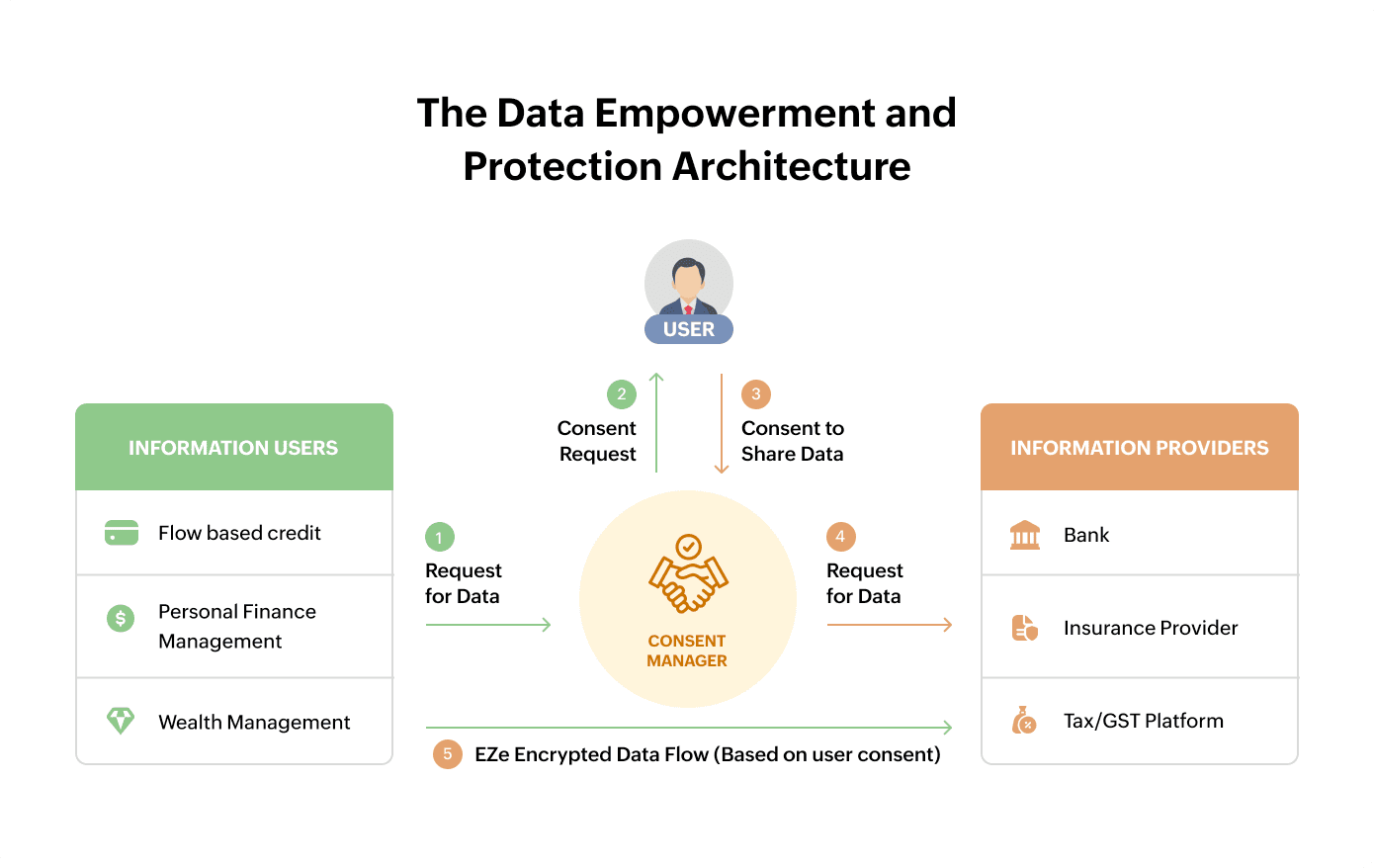
The image depicts how the DEPA empowers users to manage their data.
- A wealth management company (Data Processor) wants personal information from the user (Data Principal) to manage their investment portfolio.
- To access this data, the wealth management firm must first receive the user's consent. The Consent Manager acts as the intermediary between the user, the wealth management company, and the bank or mutual fund house (Data Fiduciary).
- The Consent Manager requests and then records the user's consent to obtain and share their data.
- The Consent Manager then requests the specific data from the Data Fiduciary.
- The Data Fiduciary then applies relevant encryption measures to share the data with the Data Processor. This way, data sharing takes place responsibly and with the full consent of the user.
Benefits of the DEPA in the DPDP era:
- Empowers individuals with tools to manage, audit, and withdraw consent
- Simplifies consent management processes for organizations
- Provides scalable solutions for sectors such as healthcare, finance, and e-commerce
Consent Managers: The backbone of transparent data handling
Under the DPDP Act, Consent Managers play a vital role in facilitating ethical data practices. Consent Managers are intermediaries that help individuals manage their consent for sharing personal data with organizations, ensuring transparency, security, and control.
Key responsibilities of Consent Managers:
- Registration and compliance: Consent Managers must register with the data protection authority (DPA) of India and comply with the DPDP Act principles.
- Granular consent collection: Provide clear, straightforward information about data collection, its purpose, and the entities processing it.
- Transparency: Maintain detailed records of user consent while safeguarding data from misuse.
- Grievance redressal: Establish mechanisms to address user concerns about consent or data handling promptly.
Data Protection Officers: Guardians of compliance
For significant Data Fiduciaries, the appointment of a Data Protection Officer (DPO) is mandatory under the DPDP Act. A DPO is a professional responsible for ensuring that an organization complies with data protection laws and regulations. DPOs play a critical role in ensuring compliance and fostering user trust.
Key responsibilities of a DPO:
- Oversight and accountability: Monitor compliance with the DPDP Act and oversee consent management processes.
- Grievance redressal: Act as the main point of contact for Data Principals, addressing concerns related to privacy and data handling.
- Communication with authorities: Facilitate interaction between the organization and the DPA.
- Employee training: Promote awareness and accountability within the organization.
Requirements for appointing a DPO:
- The DPO must be based in India.
- They should report directly to the Board of Directors or an equivalent governing body.
- Their contact details must be accessible to Data Principals for transparency.
Implementing consent management mechanisms may seem complex, but the benefits far outweigh the challenges. It fosters trust by enabling users to take control of their personal data and ensures businesses remain compliant with evolving data protection laws.
For businesses, integrating frameworks like the DEPA, appointing competent DPOs, and leveraging the expertise of Consent Managers is critical to building a privacy-first culture. These efforts will not only ensure compliance with the DPDP Act but also position organizations as ethical and trustworthy entities.
Related solutions
ManageEngine AD360 is a unified IAM solution that provides SSO, adaptive MFA, UBA-driven analytics, and RBAC. Manage employees' digital identities and implement Zero Trust and the principles of least privilege with AD360.
To learn more,
Sign up for a personalized demoManageEngine Log360 is a unified SIEM solution with UEBA, DLP, CASB, and dark web monitoring capabilities. Detect compromised credentials, reduce breach impact, and lower compliance risk exposure with Log360.
To learn more,
Sign up for a personalized demoThis content has been reviewed and approved by Ram Vaidyanathan, IT security and technology consultant at ManageEngine.