Trusted by leading banks and financial institutions worldwide
2565 Organisations
Automated PCI DSS reports
30+
Sub-requirements covered
80+
Coverage achieved
What is PCI DSS compliance?
PCI DSS (Payment Card Industry Data Security Standard) is a global framework that ensures the secure handling of payment card data through encryption, access control, and continuous monitoring to safeguard cardholder information. PCI DSS demands ongoing, provable oversight across your Cardholder Data Environment (CDE), from firewalls and access logs to file integrity and threat response. Managing these requirements manually can be complex and error-prone, making automated compliance solutions essential for staying audit-ready.
Comprehensive coverage for PCI DSS requirements
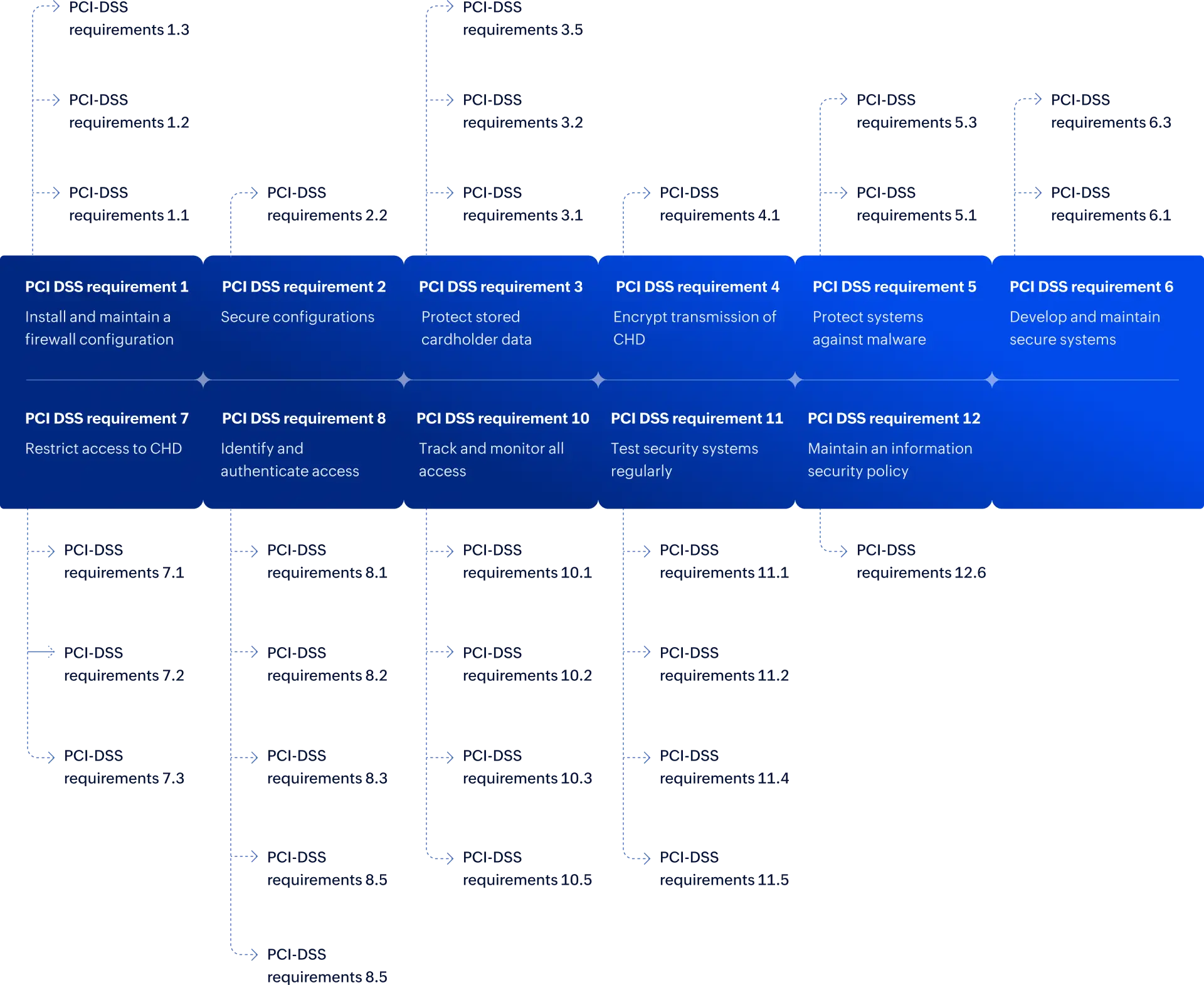
Log360 maps directly to more than 80% of PCI DSS v4.0 technical controls through unified log collection, correlation, and reporting. The coverage breakdown is illustrated below.
Note: Log360 addresses the technical and IT security monitoring aspects of PCI DSS. Administrative policies, physical safeguards, and training programs require separate organizational processes.
Why choose Log360 for PCI DSS compliance?
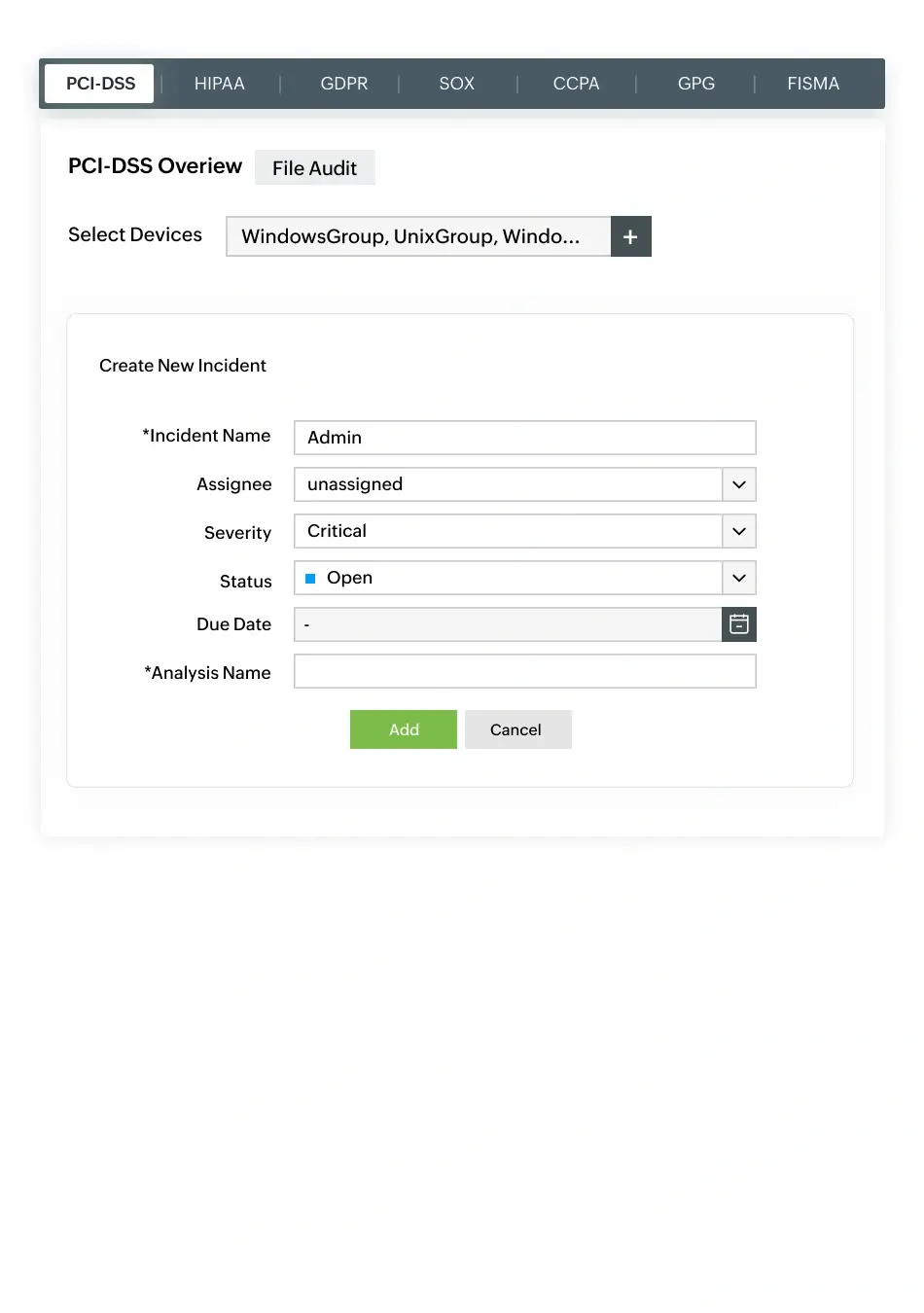
Monitor the entire CDE perimeter
Protect critical files from tampering
Gain visibility into privileged users
Audit-ready PCI DSS reports
Monitor the entire CDE perimeter
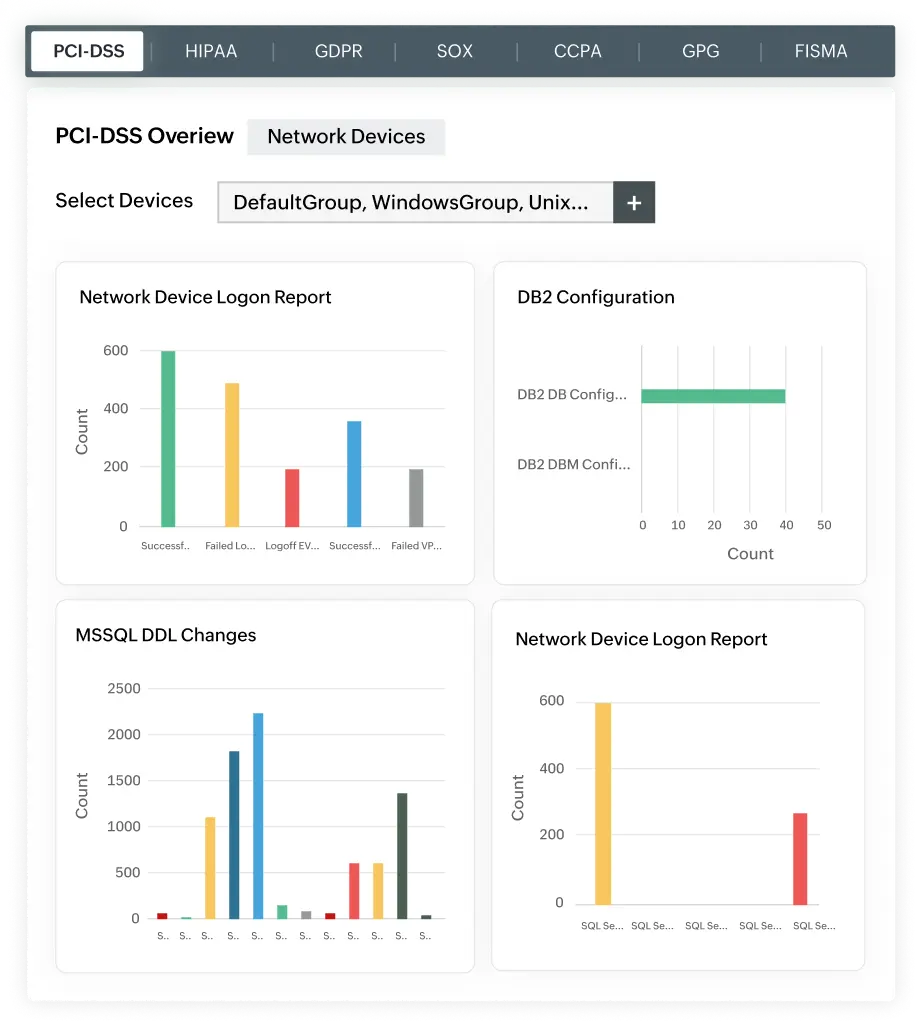
Go beyond simple logs: Log360 actively monitors your network security controls and your CDE to prevent unauthorized access to cardholder data. It consolidates and analyzes logs from firewalls, servers, databases, and applications across both on-premises systems and cloud environments. With advanced correlation and behavioral analytics, Log360 provides real-time alerts on suspicious login attempts, firewall policy changes, configuration changes, and anomalies that could signal a potential breach.
Requirements addressed:
PCI DSS Requirement 1: Install and maintain network security controls
PCI DSS Requirement 10: Track and monitor all access to network resources and cardholder data
PCI DSS Requirement 11: Regularly test security systems and processes
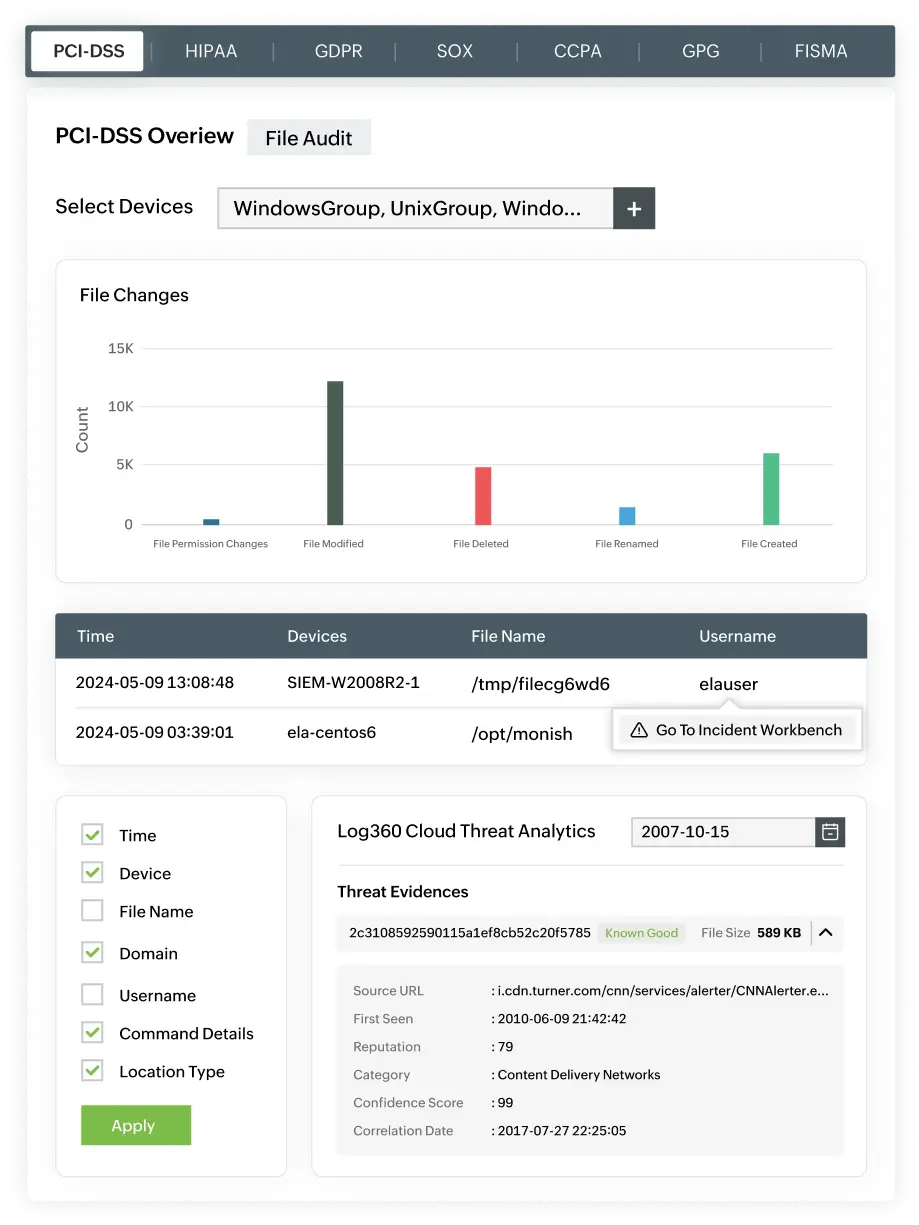
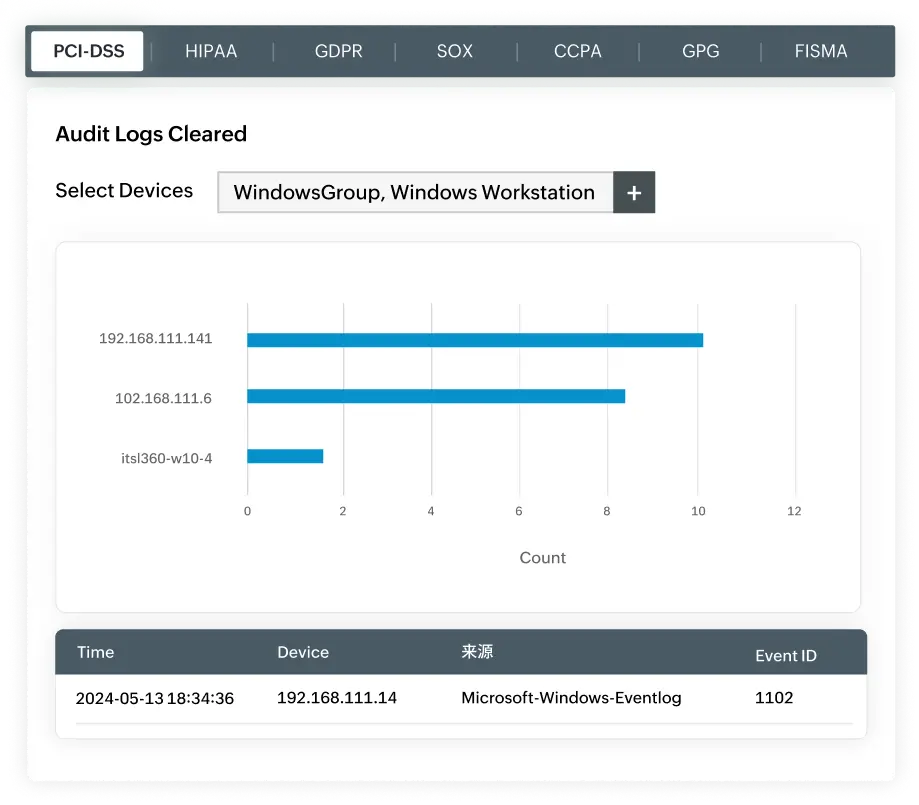
Stop unauthorized modifications before they put cardholder data at risk. Unauthorized file changes such as configuration edits, deleted logs, or altered permissions are often the first signs of a breach. Log360’s real-time File Integrity Monitoring (FIM) tracks every file modification across systems and directories that handle cardholder data, giving you clear visibility into who made the change, when it happened, and where it occurred. With automated alerts, Log360 helps you prevent insider threats and unauthorized access before they escalate.
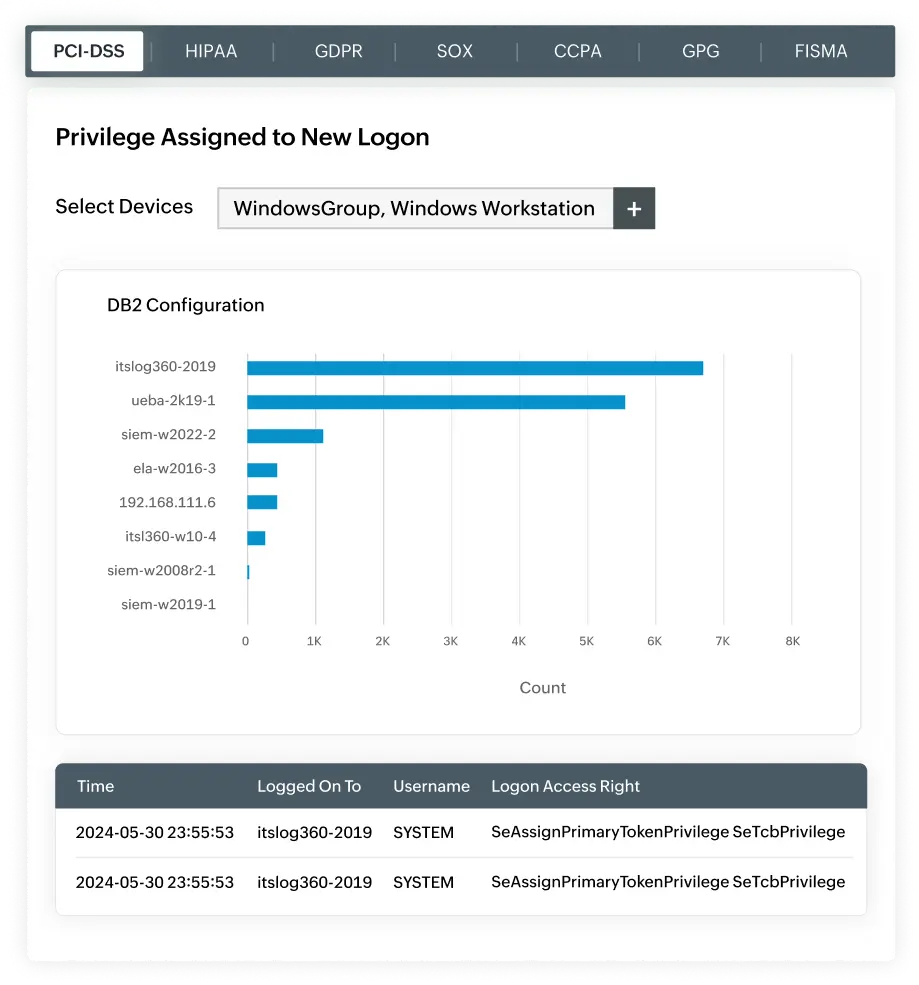
Privileged accounts can pose a major risk to cardholder data if misused or compromised. Log360 mitigates this risk by monitoring privileged user activities in real time, including logins, file access, configuration changes, and permission modifications. Each action is recorded in detail, creating a comprehensive audit trail that supports role-based access control and accountability. Any unauthorized or suspicious activity is instantly flagged for investigation, helping you to prevent internal misuse and maintain compliance with PCI DSS.
Requirements addressed:
PCI DSS Requirement 7: Restrict access to cardholder data by business need to know
PCI DSS Requirement 8: Identify and authenticate access to system components
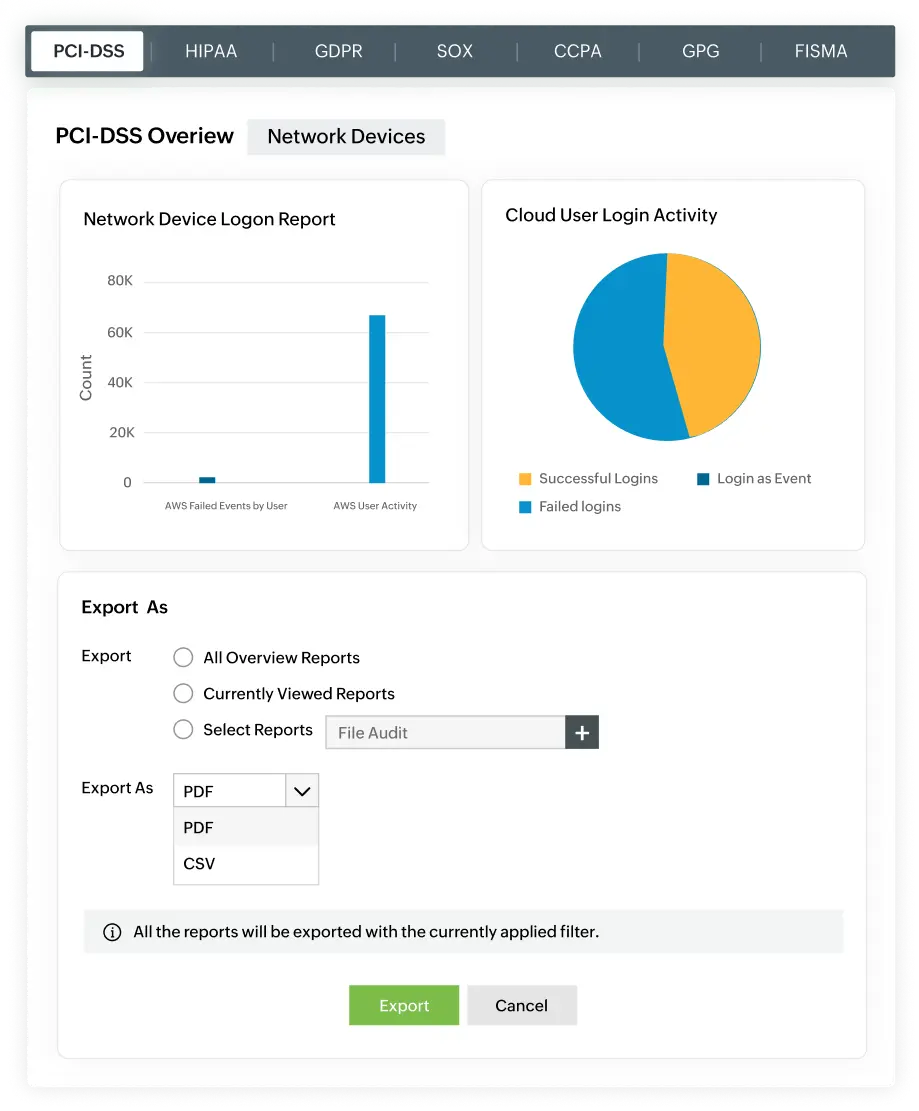
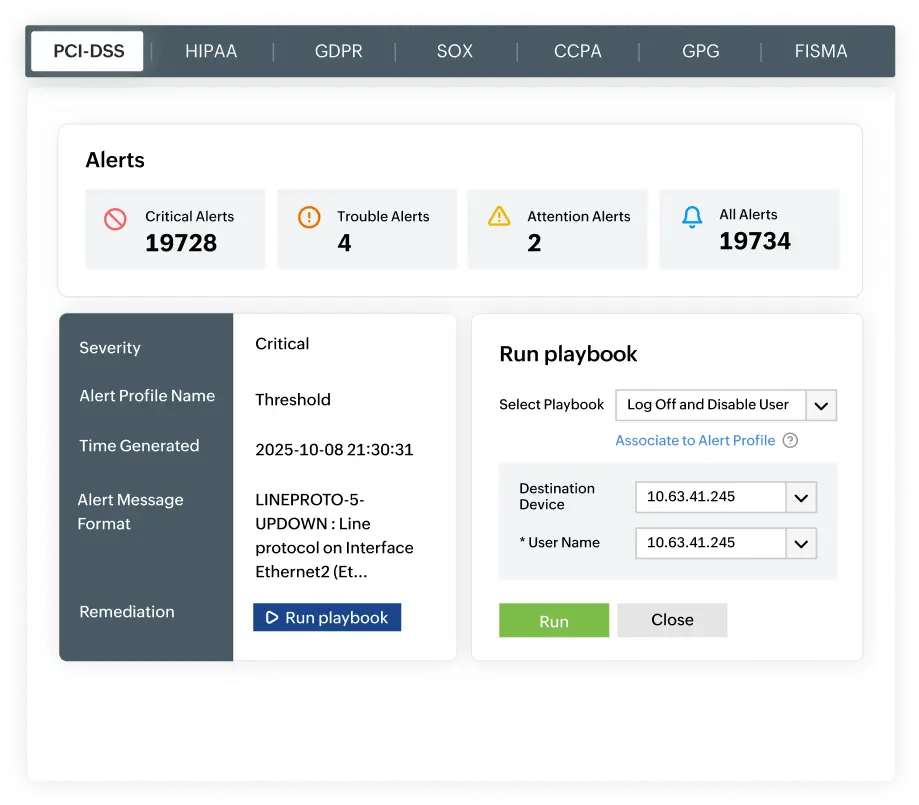
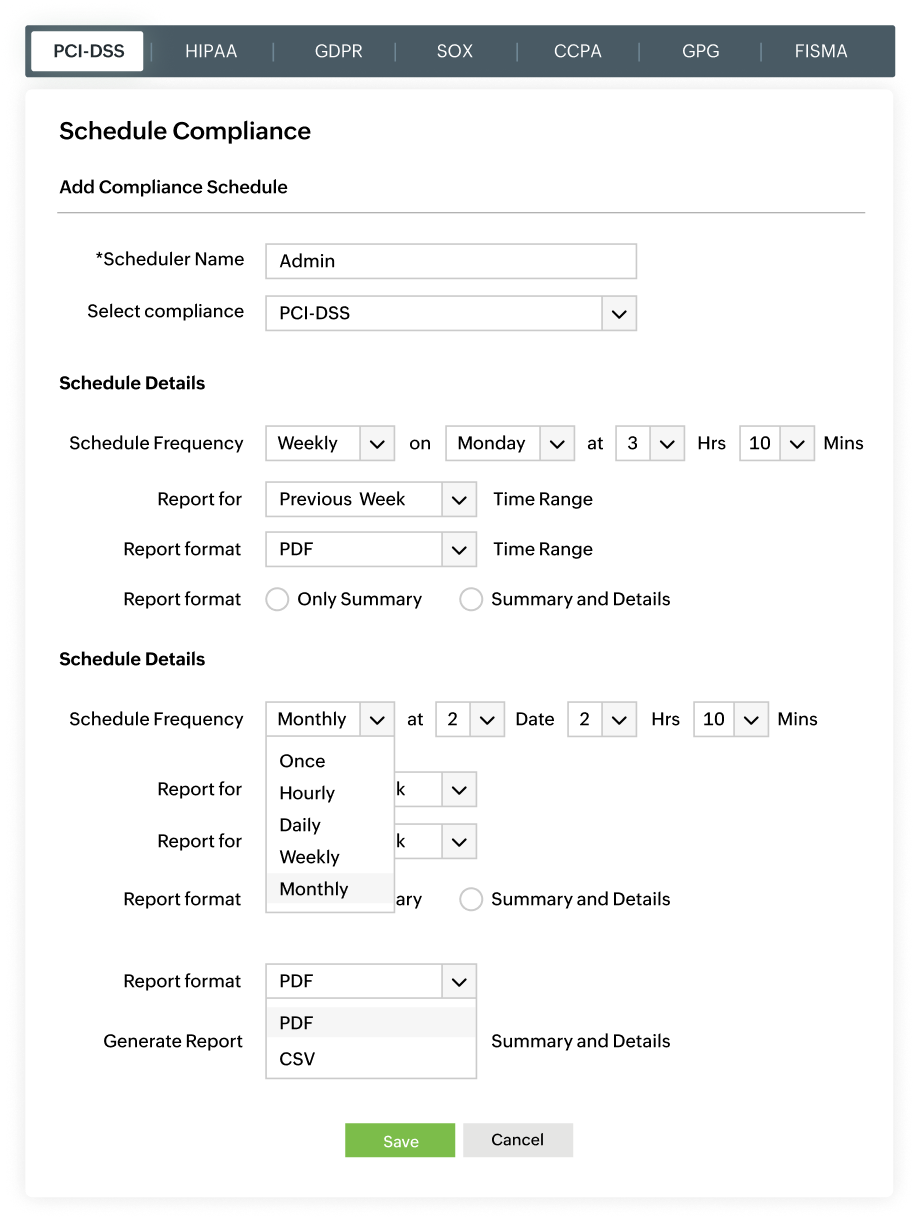
Maintaining PCI DSS compliance doesn’t have to be complex or time-consuming. Log360 simplifies the process with pre-built PCI DSS v4.0 reports mapped to all 12 requirements, helping you continuously monitor compliance posture, identify gaps, and stay audit-ready. Its automated reporting framework reduces audit preparation time, ensures data integrity, and delivers the transparency auditors expect. You can easily generate, customize, and share reports, eliminating the need for manual effort.
Non-compliance with PCI DSS can result in hefty fines, legal liabilities, and suspension of card payment privileges. Payment card brands and banks may impose penalties ranging from $5,000 to $100,000 per month, depending on the severity and duration of the violation. Beyond financial losses, non-compliant businesses are more likely to experience data breaches that expose cardholder information, leading to legal liabilities, lawsuits, and reputational damage.
Cyber insurers are increasingly tightening coverage terms for businesses that fail to meet PCI DSS standards, leaving non-compliant organizations vulnerable to uncovered breach costs. By ensuring continuous monitoring, audit readiness, and incident detection, ManageEngine Log360 helps organizations maintain PCI DSS compliance, strengthen security posture, and minimize financial and operational risks associated with non-compliance.
The Log360 Difference
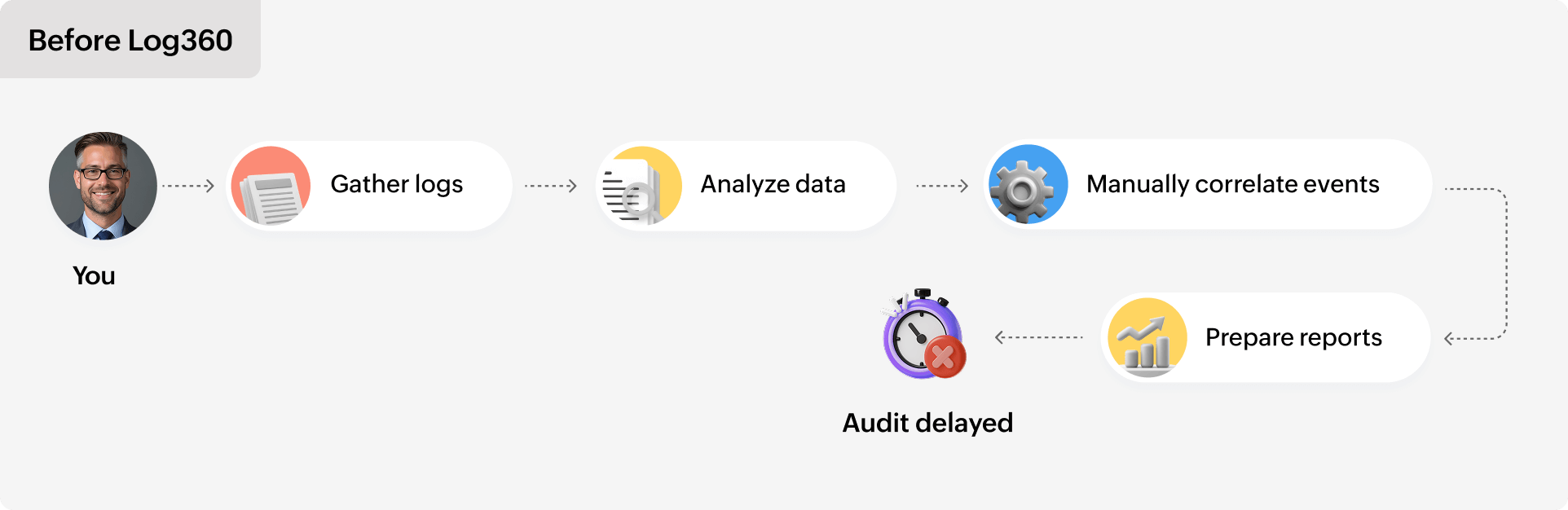
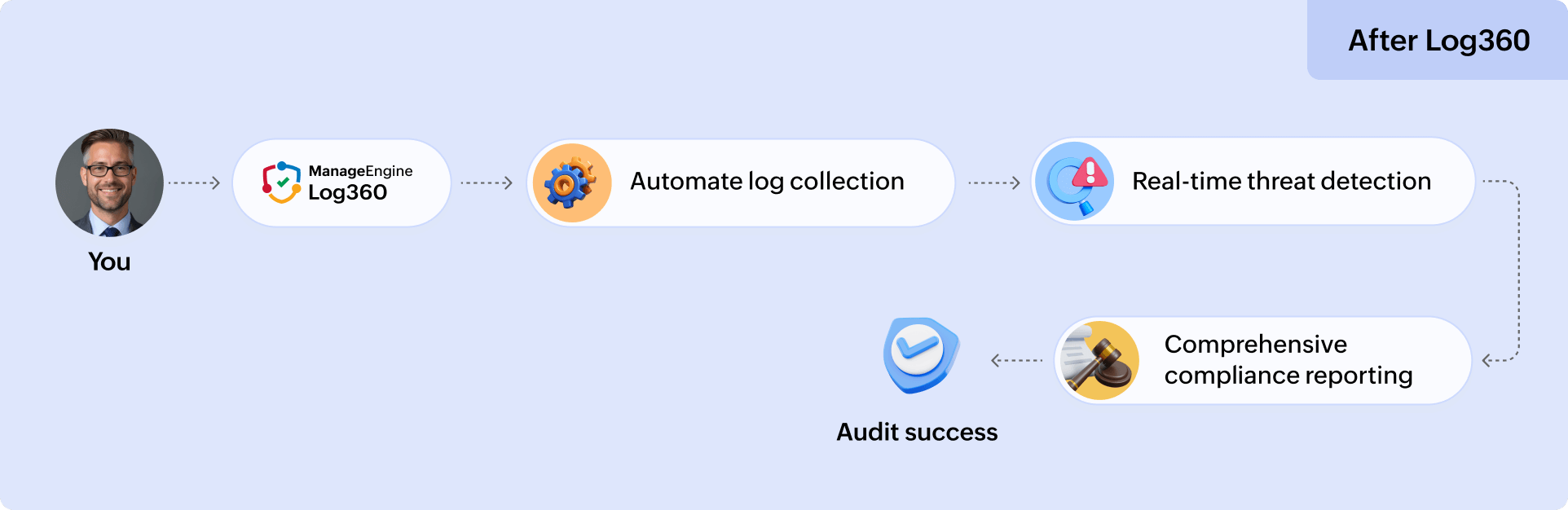
Log360 streamlines your PCI DSS compliance process by automating data collection, speeding up audits, reducing manual errors, and maintaining continuous security compliance effortlessly.
Other features of Log360
Integrated compliance management
Monitor your compliance posture in real time. Log360 correlates logs from users, systems, and network devices to uncover hidden patterns that may indicate compliance gap or security threats, making it easier to demonstrate compliance to auditors.
Learn more
Breach notification
Receive instant alerts whenever compliance violations occur in your network. Log360 continuously scans your environment in real time to detect and notify you of potential breaches, helping you mitigate risks before they escalate into penalties.
Learn more
Forensic analysis
Investigate incidents in depth with advanced forensic capabilities. Use intuitive search, filtering, and correlation options to trace events, identify root causes, and demonstrate compliance through clear audit trails.
Learn more
Tamper-proof log retention
Meet compliance log retention mandates with secure, tamper-proof storage. All logs are encrypted, hashed, and timestamped to preserve integrity and support long-term audit readiness.
Join the countless banks and financial institutions relying on Log360 for seamless PCI DSS compliance
After evaluating multiple SIEM tools, Log360 stood out as the ideal choice. It’s affordable, easy to use, and makes PCI DSS compliance effortless, allowing our team to focus on being proactive against threats and securing cardholder data.
PCI DSS compliance means following the Payment Card Industry Data Security Standard, a global framework designed to secure payment card information. It sets rules for protecting cardholder data during storage, processing, and transmission. By becoming PCI DSS compliant, organizations reduce the risk of data breaches, payment fraud, and penalties from card brands.
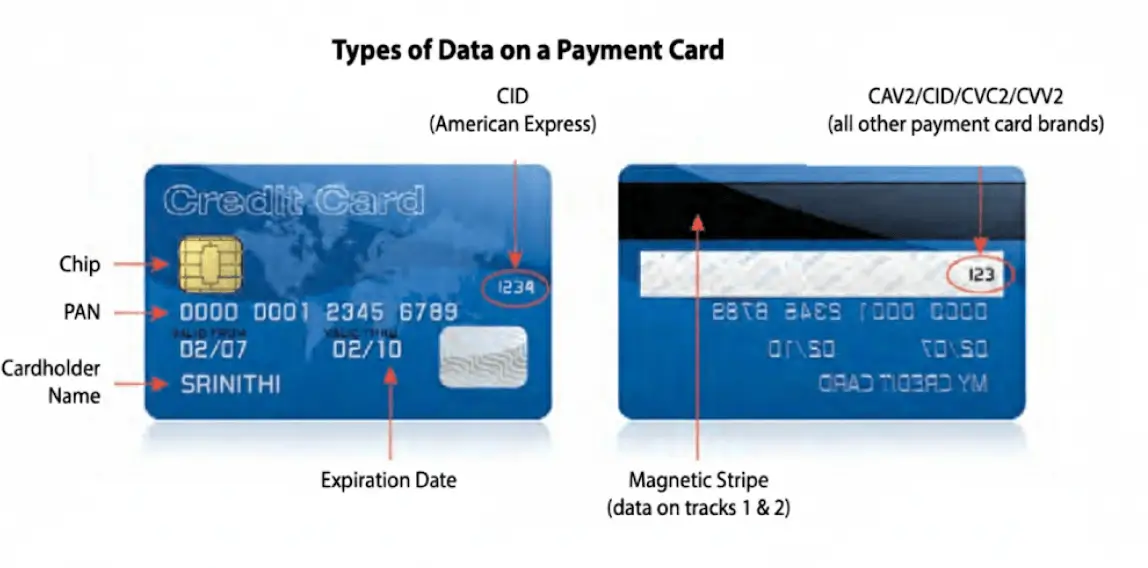
PCI DSS defines two categories of payment account data:
Cardholder data (CHD): This includes the primary account number (PAN), cardholder name, expiration date, and service code.
Sensitive authentication data (SAD): This includes full track data from a magnetic stripe or chip, card verification codes (CAV2/CVC2/CVV2/CID), and PINs or PIN blocks.
PCI DSS compliance is mandatory for any organization that stores, processes, or transmits cardholder data. This requirement applies to all entities that handle credit, debit, or prepaid card transactions such as:
Merchants accepting card payments (online or offline)
Payment gateways and processors
Banks and financial institutions
Service providers handling payment data
Compliance applies regardless of business size. Even small e-commerce stores processing a few thousand transactions must meet PCI DSS requirements.
PCI DSS requirement 1: Install and maintain a firewall configuration to protect cardholder data.
PCI DSS requirement 2 : Do not use vendor-supplied defaults for system passwords and other security parameters.
PCI DSS requirement 12 : Maintain a policy that addresses information security for all personnel.
PCI DSS defines four compliance levels based on the number of card transactions a business processes annually.
Level 1: For organizations processing over 6 million transactions per year; requires an on-site QSA audit and a Report on Compliance (ROC).
Level 2: For businesses handling 1–6 million transactions annually; requires a Self-Assessment Questionnaire (SAQ) and quarterly vulnerability scans.
Level 3: For merchants processing 20,000–1 million e-commerce transactions; requires an SAQ and quarterly scans.
Level 4: For merchants processing fewer than 20,000 e-commerce or up to 1 million card-present transactions; requires an SAQ, with validation varying by acquiring bank.
Regardless of level, all merchants must meet the same PCI DSS security standards to protect cardholder data and maintain compliance.
PCI DSS v4.0 is the recent version of the Payment Card Industry Data Security Standard, introduced in 2022 to address modern payment security challenges. This update strengthens existing requirements by emphasizing multi-factor authentication, enhanced encryption, and continuous monitoring. It also provides organizations with greater flexibility to implement customized security approaches, particularly for cloud and hybrid environments. Another major shift in v4.0 is the move toward risk-based validation and a stronger focus on ongoing compliance rather than point-in-time assessments.
Resources you might be interested in
EBOOK
Achieve PCI DSS v4.0 compliance with SIEM
Download now
CHECKLIST
PCI DSS compliance checklist
Access the checklist
VIDEO
Six crucial SIEM functions for complying with the PCI DSS
Watch now
EBOOK
PCI DSS Resource Kit for security monitoring
Explore now
Compliance ManageEngine adheres to
Our solutions undergo rigorous third-party audits to ensure compliance with the same global security and privacy standards we help you achieve.
Stop chasing alerts. Start detecting threats.
Explore how Log360 can unify your security analytics, reduce noise, and provide clear, actionable insights.