Protecting data in the cloud: Risks, responsibilities, and best practices
Cloud storage feels like an ocean—vast, endless, and deeper than Everest is tall. While it feels like there is limitless space for your data, the reality is not so harmonious. It's truly a case of survival of the fittest. With the right policies and data protection practices in place, your data remains safe. If not, it could either be lost in the abyss as dark data or end up as the next meal of a great white.
That’s why understanding the importance of data protection in the cloud—what it entails for your organization, and how you can secure it—is vital. By the end of this blog, you'll have a solid understanding of cloud data protection.
What is cloud data protection?
Cloud data protection is the practice of safeguarding the data within cloud storage environments by upholding the Confidentiality, Integrity, and Availability (CIA) triad. It ensures that your data remains accessible when needed, shielded from exposure, and protected from unauthorized changes that could compromise its integrity.
The cost of not protecting cloud data for your organization
In the past year alone, three in five organizations have reported security incidents related to public cloud usage. This is a stark indication that cloud security is evolving into a growing concern and underscores the importance of protecting cloud data. Key challenges include:
Data breaches: Around 82%of data breaches involve cloud-stored data. Attackers often exploit vulnerabilities such as weak access controls, misconfigurations, and insecure APIs to gain access to sensitive data.
Elevated attack surface: Migrating sensitive data to the cloud widens your organization’s attack surface. With data spread across multiple platforms, attackers have more opportunities to exploit weak access controls and misconfigurations, making consistent security more difficult to maintain.
Shadow IT: Employees accessing unvetted cloud apps to store or process your organization's data poses a significant threat, as these do not fall under the radar of your network perimeter, and the policies to regulate cloud usage do not apply to them.
Compliance: Complying with regulations for cloud data is particularly tricky, as it requires shared effort from both your organization and the Cloud Service Provider (CSP). Always check with your CSP regarding their compliance strategy to ensure alignment.
These challenges that come with cloud data storage slow the rate at which organizations adopt cloud storage. Fortunately, with appropriate security measures, you do not have to be one of those.
In the following sections, we'll explore how to safeguard your data and make the most out of cloud storage environments.
Who is responsible for cloud data protection?
Protecting your data in the cloud is like riding a tandem bicycle—it requires both your cloud service provider and your organization to move in sync, each accountable for different aspects of the cloud security. The shared responsibility model clearly outlines the aspects for which you and your CSP are individually responsible. Based on the type of cloud service, this division of responsibility can vary, as shown in the diagram below:
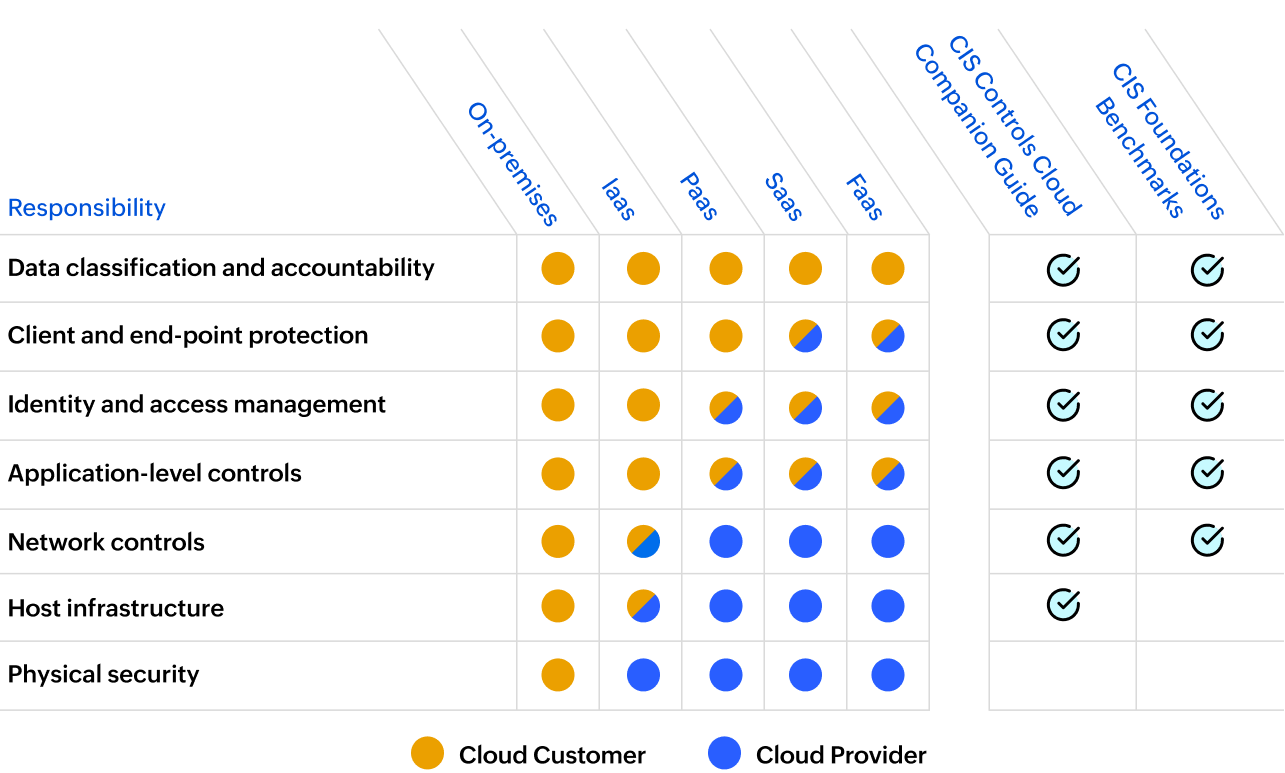
While this is a generally accepted model, the exact responsibilities can vary from vendor to vendor, so it is best to check with your CSP well in advance.
How to protect data in the cloud
The primary objective of cloud data protection is to ensure the CIA triad. Here's how you could achieve this:
Keeping your data confidential: The first step to ensuring cloud data confidentiality is discovering and classifying your data—knowing where it’s stored and how sensitive it is. Once identified, apply controls like data masking and encryption to ensure that your data remains confidential.
Inculcating integrity onto your sensitive data: Threats aren’t always external—even an unsuspecting insider can compromise data integrity. Strong authentication and granular access controls help manage who can log in and what sensitive data they can access. Deploying a cloud-enabled DLP solution further strengthens integrity by monitoring data flows, detecting anomalies, and preventing potential leaks.
Ensuring your data is available: The final segment of the CIA triad focuses on sure data is always accessible to authorized users. Unplanned outages—from cloud service disruptions, misconfigurations, and cyberattacks—can interrupt business operations. Leveraging cloud-native backups and disaster recovery plans help maintain access to critical data even during disruptions.
Enabling the cloud as a haven for your data
Storing your data in the cloud comes with a wide range of threats that could have a devastating impact on your organization. Simultaneously, not adopting cloud storage means missing out on the scalability it offers. ManageEngine DataSecurity Plus helps you resolve this conundrum by identifying the cloud applications your employees use, controlling users from logging onto specific applications, locating where your data resides, preventing exposure through file uploads, USBs, and email, monitoring how your data is accessed, and enabling instant response to potential security incidents.