
Discover, analyze, and protect sensitive data.
- Locate all personal data
- Classify files based on sensitivity
- Comply with IT regulations
- Analyze files and permissions
Locate all personal data
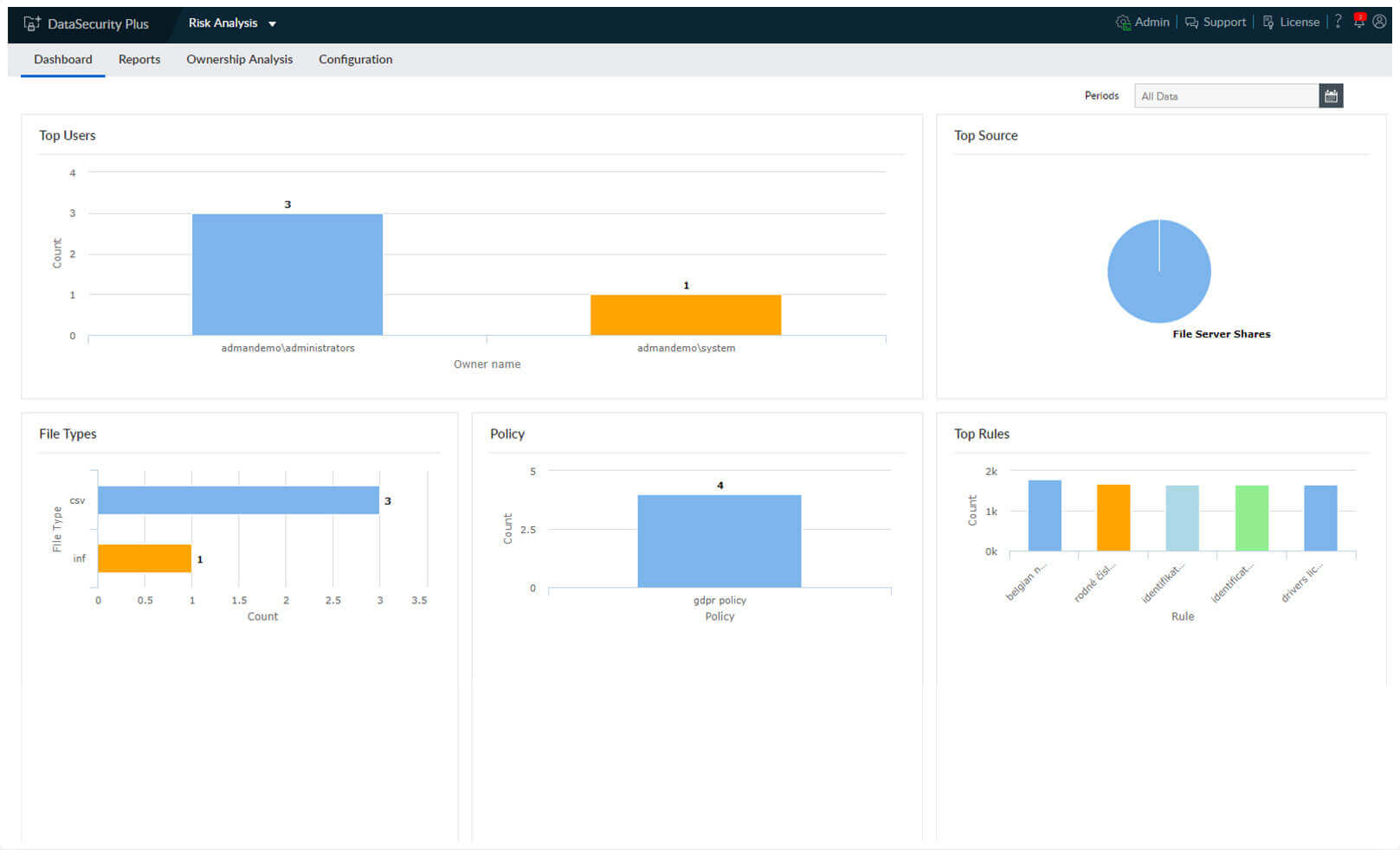
- Monitor enterprise storage environments and receive reports on the volume, type, and trends in the storage of sensitive data.
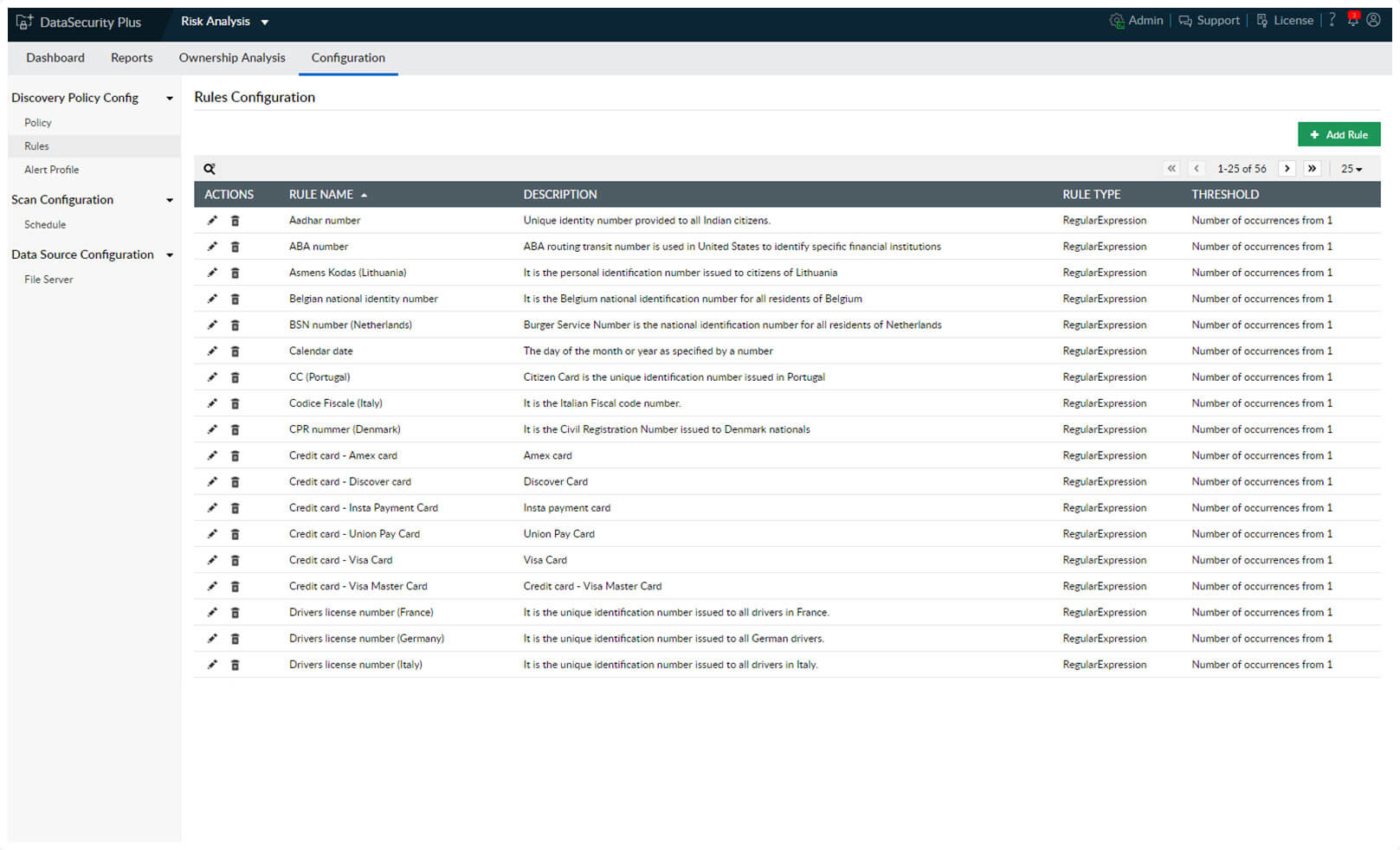
- Scan for passport numbers, email addresses, credit card numbers, and over fifty other types of personal data with preconfigured and customizable data discovery policies.
- Configure alerts to instantly detect discovered data that violates enterprise storage policies and respond by executing custom scripts.
Classify files based on sensitivity
- Automate the classification of files containing PII/ePHI to better understand which files need elevated data security measures.
- Enable incremental scanning of new and recently modified files to reduce data discovery scan times, and ensure there are no blind spots where PII can be concealed.
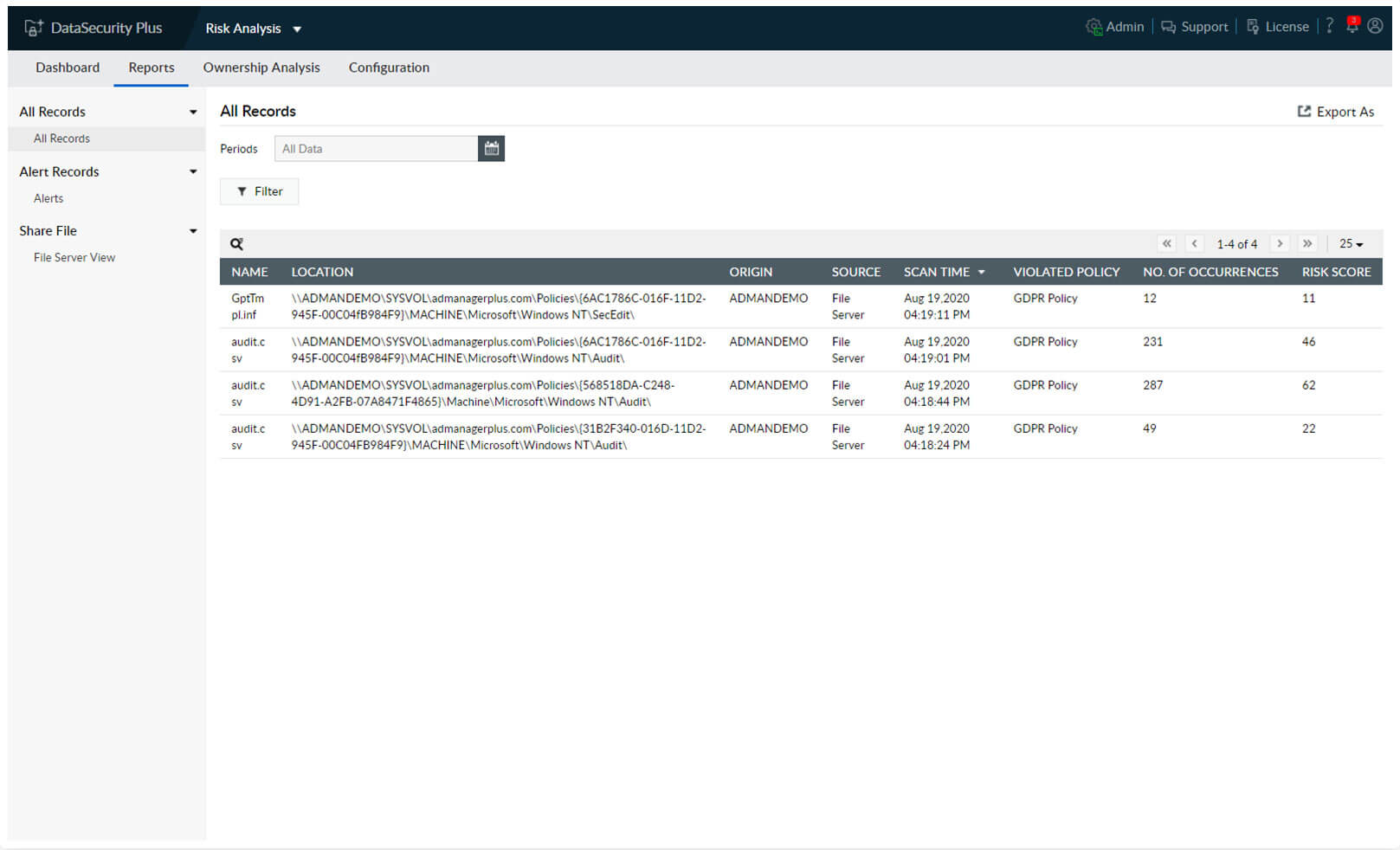
- Analyze the risk associated with files by viewing details on the amount and type of personal data they contain.
Comply with IT regulations
- Avoid the risk of non-compliance and associated penalties by generating periodic reports on the location and amount of sensitive data stored in your environment.
- Identify files containing cardholder data and check if they are sufficiently protected as regulated by PCI DSS with the risk analysis tool.
- Utilize preconfigured policies to uncover GDPR-regulated personal data such as citizenship numbers, passport numbers, and more.
- Easily locate files with ePHI, ensure that accesses and modifications to them are suitably audited, and streamline HIPAA and HITECH compliance.
Analyze files and permissions
- Identify employees who can access files containing personal information, and verify whether the access rights are required for their role.
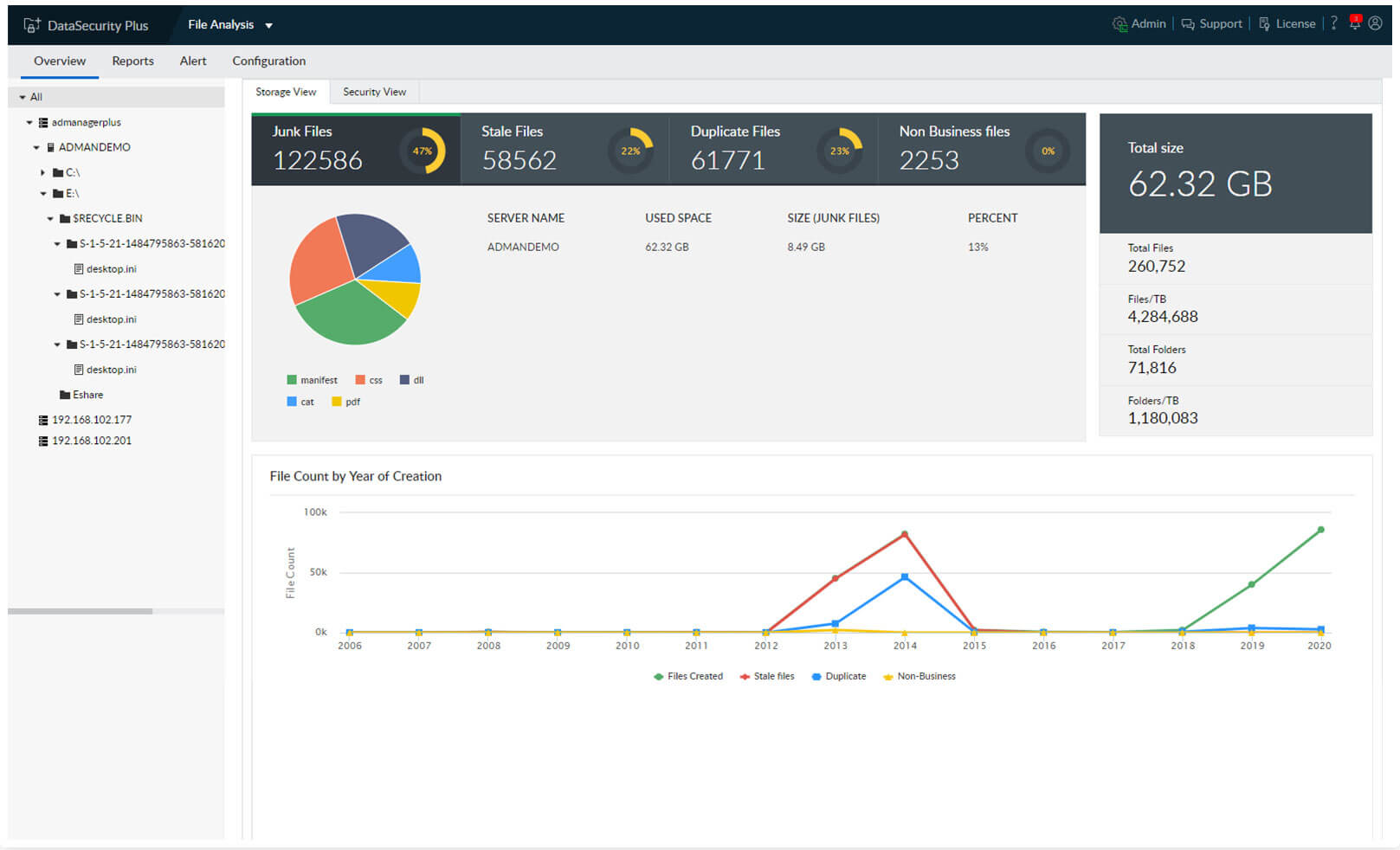
- Locate unopened, unmodified, and duplicate files containing personal data, and manage them based on their business value.
- Identify overexposed sensitive files, and automatically delete them or quarantine them in a more secure location.