
Establish operational integrity for financial entities and
enhance resilience in the digital era.

Digital transformation in the financial industry has led to numerous advantages, but it has also made businesses more vulnerable to various technology risks such as cyberattacks, system failures, and disruptions in third-party information and communication technology (ICT) services.
The European Union introduced the Digital Operational Resilience Act (DORA), which outlines specific requirements for financial institutions operating in the EU to ensure the industry can combat these threats and safeguard its business operations.
DORA took effect on January 16, 2023, and full enforcement began on January 17, 2025. The policy aims to standardise the regulations concerning operational resilience for the financial industry, covering 20 different types of financial entities and ICT service providers.
DORA is a transformative regulation designed to enhance your organisation's ability to
withstand, recover from, and adapt to ICT-related disruptions. Here's what DORA
means for your organisation:
You'll need to implement strong measures to protect your digital infrastructure from cyberthreats and operational disruptions. Regular risk assessments and security upgrades will become a core part of your operations.
DORA places accountability at the board level, requiring you to align your governance framework with digital resilience objectives.
You need to establish efficient mechanisms to detect, report, and recover from ICT-related incidents, ensuring minimal impact on operations and customer trust.
DORA emphasises the importance of assessing and mitigating risks posed by ICT third-party providers. You'll be expected to ensure that your vendors meet the same resilience standards as your organisation.
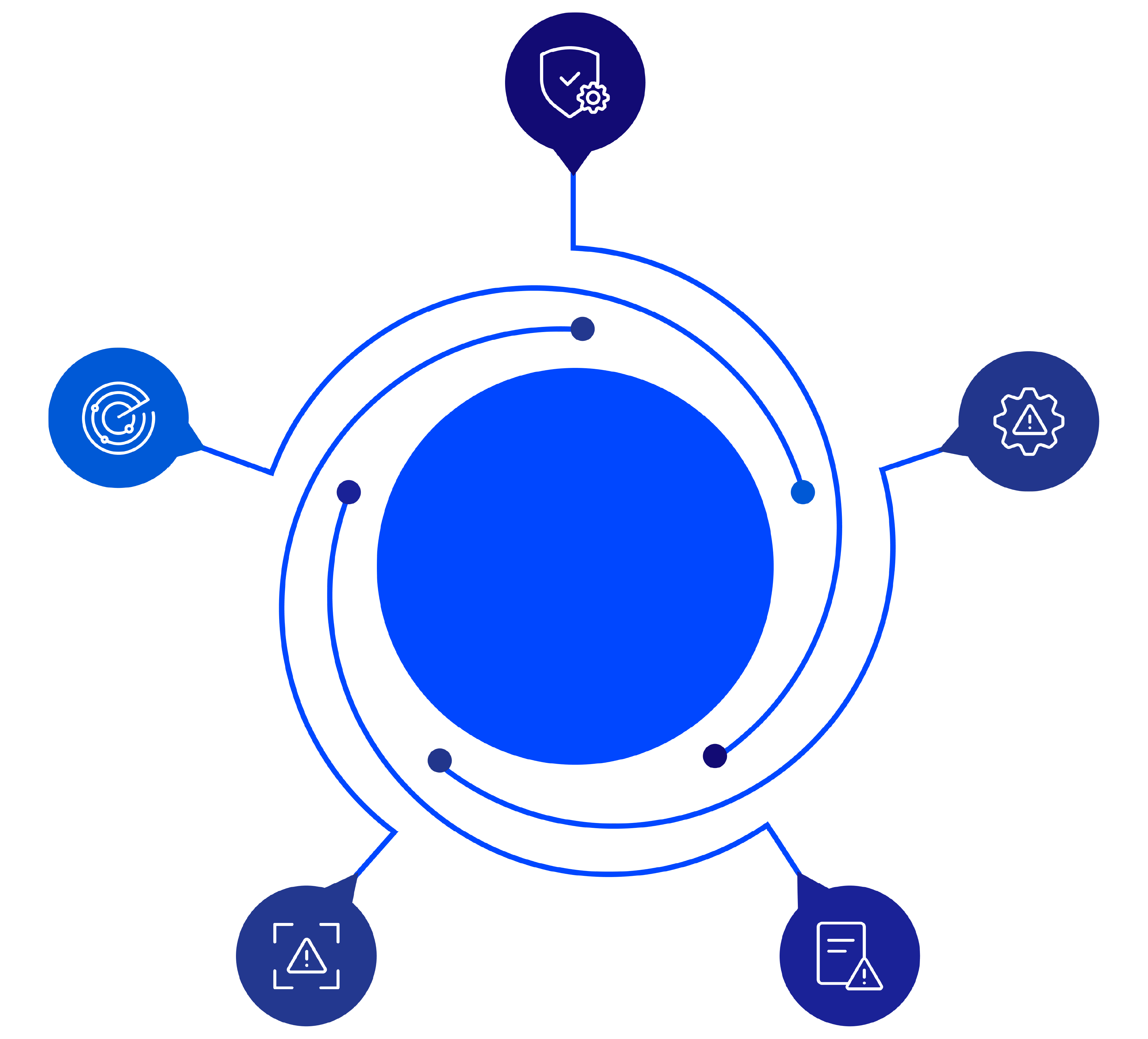
Test ICT risk management to identify any weaknesses.
The European Parliament recommends annual Digital
Operational Resilience testing on their ICT services.
However, advanced testing is only required once
every three years.
Developing a framework to monitor and
manage risks with third-party ICT
providers, covering critical aspects like
capabilities, levels, and locations.
Implementing uniform procedures for
monitoring and classifying ICT incidents
and reporting them to the relevant
authorities.
Ensuring effective service relationships for
better risk management. Service
agreements must cover monitoring,
service levels, and data processing
locations.
Facilitating the sharing of cybersecurity
threat information while safeguarding
confidential data to stay abreast of any
recent threats and risks.
ManageEngine's suite of IT management solutions can help you meet the technical requirements of DORA, thereby supporting your compliance with this regulation.
If your organisation qualifies as a small or non-interconnected investment firm or a payment institution exempt under Directive (EU) 2015/2366, institutions exempt under Directive 2013/36/EU, Articles 5 to 15 of the DORA Regulation do not apply to you, and you can proceed directly to Article 16. For more details, please refer to the DORA guide or the official document.

Financial entities must have a governance framework for effective ICT risk management to ensure digital operational resilience.
Offers admins high-level visibility, in-depth control, and governance over privileged activities across the enterprise.
Provides a unified, AI-driven ITIL compatible platform to orchestrate automated workflows for incident handling, user access, change and release management, and IT asset management.
Enforce strict access controls and maintain audit trails - providing essential visibility and accountability for ICT risk management.
Offers a unified security monitoring dashboard, allowing the tracking of security events, the detection of anomalies, and the assessment of risks in real-time.
Develop robust custom governance solutions with integrated frameworks that can enable the entity to easily adhere to global governance standards.
Financial entities must establish a comprehensive ICT risk management framework to ensure digital operational resilience. This includes strategies and tools to protect information and ICT assets from risks such as damage and unauthorized access.
Offers extensive reporting features and detailed insights into endpoint assets to deliver in-depth insights into the endpoint environment.
Dynamic trust scoring capabilities as well as privileged user behaviour analytics provide organisations with the ability to implement real-time risk management.
Manages domain risks by providing visibility, identifying threats, ensuring SSL validity, and monitoring expiry.
Create risk management dashboards to track user access, monitor asset health, and analyse risk scores for better compliance.
Identifies security risks in AD and Microsoft 365 and detects insider threats. Protects resources with strong MFA.
Automates incident responses, IT change governance, and IT asset inventory and management for effective risk mitigation. Includes orchestration and AI-driven insights.
Offers a security audit service for auditing firewalls, which includes necessary reporting and improvements to security posture.
Uses behavioural analytics and anomaly detection to identify suspicious activities such as privilege escalation, unauthorized access attempts, and data exfiltration.
Develop custom risk mitigation and risk deterrence solutions that can empower the financial entity to protect and shield itself from unauthorized access and damage.
Financial entities must regularly update ICT systems to manage risks, ensure reliability, handle increased demands during peak periods, and ensure resilience when operating under adverse situations.
Provides a FIPS 140-2 mode with approved algorithms for heightened security. Its multi-tenant design allows easy onboarding of new endpoints.
Ensures reliable monitoring and service delivery, even during peak demands and evolving technological challenges.
Develop bespoke ICT risk management solutions that have high uptime and persistence.
Financial institutions must regularly review and document all business functions, roles, and ICT assets, identifying potential risks like cyberthreats. They should assess changes in network infrastructure or legacy systems and maintain an updated inventory of critical information and third-party dependencies.
Collects comprehensive inventory details from your IT environment and provides continuous vulnerability management through a single interface.
PAM360's audit trails automatically log all privileged account activities, including login attempts and task executions, providing clear visibility for internal audits and investigations.
Discovers all network devices, offers network configuration management for change management, enhancing network security and performance.
Get insights into asset health, change records, privileged account activity, and risk scores from consolidated dashboards.
Detects AD and Microsoft 365 security risks, monitors suspicious activity, helps manage and certify entitlements, and offers insights.
Allows tracking and control of hardware and software assets, both on-premises and remote. The CMDB streamlines infrastructure mapping for IT teams, identifying risks during incident responses and change implementations.
Ensures proactive network management and efficient service restoration by merging real-time device performance insights with service dependency visualisation, crucial for maintaining infrastructure stability.
Monitors network infrastructure and legacy systems for vulnerabilities, misconfigurations, and unauthorized changes.
Build and maintain a repository that can serve as an up to date inventory of critical information, ICT assets, and third-party dependencies.
Financial entities must continuously monitor and control the security of their ICT systems to minimize risks. Key objectives for ICT security include ensuring the resilience, continuity, and availability of systems, especially those supporting critical functions, while maintaining high standards of data availability, authenticity, integrity, and confidentiality.
Enhances security with DLP, antivirus, patching, encryption, and robust admin controls for devices.
Centralized vault for managing sensitive information, including passwords, certificates, keys, and data documents.
Provides in-depth security analytics, correlating asset vulnerabilities, patch compliance, and potential risks with actionable dashboards.
Securely backs up AD, Microsoft 365, and more. Uses MFA, detects risks, prevents breaches, and reviews access regularly.
Manages access with automated role sync and bulk access management. Secures data and resources using strong MFA methods.
Helps in protecting ICT services and assets through proactive cybersecurity incident response workflows, tailored access request management workflows, and robust change management workflows.
Provides 24/7 monitoring of network devices, applications, and services, ensuring system resilience and availability for critical functions. Real-time alerts and comprehensive visibility enable early threat detection and faster incident response.
Provides continuous security monitoring, threat detection, and incident response to protect ICT systems. It ensures system resilience, availability, and data integrity through real-time log analysis, access controls, and anomaly detection.
Data stored in AppCreator is encrypted at rest with industry-grade encryption standards, compliant with global data safety regulations.
Financial entities must quickly detect ICT anomalies (as per Article 17) and conduct regular testing (as per Article 25). They should establish multiple control layers and automated incident alerts, allocate resources for monitoring user activity and cyberthreats, and ensure data reporting services can verify trade report completeness and handle errors.
Notifies SOC and IT admins to isolate system during malware attack. System can be recovered after forensic analysis.
Offers real-time monitoring, anomaly detection, and customizable and dynamic thresholds for smoother IT operations.
AI-powered anomaly detection, real-time alerts, and ML-driven predictive analytics spot anomalous activities and prevent potential threats.
Detects security risks in hybrid environments with risk assessment reports, and utilises UBA to investigate and mitigate malicious threats.
Detects alerts and alarms from different ITOM, SIEM, and IT alert management tools and converges them into incidents that are triaged and escalated to the right incident responders.
An anomaly detection engine, powered by ML, identifies deviations from baseline performance and enables rapid detection of ICT anomalies.
Offers real-time alerts for security incidents, unauthorized access, and system anomalies. It supports custom alert configurations based on event severity, helping security teams prioritise threats and respond proactively.
Financial entities should implement a comprehensive ICT business continuity policy within their risk management framework to ensure critical functions and incident response. They must establish and audit ICT response and recovery plans, regularly testing outsourced functions.
Protects endpoints from ransomware with unalterable backups and quarantine abilities.
Scalable architecture supports multiple application servers while relying on a single SQL availability group, cluster, or Cloud RDS for the backend.
Ensures business continuity via real-time monitoring, automated alerts, and regular response plan testing.
Pre-emptively spot indicators of compromise and automate root cause analysis to expedite incident response and resolutions.
Backs up AD, Microsoft 365, and more as encrypted versions with immutability. Protects access to data using MFA.
Enables incident response teams to detect and log incidents, kick starting predefined incident response workflows that automate notifications, assignment, escalations, and recovery.
Ensures ICT business continuity with real-time monitoring and failover, while automated workflows and configuration backups enable swift recovery and data protection for effective ICT disaster recovery.
Automated incident response and recovery mechanisms help minimize downtime and ensure business continuity. Log360 enables real-time threat detection, automated remediation workflows, and forensic analysis to contain security incidents efficiently.
A repository of disruptions can be developed and maintained, with records, for accessibility and future reference.
Financial entities must create and document backup and recovery policies to minimize downtime.
Safeguards endpoints from ransomware with instant backups and quarantines suspicious ones for forensic analysis.
When a server fails, users can do a fresh install of PAM360 and restore the database with the help of the backup file and master key in less than 15 minutes.
Backs up AD, Microsoft 365, and more with encryption, quick recovery, MFA, and immutability for data protection.
Automates the backup of network device configurations (routers, switches, firewalls) and performs compliance checks for quick restoration and business continuity.
Enables long-term storage of security logs, ensuring critical data is available for forensic analysis and compliance audits.
Financial organisations must assess cyberthreats, review incidents, track risk trends, and provide security training for staff and third parties to enhance cyber maturity and adapt to changes.
Records and summarises all incident response details for post-incident reviews to promote shared knowledge and learning.
Aggregates and analyses security event data from across the IT environment, enabling organisations to identify vulnerabilities, assess cyberthreats, and refine risk management strategies.
Financial entities need crisis communication plans for disclosing ICT incidents or vulnerabilities to clients, counterparts, and the public, as required by Article 6(1). This involves policies for both internal and external stakeholders, with a designated person in charge of managing media inquiries.
Enables organisations to alert incident responders, internal teams, competent authorities, and any external stakeholders at every stage of the incident response workflow.
The European Supervisory Authorities (ESAs) and ENISA have established regulatory technical standards to enhance ICT security in financial entities. These standards cover network strength, data integrity, access management, incident response, continuity plans, and ICT risk management. They have also been adopted by the European Commission.
Assists companies in meeting RTS for ICT risk management and improves frameworks with enhanced endpoint privilege management.
Secures business networks with phishing-resistant MFA, tracks risks, and reviews access permissions regularly.
Automates access management and uses MFA to protect data, assets, and the entire business network.
Ensures that every single incident response action, impact, CIs, conversation, and notes are recorded and summarised to generate detailed post-incident reviews to facilitate knowledge sharing and collective learning.
Strengthens financial entities' compliance with ESAs and ENISA standards through granular access controls and proactive rogue device detection, ensuring robust ICT security and operational resilience.
Enables financial institutions to manage access privileges effectively and monitor user authentication, role-based access, and anomaly detection in compliance with regulatory standards.
Organisations must establish an ICT risk management framework with a clear plan, continuously monitor systems, and respond quickly to risks. They should recognize their reliance on third-party providers and develop business continuity plans with backups.
Note: This article is only applicable to small, non-interconnected firms as described above. You can refer to the DORA regulation for more details.
Helps meet RTS for ICT risk management tools, methods, processes, policies, and simplified framework.
Detects AD and Microsoft 365 risks, prevents breaches, and backs up data with immutability for quick recovery.
Assists small, non-interconnected firms enhance risk management with ITIL best practices, including incident, service request, change, and IT asset management.
Maintains network integrity and simplifies ICT risk management for business continuity. Automated backups and real-time firewall monitoring ensure compliance and quick risk response.
Financial entities must manage ICT-related incidents by detecting, recording, and monitoring them. Key steps include establishing early warning indicators, assigning roles, planning stakeholder communication, reporting major incidents to senior management, and developing response procedures for timely service recovery.
Provides key data to network admins or SOC team, including detection time, attack status, agent actions, and endpoint details for suspicious events like malware or ransomware.
Detects incidents, manages responses, and notifies stakeholders with real-time monitoring and detailed reporting tools.
Use AI to spot indicators early and automate workflows to notify stakeholders and address incidents swiftly.
Assists accelerate incident response through visual incident response workflows, intelligent triage, GenAI-powered summarization, and robust reporting and analytics.
Real-time dashboards and adjustable alerts serve as early warnings. Simplify incident tracking, monitoring, and reporting for prompt service recovery with pre-set response protocols.
Streamlines incident detection, classification, and resolution for financial entities with its SOAR capabilities.
Build a repository for ICT incidents and cyberthreats. Generate reports for stakeholders to aid in impact assessments and mitigation efforts.
Financial entities must categorise ICT incidents by impact and data loss. Regulatory standards will clarify reporting for significant cybersecurity threats, aiding small enterprises.
Provides condition-based and AI-driven incident classification capabilities based on which incident response workflows can be invoked.
Financial entities must report major ICT incidents to a designated authority, providing detailed information for assessment and potential cross-border effects. For that, use templates from Article 20.
Assists financial organisations in timely notification of authorities and stakeholders during incident response.
Check out the infographic to see how ManageEngine products can help with the various requirements for DORA compliance.
For more detailed information, download the guide.

Double trouble or double defense: What NIS2 and DORA mean for finance
Read more
Your partner in navigating DORA requirements
Read more
Achieving DORA compliance standards with privileged access management
Read more
DORA compliance: A comprehensive guide
Read moreCheck out our downloadable guide for high-level insights into DORA and
how ManageEngine can help you implement most of the DORA compliance controls.
The complete implementation of the DORA requires a variety of processes, policy, people, and technology controls. The solutions mentioned above are some of the ways in which IT management tools help with the DORA compliance requirements. Coupled with other appropriate solutions, processes, people controls, and policies, ManageEngine's solutions can help organisations align with the DORA. Organisations must do their independent assessment of ManageEngine's features and to what extent they can help them comply with this directive. This material is provided for informational purposes only, and should not be considered as legal advice for DORA compliance. ManageEngine makes no warranties, express, implied, or statutory, as to the information in this material. Please contact your legal advisor to learn how DORA impacts your organisation and what you need to do to comply with the DORA compliance.