Rogue device detection software for enterprise network security
Detect, classify, and locate unauthorized devices through proactive IP scanning, trusted inventory comparison, switch port mapping, and MAC address tracking.
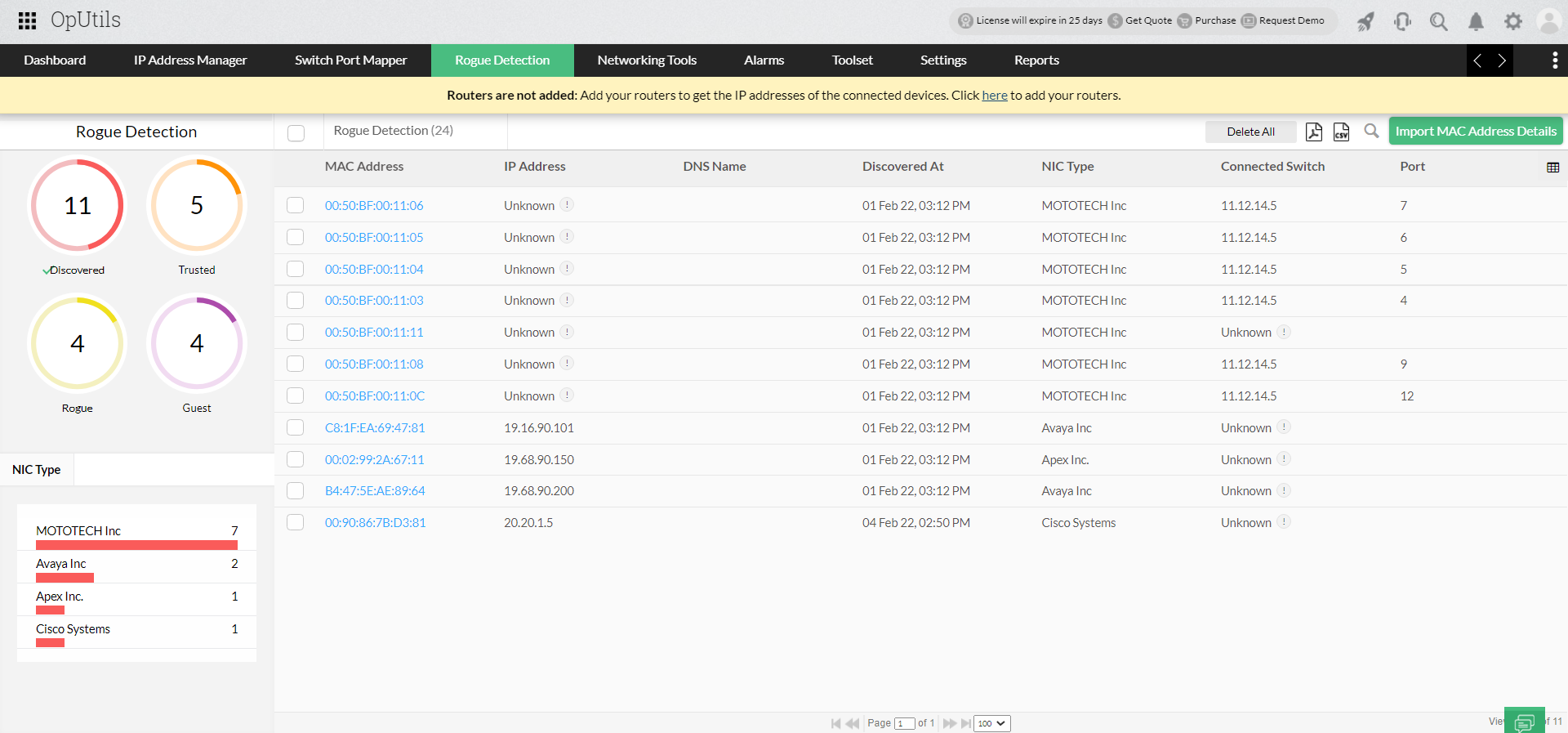
OpUtils' rogue device detection software
OpUtils proactively scans configured subnets, IP ranges, Active Directory, and IP-connected devices to discover every device on your network. Administrators establish a trusted inventory by approving known systems, while subsequent scans identify newly connected devices for classification. Using IP scanning, MAC address tracking, rogue DHCP discovery, switch port mapping, and DHCP-based MAC filtering, administrators can quickly locate and block unauthorized devices.
Six key capabilities of OpUtils' rogue device detection software
Discover every connected device automatically
OpUtils periodically scans configured IP ranges, subnets, routers, printers, and other IP-connected devices to discover every endpoint. Proactive network discovery quickly detects newly connected devices, helping administrators identify systems outside approved inventories before they become security risks.
Build a trusted device inventory
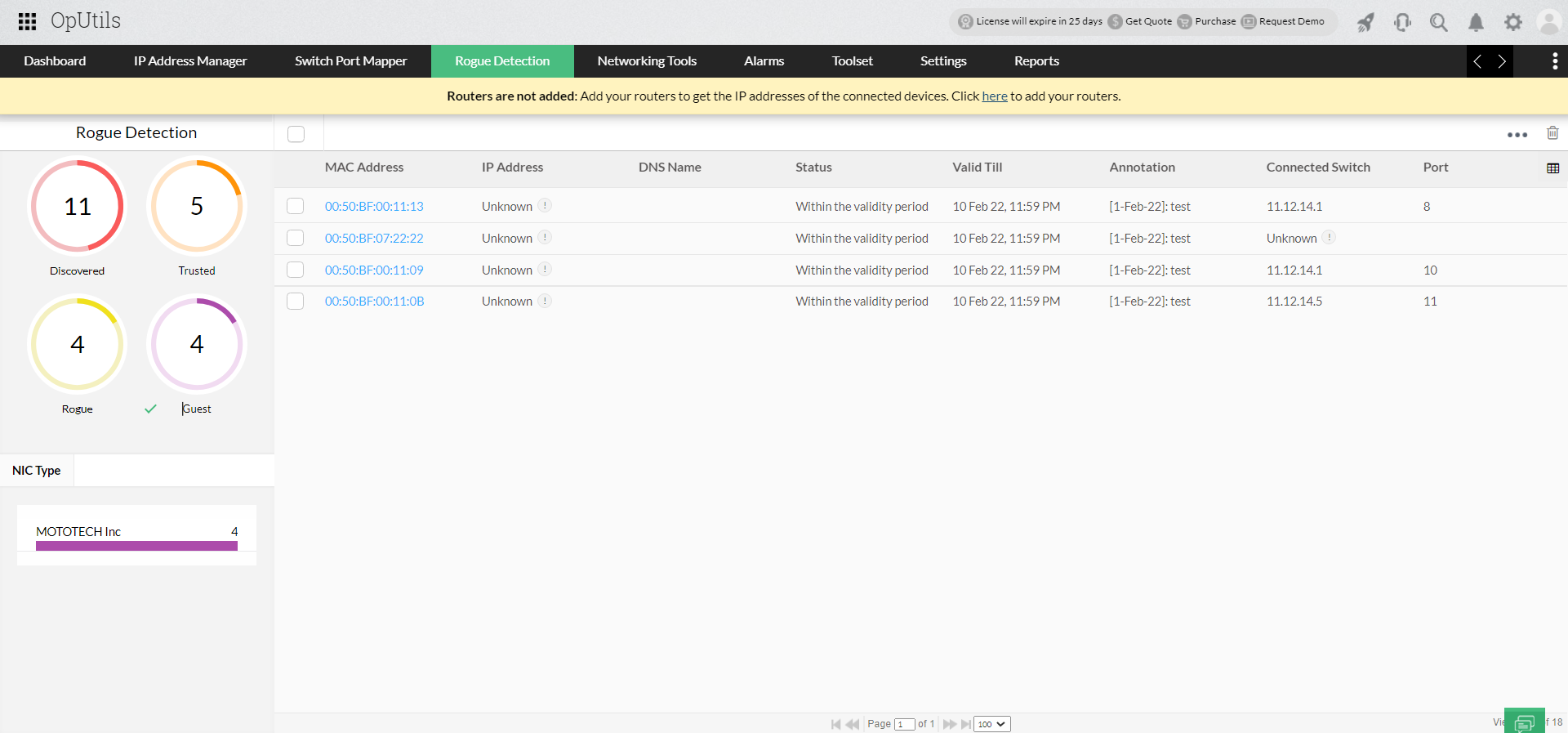
OpUtils automatically marks Active Directory devices as trusted while allowing administrators to import and verify additional approved systems. Trusted devices are excluded from future rogue detection results, reducing unnecessary alerts and helping administrators focus on unknown or suspicious devices.
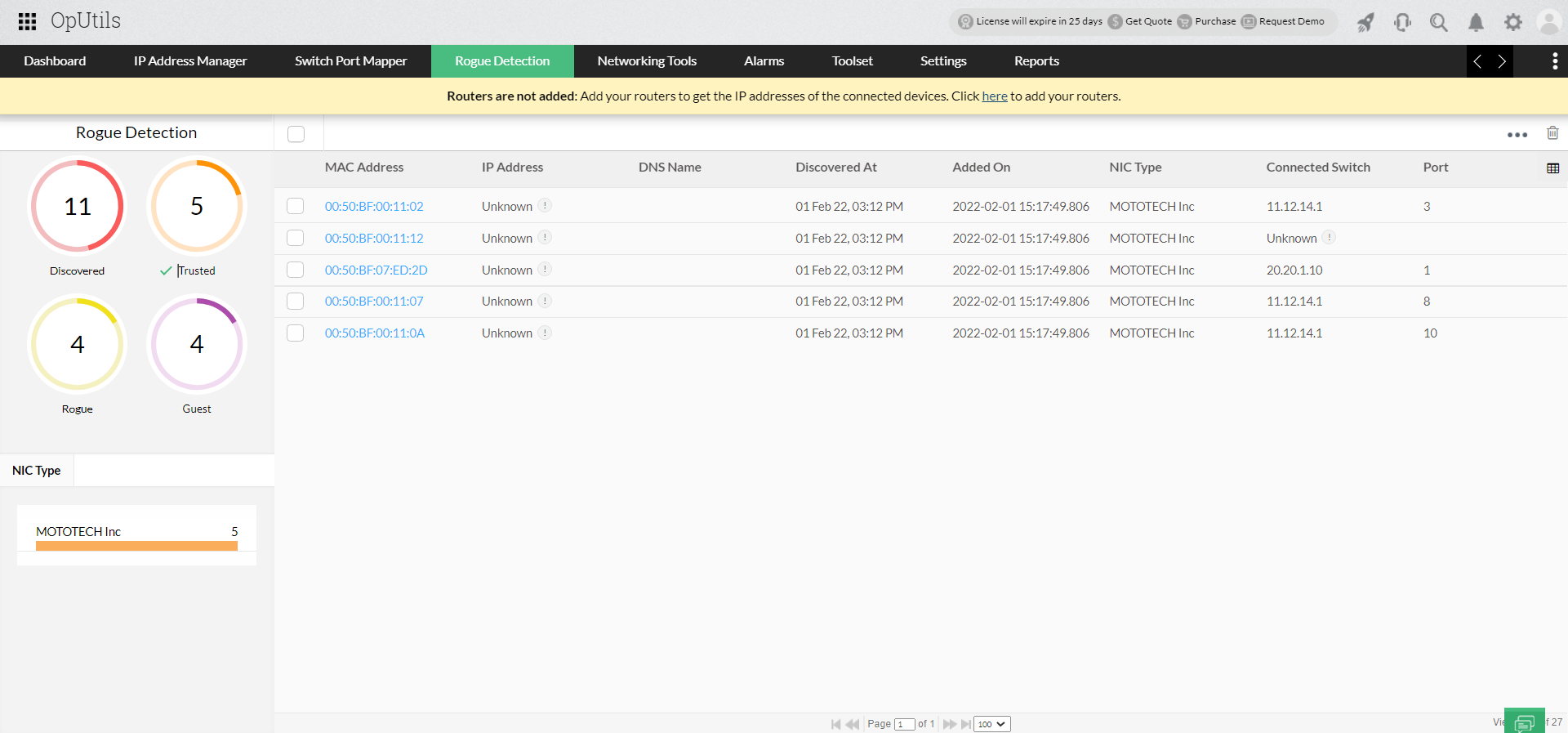
Control temporary guest device access
Not every new device is unauthorized. OpUtils lets administrators classify devices as guests and grant temporary network access. When the approved period expires, administrators receive notifications to review, extend, or revoke access, preventing temporary devices from becoming security gaps.
Detect and investigate rogue devices
When newly discovered devices don't match trusted or guest inventories, OpUtils flags them for investigation. Using IP scanning, MAC address tracking, switch port mapping, and Active Directory integration, administrators can quickly locate rogue devices and determine the appropriate response.
Block rogue devices from reconnecting
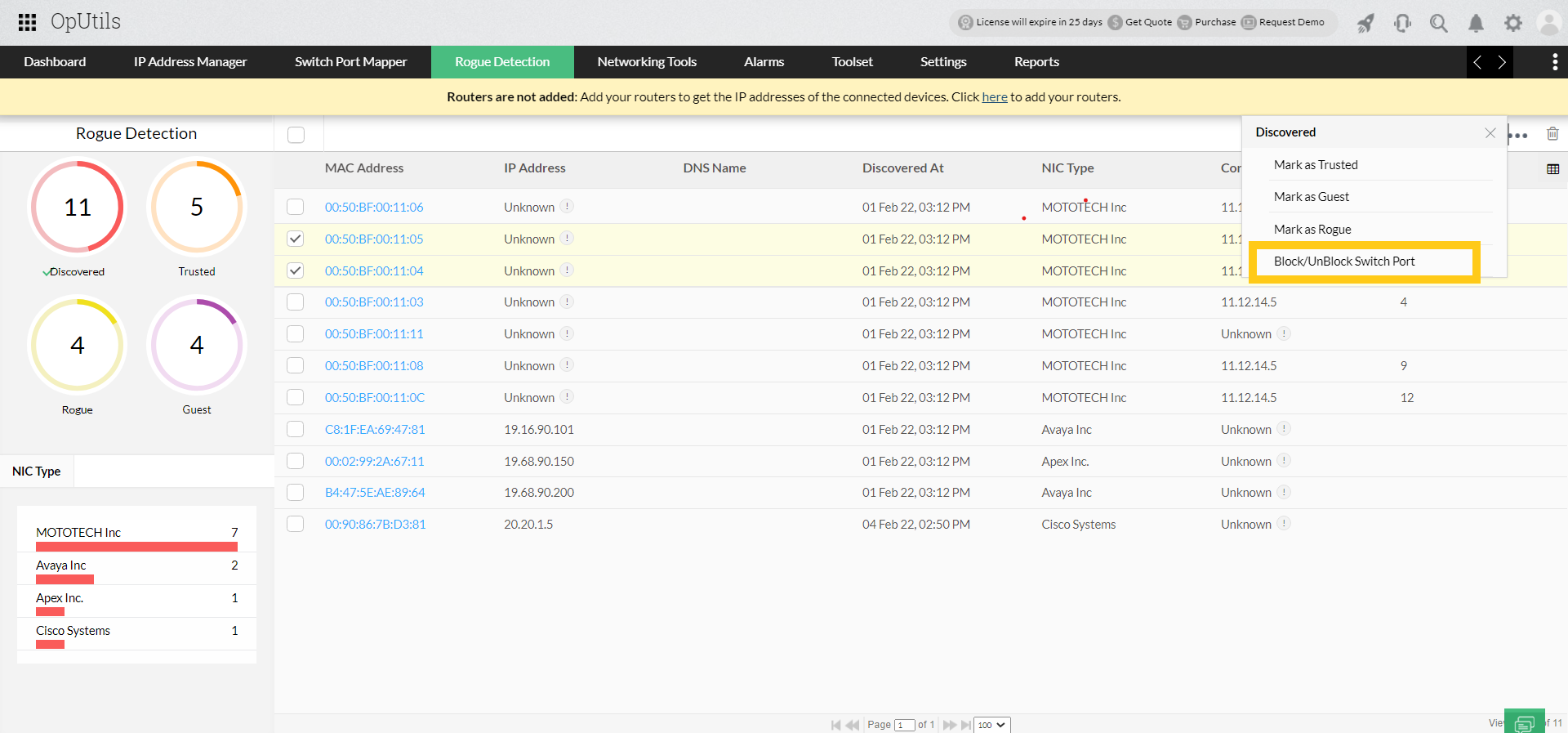
Detecting rogue devices is only the first step. OpUtils helps contain threats by allowing administrators to block the associated switch port immediately.DHCP-based MAC address filtering prevents the same device from reconnecting through another switch port, reducing repeat intrusion risks.

Quickly detect and isolate rogue DHCP servers
Rogue DHCP servers can cause IP conflicts, connectivity issues, and traffic redirection. OpUtils proactively discovers DHCP servers, compares them with authorized infrastructure, and integrates with Switch Port Mapper to quickly locate and isolate the rogue device.
Learn more →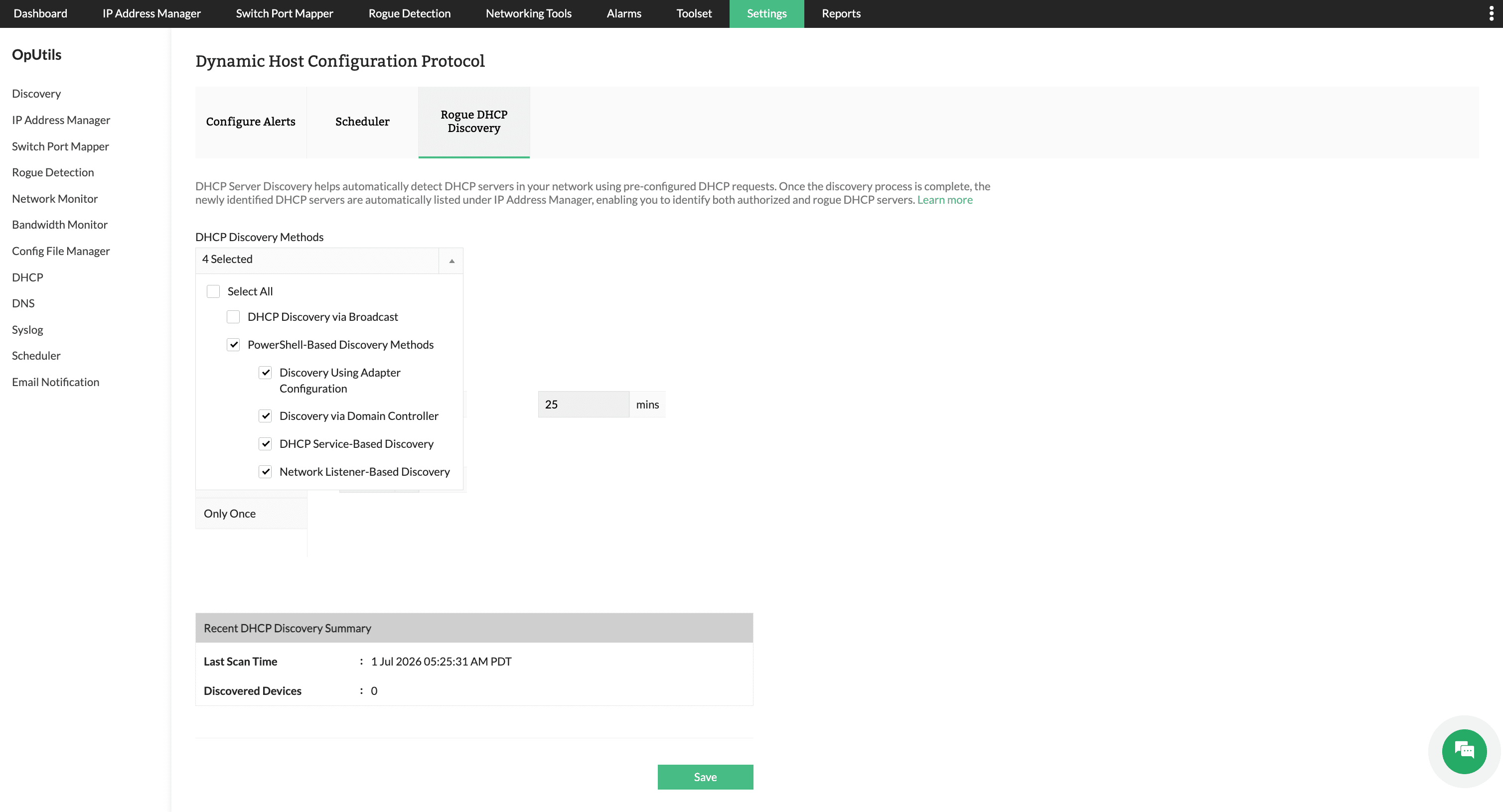
Frequently asked questions on rogue detection
- Continuous IP scanning
- MAC address tracking
- Active Directory-based trust validation
- Switch port mapping
Resources to dig deeper
Learn how IPAM is simplifying modern networking needs!
From mainframes to AI, networking has changed. Is your IPAM solution equipped to take on modern challenges?
Download (PDF) →Unlock more value with add-ons
Looking to go beyond DDI? OpUtils can be enhanced to monitor devices, analyze traffic, and deliver end-to-end observability across your IT infrastructure with compatible in-house add-ons.
Network monitoring
Correlate DDI data with real-time network performance metrics. Monitor device health, availability, and faults alongside IP, DNS, and DHCP context to resolve issues faster and maintain service reliability.
Bandwidth monitoring
Add traffic visibility to your DDI operations. Track how applications and devices consume bandwidth, detect abnormal flows, and link traffic patterns to IP addresses and network segments.
Try free trial →Infrastructure monitoring
Bring DDI, performance monitoring, flow analysis, firewall management, and application monitoring into a single operational view. Manage addressing, performance, security, and traffic together for complete end-to-end network observability.