Free Edition
In this article:
This article provides the steps to implement multi-factor authentication (MFA) for Microsoft Remote Desktop Protocol (RDP) connections. Configuring MFA for RDP helps secure both local and remote access to Windows, macOS, and Linux machines, effectively reducing the risk of password-based attacks, such as brute-force attempts. By implementing RDP MFA, organizations can ensure that only authorized users gain access to critical endpoints.
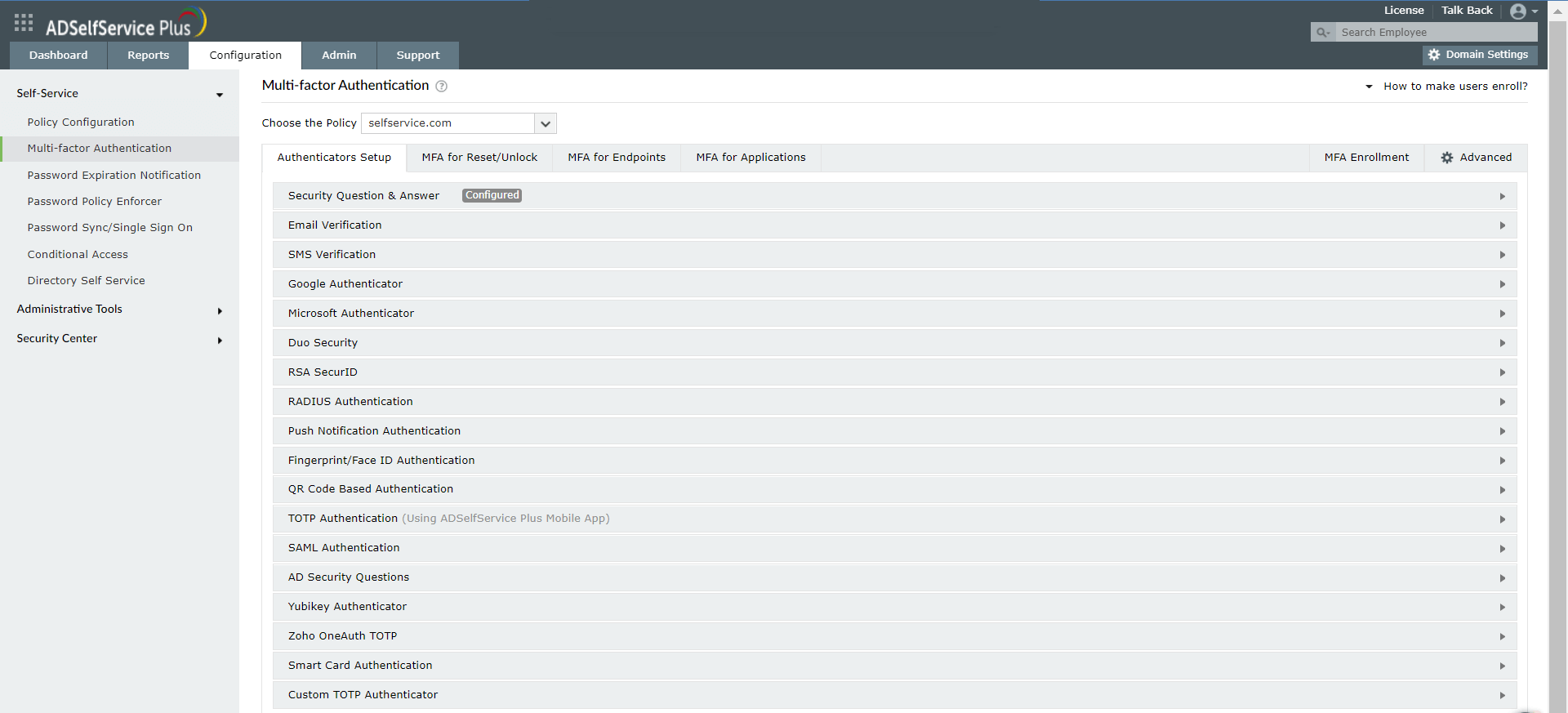
Figure 1: Configuring authenticators for RDP MFA in ADSelfService Plus.
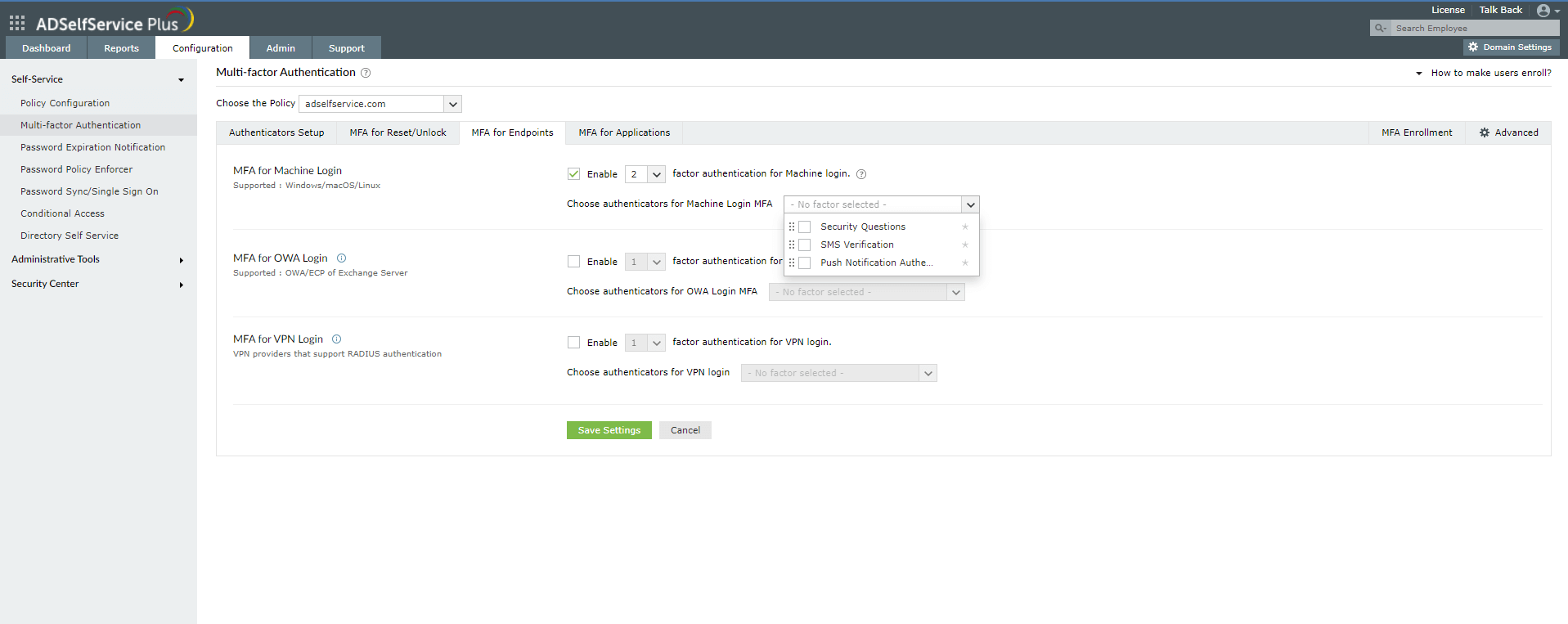
Figure 2: Enabling RDP MFA in ADSelfService Plus
Multi-factor authentication for RDP logins
Enable MFA for privileged user accounts using ADSelfService Plus
Download a free trial now! Request demoNeed further assistance? Fill this form, and we'll contact you rightaway.
Allow Active Directory users to self-service their password resets and account unlock tasks, freeing them from lengthy help desk calls.
Get seamless one-click access to 100+ cloud applications. With enterprise single sign-on, users can access all their cloud applications using their Active Directory credentials.
Intimate Active Directory users of their impending password and account expiry via email and SMS notifications.
Synchronize Windows Active Directory user passwords and account changes across multiple systems automatically, including Microsoft 365, Google Workspace, IBM iSeries, and more.
Strong passwords resist various hacking threats. Enforce Active Directory users to adhere to compliant passwords by displaying password complexity requirements.
Enable Active Directory users to update their latest information themselves. Quick search features help admins scout for information using search keys like contact numbers.