Cloud Cost Management Overview
An effective cloud cost management strategy empowers organizations to set clear budgets, forecast future cloud expenses, and establish financial guardrails that prevent unexpected overages. It also helps in allocating costs accurately to different departments, projects, or business units through models like chargeback or showback which promotes financial accountability and encourages more responsible usage.
Through ongoing analysis, companies can detect idle or underutilized resources and take corrective actions such as rightsizing instances, automating shutdowns, or shifting to more cost-effective options like reserved or spot instances. It also combines cost transparency, governance policies, and usage insights to ensure your cloud investments deliver maximum value without surprises.
See also
Explore CloudSpend
Business use cases
Organizations migrate to the cloud for agility, scalability, and innovation, but they often face cost overruns due to underutilized resources, lack of visibility, or decentralized usage. Cloud cost management (CCM) helps you track and monitor cloud usage across accounts and services.
Finance
- Gain real-time visibility into cloud expenses.
- Forecast costs more accurately.
- Set and enforce budgets to prevent overruns.
- Enable chargeback and showback to hold teams accountable.
DevOps & engineering
- Identify and eliminate underused or idle resources.
- Optimize provisioning to avoid over-allocated infrastructure.
- Get alerted on cost anomalies and unexpected spikes.
- Enable resource governance without slowing development.
Business leadership
- Align cloud spending with business goals and outcomes.
- Improve profitability by reducing wasteful expenses.
- Enable data-driven decisions around scaling and innovation.
- Foster a culture of financial accountability with FinOps (FinOps).
Small businesses and startups
- Control cloud costs early in the growth journey.
- Avoid bill shocks with proactive alerts.
- Make the most of limited cloud budgets.
- Build scalable infrastructure without financial risk.
Benefits of cloud cost management
CCM empowers organizations to maximize the value of their cloud investments. Some of the key benefits include:
- Cost optimization: Identify and eliminate unused or underutilized resources, enabling up to 30–40% reduction in unnecessary cloud spend.
- Financial predictability: Avoid bill shocks by setting budget thresholds and receiving timely alerts that help you stay within planned expenses.
- Operational efficiency: Gain insights into how cloud resources are used, allowing teams to optimize performance while keeping costs under control.
- Enhanced visibility: Monitor cloud usage across multiple accounts, regions, and services in one place. Drill down into spending patterns by team, project, or environment.
- Cross-team collaboration: Foster alignment between finance, DevOps, and business stakeholders through shared visibility and responsibility.
- Compliance and governance: Enforce cost allocation rules, tagging policies, and usage limits to support internal audits and regulatory compliance..
What are the key features to look for in a cloud cost management tool?
Unified multi-cloud visibility
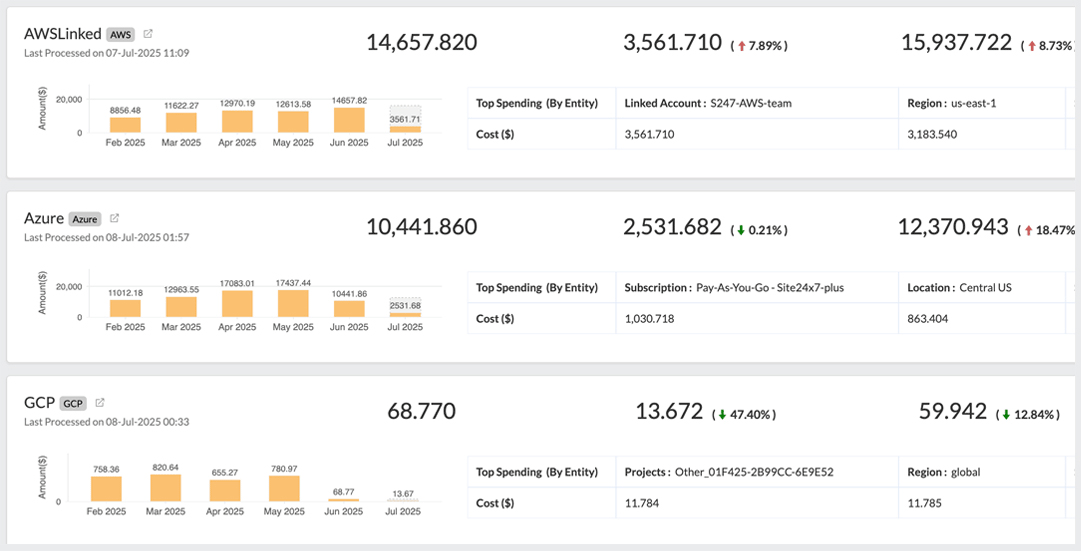
Get a consolidated view of spending across AWS, Azure, and Google Cloud in one dashboard. This helps organizations manage hybrid or multi-cloud environments more effectively without juggling multiple native tools.
Detailed budgeting and forecasting
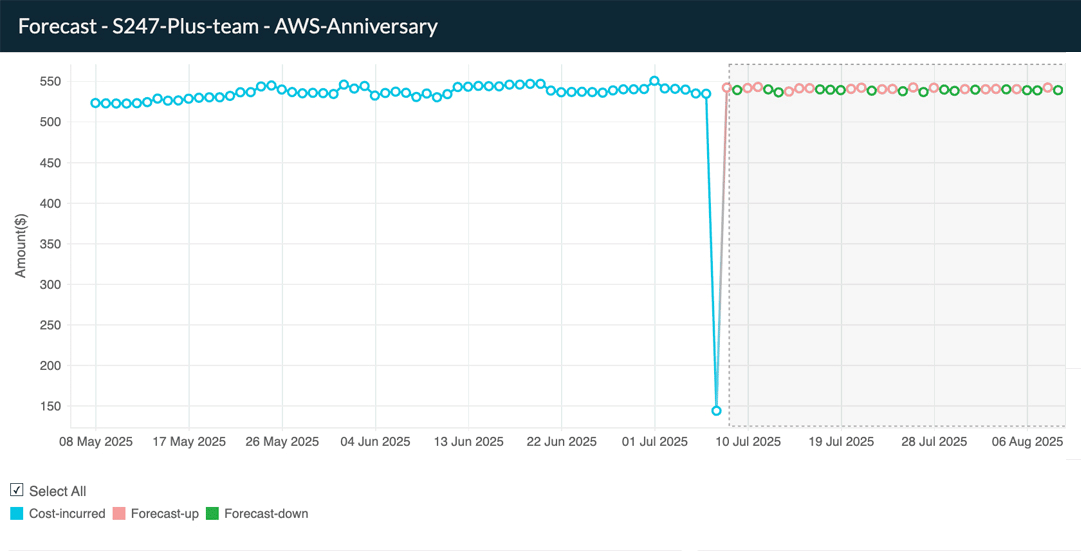
Create budgets at project, team, or account levels. Forecast future costs based on historical usage trends and seasonal patterns to prevent unexpected expenses and enable better financial planning.
Anomaly detection and real-time alerts
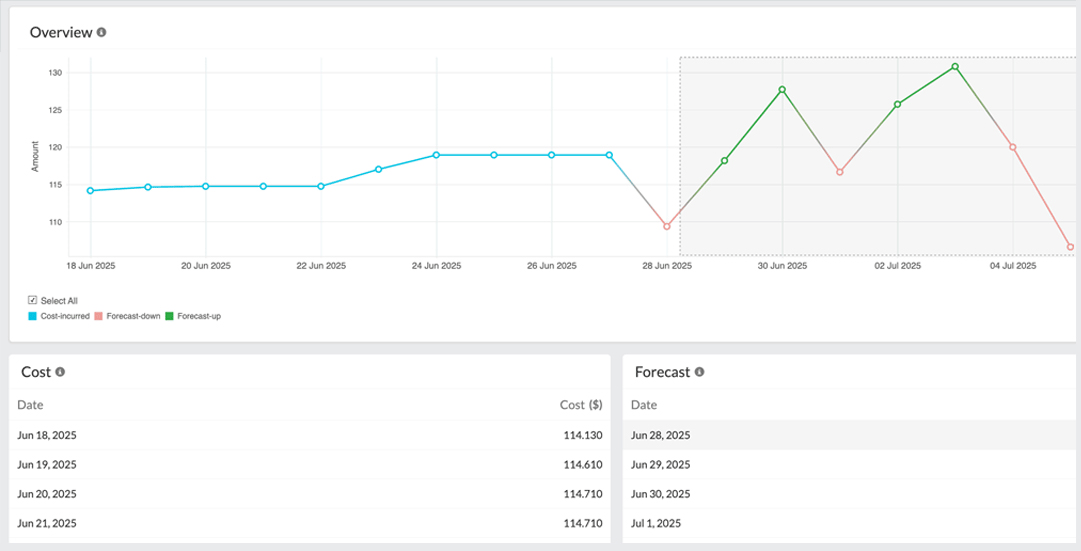
Identify sudden spikes or irregularities in cloud spending. Alerts notify the right teams in real time so they can investigate and take corrective action before costs spiral out of control.
Resource optimization and rightsizing
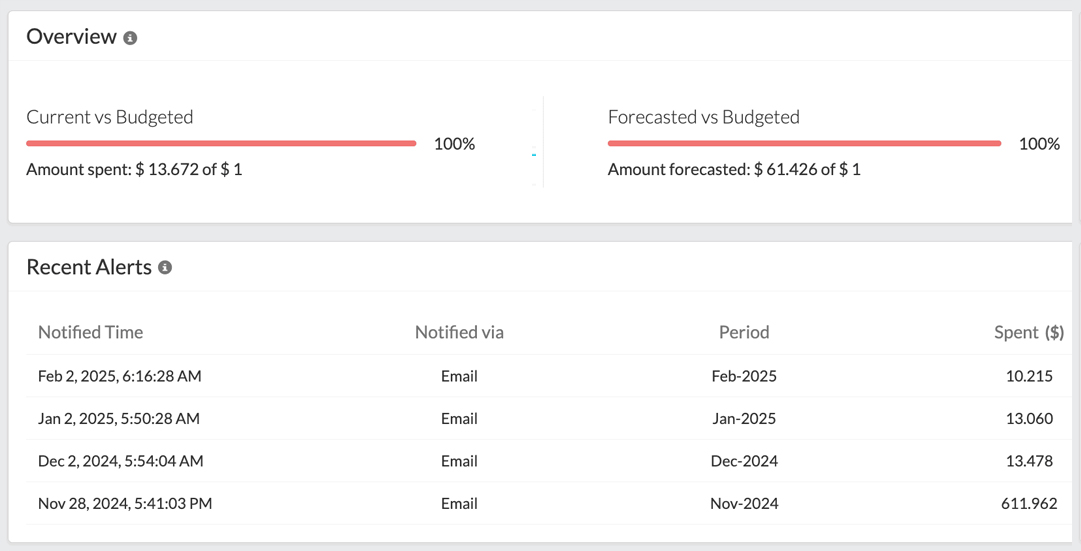
Automatically detect underutilized instances, idle resources, or overprovisioned compute and storage space. Get actionable recommendations to rightsize workloads, schedule shutdowns, or decommission unused services.
Chargeback and showback reports
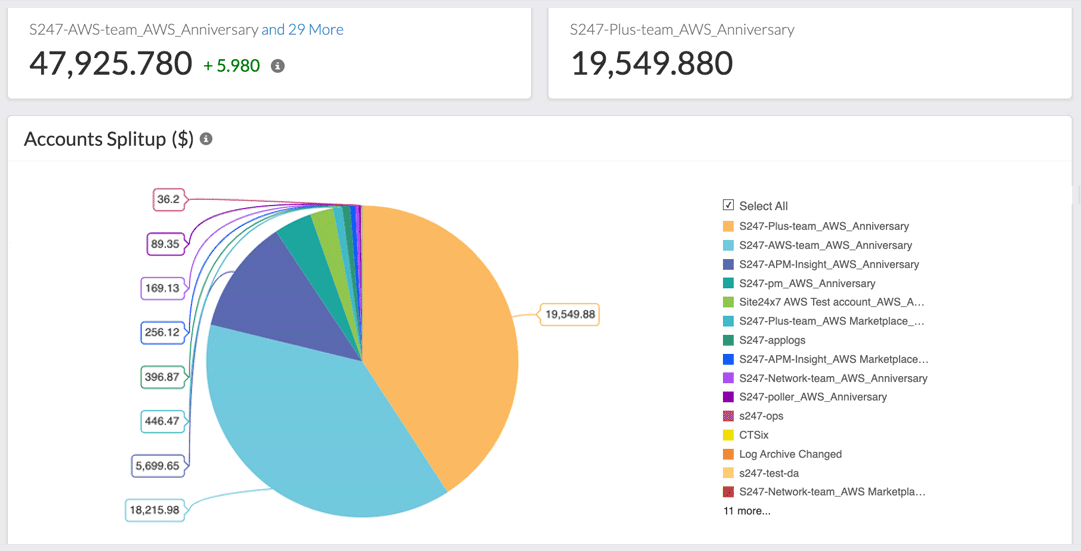
Allocate cloud costs to individual departments, projects, or teams using resource tags or account hierarchies. This promotes accountability and enables internal billing or cost visibility.
Customizable dashboards
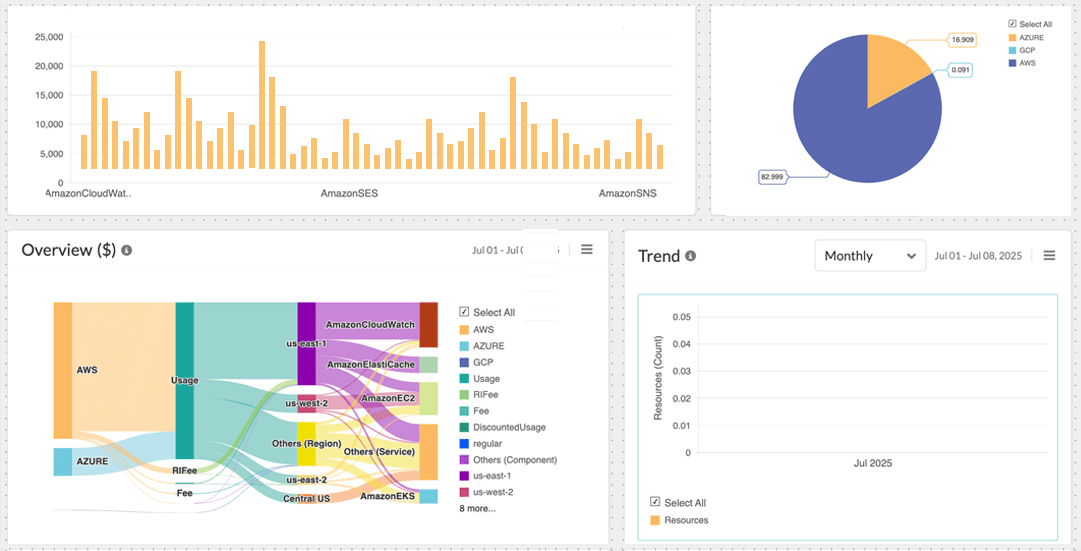
Visualize usage and cost trends with interactive charts, filters, and exportable reports. Tailor views for finance, engineering, or executives with relevant KPIs.
Best practices
Establish clear tagging policies
Ensure all cloud resources are tagged with relevant metadata like owner, environment, department, and project. This improves cost attribution and reporting accuracy.
Set budgets and alerts proactively
Define budgets at team, project, or account levels. Use real-time alerts to notify stakeholders when thresholds are crossed to prevent overspending.
Automate resource management
Use scheduling, auto-shutdown, and auto-scaling policies to manage non-production or idle resources automatically and save costs.
Implement rightsizing regularly
Continuously analyze resource usage and adjust compute, storage, or database sizes to better match workload requirements.
Centralize cloud visibility
Consolidate spend and usage data across all cloud accounts and providers into a single CCM platform. This enables holistic monitoring and governance.
Foster a FinOps culture
Encourage collaboration between finance, engineering, and operations to create a culture of shared responsibility for cloud costs.
Frequently asked questions
What is the difference between FinOps and cloud cost management?
FinOps is a cultural and operational framework that aligns finance, engineering, and business teams around shared cloud cost responsibility. Cloud cost management is the broader practice, where FinOps is the people and process layer, and cloud cost management encompasses the tools, policies, and workflows used to monitor and control cloud spend.
How much can cloud cost management save?
Organizations that implement cloud cost management effectively typically reduce unnecessary cloud spend by 30—40%. The biggest savings come from rightsizing overprovisioned instances, eliminating idle resources, and shifting eligible workloads to reserved or spot instances.
What tools are used for cloud cost management?
Cloud cost management tools provide unified visibility across AWS, Azure, and Google Cloud with features like budget alerts, anomaly detection, rightsizing recommendations, and chargeback reporting. ManageEngine CloudSpend offers all of these in a single multi-cloud dashboard.
What is rightsizing in cloud cost management?
Rightsizing means matching your cloud instance sizes to actual workload demands. It involves analyzing CPU, memory, and storage utilization over time and downsizing or changing instance types where resources are underused, often the fastest way to cut cloud costs without affecting performance.
Is cloud cost management only for large enterprises?
No. Startups and small businesses benefit from cloud cost management early in their growth journey, when cloud budgets are tightest. Proactive alerts, tagging discipline, and basic rightsizing can prevent bill shocks and build scalable, cost-efficient infrastructure from the start.