Configuring DHCP pool data for DHCPv6 Windows
Under the DHCP section, you can view the Cisco section in the right side menu. Clicking on it showcases the subsection for DHCP pool data.
DHCP pool data allows network admins to view their pool ranges in tabular view.
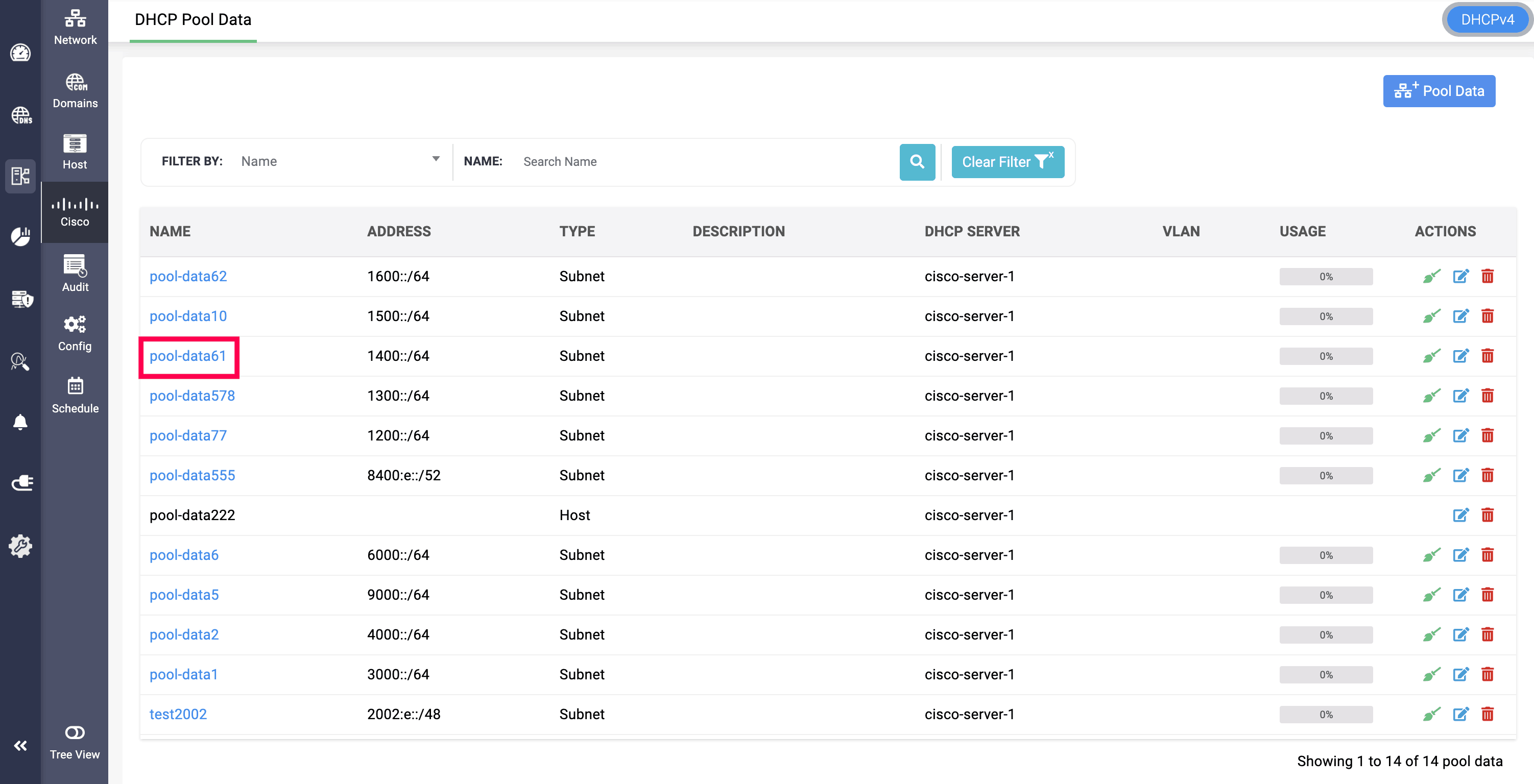
Admins can add new DHCP pool data by clicking on Add Pool data:

In DHCPv6, the fields for adding DHCP pool data differs,
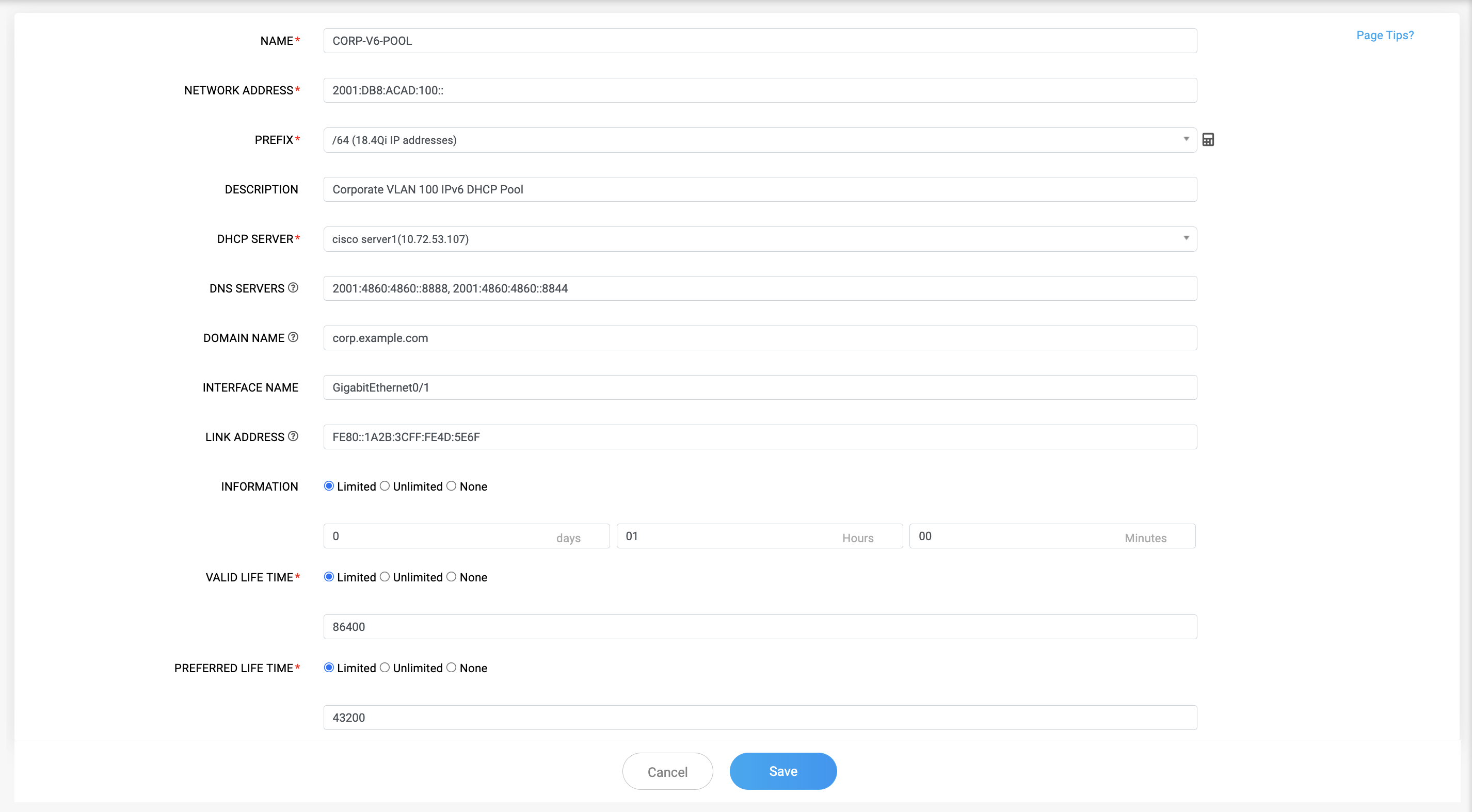
NAME: The name assigned to the DHCP pool for distinguishing between other pools.
NETWORK ADDRESS: The IPv6 address of the subnet associated with DHCP pool, helping in defining the clients that belong in the pool.
PREFIX: Defines the prefix length of the IPv6 network, determining how many addresses are available.
DESCRIPTION: An optional description or note about the pool’s purpose or associated department/site.
DHCP SERVER: An optional text note explaining the purpose or location of the DHCPv6 pool.
DNS SERVERS: One or more IPv6 DNS server addresses that DHCP provides to clients for domain name resolution.
DOMAIN NAME: The DNS domain that DHCPv6 assigns to clients for hostname resolution.
INTERFACE NAME: The router interface tied to the DHCPv6 pool, from which the server will respond to client requests.
LINK ADDRESS: The IPv6 link-local or global address used to identify the network/segment for DHCPv6 communications.
INFORMATION: The time duration for which the IP address is leased to a client.
VALID LIFETIME: The total valid duration (in seconds) of an IPv6 address lease before it must be renewed or expires.
The valid lifetime ranges between 5 - 4294967295
PREFERRED LIFETIME: For IPv6 DHCP, the duration (in seconds) that an address remains “preferred” before becoming deprecated.
The preferred lifetime ranges between 5 - 4294967295
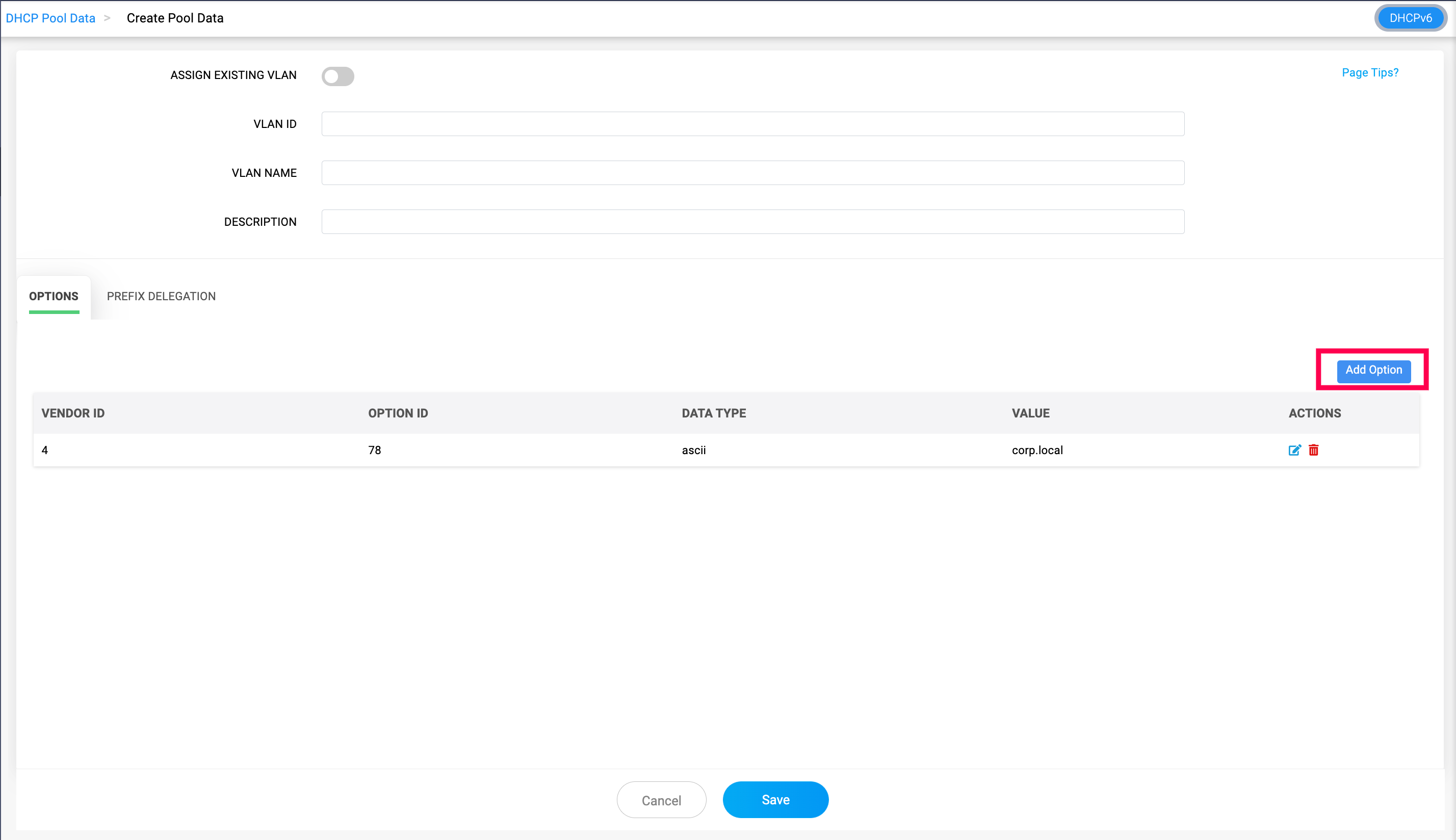
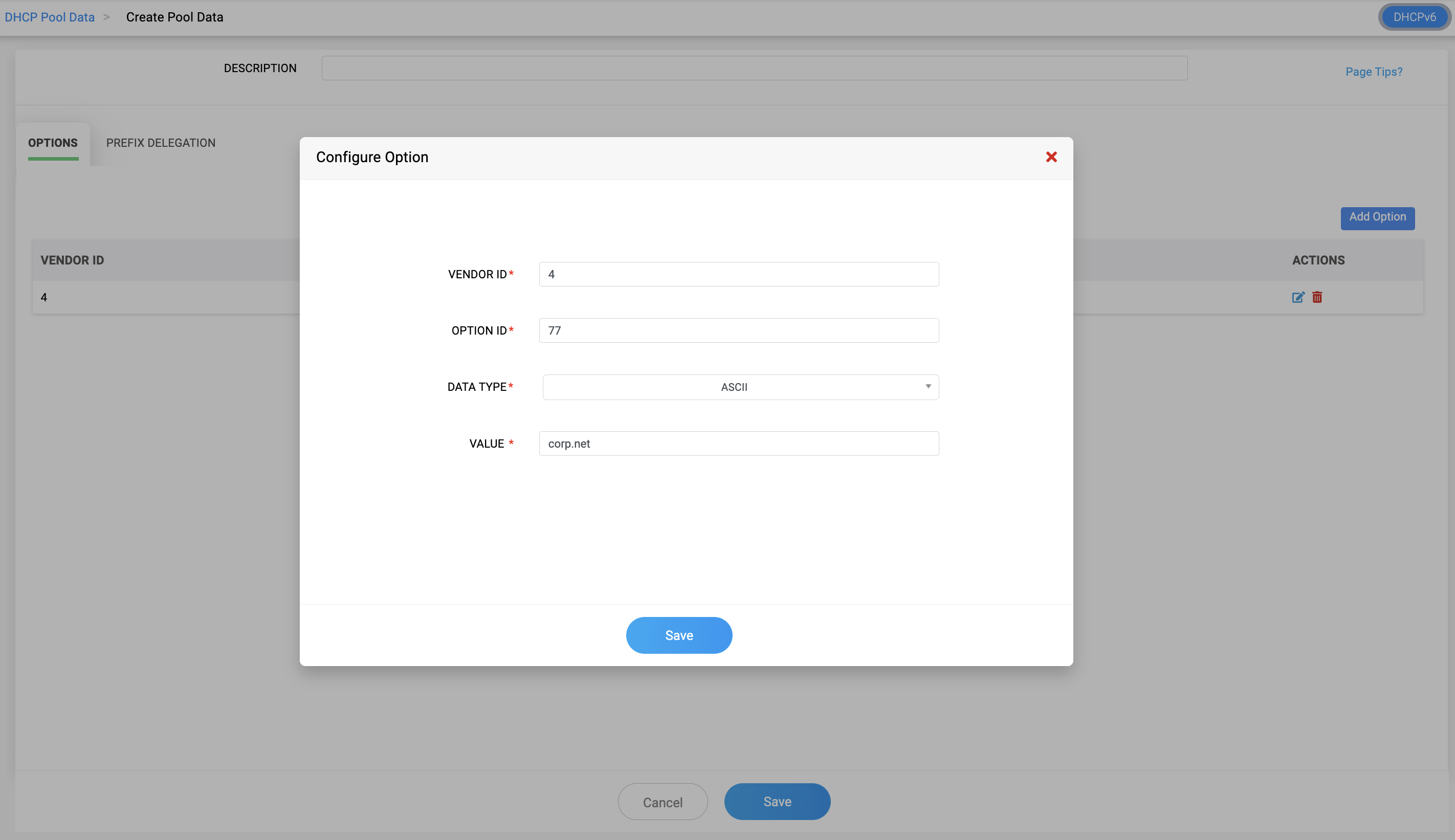
OPTION ID: Provide the option ID for implementing the configuration. The option ID ranges from 0 - 254 for DHCPv4.
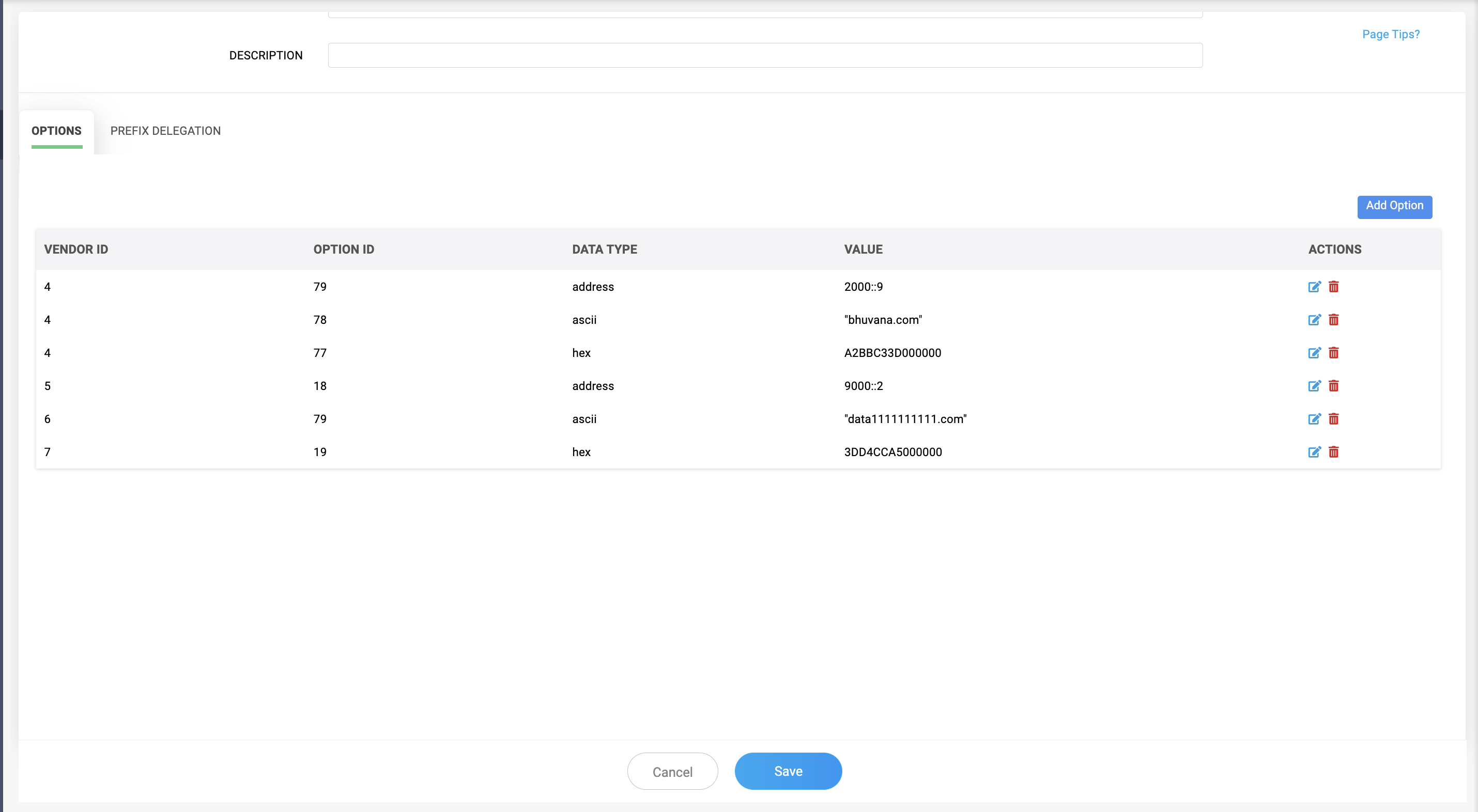
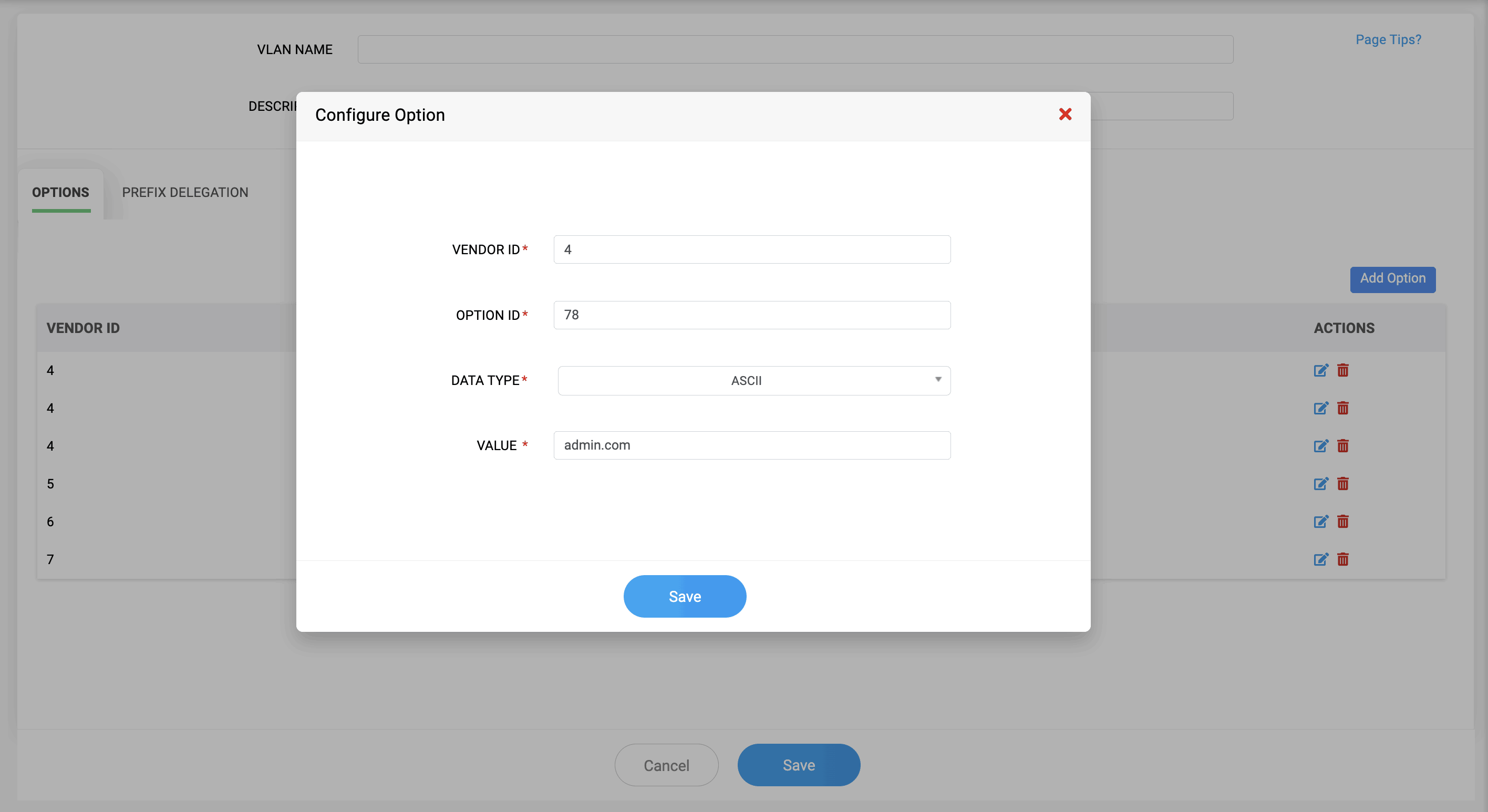
For DHCPv6, the Option ID ranges from 1 - 65535.
DATA TYPES: There are three types of data:
- ASCII: Human-readable text used for values such as domain names, boot file names, TFTP server names, vendor identifiers, and similar text-based options.
- HEX: Raw hexadecimal data, typically used when an option requires binary formatting or a specific encoded structure.
- ID (IP Address): Used when the value must be an IP address. Ideal for options that reference external servers or services, such as DNS, NTP, or TFTP servers.
VALUE: Provide the value of the option, relevant to the Option ID and data type.
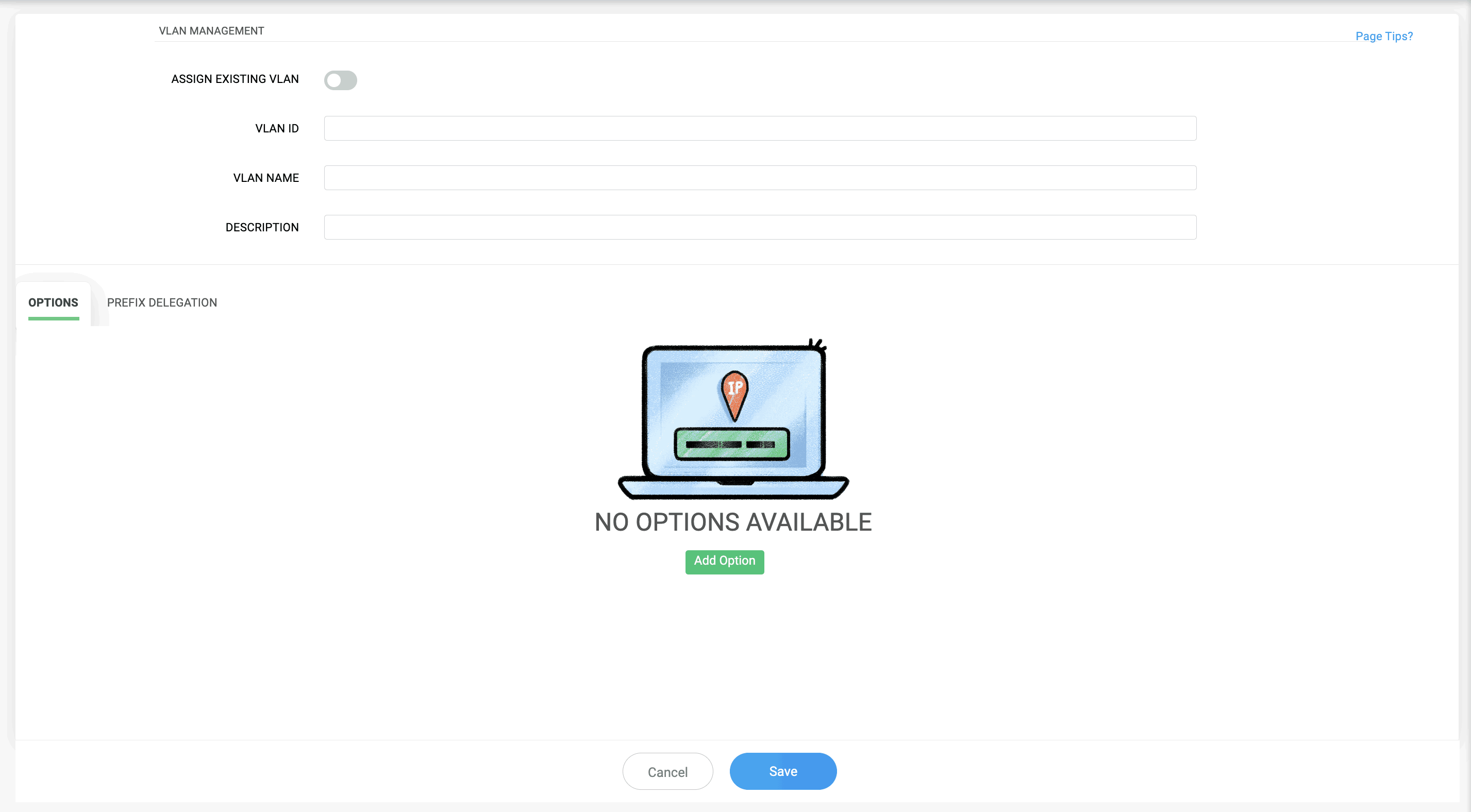
In DHCPv6, Options is configured through providing the Vendor specific ID along with the other fields.
VENDOR ID: The vendor class identifier (VCI) string sent by DHCP clients in their requests. It identifies the client’s manufacturer or device type. Cisco DHCP servers use this to match clients with the correct pool or configuration options.
The Vendor Specific ID ranges from 1 - 4294967295
In DHCPv6 custom options can be defined only as sub option under specific category
The Options can also be configured for host type pool data.
PREFIX DELEGATION:
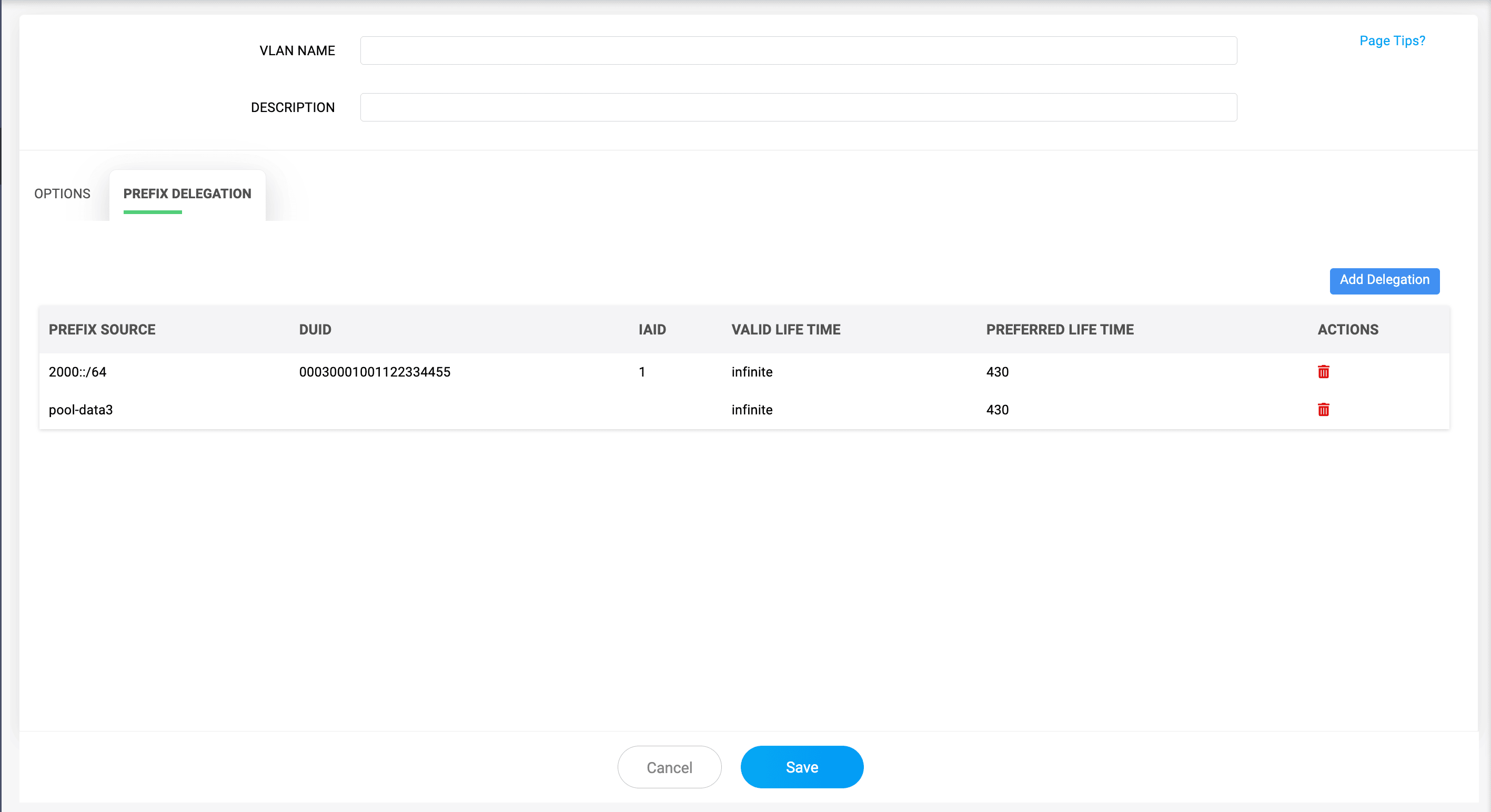
Prefix Delegation (PD) in DHCPv6 allows a router to automatically receive an entire IPv6 network prefix (like a /56 or /48) from a DHCPv6 server so it can create and assign /64 subnets to its internal interfaces. The server identifies the requesting router using its DUID and tracks each prefix request with an IAID.
The prefix delegation has the following fields to provide data:
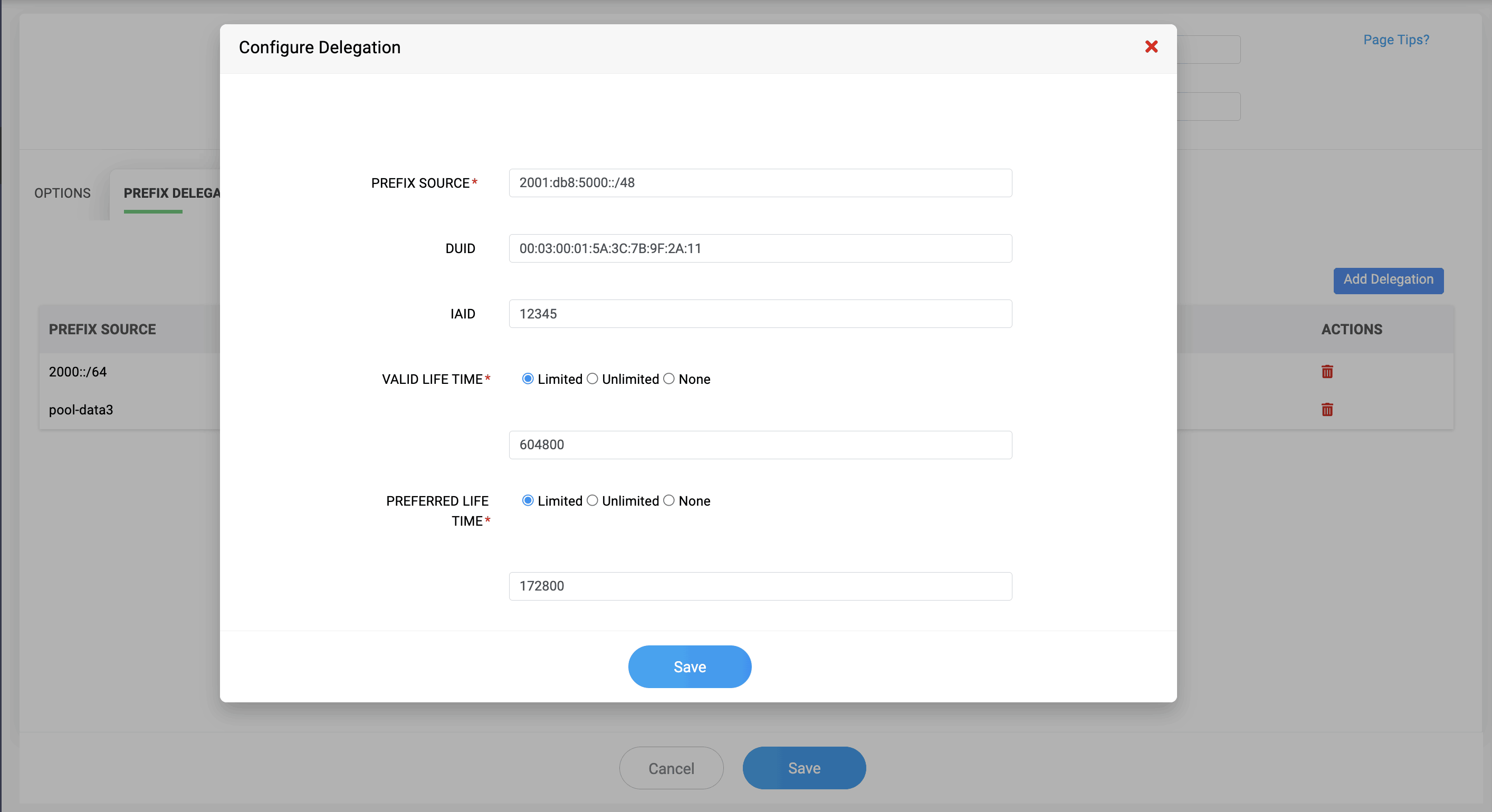
PREFIX SOURCE: The IPv6 network prefix that the DHCPv6 server delegates to a router for its internal LANs.
But, providing the network address and its prefix range means they must also provide the DUID of the network address as well.
Providing Pool name in prefix source wont require to provide DUID and IAID.
DUID: A unique identifier in hexadecimal used by DHCPv6 to identify the requesting router or device.
IAID: A unique number that identifies a specific prefix delegation request made by the router.
VALID LIFETIME: The total time the delegated prefix remains valid and can be used for communication.
PREFERRED LIFETIME: The time during which the prefix is preferred for new connections before becoming “deprecated.”