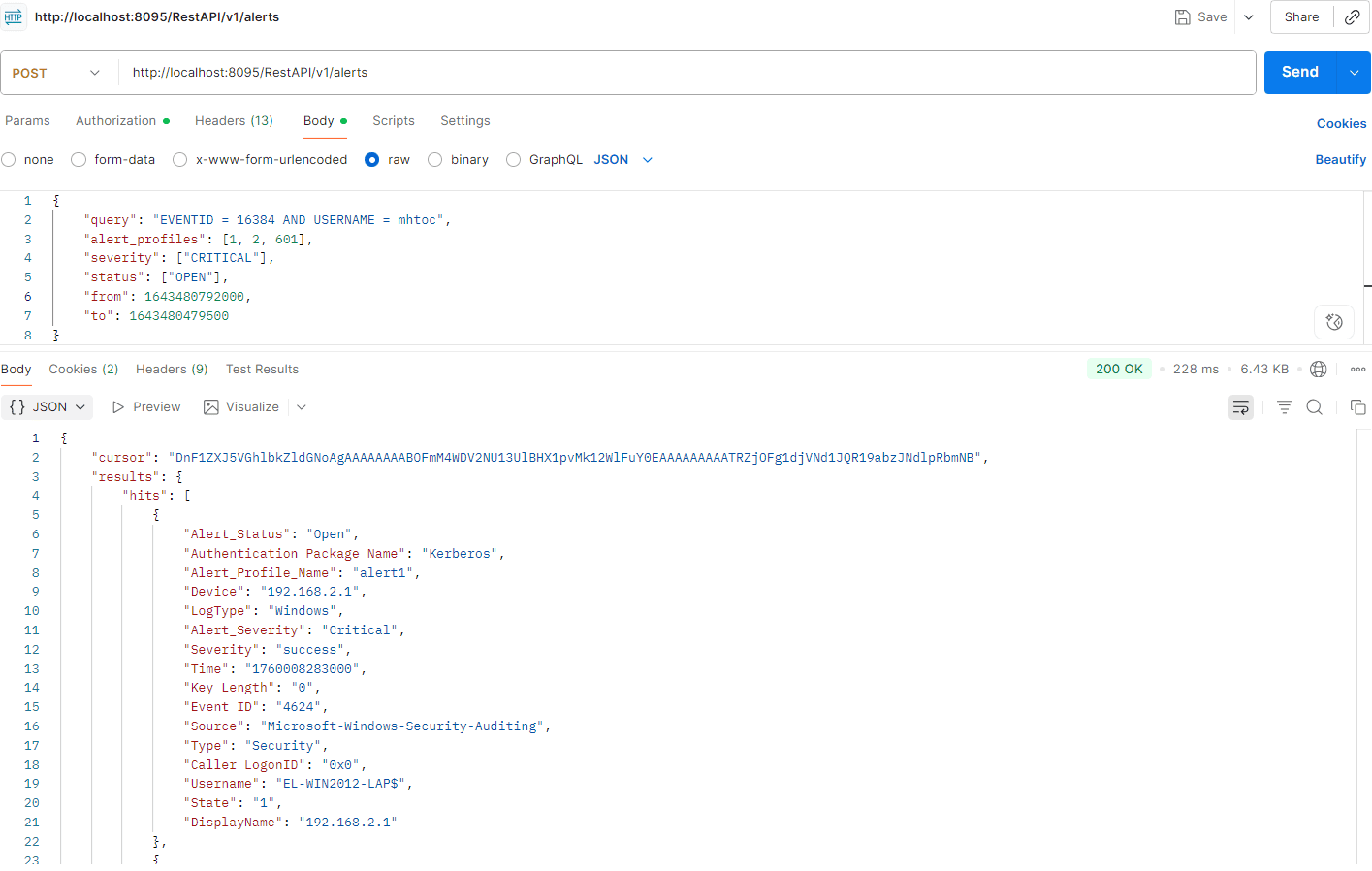
This API enables synchronous retrieval of alert data from ManageEngine Log360. When you initiate a synchronous alert query, the request is processed by the server.
The total time taken for the process depends on the number of search results obtained.
The following steps are involved to execute a synchronous alert query:
Create an alert request with the required metadata.
The server executes the request on the request thread and responds with the result.
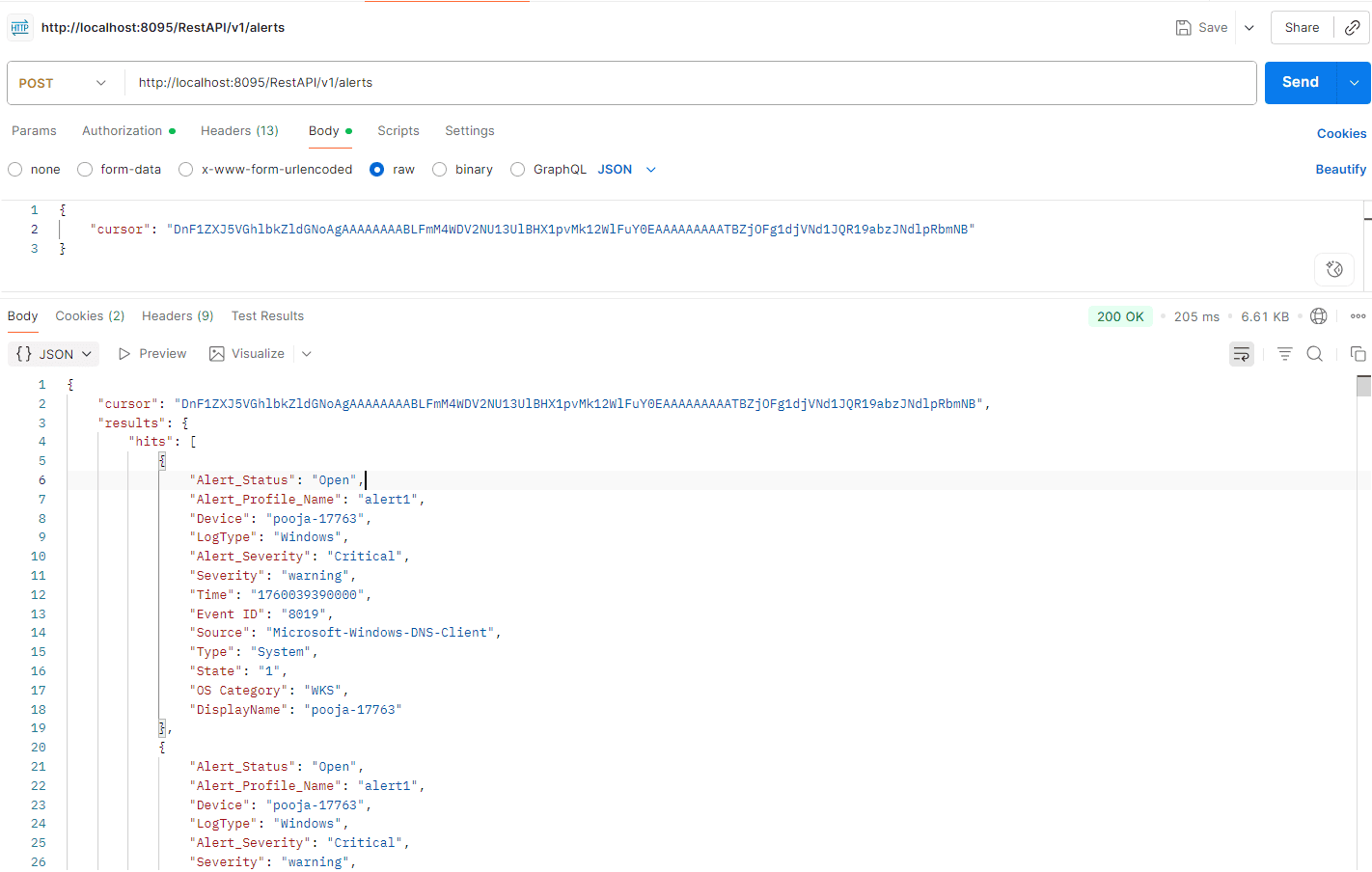
The server responds with a cursor when there are additional results beyond the predefined number that can be displayed in a single response.
You can continue requesting with the next cursor to retrieve the remaining set of results.
This process must be repeated until all alert hits are retrieved and the server no longer returns a cursor.
NOTE Continue fetching results using the cursor until the server stops returning one. This indicates that all alert hits have been retrieved. The cursor will expire if unused for more than five minutes.
Request URL
POST http://hostname:8095/RestAPI/v1/alerts
NOTE For the request URL, you can either use the IP address, or FQDN of the product server in place of hostname.
The request must be sent in JSON format in the body of the request and should contain the following key/value parameters.
Parameter name
Default value
Mandatory
Type
Description
query
*
No
String
Start value of the list
alert_profiles
all
No
JSONArray
List of alert profiles
severity
all
No
JSONArray
List of severity
status
all
No
JSONArray
List of status
from
current time - 24 hours
No
Long
Start time for search in Unix milliseconds
to
current time
No
Long
End time for search in Unix milliseconds
cursor
-
No
String
Cursor from next query
NOTE
When the cursor is passed, the other parameters are not required.
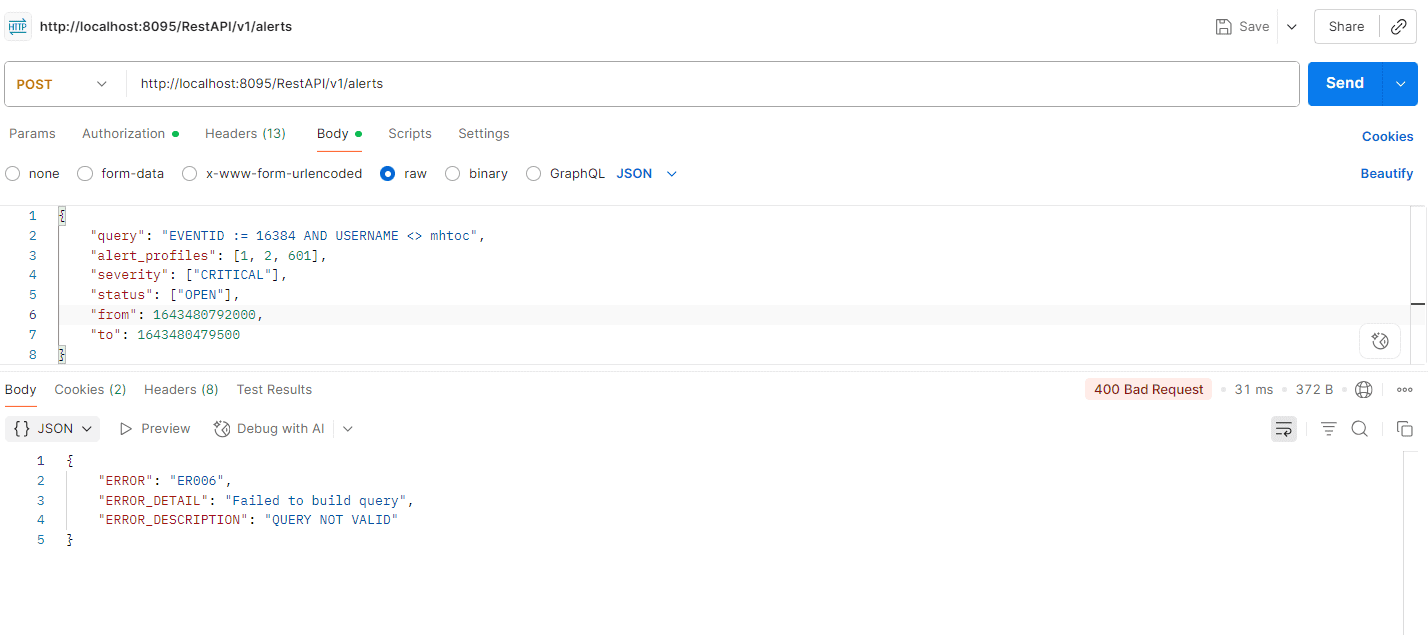
Quotes i.e ( " ") in query string must be escaped. If query in the product console's search page is REMOTE_INTERFACE = "switch 1", then for Rest Api the query parameter should be written as "REMOTE_INTERFACE = \"switch 1\""
Response
The API returns a JSON object containing the following fields:
Parameter name
Description
hits
JSON object which contain alert hits for the request
Contains following fields hits: List of alert hits hits_count_in_current_page: Hits count in current alert hit response