- What is PSA Software?
- Key benefits of PSA software for MSPs
- Industries that benefit from PSA software
- How MSP Central delivers these PSA benefits
Share:




As service businesses grow, managing operations using disconnected tools and manual processes becomes increasingly difficult. For MSPs in particular, day-to-day operations involve handling service requests, tracking technician effort, managing customer agreements, and ensuring accurate billing; all while maintaining service quality and response times.
Professional Services Automation (PSA) software brings these operational elements together into a single system. It helps MSPs manage service delivery, track work performed, and align operational activity with business outcomes. Instead of treating service management, time tracking, and billing as separate functions, a PSA connects them into a unified workflow.
For MSPs, this unified approach has a direct impact on business efficiency. Service requests are handled more consistently, technician time is captured accurately, and billing is based on actual work delivered. This reduces manual effort, improves visibility across operations, and helps MSPs understand how their services perform from both an operational and financial perspective.
As customer expectations increase and service models become more complex, PSA software plays a key role in helping MSPs maintain control, scale operations, and deliver services in a structured and predictable manner.
What is PSA Software?
Professional Services Automation (PSA) software is a centralized platform that helps service-oriented organizations manage their work from start to finish, from project planning and time tracking to billing, reporting, and resource coordination. At its core, PSA brings together tasks that are often scattered across multiple tools such as ticketing, time sheets, contracts, invoicing, and utilization data, into a single system that’s easier to manage and track.
For MSPs and other service providers, PSA software is especially valuable because it provides real-time operational visibility and a consistent way to manage service delivery and business workflows. Instead of juggling spreadsheets, manual work logs, and disconnected apps, teams have one place to understand what’s happening, who is doing what, and how work is translating into revenue and financial results.
With PSA software in place, organizations can move beyond reactive, manual processes to structured, predictable operations, which sets the stage for meaningful improvements across service quality, resource utilization, financial accuracy, and customer satisfaction.
Now, let’s look at the key benefits of PSA software and how it supports MSPs in running services and business processes more effectively.
8 Key Benefits of an RMM (Remote Monitoring & Management)
PSA (Professional Services Automation) software transforms how managed service providers operate by connecting service delivery, resource planning, and financial processes into a unified platform. The result is greater efficiency, visibility, and business control across the entire MSP lifecycle.
- Centralized operations and data
PSA software brings service management, time tracking, billing, project workflows, and reporting into a single system. This eliminates data silos and reduces the need to switch between disparate tools, giving MSPs a single source of truth for operational and financial data.
- Improved resource utilization
By providing real-time visibility into team availability, workloads, and skills, PSA tools help MSPs assign the right people to the right tasks. This improves utilization rates, reduces idle time, and supports better capacity planning, ultimately leading to higher productivity and profitability.
- Accurate time tracking and billing
PSA platforms automate time and expense tracking and link them directly to billing. This ensures accurate, timely invoices for all billable work, reduces errors, and speeds up the quote-to-cash cycle. Faster and more accurate billing also improves cash flow.
- Enhanced visibility and reporting
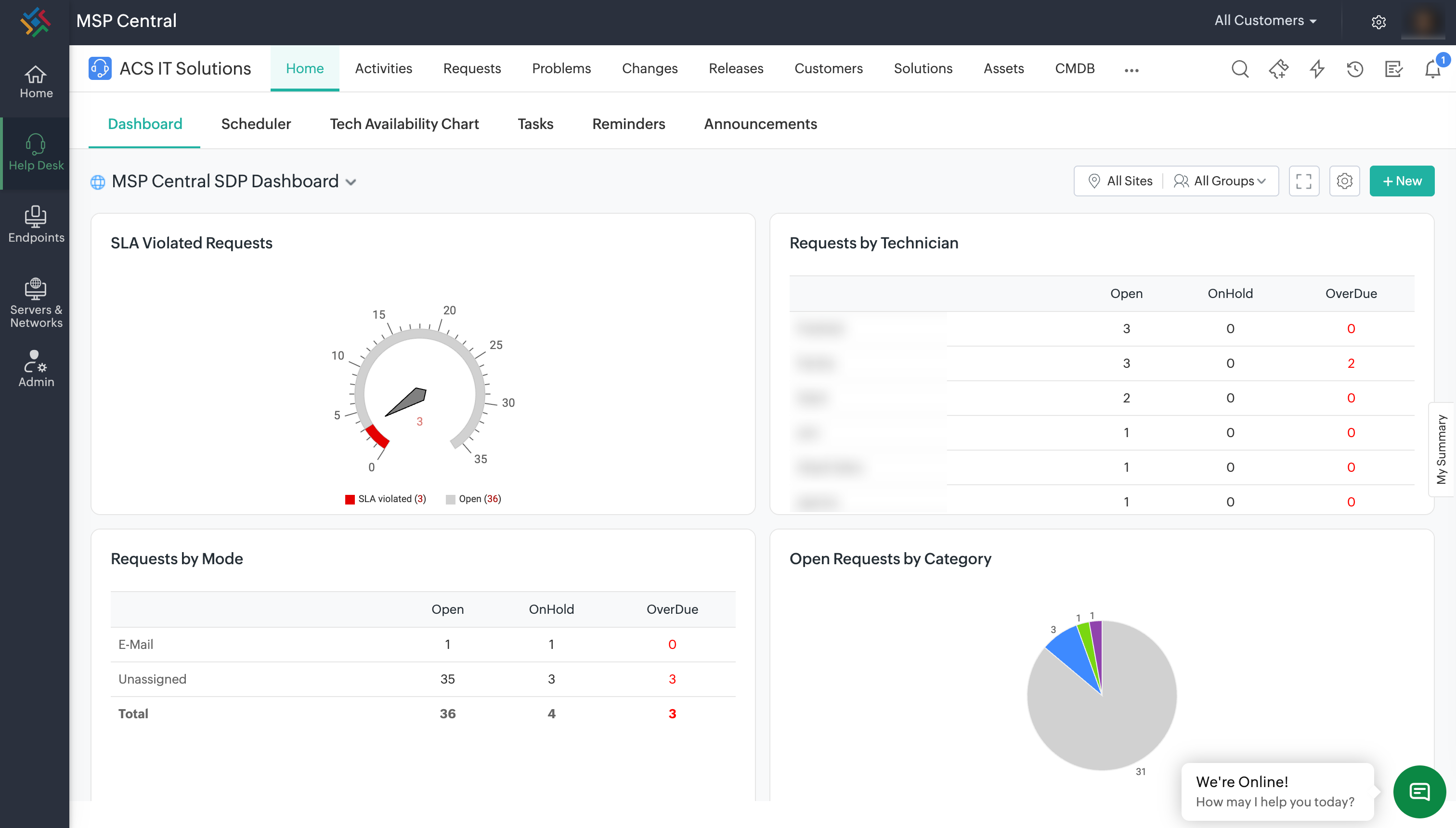
With real-time dashboards and custom reports, PSA software gives MSP leaders insights into service performance, utilization, profitability, and financial health. This visibility enables data-driven decisions that improve operational efficiency and client outcomes.
- Automation of routine tasks
PSA software automates repetitive administrative tasks such as ticket routing, approvals, invoicing, and reporting. This reduces manual workloads, minimizes errors, and frees teams to focus on higher-value activities like customer service and strategic planning.
- Standardized and scalable processes
Standard workflows, from ticket handling to billing, help MSPs deliver consistent service quality across all customers. As the business grows, PSA systems support scalable, repeatable processes that reduce operational friction.
- Better client satisfaction
PSA software improves transparency and communication with clients. Automated updates, real-time ticket status tracking, and accurate billing create a more predictable and professional service experience, which strengthens trust and client retention.
- Stronger financial control and forecasting
By linking operational activity with financial results including billable hours, costs, and revenue recognition. PSA tools help MSPs better forecast cash flow, analyze profitability, and make strategic investment decisions.
Industries that benefit from PSA software
While PSA software is commonly associated with MSPs, its value extends to any service-driven organization that manages people, projects, and billable work. Industries that rely on structured service delivery, resource planning, and financial visibility benefit the most from PSA adoption.
- Managed Service Providers (MSPs): For MSPs, PSA software acts as the operational backbone. It helps manage service tickets, technician workloads, customer contracts, and billing in a single system. This enables MSPs to deliver consistent services at scale while maintaining visibility into operational efficiency and profitability.
- IT services and consulting firms: IT consulting organizations use PSA software to manage client engagements, track billable hours, and oversee project delivery. PSA helps ensure accurate billing, better utilization of consultants, and clearer insights into project costs and margins.
- Professional services organizations: Firms offering advisory, implementation, or support services benefit from PSA by standardizing workflows across projects and clients. PSA software improves coordination between teams, supports predictable delivery models, and helps leadership track business performance in real time.
- Technology service providers and system integrators: System integrators and technology service providers often handle complex, multi-phase engagements. PSA software supports project tracking, resource allocation, and financial control, helping these organizations deliver services efficiently while managing cost and revenue alignment.
How MSP Central delivers these PSA benefits
MSP Central is designed to help MSPs translate the benefits of PSA software into practical, everyday outcomes. By bringing service management, project tracking, billing readiness, and operational visibility into a single platform, it enables MSPs to run services efficiently while keeping business workflows aligned.aps between people, tools, and processes, allowing teams to deliver reliable, scalable, and data-driven IT services that align with evolving client expectations.
- Streamlined service operations: Centralized ticketing, SLAs, and service workflows help MSPs deliver consistent support and reduce response times across customers.
- Improved resource utilization: Built-in time tracking and workload visibility provide clarity on technician effort, enabling better planning and higher productivity.
- Predictable project delivery: Project planning and task tracking help MSPs manage timelines, dependencies, and delivery risks more effectively.
- Accurate billing and revenue capture: Service activities and time entries are linked to contracts, ensuring billable work is tracked correctly and revenue leakage is minimized.
- Operational and business visibility: Dashboards and reports offer insights into service performance, utilization trends, and operational efficiency.
- Scalable service processes: Standardized workflows make it easier to support more customers and services without increasing operational complexity.
- Unified PSA experience: Core PSA capabilities are available within a single platform, reducing tool sprawl and improving coordination across teams.
Together, these capabilities make MSP Central a purpose-built PSA solution for modern MSP operations. By aligning service delivery, resources, projects, and business workflows within a single platform, it helps MSPs move from reactive service management to structured, scalable operations. For teams looking to simplify how they run and grow their services, MSP Central provides the foundation a PSA is expected to deliver.