Conquering Distributed Network Management with OpManager
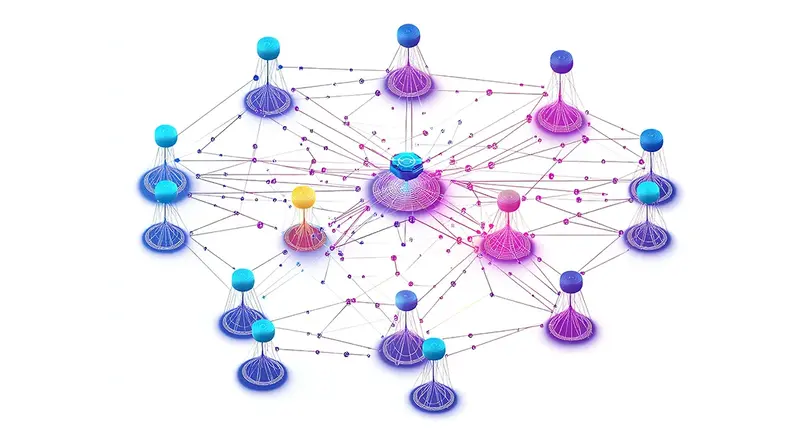
The modern enterprise network has evolved far beyond the traditional hub-and-spoke model. Today's IT infrastructure spans multiple continents, cloud providers, and edge locations, creating a complex web of interdependencies. The challenge isn't just managing more devices but maintaining visibility, ensuring consistent performance, and resolving issues across a distributed ecosystem where problems can cascade faster than falling dominoes.
This complexity has transformed distributed network management from a straightforward task into a formidable challenge. This guide explores the core complexities of managing distributed networks and how a purpose-built architecture can transform chaos into control.
The core challenges of managing a distributed network
As networks scale across multiple geographic locations, the management complexity increases exponentially. Key challenges include:
- Data overload and alert fatigue: Distributed systems generate massive amounts of monitoring data. Without intelligent filtering and correlation, IT teams are quickly overwhelmed by a flood of low-value alerts, making it difficult to spot the critical signals amidst the noise.
- Geographic distribution complexity: Managing networks across multiple sites introduces significant coordination challenges for maintenance, troubleshooting, and upgrades, compounded by varying time zones and local technical constraints.
- Pervasive visibility gaps: Rapidly replicate and migrate workloads between physical hosts to maintain high availability and streamline disaster recovery.
- Tool fragmentation: Large enterprises often accumulate 10-15 different monitoring tools for various purposes. This creates operational silos, inconsistent data, and increased complexity in training and tool management.
OpManager Enterprise - engineered to tackle geographic distribution and its challenges
To effectively manage a distributed network, you need an architecture designed for it. The Probe-Central architecture is the industry standard for scalable, resilient distributed monitoring.
- Central server: This acts as the unified command center or "single pane of glass." It is typically located at the primary Network Operations Center (NOC) and is responsible for data aggregation, reporting, and providing a centralized user interface.
- Probe servers: These are lightweight polling and data collection engines deployed at each remote location. They perform all the local monitoring tasks—polling routers, switches, and servers for faults and performance—and then send the compressed, summarized data back to the Central server
This architecture provides the best of both worlds: centralized visibility for the NOC team and distributed intelligence for fast, local issue detection and reduced WAN bandwidth consumption.
Probe-central architecture combined with powerful features to unlock distributed management
ManageEngine OpManager's Enterprise Edition is built on this robust Probe-Central architecture, engineered specifically to tackle the complexities of geographically distributed networks while maintaining unified control.
Unified visibility that breaks down silos
One of OpManager's most powerful capabilities is providing a single-pane-of-glass interface for the entire distributed infrastructure. This consolidates the monitoring of networks, servers, applications, storage, firewalls, and more. OpManager's automated discovery leverages multiple protocols (SNMP, WMI, ICMP, CLI) to discover and classify all devices, generating real-time Layer 2 and Layer 3 topology maps that provide immediate visual context during troubleshooting, even for remote sites.
AI-Powered automation for intelligent management
OpManager leverages AI and machine learning to streamline IT operations. Its Adaptive Thresholds feature dynamically adjusts alert thresholds based on learned performance baselines for each remote site, drastically reducing false positives and alert fatigue. Furthermore, its code-free IT Workflow Automation engine allows you to automate fault remediation and routine maintenance tasks. For example, you can create a workflow that automatically reboots a hung server at a remote branch office without any manual intervention.
Advanced Root Cause Analysis to cut through complexity
OpManager's Root Cause Analysis (RCA) feature enables you to visualize, analyze, and correlate monitoring data from devices across multiple locations in a centralized console. The built-in Network Path Analysis tool allows you to trace performance and route patterns hop-by-hop between sites, helping you quickly identify whether a communication delay is in your local network, the WAN, or your ISP's infrastructure.
Scalability that grows with your network
OpManager's Enterprise Edition is optimized for massive scalability, supporting up to 50,000 devices and 1 lakh interfaces out-of-the-box. Each probe can monitor up to 15,000 interfaces, ensuring that your monitoring infrastructure can grow with your network without requiring a complete overhaul. This scalability extends across diverse environments, including physical and virtual servers, multi-vendor network equipment, and hybrid cloud infrastructure.
Complex network environments? OpManager has you covered
High Availability Monitoring
OpManager supports high availability monitoring for critical network infrastructure, with configurations for failover mechanisms and redundancy monitoring. This capability is essential for distributed networks where single points of failure can impact multiple locations.
Multi-vendor support and integration
The platform provides comprehensive multi-vendor support with exclusive templates for 30+ storage vendors and the flexibility to create custom monitoring templates. This capability prevents vendor lock-in and ensures comprehensive network visibility across heterogeneous environments.
Mobile and Remote Management
OpManager includes iOS and Android mobile applications that enable real-time monitoring and push notifications for network engineers. This mobile capability is particularly valuable for distributed networks where technical personnel may need to respond to issues while away from traditional network operations centers.
Traditional network challenges are amplified in distributed environments, OpManager helps eliminate them
Addressing tool sprawl
Rather than requiring multiple specialized tools for monitoring performance, bandwidth, configurations, IP addresses, switch ports, firewalls, and applications, OpManager provides a unified platform for comprehensive network management. This consolidation eliminates tool sprawl and simplifies network management operations.
Reducing operational complexity
OpManager's distributed monitoring eliminates the need for individual updates and configurations for every remote site. Changes made in the central server are reflected across all probes, significantly reducing administrative overhead and ensuring consistency across distributed deployments.
Cost-effective scaling
The platform offers a cost-effective solution for network management, eliminating the need for multiple specialized tools and reducing operational costs. Organizations can scale their monitoring capabilities without proportional increases in licensing costs or management complexity.
Enables proactive network management aligned with future-ready capabilities
Cloud and hybrid environment support
OpManager provides server monitoring for cloud deployments, supporting public, hybrid, and private cloud environments. The platform's software scaling capabilities ensure it can grow as enterprises add more servers to their portfolio virtually.
AI and machine-learning integration
The platform's integration of AI and machine learning technologies improves anomaly detection, predictive analysis, and automated remediation. These capabilities help organizations stay ahead of potential issues while reducing the manual effort required for network management.
Predictive analytics and capacity planning
OpManager Nexus leverages historical data and advanced algorithms to predict future performance trends. The platform performs storage capacity planning and forecasting to help organizations avoid capacity-related crises while minimizing costs.
Transform distributed network management with ManageEngine OpManager
ManageEngine OpManager transforms the complex challenge of distributed network management into a manageable, scalable operation. By directly addressing the fundamental challenges of data overload, geographic distribution, and tool fragmentation, OpManager enables organizations to:- Achieve unified visibility: Monitor your entire distributed infrastructure from a single console while maintaining local intelligence at each remote site.
- Reduce operational overhead: Eliminate the need for multiple monitoring tools and reduce the complexity of managing geographically dispersed networks.
- Enable proactive management: Leverage AI-powered features for predictive analytics, intelligent alerting, and automated remediation.
- Scale efficiently: Support network growth without proportional increases in management complexity or operational costs.
For organizations struggling with the complexity of distributed network monitoring, OpManager represents a strategic investment in operational efficiency, network reliability, and business continuity.