Redis is an open-source NoSQL database that stores data in key-value pairs and is known for its speed and efficiency. It is suitable for use in database, caching, message broker, real-time analytics, and data storage applications. With Applications Manager's Redis monitoring, you can track the health and performance of Redis databases to ensure high availability and accessibility, providing insights into resource utilization and capacity planning, as well as incident resolution in case of performance disruptions.
Applications Manager: The only Redis monitoring tool you need
To ensure your Redis database is functioning at high speed and efficiency, there are a multitude of Redis monitoring metrics that need to be tracked. Redis monitoring tools like Applications Manager enables you to keep a close watch on the performance of your Redis servers with the help of the following capabilities:
Redis server monitoring
Connection statistics
Database activity insights
Message broker statistics
Replication details
Persistence activity details
Track the performance of your Redis servers with advanced metrics
Because Redis is renowned for its rapid, in-memory data storage access, comprehensive Redis monitoring is the most crucial step for maintaining high availability. As Redis functions as a message broker, caching, and data storage to perform fast-paced business operations, the likelihood of encountering a server outage increases when handling numerous requests without a proper Redis monitoring tool.
CPU Usage
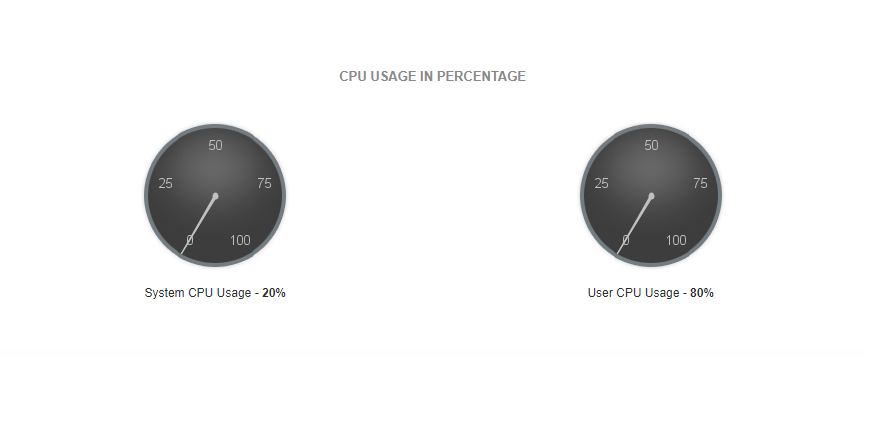
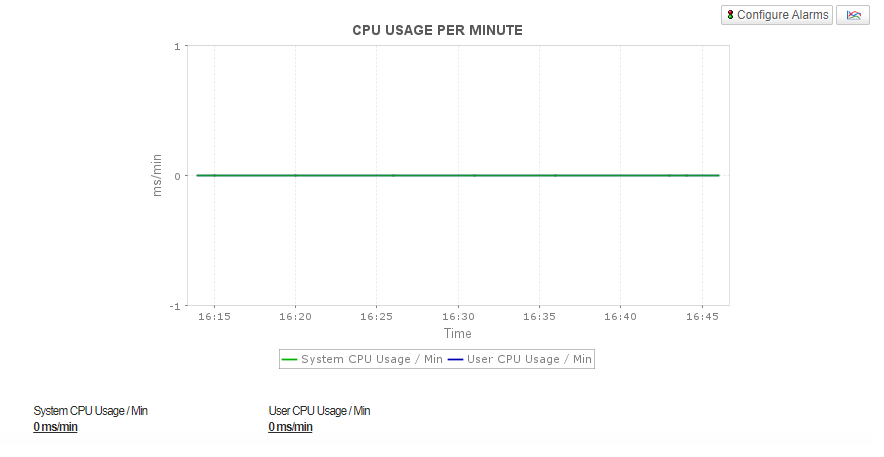
Applications Manager's Redis monitor enables continuous monitoring of CPU utilization for your Redis server, offering clear visibility. It helps analyze CPU usage patterns by providing detailed graphs of system and user CPU usage and promptly notifies you of any spikes in utilization values.
Memory usage and Eviction policies
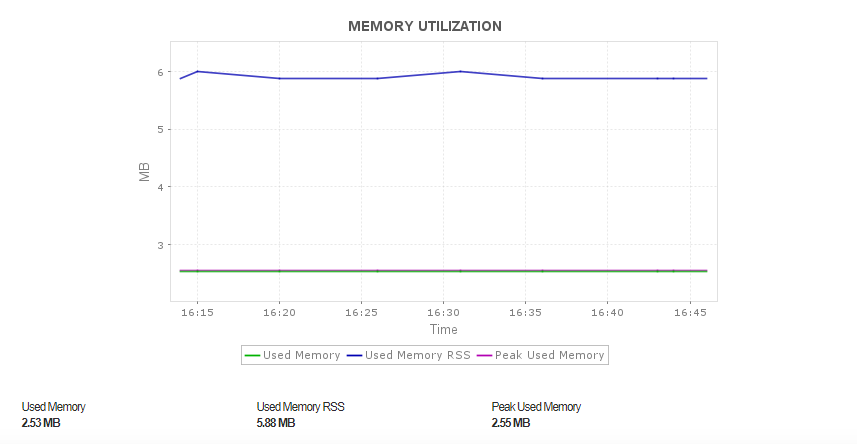
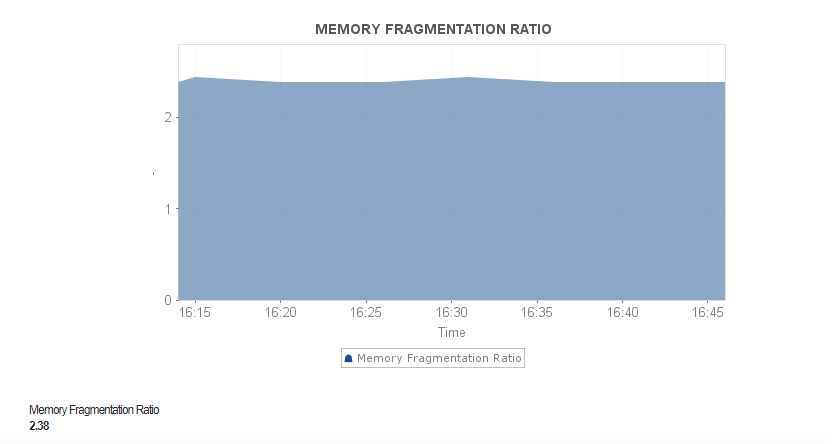
Applications Manager's Redis performance monitoring enables you to obtain real-time insights into memory utilization statistics such as Used Memory, Used Memory RSS, and Peak Used Memory to provide you with a better understanding of how each memory type affects storage consumption. Additionally, it keeps tracks of the Memory Fragmentation ratio, allowing for efficient memory usage and maintenance. Ensure optimal performance and prevent memory issues in your Redis environment.
Monitor the client connections of your Redis server
As Redis is famous for its rapid data storage, message brokerage, and caching abilities, a spike in the number of clients connecting to the server would happen almost immediately, which could impact responsiveness if not addressed.
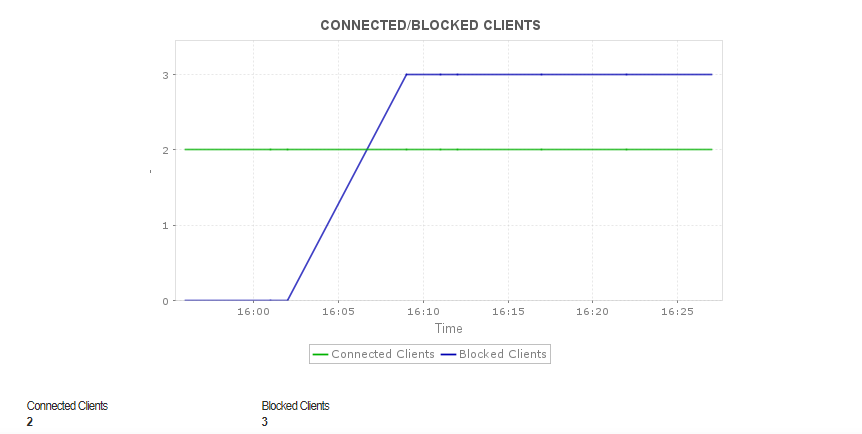
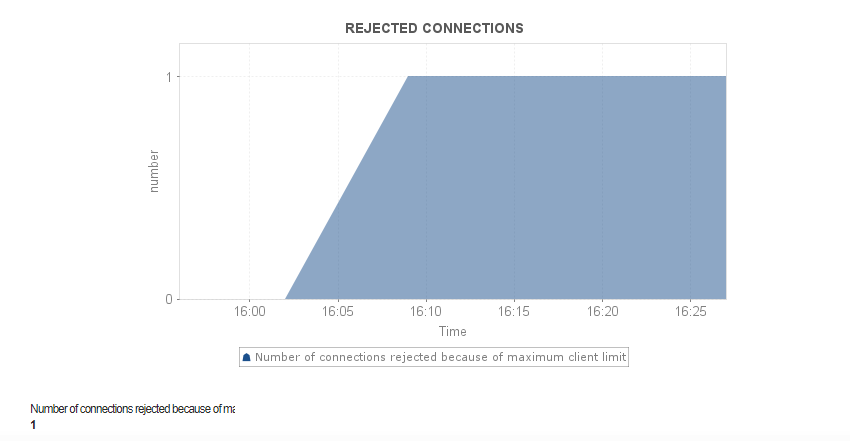
Applications Manager's Redis monitoring helps you get a clear view of the connections to your Redis server, with detailed information on each connection. It gives you insights into the number of connected, blocked, and rejected clients as well as the number of commands processed per second. This makes it easy to spot increasing values and take appropriate actions to address them.
Keep an eye on keyspace status
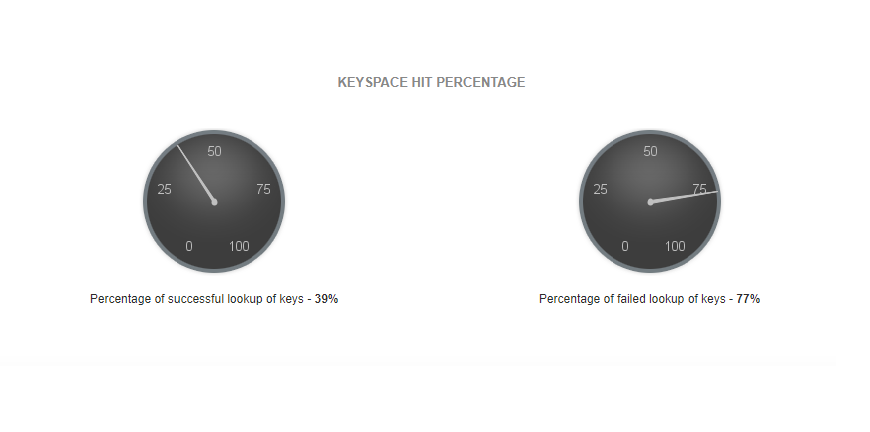
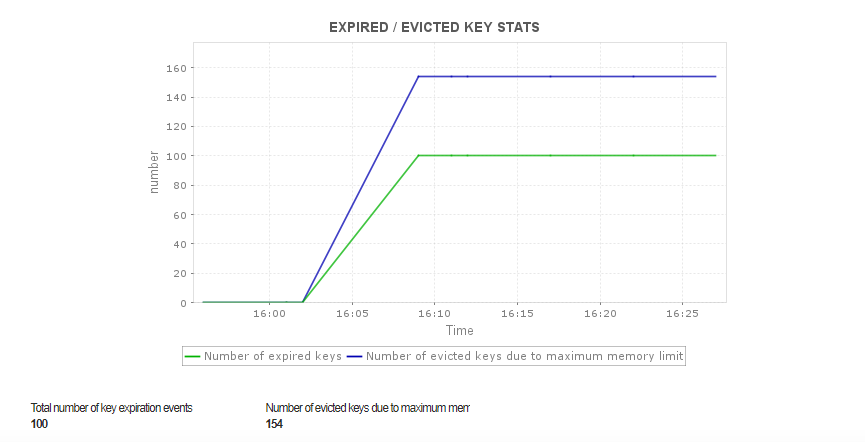
Applications Manager's Redis performance monitoring tool helps you gain a deeper understanding of your keyspace metrics, which functions as an internal dictionary for Redis to store and manage all its keys. It offers in-depth information about keyspace statistics by monitoring the number of successful and unsuccessful key lookups from the dictionary, as well as the number of expired and evicted keys due to memory limits, providing a thorough understanding of the server's processing capacity. This enables you to analyze the effect of key expirations on system performance, allowing you to avoid data losses and allocate resources appropriately.
Analyze message broker statistics
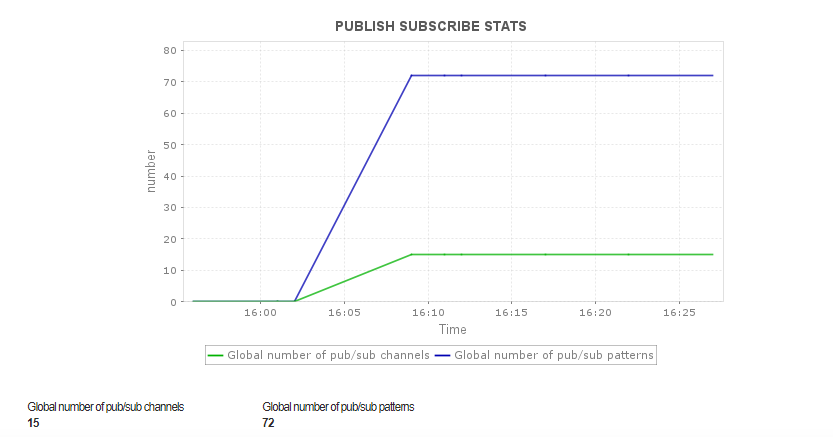
Using Applications Manager's Redis monitoring, you can gain insight into the messaging broker aspects of your Redis server. It monitors Redis server's pub/sub statistics by tracking the total number of pub/sub channels and patterns, as well as client subscriptions, to provide a comprehensive view of the volume of message calls your Redis server is handling.
Gain insights into your replication processes
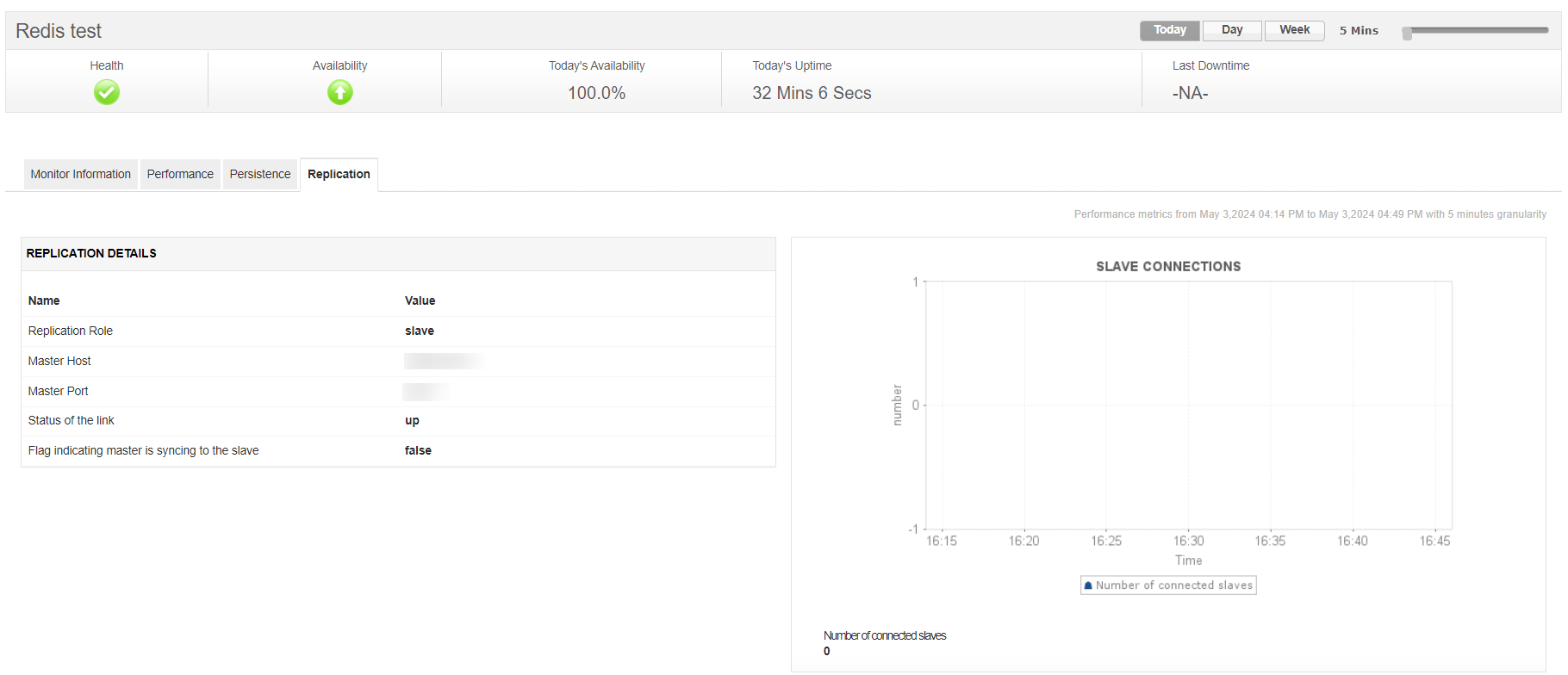
Applications Manager's Redis monitoring offers complete information about the replication processes of your Redis servers, including details like the replication role, master host and port, and the status of the connection between the master and slave servers. Additionally, it monitors the number of slave connections established with the master server, providing a complete view of the replication processes for data integrity.
Keep checks on persistence activity
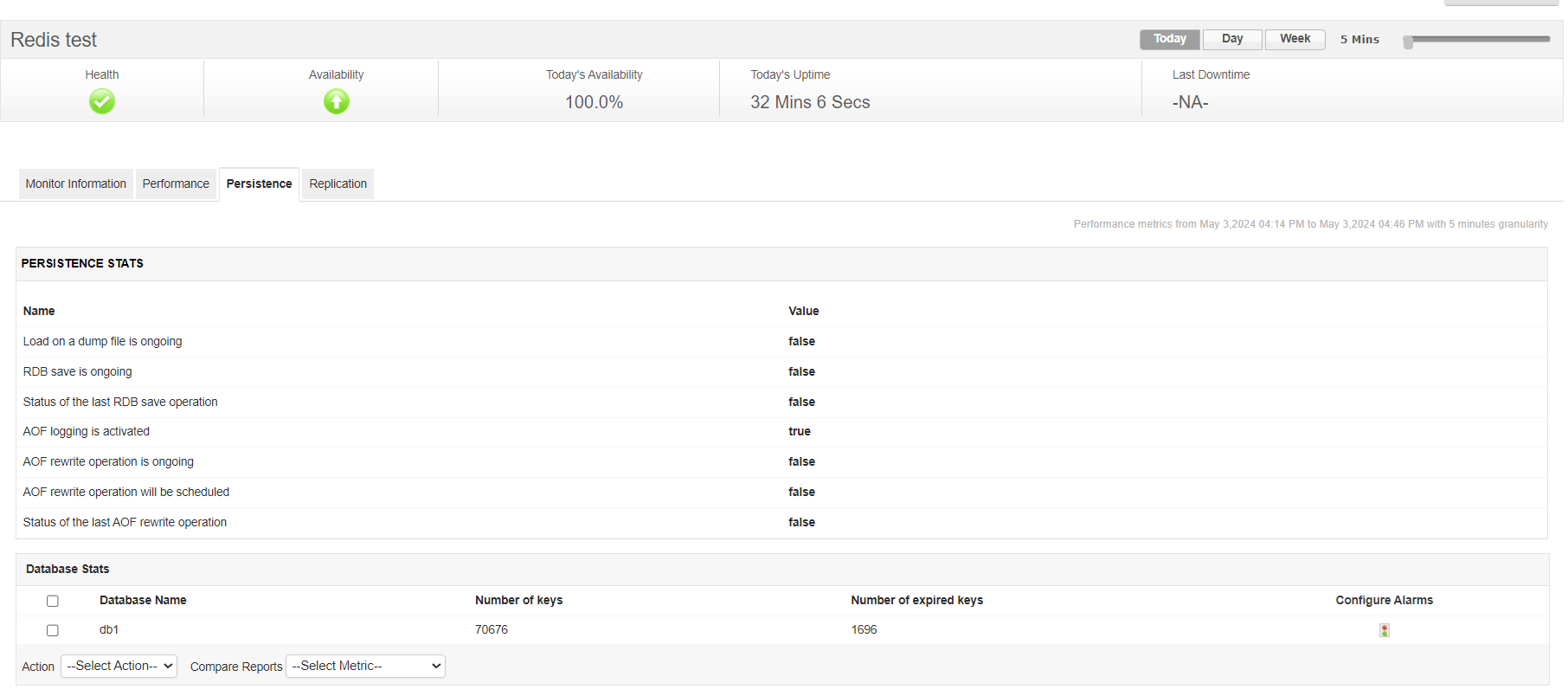
Applications Manager's Redis monitor also monitors the persistence statistics of your Redis server, which is used to store data on physical storage for backup in case of server crashes. It tracks various persistent states of RDBs (Redis Databases) and AOFs (Append Only Files), including the status of the last RDB save operation and the status of the AOF rewrite operation, respectively. Understanding these metrics can be beneficial for database admins during disaster recovery.
AI-powered alerting and reporting for Redis
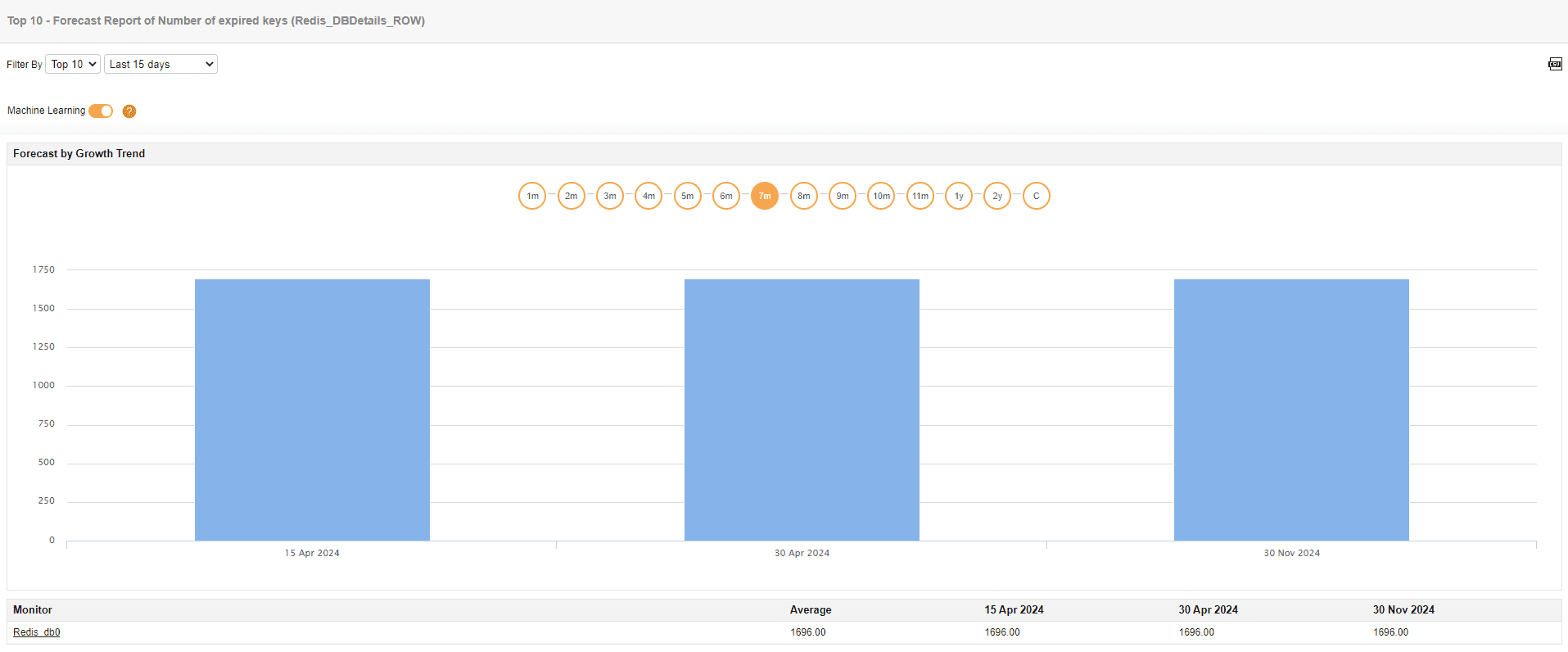
Applications Manager's AI-driven alerting capabilities can help simplify the detection and resolution of issues in your Redis server by detecting potential performance problems and promptly notifying you of the slightest bottleneck. With machine learning-based forecasting reports, you can anticipate your Redis server's future performance, covering timeframes ranging from months to years.
By utilizing AI-powered alerting and reporting, you can enhance your database performance monitoring and problem-solving process, ultimately ensuring that your Redis server consistently delivers fast-paced business performance as it should.
Common questions asked on Redis monitoring
What is Redis monitoring?
Redis monitoring is the process of tracking the health, performance, and availability of Redis databases to ensure reliable data access and uninterrupted operations. It involves monitoring key performance metrics such as memory usage, latency, connections, and resource utilization to detect issues early, optimize capacity, and support faster incident resolution.
Why is Redis monitoring important?
Redis is widely used for latency-sensitive applications such as gaming, messaging, finance, and real-time analytics. Since Redis stores data in memory for ultra-fast performance, even minor disruptions can significantly impact application responsiveness and business outcomes.
Monitoring Redis helps maintain consistent performance and availability by enabling early issue detection, minimizing downtime, and ensuring smooth application experiences.
What are the key advantages of comprehensive Redis monitoring?
A robust Redis monitoring solution delivers multiple operational and performance benefits, including:
- Proactive bottleneck detection: Identify slow commands, latency spikes, and abnormal activity before they affect end-user applications.
- Improved capacity planning: Analyze memory usage trends to forecast growth and scale Redis clusters efficiently.
- Optimized resource utilization: Reduce memory fragmentation and fine-tune eviction policies to maximize infrastructure efficiency.
- Enhanced security visibility: Track rejected connections and unauthorized access attempts to protect critical Redis environments.
What are the common challenges in monitoring Redis?
Monitoring Redis environments can present several operational challenges, such as:
- Handling large datasets: Managing high volumes of in-memory data can impact performance if not properly monitored.
- Maintaining peak performance: Ensuring consistent performance 24/7 requires continuous visibility into latency and resource usage.
- Delayed incident response: Slow identification of performance issues can disrupt business-critical workloads.
- Scaling complexity: As data and user demand grow, Redis environments must scale without compromising performance.
How to monitor Redis performance?
Using a Redis performance monitoring tool like Applications Manager, enables administrators to continuously track database health, detect anomalies, and receive alerts when performance thresholds are exceeded, all within a single Redis monitoring dashboard. Through intelligent machine learning techniques, our Redis monitoring tool can also use predictive analytics to forecast growth trends and resource utilization, helping teams make informed scaling decisions.
Does Applications Manager support Redis query monitoring?
No, Applications Manager does not currently support deep Redis query monitoring
Does Applications Manager support Redis cache monitoring?
Applications Manager monitors overall Redis performance metrics. In cloud environments, Azure Cache for Redis instances can also be monitored through the Azure Cache for Redis monitoring.