Unmanaged Applications
Understand what unmanaged applications are, why they matter, and how to bring them under policy control.
Overview
What are unmanaged applications?
Any application that exists outside your defined allowlists and blocklists is unmanaged — and unmonitored.
The risk of over-relying on basic lists
An unmanaged application is any executable that exists on an endpoint but is not included in any allowlist or blocklist. Because no policy governs it, its behavior is unmonitored. Relying only on a basic allowlist — without accounting for every application present in your environment — leaves gaps that weaken your overall security posture.
Building comprehensive policies that cover all discovered applications, not just the frequently-used ones, is essential for effective network security and a genuine zero-tolerance posture toward unmanaged software.
The security vs. productivity trade-off
There are two fundamental strategies for handling unmanaged applications: allow them or block them. A strict Zero Trust approach favors blocking, but an overly restrictive allowlist creates operational friction — access requests pile up and newly installed applications are blocked by default until reviewed.
Management
Using flexibility modes to assess unmanaged apps
Start in Audit Mode to understand what's running, then move to Strict Mode once your lists are complete.
Audit Mode for discovery
In Audit Mode, both allowlisted and unmanaged applications run simultaneously while events are collected. This lets administrators observe actual application usage patterns before committing to any blocking decisions.
After analysis, each unmanaged application can be resolved by adding it to an allowlist or blocklist. Once all unmanaged applications have been addressed, the policy can be switched to Strict Mode for full enforcement.
Resolving unmanaged applications
Unmanaged applications per policy are visible in the deployment view and can be resolved in several ways.
Viewing unmanaged applications
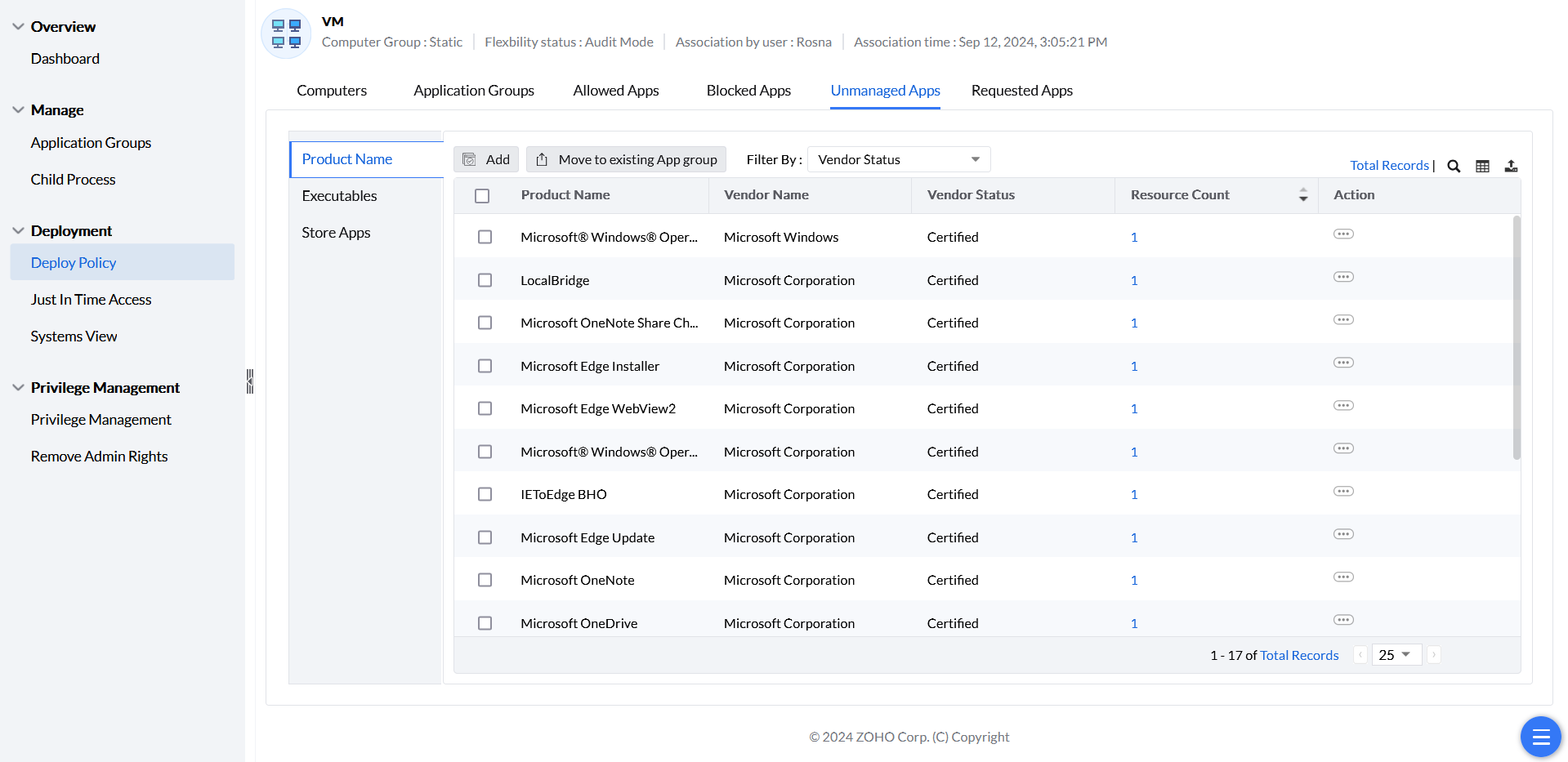
Unmanaged applications for each deployed policy are visible under Unmanaged Apps within the relevant group in Deploy Policy. From there, each application can be handled in one of three ways:
- Add to Allowlist or Blocklist — select the application and add it directly to an existing list.
- Move to Existing App Group — move the application into an application group, automatically associating it with the custom group that the policy is deployed to.
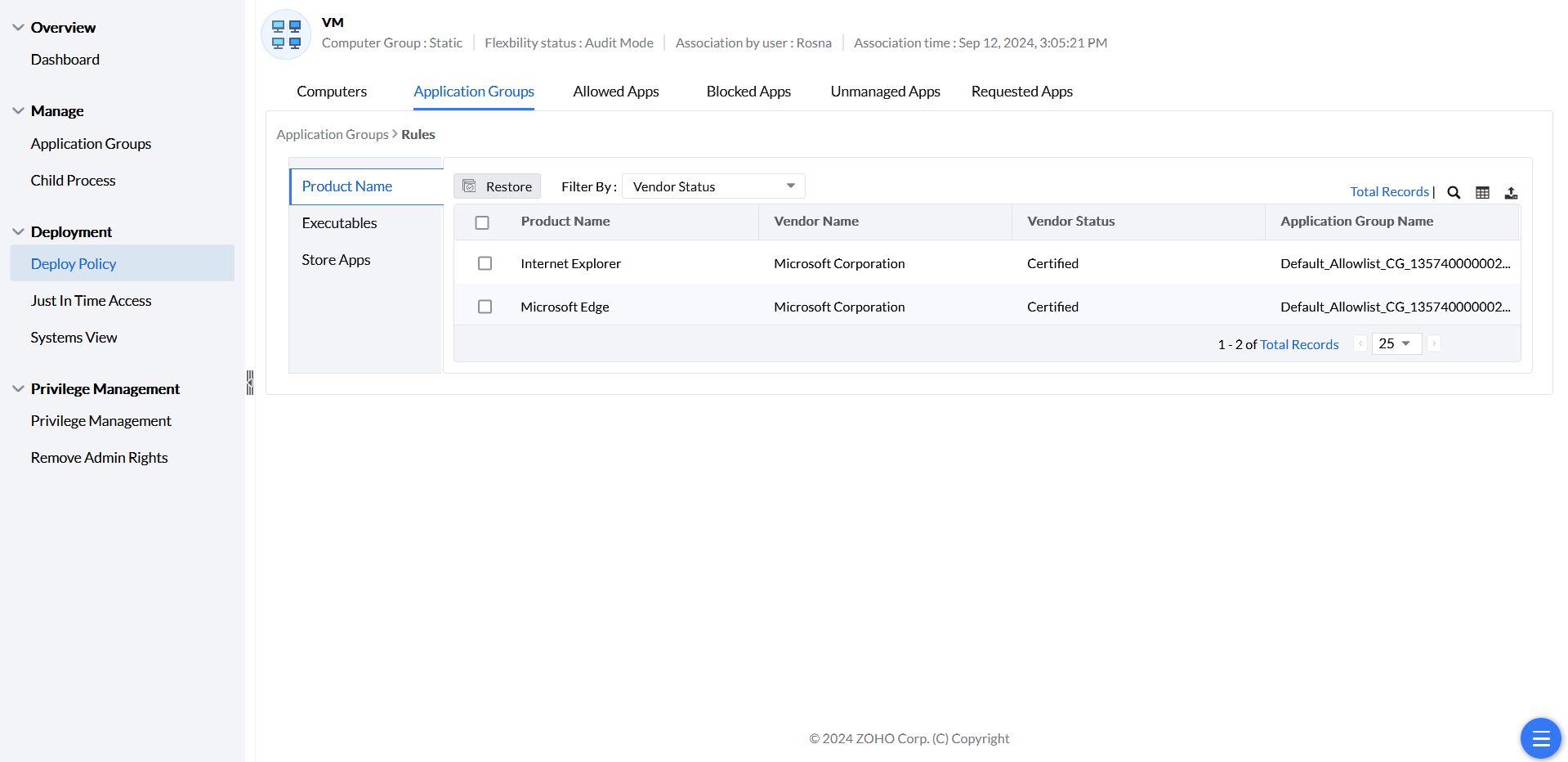
- Restore — after an application has been moved to a list, this option returns it to unmanaged status from within Application Groups.