Simplify incident management with OpManager's ilert integration
- Leverage AI-driven alerts to detect issues proactively
- Consolidate context-rich alerts in ilert's interface
- Automate alert management to simplify incident response
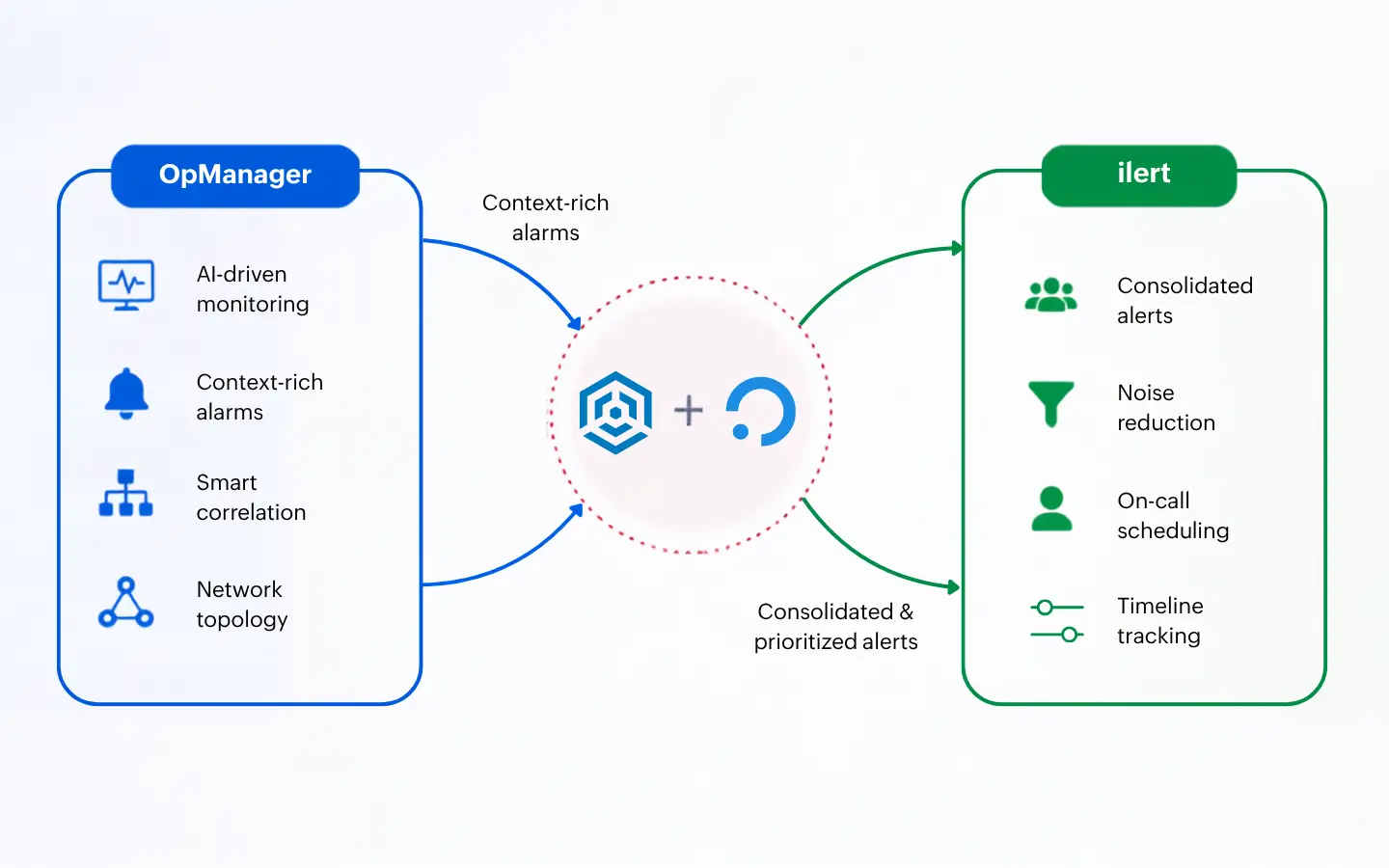
Why integrate OpManager with ilert?
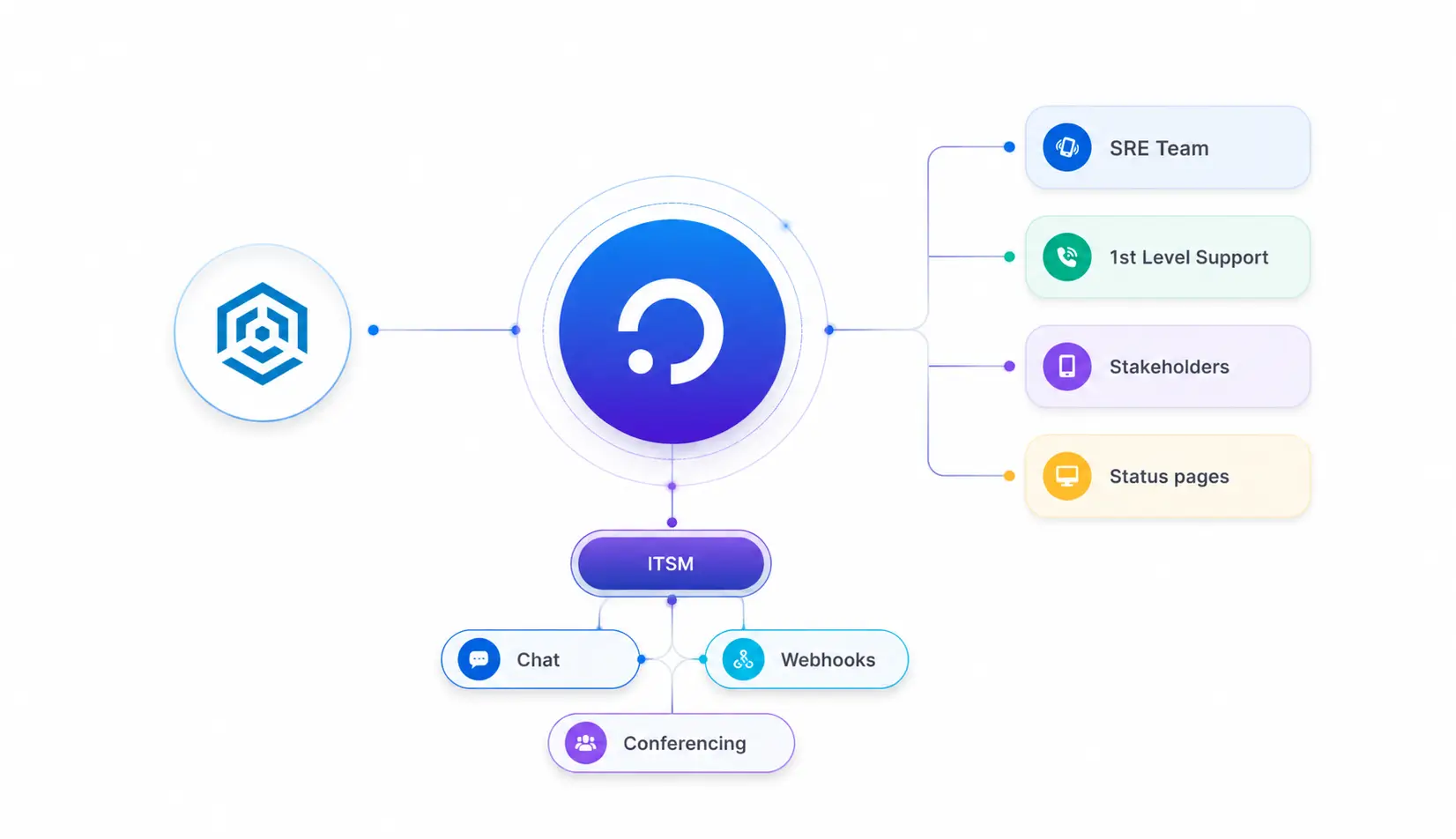
ilert is an incident management platform that ensures that when IT infrastructure or software breaks, the right team is notified instantly to fix it. OpManager is a network monitoring software that specializes in detecting the symptoms of IT infrastructure breakages. By integrating OpManager with ilert, you can speed up incident response: escalating the right alerts to the right team at the right time to fix issues proactively.
Key features of the OpManager-ilert integration
Automate alarm management
OpManager's AI-driven monitoring keeps tab on the IT infrastructure round the clock. When any discrepancies are detected, they are raised as context-rich alarms.
- These alarms are sent to ilert instantly. As your technicians work and fix the issue: The alarms are updated and closed automatically in OpManager's interface.
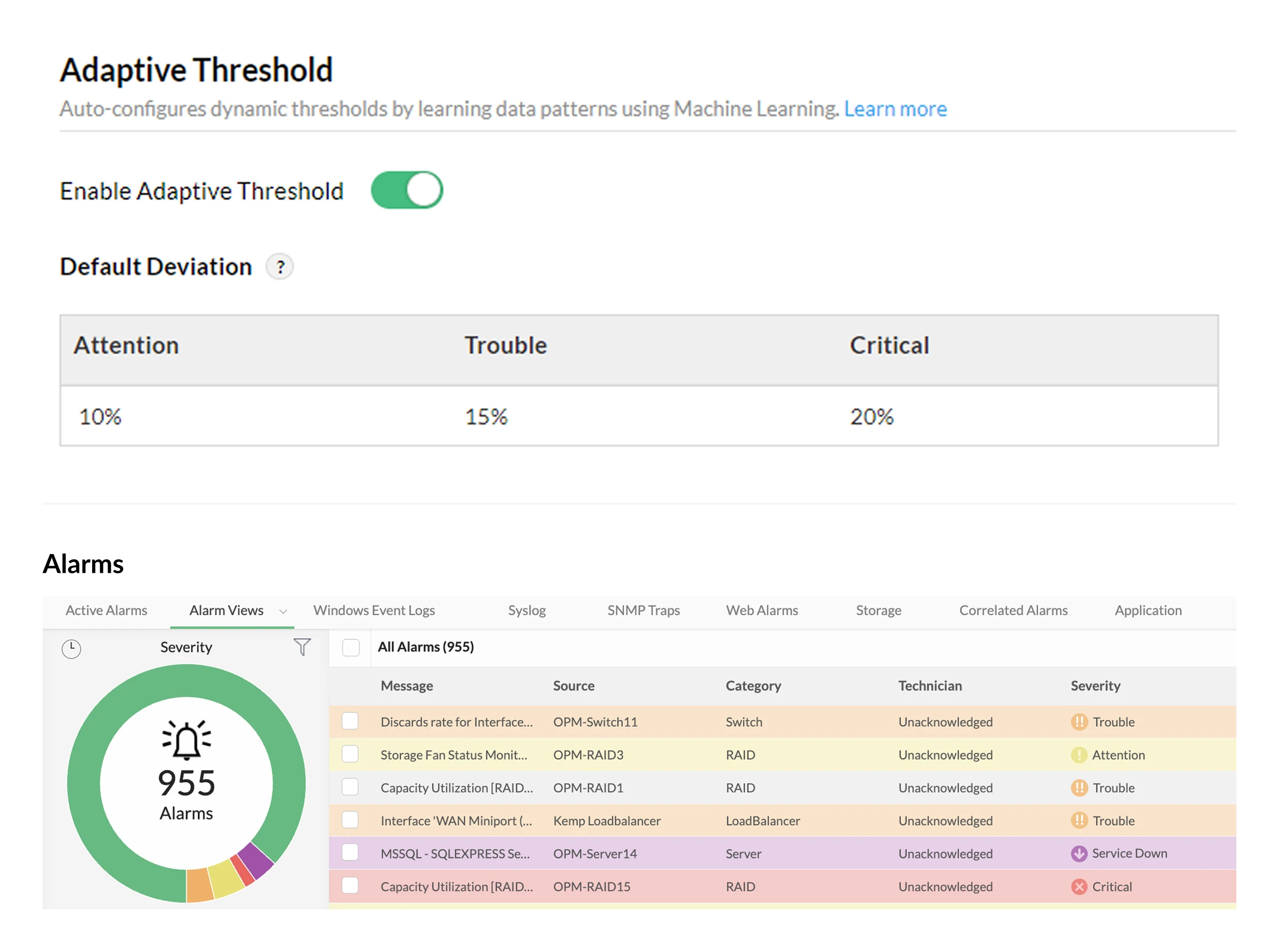
Reduce alarm noise
OpManager's smart event correlation reduces alarm noise by grouping similar alerts together. OpManager also uses network topology mapping and dependency tracking to suppress alarm floods triggered by core devices. ilert refines them further and prioritizes them based on severity.
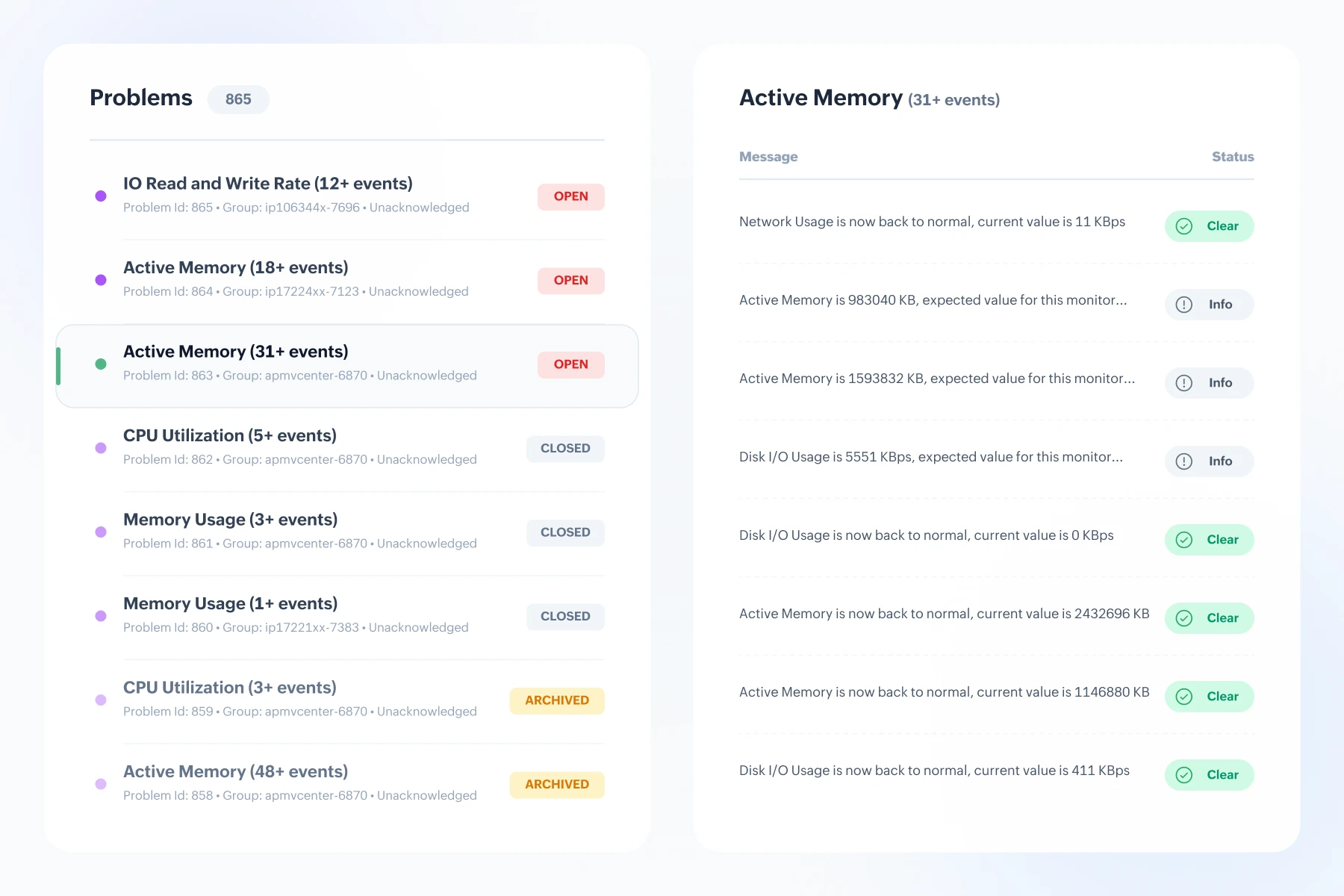
Simplify incident management
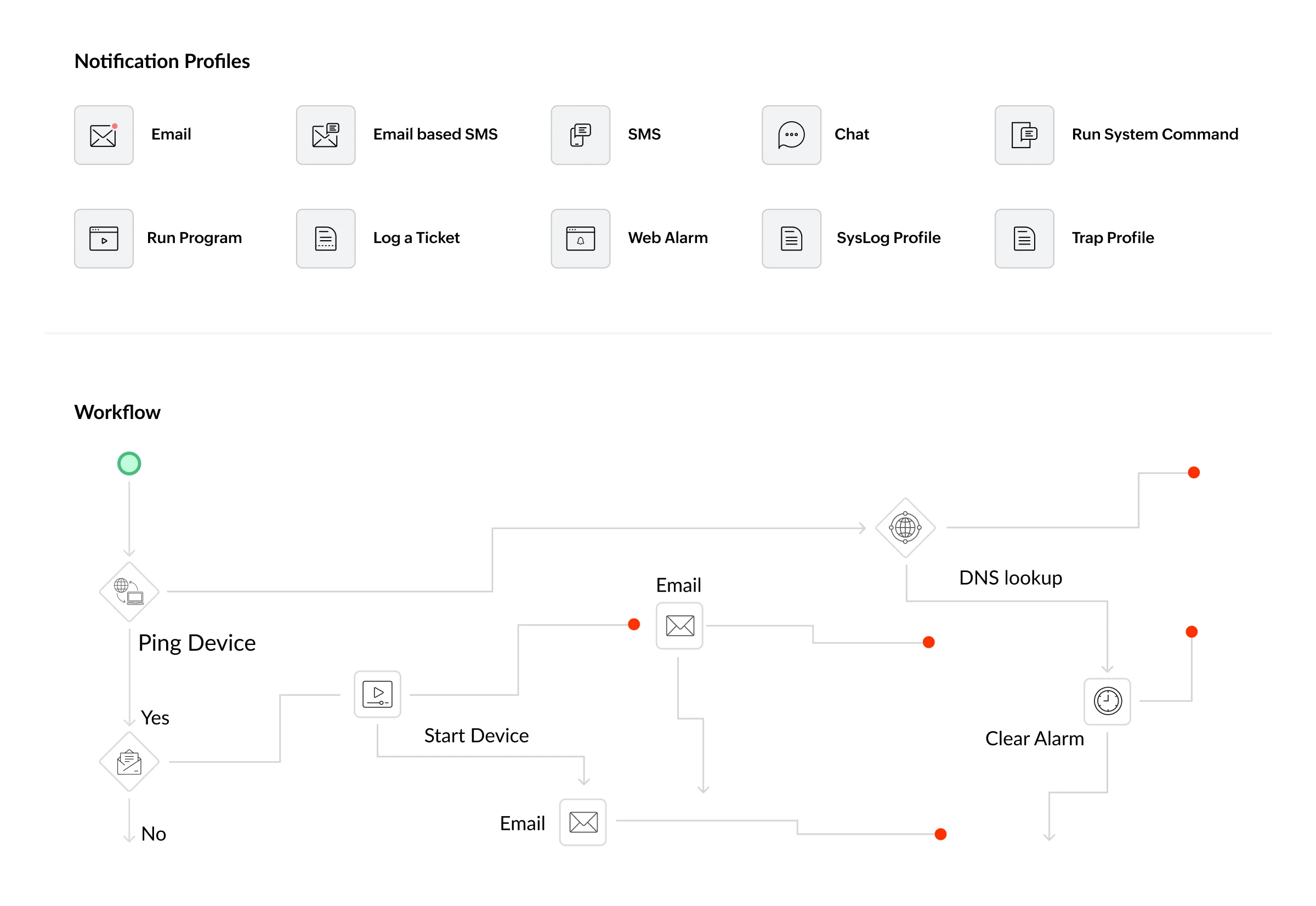
Speed up incident response
OpManager generates alerts with severity levels and metrics. ilert provides advanced on-call scheduling and escalation to ensure that no alert goes unnoticed. ilert also provides timeline tracking: giving IT teams complete visibility into incident response, post-event analysis, and audit tracking.
Practical use cases for OpManager's ilert integration

Combating alert storms during cascading core switch failures
Prevent on-call burnout and accelerate root cause resolution when core network devices fail, stopping secondary alerts from overwhelming incident queues during major infrastructure outages.
- Use dependency tracking and topology mapping in OpManager to instantly suppress downstream device alerts when a primary edge switch drops offline.
- Group remaining correlated alarms into a single, unified incident in ilert, preventing redundant SMS, push, and voice call pages to engineers.
- Direct the consolidated incident payload through ilert’s parallel escalation policies and multi-channel notifications (voice, SMS, push) to instantly wake up on-call network engineers.
Eliminating orphaned VM resource bottlenecks during major release cycles
Stop abandoned staging VMs, forgotten developer sandboxes, and unmonitored test clusters from causing storage latency or CPU starvation for critical production workloads.
- Leverage OpManager’s dedicated Hyper-V dashboards and WMI discovery to automatically flag orphaned VMs, over provisioned data stores, and core-level CPU contention.
- Set up the ilert integration to forward these flagged events to ilert. Utilize ilert to assign a named Incident Commander and a dedicated incident chat channel.
- This ensures that the alert bypasses general IT support and hits the dedicated virtualization on-call schedule.
- Capture every lifecycle state from initial OpManager alarm generation to ilert shift handover inside ilert’s automated timeline for seamless audit tracking and post-incident analysis.
Resources to dig deeper
The technical playbook for deploying agentic AI in production ITOps
From alerts to action: How agentic AI will change your ITOps
Download (PDF) →Unlock more value with add-ons
Extend easily with complementary products — add deeper traffic visibility, configuration management, and more.
Bandwidth monitoring
Layer NetFlow-based traffic analysis to see who and what is driving every byte across the network.
Try free trial →Firewall management
Audit firewall rule changes, spot shadow rules, and tie every config change back to the network event.
Try free trial →Network configuration
Back up configs, detect drift, and push standardized changes across thousands of devices.
Try free trial →