- Traditional AV: Good intentions, weak execution
- WannaCry: A classic failure of traditional AV
- Enter NGAV: The smart security muscle
- Before investing in NGAV: Real use cases that matter
- NGAV + UEM = Endpoint zen
- What Endpoint Central’s NGAV brings to the table
- Final thoughts: Why you should rethink AV strategy today
Share:




Antivirus (AV) was built for a different era—when viruses were straightforward and predictable. Today’s malware is smarter, stealthier, and moves laterally through networks. Relaying on legacy AV is like using a paper map in a world of GPS. It had its time. However, that time is over.
It's time to discuss why AV is falling behind, and why next-gen antivirus (NGAV) isn't just smart, but essential to your endpoint security strategy.
Traditional AV: Good intentions, weak execution
How it works:
- Signature-based detection
Compares files against a known list of malware hashes. If it’s not on the list? It gets a pass.
- Scheduled scans
Like a Roomba for your endpoints—just slower and prone to missing the stuff that really matters.
- Reactive model
Threats show up, then maybe the AV reacts.
The problem? Most modern attacks don’t look like anything on yesterday’s threat database. They're shapeshifters, script-based, and fileless. They sneak in under the radar while your AV is still looking for that 2017 WannaCry signature.
Weak spots:
- Can’t handle zero-day exploits or polymorphic malware
- Easily bypassed by simple obfuscation techniques
- Heavy system resource usage that drags performance
- No visibility into behavioral patterns or attack chains
It’s like locking your front door while leaving the windows open.
WannaCry: A classic failure of traditional AV
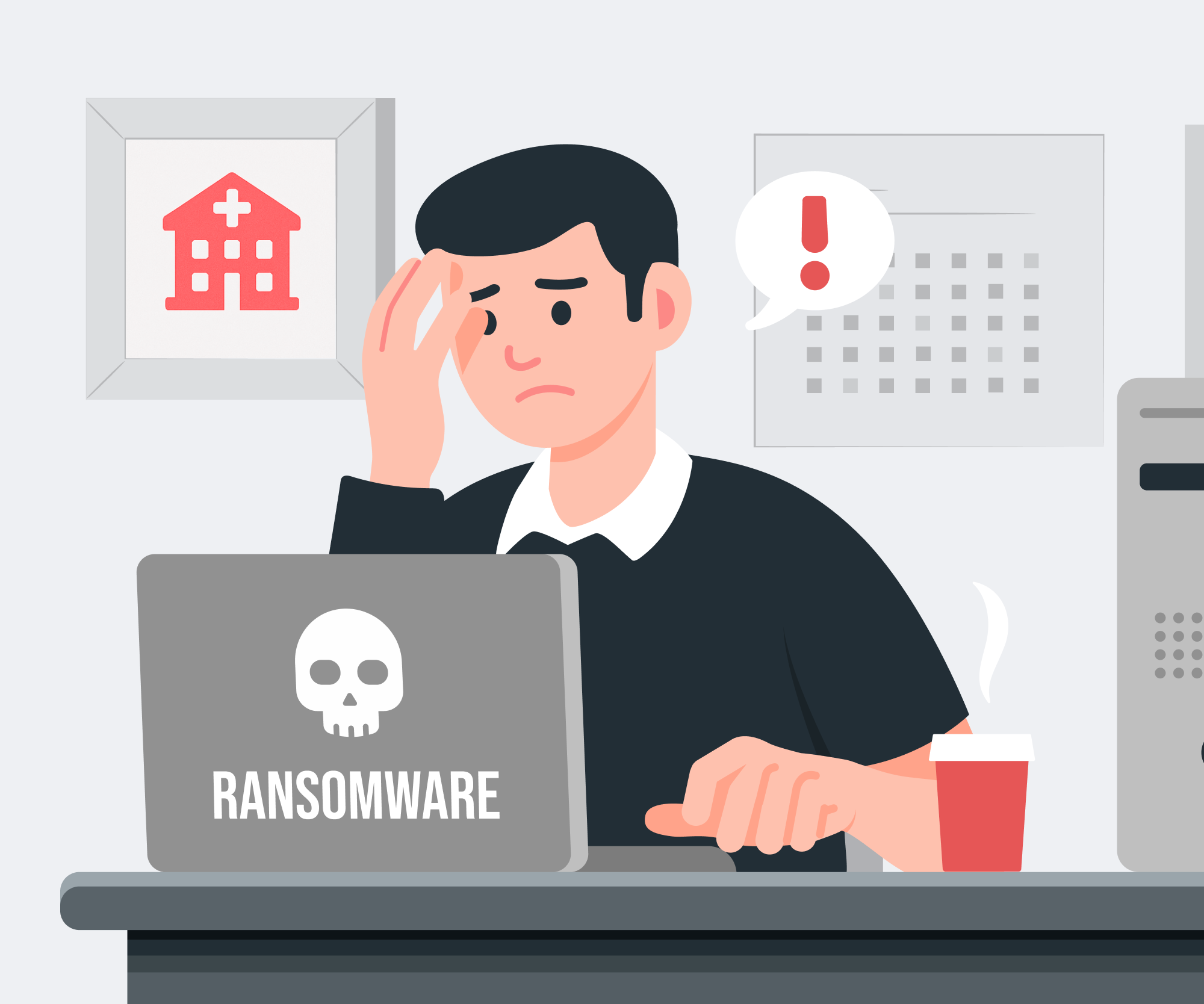
WannaCry ransomware swept through 150+ countries in May 2017 in a matter of hours. Hospitals, banks, telecommunication companies, and governments were brought to a standstill. The reason? This lethal combo:
- A leaked NSA exploit (EternalBlue) targeting unpatched SMBv1 services.
- A fast-spreading worm mechanism.
- A massive blind spot in most organizations' security stacks: traditional antivirus.
Why traditional AV failed:
- Signature dependence
WannaCry was a new cyberthreat at the time of its initial outbreak. Traditional AV vendors didn’t have signatures for it. Until those were added (hours or even days later), AV products were flying blind.
- No behavioral context
WannaCry exhibited classic ransomware behavior: It encrypted files in bulk, changed extensions, and demanded payment in Bitcoin. But AV tools weren’t watching for that kind of activity. They were looking for specific file hashes, not behavioral anomalies.
- Lack of network awareness
WannaCry spread laterally using SMB exploits. Traditional AV tools lived on the endpoint, not the network, and couldn’t see or stop lateral movement effectively.
- No autonomous response
Once infected, endpoints had no ability to self-isolate. An AV would eventually detect the malware, but by then, the worm had already jumped across dozens of machines.
Enter NGAV: The smart security muscle
It’s not about replacing AV, it’s about evolving it. NGAV takes everything traditional AV tried to do and upgrades it for the real world we live in now.
Here’s how NGAV flips the script:
- Behavior-based detection
Instead of relying on a list of known threats, NGAV analyzes the behavior of processes.
- ML + AI analysis
NGAV learns from known good and bad behaviors. So when something out of the norm happens—like a script that tries to disable logging and exfiltrate data—it flags it in real time.
- Fileless and script-based attack protection
Traditional AV can’t see attacks that don’t leave a file. NGAV watches runtime behavior, network connections, and script execution paths.
- Automated response capabilities
Kill a process, isolate an endpoint, rollback malicious changes, and alert the SOC—without waiting for a human to hit a button.
Before investing in NGAV: Real use cases that matter
You don’t need another cybersecurity buzzword—you need solutions that work when attackers hit. Here's where NGAV proves its value:
- Stopping fileless attacks
Fileless malware doesn’t live on a disk, so AV ignores it. NGAV sees PowerShell abuse, registry tampering, and WMI shenanigans and stops them cold.
Example: An attacker uses living off the land binaries (LOLBins) like cmd.exe and regsvr32 to escalate privileges. NGAV flags the unusual process tree and blocks execution in real time.
- Blocking lateral movement
As soon as an attacker gains access to the system, they use tools like Mimikatz or Cobalt Strike to move laterally. As network connections are monitored, NGAV flags suspicious behaviors such as credential dumps and privilege escalation attempts as suspicious.
Bonus:Some NGAV platforms can even quarantine compromised machines from the rest of the network automatically.
- Detecting Insider Threats
A rogue employee decides to copy 20GB of data to an external drive at 2:14am. Traditional AV, wouldn't flag this activity. With NGAV on the other hand, behavioral analysis kicks in, notes the abnormal time, data volume, and endpoint history, and throws up red flags—immediately.
- Zero-day threat response
Let’s say a brand-new exploit hits the wild. It hasn’t made it into AV signature databases yet.
NGAV doesn’t care—it watches how the process behaves. If it looks malicious, the engine isolates the device and stops the threat, even before threat intelligence catches up.
NGAV + UEM = Endpoint zen
Now, here’s where things get really interesting. NGAV on its own is powerful. But when integrated into your unified endpoint management (UEM) platform? You go from reactive defense to proactive command.
Take Endpoint Central by ManageEngine, for example. Their NGAV add-on folds seamlessly into UEM, giving you security and operations from one console.
What that gives you:
- One console, zero toggling
Patch, configure, monitor, and secure. No more tab-hopping between ten tools.
- Unified policies
Device control, threat protection, encryption—managed as one.
- Smarter automation
Set policies to isolate endpoints, roll back damage, and send alerts—without needing manual intervention.
- Full visibility
Zoom into attack chains, see incident timelines, and correlate threat posture with device health.
Why it matters: Attackers don’t care about your siloed tools. Your defenses shouldn’t be siloed either.
What Endpoint Central’s NGAV brings to the table
ManageEngine Endpoint Central NGAV delivers a fully modernized endpoint defense suite. Here’s a clear breakdown of its must-know capabilities:
- AI‑driven behavioral and static detection
Powered by deep learning and AI-assisted behavior monitoring, it combines static and dynamic detection to spot both known and unknown threats, including fileless attacks—even when the device is offline.
- MITRE‑based forensics
Extensive incident forensics mapped to MITRE ATT&CK TTPs give security teams granular insights into the attack life cycle—techniques, attack chains, IOCs—to supercharge incident response
- Contextual threat mitigation
One-click remediation is real: Quarantine infected machines, neutralize attacks, isolate endpoints, and revert files to their pre‑attack state with patented backup technology—all from the same console
- Robust offline protection
Unlike signature‑based AV, this NGAV works whether or not the endpoint is connected to the internet. Zero definition updates required.
- Lightweight performance
All of this is delivered via a single agent, using less than 1% of CPU—so your users barely notice it’s there
Final thoughts: Why you should rethink AV strategy today
Let’s be honest: Security teams are tired. Tired of breaches, alert fatigue, and twaking up at 3am to fix something that should have been prevented. NGAV isn’t just about blocking more malware—it’s about enabling your team to play offense.
- Comprehensive coverage of malware types—signature, behavioral, fileless, ransomware, zero‑day.
- Unified console: NGAV lives inside your endpoint management tool—no extra agents or dashboards required.
- Automated, smart response: From initial detection to rollback and quarantine, with full visibility into root causes.
- Always-on protection: Online or offline, endpoints are continuously monitored and defended.
The true ROI of NGAV? Fewer midnight alerts. Fewer tickets. Less firefighting. More control. So go ahead, retire that antique antivirus. Your endpoints deserve better. Your team deserves better.
 Meet the author