A unified cloud security platform reduces attack surface, prevents data leakage, governs shadow risks, protects cloud applications from abuse, and secures hybrid workforces—all from one place.
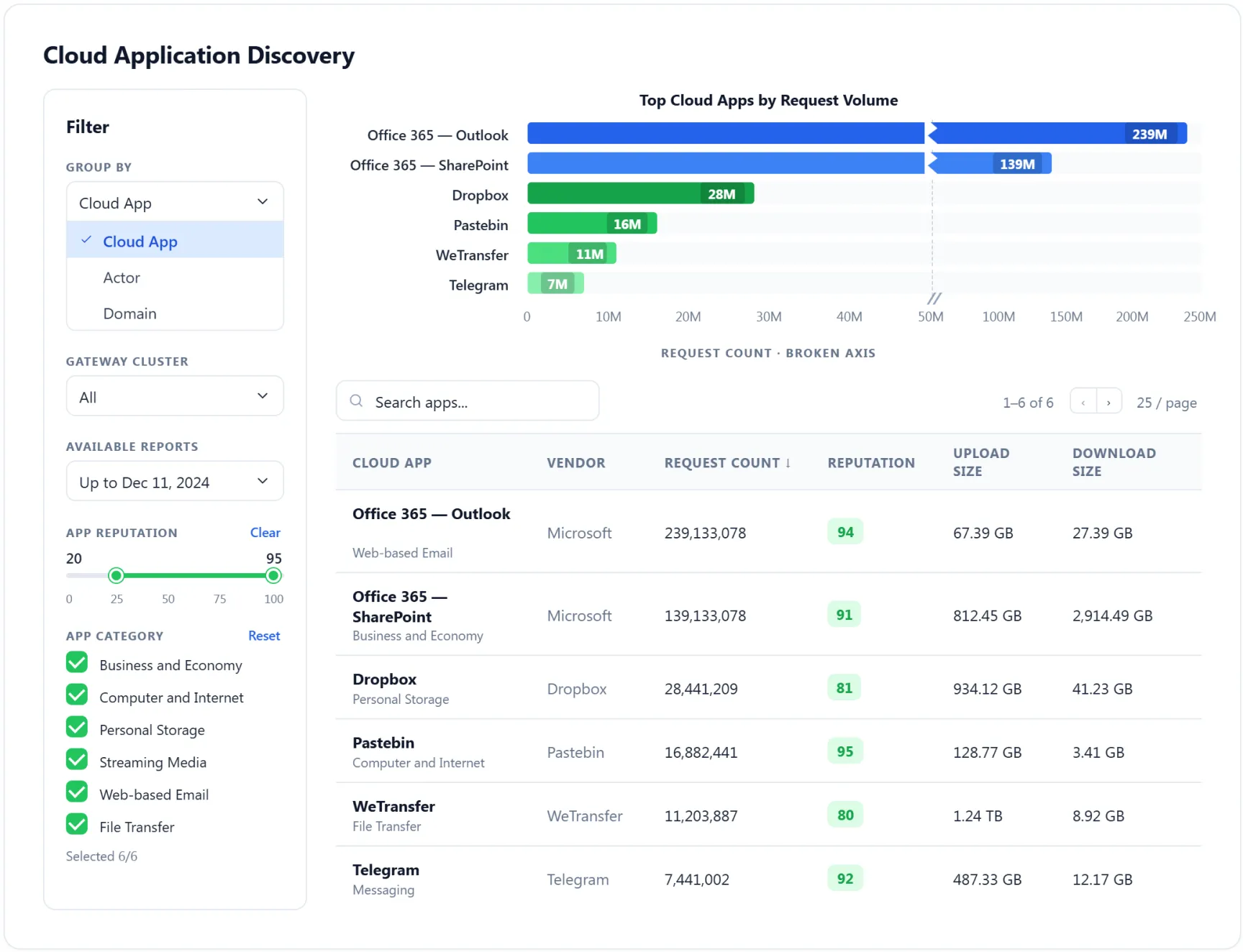
Use our intuitive dashboard that to adjust the app-reputation slider to spotlight low-trust, risky services and analyze usage patterns across any time frame.
App category selectors allow segmentation of traffic across business, personal storage, streaming, email, and more—helping you distinguish productivity-related activity from shadow IT.
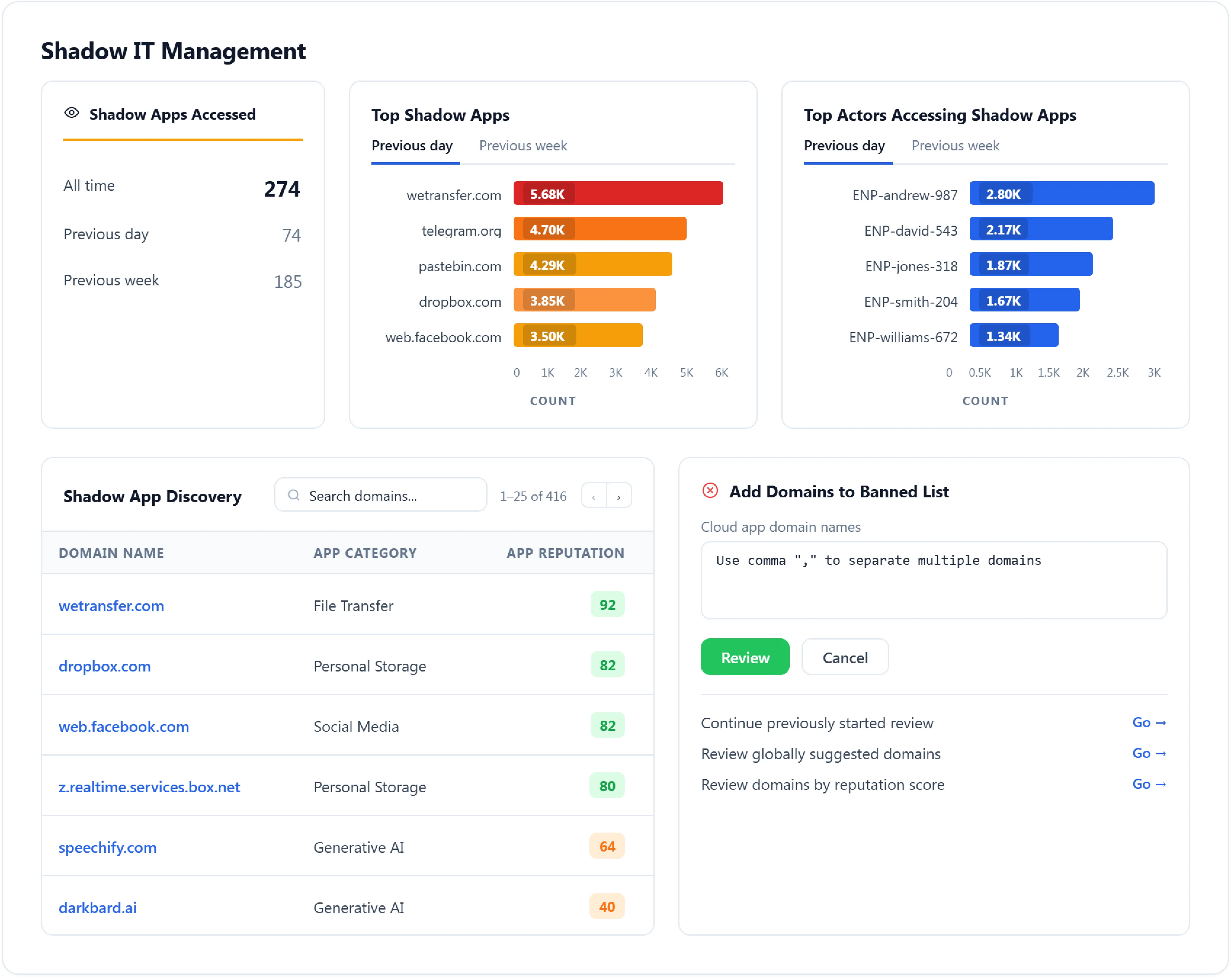
Analyze shadow-app usage trends, highlight top shadow apps, and identify the main actors accessing shadow or banned apps.
Reclassify shadow apps discovered as sanctioned or banned to strengthen oversight and immediately dictate which services stay, and which are blocked.
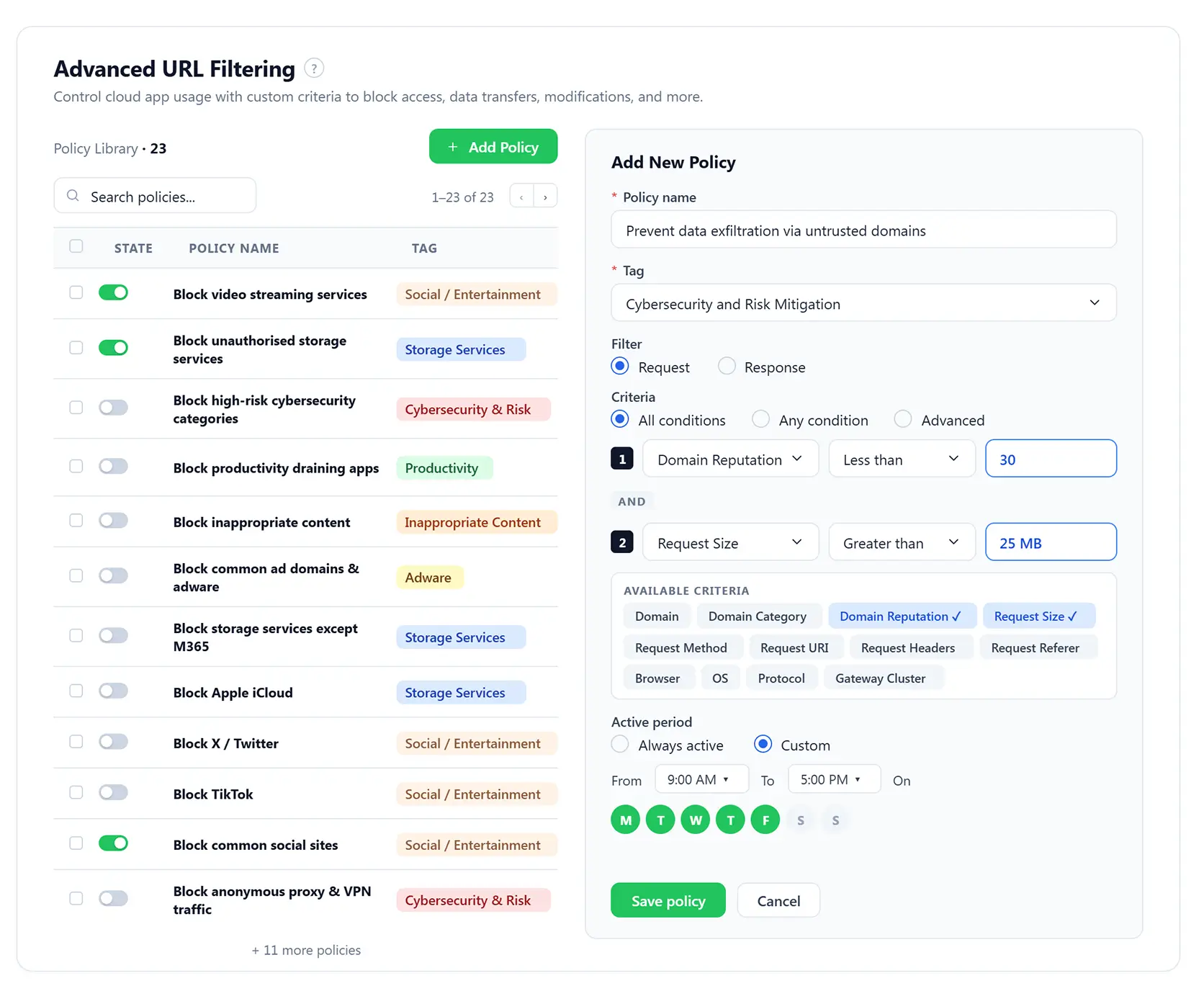
Reduce risk exposure by blocking unsafe domains, suspicious referrers, malicious payload types, and abnormal request patterns using intelligent filtering criteria tuned to modern attack vectors.
Employ logical operands (AND,OR) enable the platform to evaluate multiple conditions together, such as domain reputation AND file size OR request method, reducing false positives drastically.
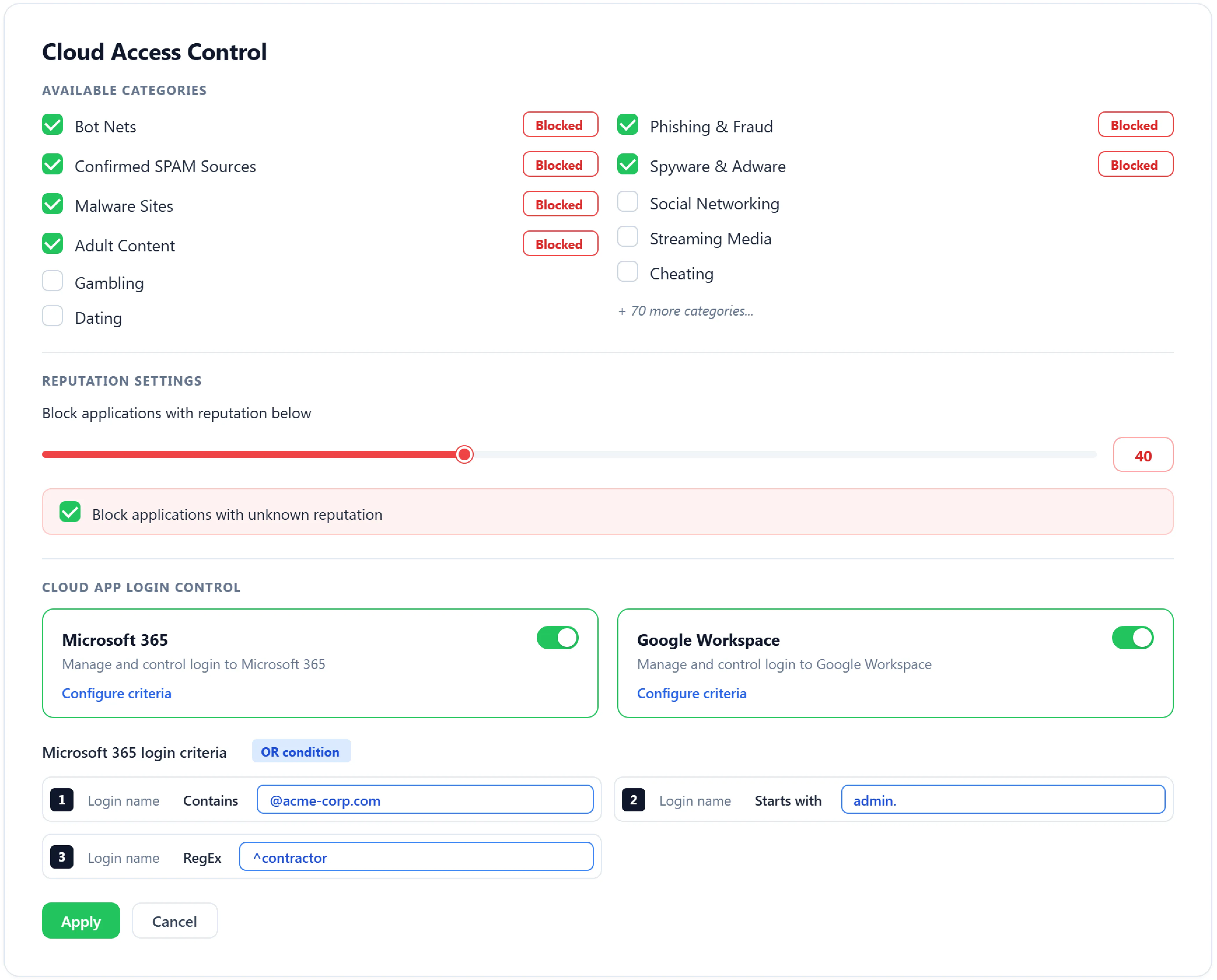
Use over 80 predefined cloud app categories to apply precise controls, and automatically block applications that fall below your custom reputation threshold, or those with unknown or unverified trust levels.
Set up login controls for Microsoft 365 and G Suite to block suspicious credentials automatically, preventing unauthorized access and reducing identity-based risks.
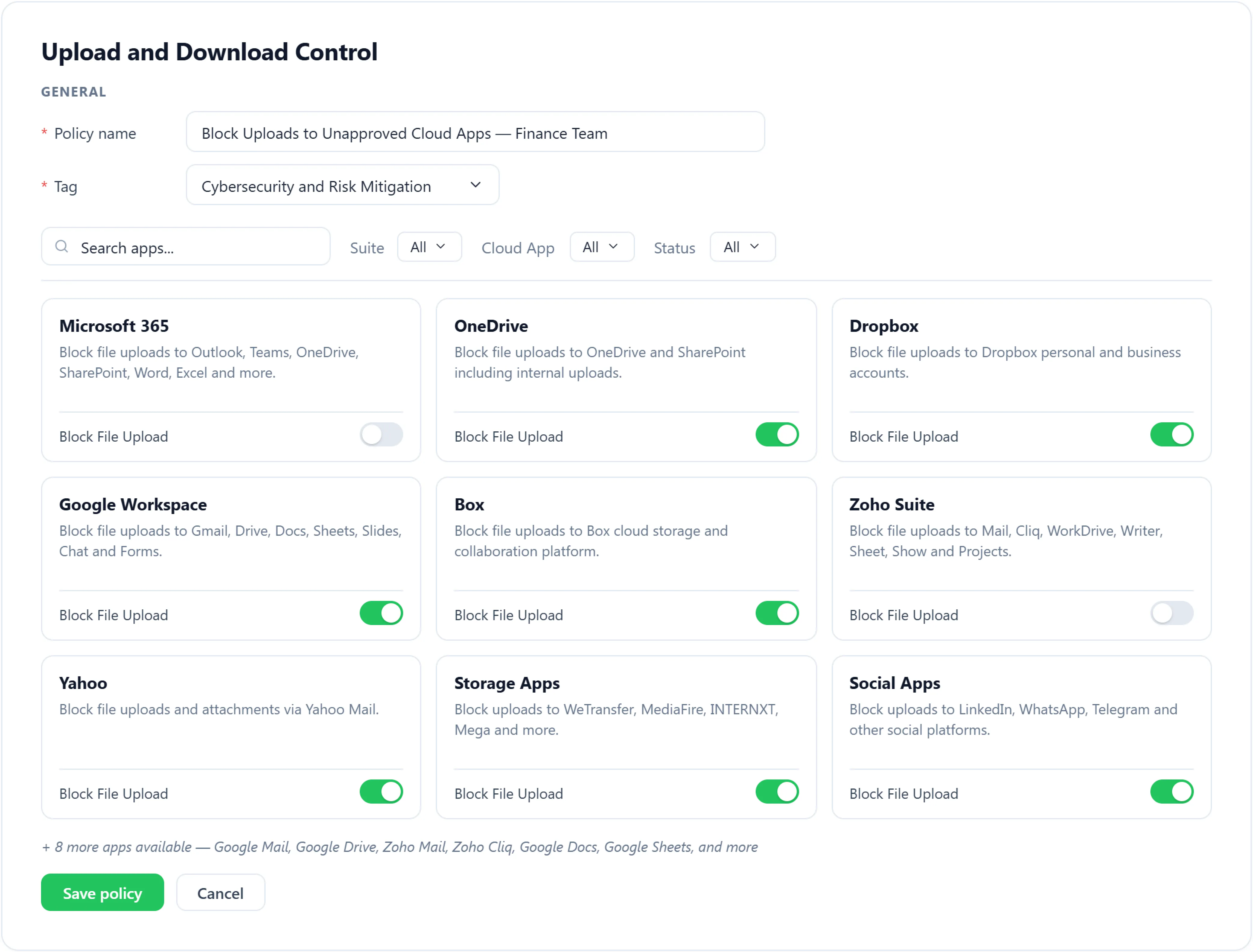
Create granular upload control policies to stop risky file uploads across major cloud suites and apps: Microsoft 365, G Suite, Zoho, Dropbox, Box, Yahoo, and social/storage apps.
Track policy violations by monitoring every attempt to bypass upload, download, or login controls, flag repeat offenders, and uncover hidden risk patterns to strengthen cloud security proactively.
Thanks! One of our solution experts will get in touch with you shortly.
*Cloud protection is a free add-on to the data leak prevention solution. Learn about its features here.
Detect, disrupt, and prevent sensitive data leaks via endpoints, i.e., USBs and email.
Learn MoreAnalyze file content and context, and classify files based on vulnerability.
Learn MoreMonitor, analyze, and report on all file server accesses and modifications.
Learn MoreTrack your organization's web traffic, and block malicious web applications
Learn MoreCloud protection refers to the security controls organizations use to protect cloud application usage and services from unauthorized access, data exposure, and malicious activity. It encompasses access control, data flow protection, threat detection, and policy enforcement across cloud environments.
Cloud protection is critical because modern organizations rely heavily on cloud services for daily operations, collaboration, and data storage. Without effective cloud protection, businesses face increased risk of breaches, compliance violations, and disruptions.
Using dedicated solutions like tools such as cloud access security brokers (CASBs), that analyze network traffic, authentication events, data transfers, and API integrations to discover both sanctioned and unsanctioned cloud applications.
This insight allows the SOC teams to understand cloud app usage patterns, data flows, and potential risk exposure.
Listed below are some of the most significant cloud security risks frequently overlooked:
This decision on how to segment a cloud app is typically driven by a risk-based framework that evaluates:
Cloud applications that access sensitive data, lack basic security controls, or request excessive permissions present higher risk and would require tighter controls.
Sensitive data discovery and classification provide visibility into where critical information resides. Automated policy-based controls and continuous monitoring restrict unwarranted external sharing, public access, and risky downloads based on data sensitivity, risk posture, and context.
Enforcing least-privilege access and role-based permissions further reduces exposure by limiting who can access or share sensitive content. Visibility into user behavior and third-party integrations enables faster detection and remediation of intentional misuse or abnormal activity.
Use our detailed guide to develop an effective data loss prevention strategy.

