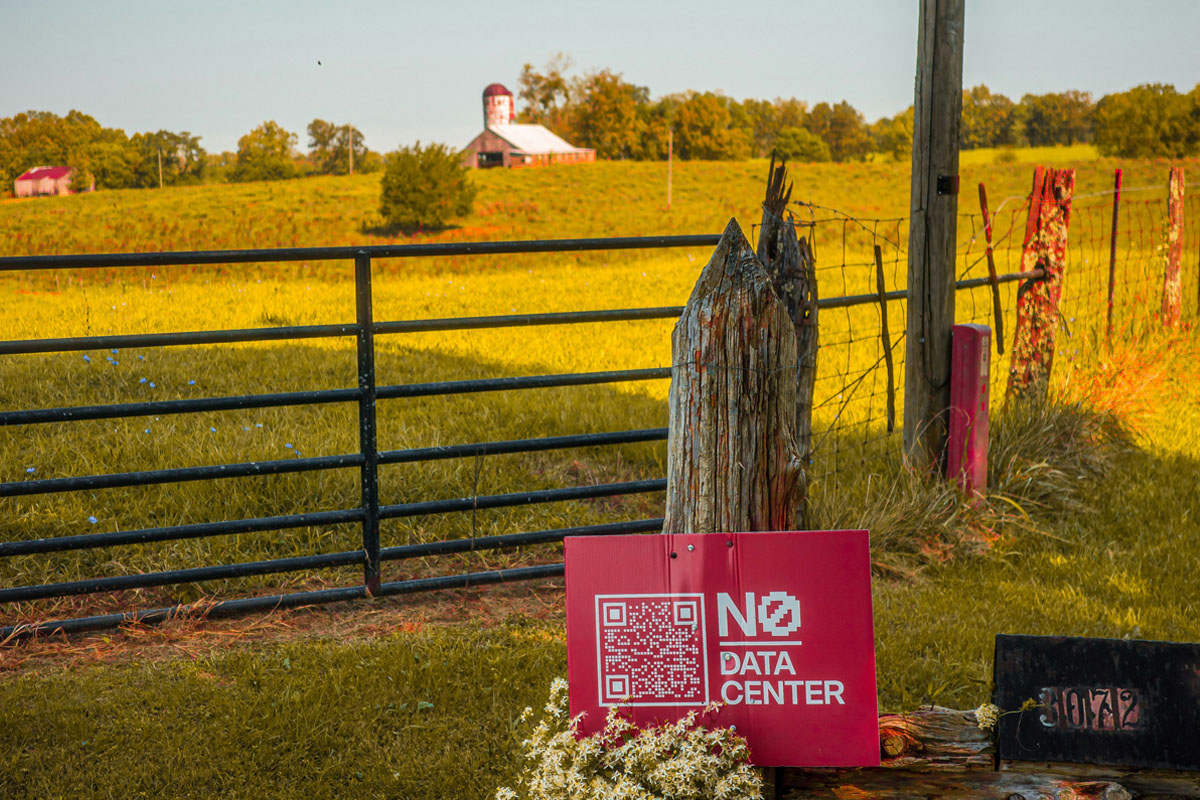




Like a Trojan horse, AI is a gift: It's enormous, flattering, and ready to attack your sustainability commitments from the inside.
While every organization is racing to adopt AI, and every software vendor is embedding AI features into their tools, AI remains the least measured, least regulated, fastest-growing technology this world has seen. There's a growing amount of research exposing the hidden financial costs of AI; yet, there remains no substantial accountability for the carbon cost of AI adoption at the organizational level.
As investors and regulators scrutinize everything from an organization's hardware efficiency to cloud region selection, the rise of AI might be undermining everyone's effort to go green.
Why AI use isn't really part of the carbon conversation
GreenOps, the practice of minimizing IT's environmental impact, has always been reactionary.
While GreenOps expands its checklist, AI has outrun the scrutiny of most corporate sustainability strategies. Unlike a traditional cloud workload, most AI use is an API call to a vendor's model. Or it isn't even a separate line item to scrutinize—it's a feature added to software already in use. The carbon cost is abstracted away. It happens in someone else's data center, billed as a flat subscription or an opaque metered fee, and invisible in any emissions report the organization produces. However, the cost is not zero. Every prompt, API call, or token represents compute running on real infrastructure.
Whose responsibility is it anyway?
It's now widely documented that training an AI model or running a data center is energy-intensive. What's been harder to pinpoint is the impact of an individual query or task, though reporters and watchdogs have put out some astonishing estimates. According to MIT Technology Review's extensive resource, AI and our energy future, making a five-second video with AI is equivalent to running a microwave for over an hour. Multiply that across a large enterprise that's embedded AI into every workflow, and the result will make any sustainability-conscious decision-maker blush.
Yet, who is responsible for the carbon cost of AI—is it the vendor, the organization, or the individual user? While the answer might not be clear, in the regulatory context, the responsibility could soon fall upon the organization using AI.
A patchwork of carbon disclosure rules
For organizations, the impact of AI falls into Scope 3, a category for indirect emissions from the corporate value chain. Scope 3 activities are the hardest to measure and the easiest to ignore, but the Green Software Foundation (a Linux Foundation project) wants to change that.
The foundation's Software Carbon Intensity (SCI) Specification is the open-source standard that provides decision-makers in the software supply chain, like DevOps, developers, engineers, and architects, with a way to calculate a system's carbon emissions. By seeing the SCI score fluctuate based on their approach to design, development, or deployment, the foundation hopes the decision-makers will make better decisions. Yet the specification acknowledges the limits of reporting on something so multifaceted as software development, allowing for "best estimates instead" when there's a lack of access, capability, or rights to data. Lack of access, capability, or rights to data—that's most AI systems in three words.
Even now that the specification carries an international standard number, ISO/IEC 21031:2024, it's still entirely voluntary. When it comes to regulated Scope 3 reporting, global adoption might look less like a coordinated rollout and more like cannabis legalization—or oat milk. Europe walked, California ran, and everyone else is still figuring it out.
Since the Securities and Exchange Commission backed off Scope 3 reporting in its 2024 Climate Disclosure Rule due to industry pushback, reporting in this country is being driven at the state level: California's landmark climate-disclosure statute SB 253 is projected to require certain Scope 3 reporting by 2027. New York and other states are eyeing similar legislation. Europe's also attempting to fill the gaps, making Scope 3 reporting mandatory for certain entities under the European Union's Corporate Sustainability Reporting Directive.
For now, only a handful of regulated entities must scramble to report AI's share of their Scope 3 emissions. Everyone else has a head start to define what "responsible AI" means before a regulator does it for them.
Organizations that want to get ahead will offset with carbon credits and cut their footprint through smaller models and better token efficiency. They will have clear, targeted adoption goals, not blanket AI mandates. They will choose vendors with reporting transparency, greener data centers, and smarter algorithms. Or perhaps they will run local models on smaller, on-premises stacks, though whether this will shrink the footprint, or just the bill, is an open question.
Whatever the approach, organizations can no longer treat AI's carbon cost as someone else's problem, whether a vendor's, a regulator's, or next year's. Right now, sustainability and AI strategy are run by separate teams with separate goals. And that's not sustainable.