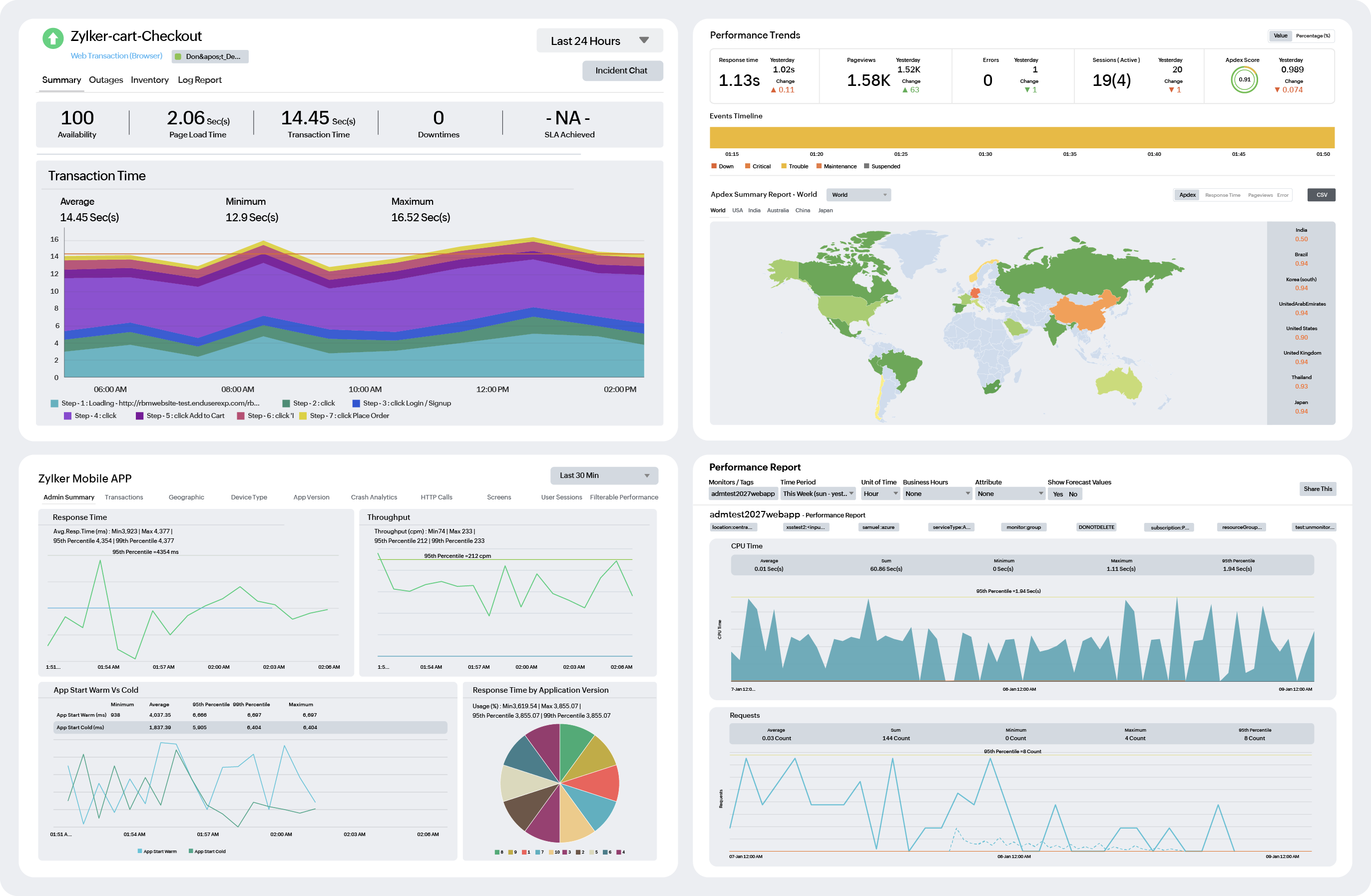
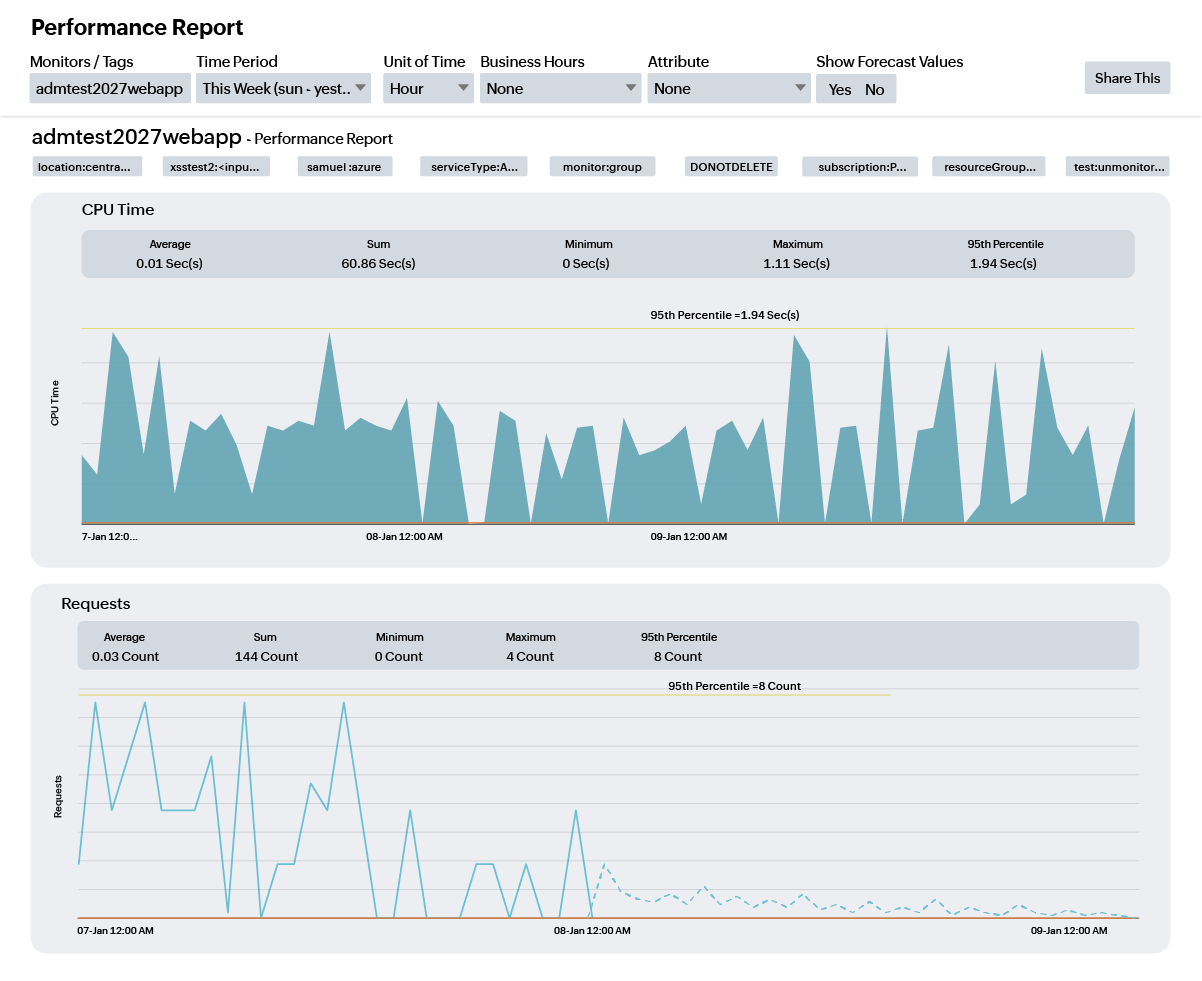
DEM relies on a variety of tools to comprehensively assess and enhance the user experience across digital services. These tools cover various aspects of performance, user behavior, and
application functionality. Here are some key types of DEM tools:
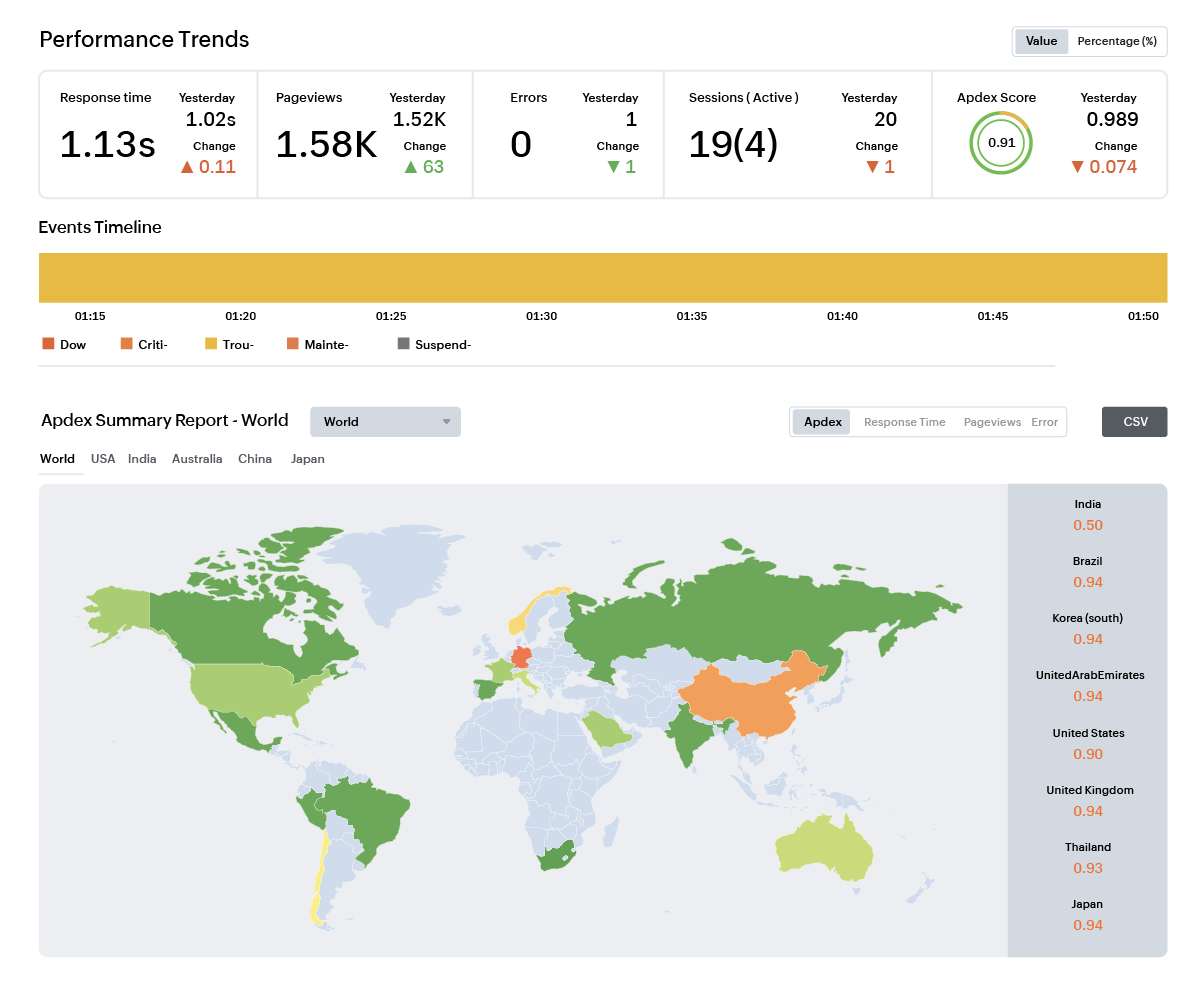
Real user monitoring (RUM)
Captures and analyzes data from actual user interactions with applications and websites in real time, then provides insights into user experience, user behavior, and performance
bottlenecks.
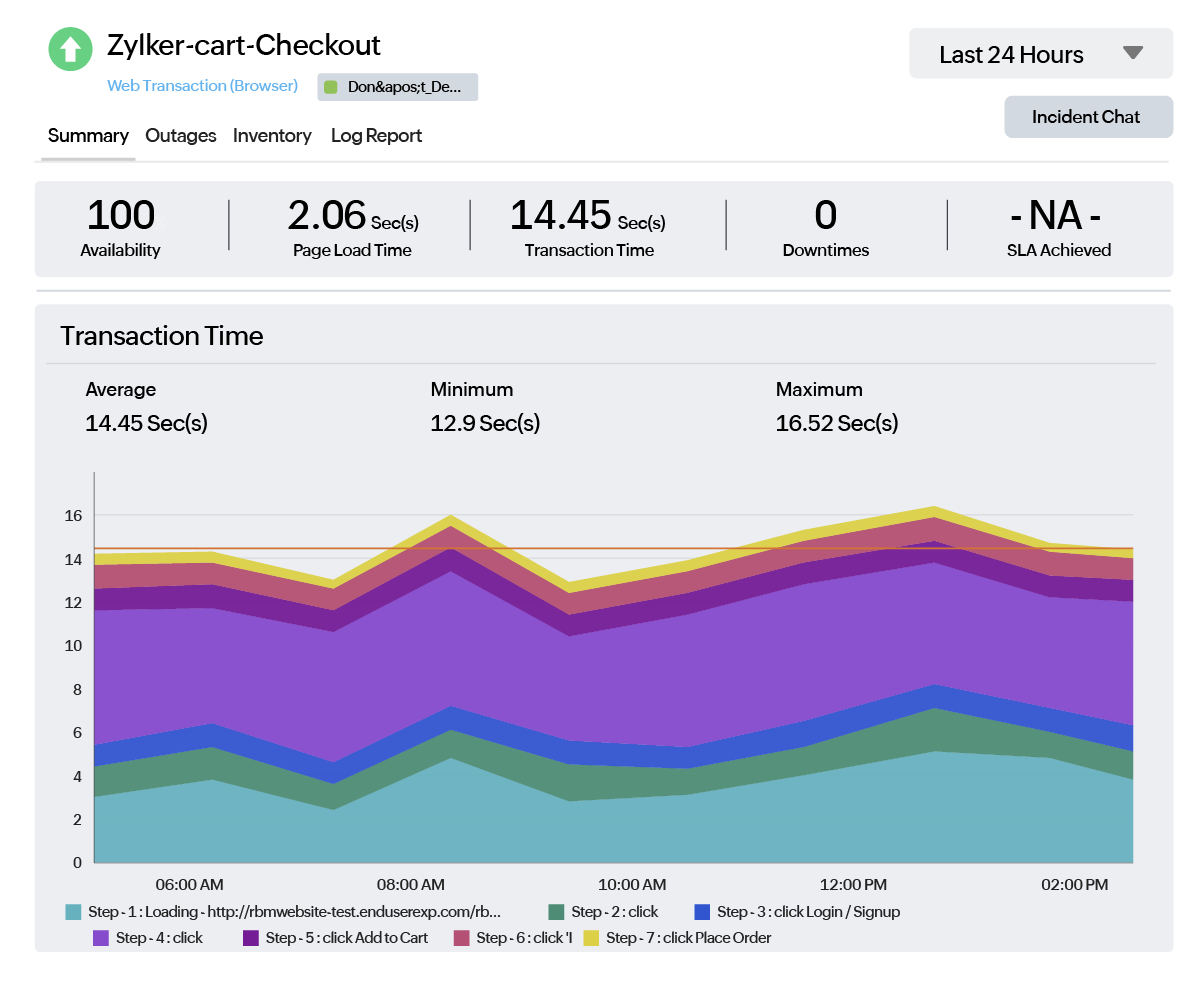
Synthetic monitoring
Simulates user interactions and transactions to test proactively and monitor application performance under various conditions and potential issues before they impact real users and
establish performance benchmarks.
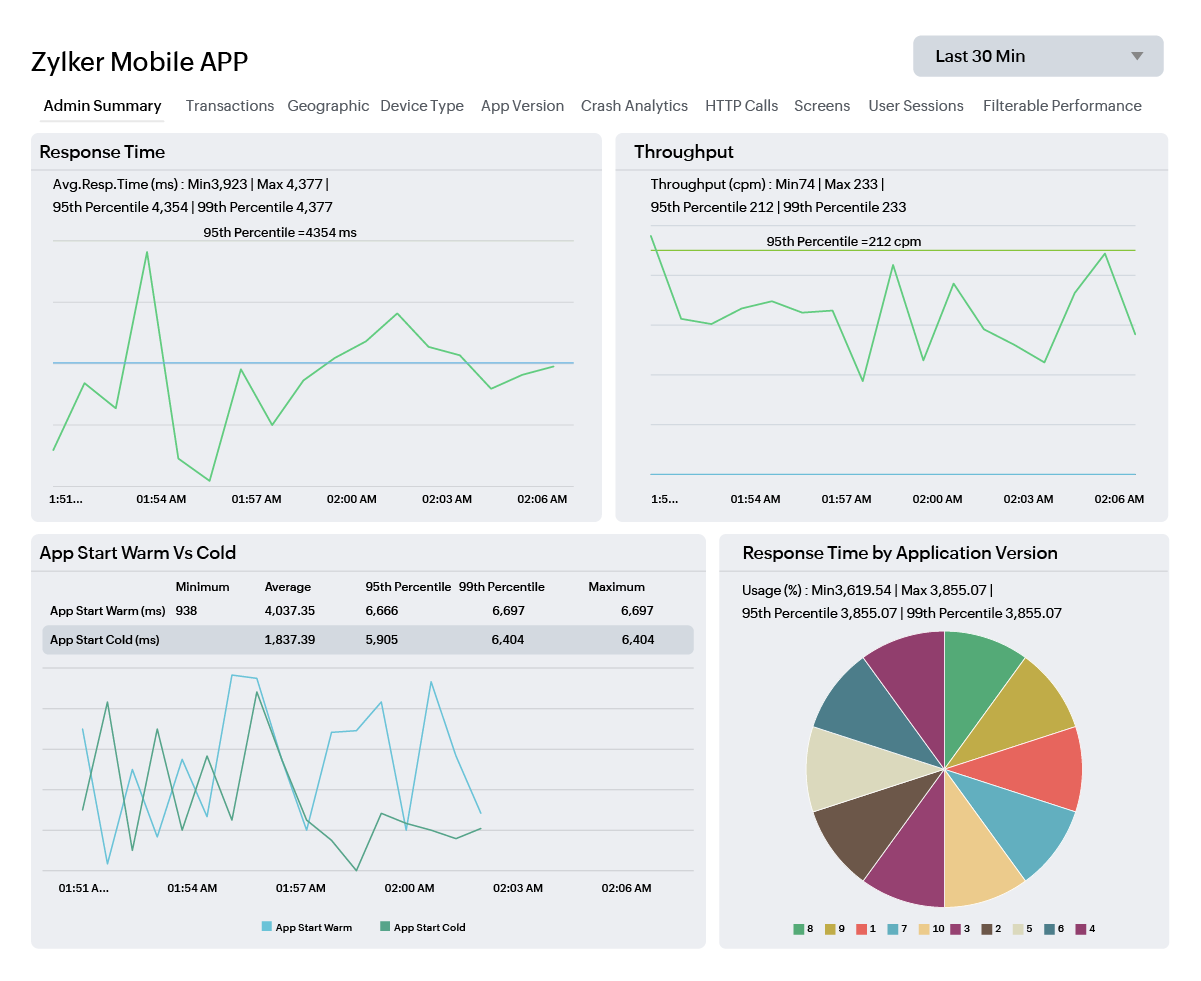
Application performance monitoring (APM)
Monitors the performance of applications—including metrics like response times, latency, error rates, and resource usage—and helps to identify and resolve performance issues within the
application infrastructure.
Network performance monitoring
Evaluates the performance and reliability of network infrastructure, assesses data transfer and connectivity, and ensures optimal communication between users and applications.
End-user experience monitoring (EUEM)
Focuses on monitoring the overall end-user experience by combining elements of RUM, synthetic monitoring, and APM and offers a holistic view of how end users interact with digital
services.
Incident management and collaboration tools
Facilitates communication, collaboration, and incident response across teams and streamlines the resolution process for identified performance issues.