

While the DPDP Act's specific breach notification requirements apply to breaches after its enactment, transparency is key. It's good practice to assess the impact of the old incident under current data protection principles. Consider informing affected individuals about what happened, the data involved, and any steps they should take. While not strictly a DPDP notification, this builds trust and aligns with the spirit of data protection.
On this page
In a time where data breaches are not just possible but inevitable, organizations must prioritize incident response strategies to mitigate risks and adhere to regulatory requirements. The Digital Personal Data Protection (DPDP) Act highlights the necessity of prompt and transparent breach notifications, thereby pushing businesses to adopt cybersecurity measures that ensure compliance and safeguard sensitive information.
SIEM plays a critical role in this process by enabling real-time monitoring, detecting potential threats, and supporting efficient response mechanisms. By integrating SIEM into incident response frameworks, organizations can enhance their ability to identify breaches early, take swift corrective action, and fulfill DPDP notification requirements.
This article guides organizations in integrating incident response and regulatory compliance with their SIEM solution, enhancing data security while ensuring full adherence to breach notification mandates under the DPDP Act.
Understanding the DPDP Act and breach notification requirements
The DPDP Act, enacted to protect personal data in India, stipulates stringent guidelines for organizations handling sensitive information. Among its key provisions is the mandatory notification of data breaches, ensuring that affected parties and authorities are informed promptly.
Key requirements related to breach notification under the DPDP Act include:
- Timely reporting: Organizations must report data breaches within a stipulated time frame to the Data Protection Board of India.
- Impact assessment: Entities must assess the scope and severity of the breach, detailing affected individuals and potential risks.
- Mitigation measures: Organizations should implement corrective actions and ensure transparency regarding the breach's implications.
- Public and consumer communication: Depending on the breach severity, affected individuals must be notified, informing them of necessary precautions.
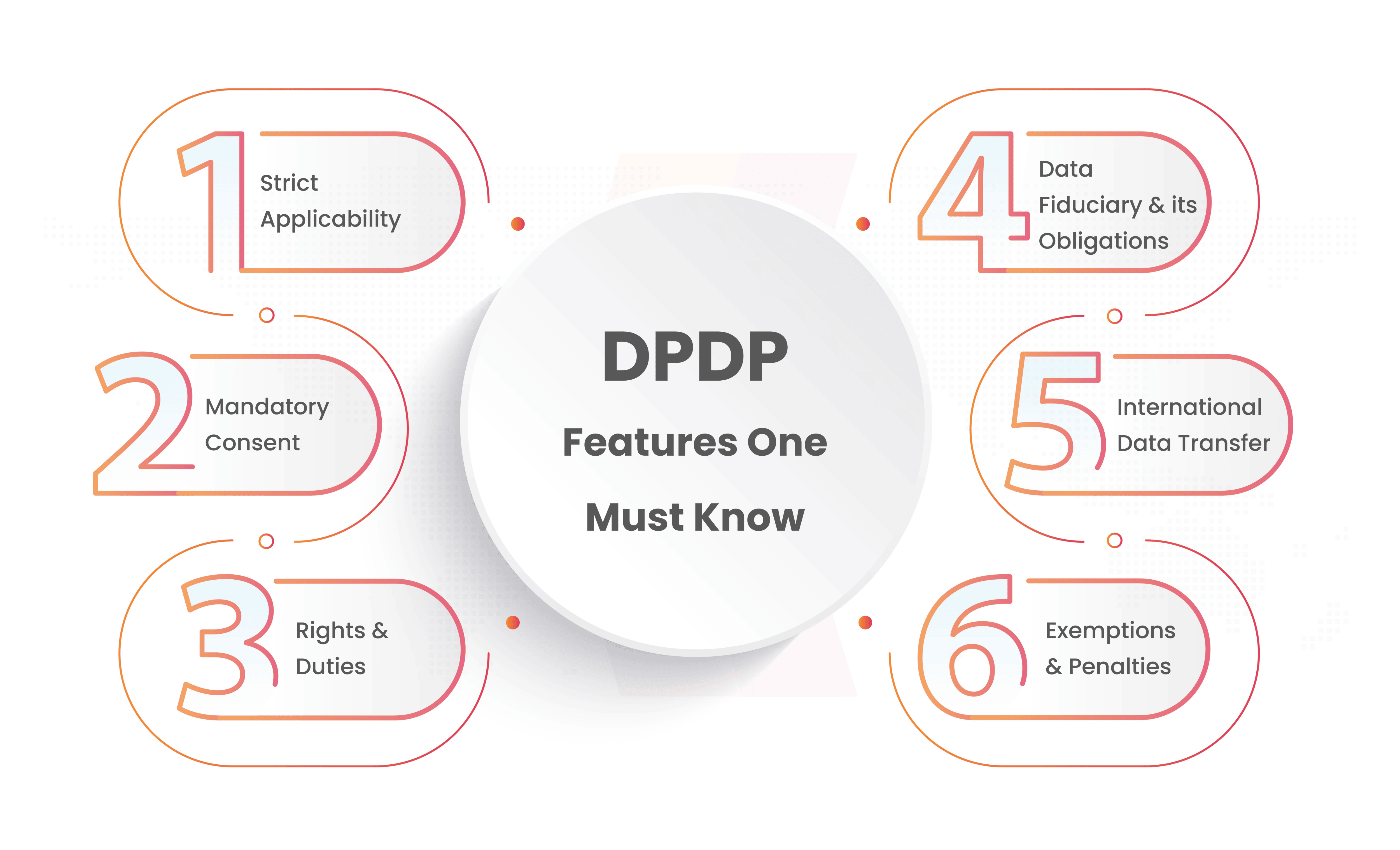
Ref image for designers for following section.
How to align security tools with DPDP Act mandates
To build a strong compliance foundation, organizations must integrate security protocols with regulatory obligations, ensuring that incident response is both effective and legally sound. This requires a structured approach that aligns cybersecurity tools like SIEM with the DPDP Act’s breach notification mandates.
Here's how to align your security tools to comply with DPDP Act mandates.
1. Defining compliance objectives
This initial phase is foundational for aligning your SIEM deployment with the specific requirements of the DPDP Act. It's not just about generally improving security; it's about focusing on the aspects relevant to personal data protection under the new law.
- Identify personal data assets within the IT infrastructure: This is the crucial first step. You cannot protect what you don't know exists. This involves a comprehensive data discovery and classification exercise across your entire IT ecosystem. This includes:
- Data inventories: Creating a detailed inventory of all systems, applications, databases, cloud services, and even physical storage where personal data resides.
- Data mapping: Understanding the flow of personal data—where it originates, how it's processed, where it's stored, and who has access to it. This helps visualize potential breach pathways.
- Data classification: Categorizing personal data based on sensitivity. The DPDP Act doesn't explicitly define categories like the GDPR, but understanding the nature of the data (e.g., financial, health, contact information) is crucial for assessing potential harm in case of a breach.
- Ownership and responsibility: Clearly assigning ownership and responsibility for the security and compliance of specific personal data assets.
- Setting up breach threshold parameters that trigger incident response: The DPDP Act mandates notification of data breaches. Defining internal thresholds within your SIEM strategy helps proactively identify incidents that are likely to meet the regulatory reporting requirements. This involves:
- Defining "personal data breach" according to the DPDP Act: Ensure your internal definition aligns with the legal definition, which generally involves any unauthorized processing, disclosure, alteration, or access to personal data that compromises its confidentiality, integrity, or availability.
- Establishing quantitative and qualitative thresholds:
- Quantitative: Setting specific numbers (e.g., number of affected data subjects, volume of data compromised).
- Qualitative: Defining types of incidents that automatically trigger a high-priority response (e.g., confirmed unauthorized access to sensitive personal data, evidence of data exfiltration).
- Configuring SIEM rules to align with thresholds: Translating these defined thresholds into specific rules and alerts within your SIEM solution.
- Understanding reporting timelines and required documentation: The DPDP Act specifies timelines for breach notification to the Data Protection Board of India and potentially affected data principals. Understanding these requirements is crucial for configuring your SIEM and incident response processes. This includes:
- Identifying notification deadlines: Knowing the exact timeframe within which a breach must be reported after becoming aware of it. Under the DPDP Act, organizations must notify the Data Protection Board about a data breach within 72 hours of becoming aware of it. Affected individuals must also be informed without delay, with clear communication on the breach's nature, impact, and mitigation steps.
- Determining information to be included in the notification: Understanding what details the regulatory body requires in the breach notification. The following information is to be included in a notification:
- Nature of the breach
- Affected data principals
- Potential consequences
- Mitigation measures
- Reporting timeframe
- Contact information
- Mapping data sources for documentation: Identifying where the necessary information for breach reporting resides within your systems and ensuring your SIEM can help gather and present this data efficiently.
2. Configuring SIEM for regulatory alerts
This step focuses on the technical implementation within your SIEM to proactively detect and flag incidents that could potentially lead to a DPDP-reportable breach.
- Establishing automated alerts for unauthorized access to personal data: This involves creating SIEM rules that trigger alerts based on suspicious access patterns to systems and data stores containing personal data. Examples include:
- Multiple failed login attempts: Anomalous spikes in failed login attempts from unusual locations or accounts accessing personal data repositories.
- Access from unauthorized geolocation or IP addresses: Alerts when accounts access personal data from unexpected geographic locations or IP ranges.
- Access outside business hours: Monitoring access patterns outside of normal working hours for specific user accounts or data sets.
- Privileged access violations: Alerts when users with lower privileges attempt to access data or perform actions requiring higher privileges on systems containing personal data.
- Implementing custom rules to detect data exfiltration attempts: These rules are designed to identify activities that suggest data is being copied or moved out of authorized environments. Examples include:
- Large file transfers to external destinations: Monitoring network traffic for unusually large outbound file transfers to untrusted domains or IP addresses.
- Use of unauthorized file sharing services: Detecting the use of unsanctioned cloud storage or file-sharing platforms from within the corporate network.
- Unusual data access patterns followed by outbound connections: Identifying sequences of events where a user accesses a large amount of personal data and then initiates connections to external, untrusted locations.
- Monitoring for specific tools and techniques: Creating rules to detect the use of known data exfiltration tools or techniques.
- Leveraging identity access management (IAM) tools and UEBA capabilities for anomaly detection: Integrating your SIEM with your UEBA and IAM tools provides crucial context for identifying suspicious behavior related to user accounts and access privileges. This enables:
- Monitoring for account takeover: Detecting changes in user behavior that deviate significantly from their baseline, such as logins from new devices or locations or unusual access patterns.
- Tracking privilege escalation attempts: Alerting when users attempt to gain higher privileges than they are authorized for, especially when targeting systems containing personal data.
- Identifying dormant or compromised accounts: Flagging activity from accounts that have been inactive for a long time or exhibit suspicious login patterns.
- Correlating authentication and authorization events: Linking login attempts with subsequent data access activities to identify potentially malicious sequences.
3. Incident categorization and risk assessment
Once a potential security incident is detected by the SIEM solution, the next crucial step is to categorize its severity and assess the potential risk it poses to personal data. This helps prioritize response efforts and determine if the incident meets the DPDP Act's breach notification criteria.
- Assessing whether a breach meets DPDP notification criteria: This involves analyzing the details of the incident against the defined thresholds and the legal definition of a personal data breach under the DPDP Act. Key questions to consider include:
- Was there unauthorized access, processing, disclosure, alteration, or loss of personal data?
- Did the incident compromise the confidentiality, integrity, or availability of personal data?
- Does the incident meet the quantitative or qualitative thresholds defined in the compliance objectives?
- Assigning priority levels to incidents for efficient resolution: Based on the severity and potential impact, incidents should be assigned priority levels (e.g., low, medium, high, critical). This ensures that the most critical incidents, especially those involving personal data, are addressed with the necessary urgency and resources. Factors influencing priority include:
- Number of affected data principals.
- Sensitivity of the compromised data.
- Potential for harm to individuals (e.g., financial loss, identity theft).
- Evidence of malicious intent.
- Determining impact on data principals: Understanding the potential consequences for the individuals whose personal data has been involved in the incident is crucial for both the immediate response and the subsequent breach notification. This involves assessing:
- The type of personal data compromised (e.g., contact information, financial details, health records).
- The potential for misuse of the compromised data.
- The potential for harm or distress to the affected individuals.
4. Automating breach reporting and documentation
A significant advantage of SIEM is its ability to create and automate the generation of reports and maintain audit trails, which are essential for complying with the DPDP Act's notification and documentation requirements.
- Preconfiguring reporting templates tailored to regulatory mandates: Based on your understanding of the DPDP Act's reporting requirements, you should create predefined report templates within your SIEM solution. These templates should include fields for all the necessary information required for a breach notification, such as:
- Date and time of the breach.
- Nature of the breach.
- Categories and the approximate number of affected data principals.
- Types of personal data affected.
- Potential consequences of the breach.
- Measures taken or proposed to be taken to address the breach and mitigate its adverse effects.
- Contact information for inquiries.
- Maintaining a detailed audit trail for regulatory audits and compliance checks: SIEM solutions inherently maintain detailed logs of security events. Configuring it to retain these logs for the required duration under the DPDP Act is crucial for demonstrating compliance during audits. The audit trail should include:
- All security-related events, including alerts, user activity, system changes, and network traffic.
- Details of incident investigations and response actions taken.
- Records of breach notifications and related communications.
5. Integrating SIEM with cyber incident response teams (CIRT)
Effective incident response requires seamless collaboration between the SIEM solutions and the security analysts who form the CIRT.
- Create breach response protocols: Develop specific playbooks that outline the step-by-step procedures to be followed when a potential DPDP-reportable breach is detected by the SIEM. These playbooks should:
- Define roles and responsibilities of CIRT members.
- Outline communication protocols.
- Provide guidance on containment, eradication, and recovery procedures specific to personal data breaches.
- Include steps for assessing the impact on data principals and determining notification requirements.
- Conduct training sessions for security analysts to interpret SIEM alerts: Ensure that your security analysts are thoroughly trained on how to interpret SIEM alerts related to potential personal data breaches. This includes:
- Understanding the specific SIEM rules and correlation logic designed to detect DPDP-relevant incidents.
- Knowing how to triage and investigate these alerts effectively.
- Understanding the escalation paths for potential breaches.
- Establish communication channels with legal teams for breach disclosures: Timely and accurate communication with legal counsel is crucial when dealing with data breaches that may require regulatory notification under the DPDP Act. Establish clear communication channels and protocols for involving legal teams early in the incident response process to ensure:
- Accurate interpretation of legal requirements.
- Proper guidance on notification obligations.
- Review of breach disclosure statements.
6. Continuous monitoring and post-incident analysis
Incident response is not a one-time event. Continuous monitoring and thorough post-incident analysis are essential for improving security posture and preventing future breaches.
- Analyzing attack vectors to prevent recurrence: After resolving a personal data breach, conduct a detailed post-incident analysis to understand the root cause of the incident, the attack vectors used, and any vulnerabilities that were exploited. This information is crucial for implementing preventative measures.
- Implementing security patches based on SIEM insights: SIEM logs and post-incident analysis can provide valuable insights into system weaknesses and vulnerabilities that were exploited during a breach. Use this information to prioritize and implement necessary security patches and updates.
- Enhancing machine learning models for better threat detection: If your SIEM utilizes machine learning or UEBA, the data from past incidents, including false positives and true positives related to personal data breaches, should be used to refine and improve the accuracy of the detection models. This helps in identifying future threats more effectively and reducing alert fatigue.
FAQ on DPDP breach notifications
The responsibility for notification often lies with the data fiduciary (your organization). If a third-party you shared data with experiences a breach, you will likely need to coordinate with them to understand the scope of the breach and whether data you shared was affected. You would then need to assess your notification obligations to the affected data principals. Your agreements with third parties should ideally outline responsibilities in case of a data breach.
A robust record-keeping system is vital. You should maintain logs of all breach notifications sent, including the date, method of communication, and the individuals or groups notified. This helps demonstrate compliance and allows you to follow up if needed. A dedicated breach management dashboard can be invaluable for monitoring the notification process.
If the breach involves cookie data that can identify individuals (making it personal data under the DPDP Act), and if the breach is likely to cause harm, then notification would likely be required. You would need to assess the nature of the cookie data compromised and the potential impact on users.
Yes, efficiency is crucial in such situations. You can send breach notifications in bulk, ensuring all affected data principals are informed promptly. Your notification system should be capable of handling mass communication while still providing necessary details relevant to each individual where possible.
Related solutions
ManageEngine AD360 is a unified IAM solution that strengthens enterprise security by providing adaptive multi-factor authentication, user behavior analytics, and role-based access control. These capabilities help secure digital identities, control access, and mitigate insider threats, even if credentials are stolen.
To learn more,
sign up for a personalized demoManageEngine Log360 is a unified SIEM solution offering integrated UEBA, DLP, CASB, and SOAR capabilities. It proactively detects compromised credentials via dark web monitoring, identifies threats with ML-driven behavior analytics and file integrity monitoring, audits file servers, protects cloud environments, and automates incident response, helping enterprises reduce breach impact and compliance risk exposure.
To learn more,
sign up for a personalized demoThis content has been reviewed and approved by Ram Vaidyanathan, IT security and technology consultant at ManageEngine.