IT operations management
The health and performance of IT infrastructure and its seamless delivery of IT services are essential components in the blueprint of any organization striving to meet clients’ needs and stay ahead of the competition. IT admins need a clear, well-defined process to help them gain the right amount of visibility into their IT infrastructure and ensure peak performance.
This is where IT operations management (ITOM) comes into play. ITOM is a critical, clearly defined, end-to-end IT management process aimed at ensuring optimal performance of an organization's IT infrastructure.
Why do companies adopt ITOM?
A well-structured ITOM process can help businesses resolve critical IT infrastructure bottlenecks. When implementing an ITOM strategy, it's important to consider the following:
- Conducting regular health checks for the various physical and virtual infrastructure components and ensuring their optimum performance.
- Implementing bandwidth management best practices to plan and allocate bandwidth across the network, ensure optimum bandwidth consumption, and shape traffic accordingly to ensure IT infrastructure does not succumb to bandwidth pitfalls.
- Avoiding downtime by tracking misconfigurations and performing periodic backups of critical configurations to ensure IT infrastructure meets global compliance standards.
- Making sure all devices are compliant with the latest security compliance standards, and ensuring security is enforced across all vulnerable endpoints.
- Ensuring network devices operate seamlessly without interference between one another due to issues like IP address collision.
- Planning storage needs well in advance to accommodate ever-increasing business requirements.
- Monitoring business-critical applications and servers to ensure that the end-user experience is not affected.
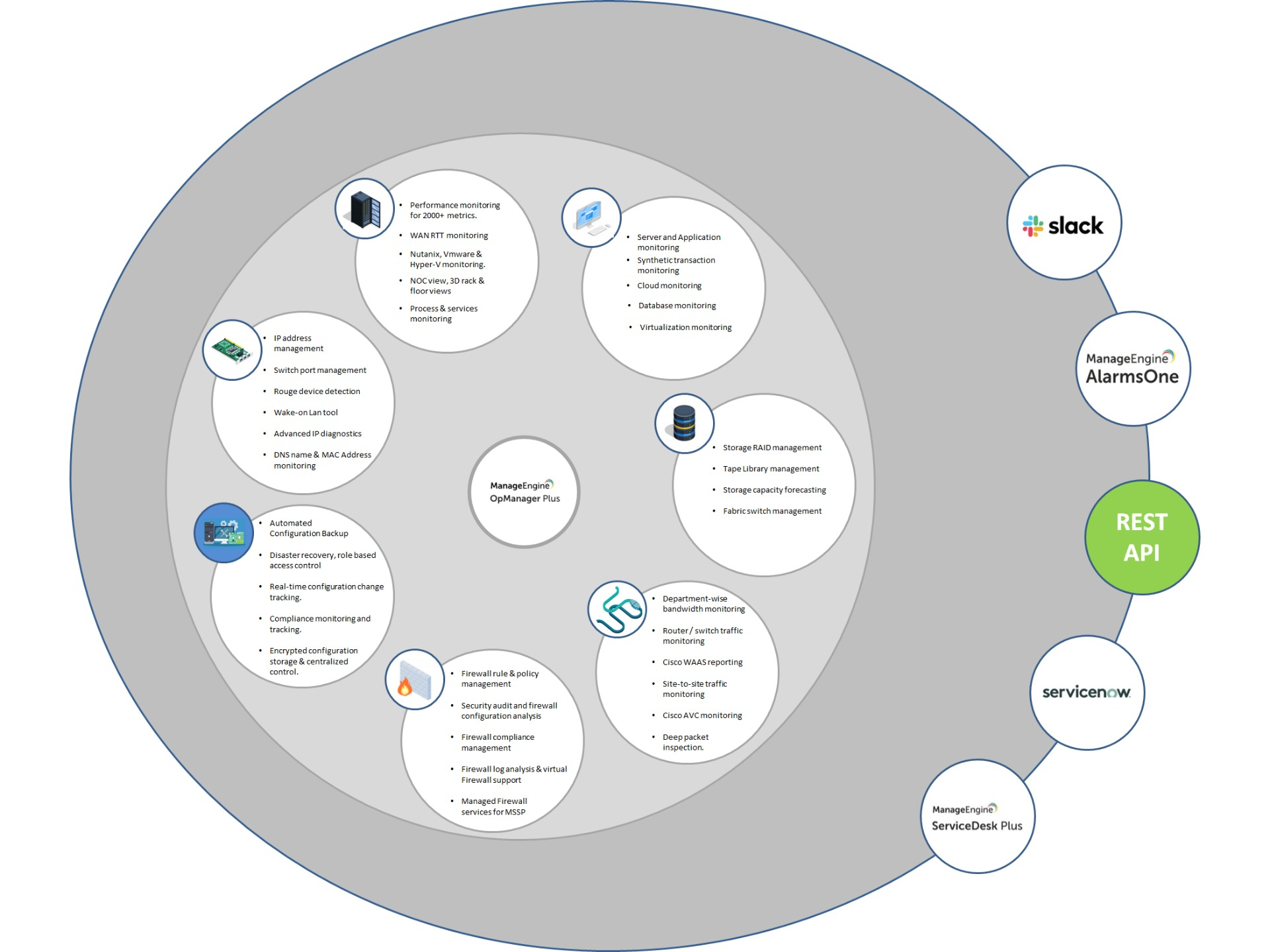
ITOM is comprised of the following components:
- Infrastructure management
- Bandwidth management
- Firewall management
- Configuration management
- Application management
- IP address and switch port management
- Storage management
Challenges in implementing ITOM
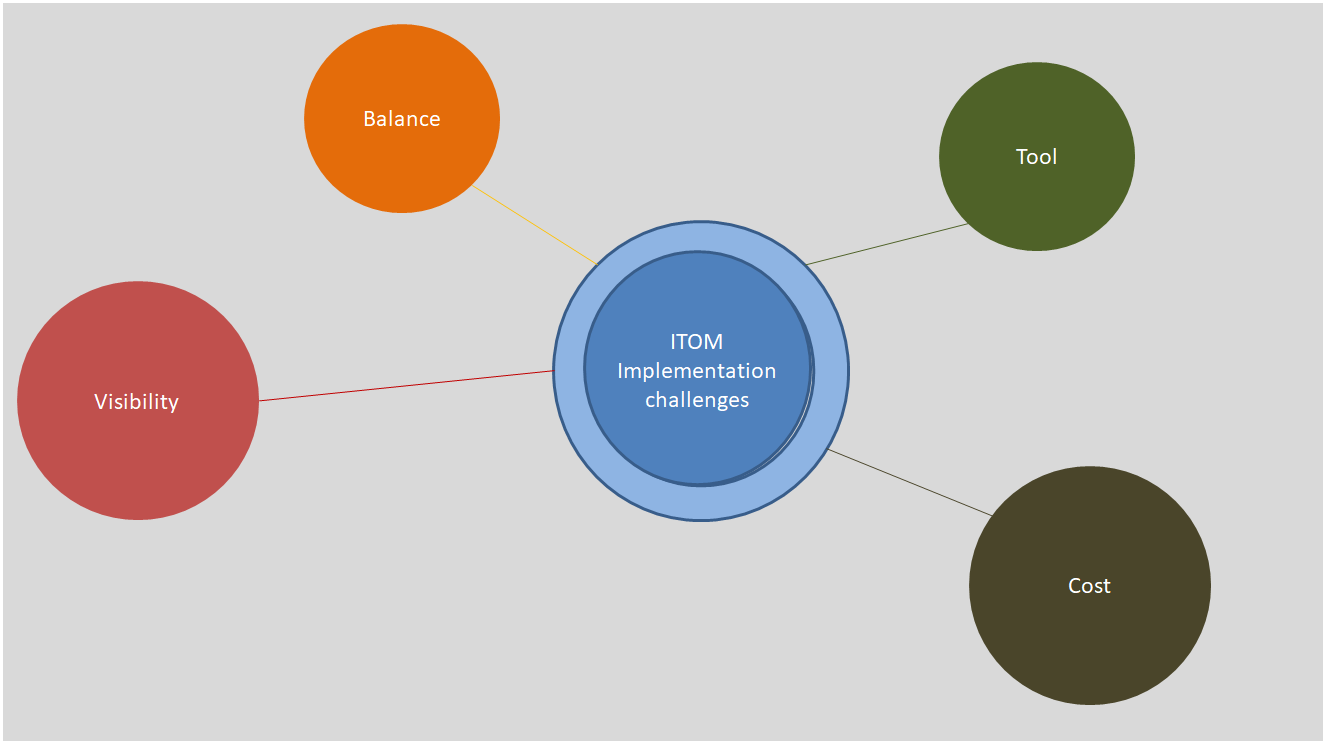
A well-crafted strategy for ITOM is key to its success. Any IT admin tasked with formulating and implementing their organization’s ITOM process will face the following challenges:
- Since ITOM has several components, IT admins must strike a balance between each of them and avoid focusing too much on one component, lest they potentially miss key loopholes in others.
- For effective implementation of ITOM, an admin has to ensure greater visibility into the organization’s IT infrastructure across multiple layers (physical layer, application layer, security layer, and transmission layer) at all times.
- With multiple tools at an admin's disposal, coordinating and switching between them consumes a substantial amount of time and effort. In addition to this, the lack of coordination between the various tools leads to confusion. This can be resolved by opting for a unified ITOM tool.
- If an organization owns several tools but doesn't handle its licenses and spend carefully, this can lead to issues that will cost more in the long run, like a drop in efficiency and increased response time and downtime. Find a strategy that will allow your organization to gain the maximum returns for the lowest investment.
OpManager Nexus: A single tool for the entire IT operations management cycle
Enter OpManager Nexus, an integrated ITOM tool packed with advanced IT monitoring capabilities that ensure optimal performance of your organization's IT infrastructure. Here is an overview of OpManager Nexus' features: