Data center monitoring is the process of tracking and analyzing performance indicators across IT infrastructure, facilities, and environmental systems. Its goal is to maintain optimal performance, strengthen resilience, and ensure cost efficiency. As enterprises expand AI workloads and hybrid IT models, the demand for robust monitoring continues to grow. In this page, we’ll cover:
- Why data center monitoring matters
- Different types of monitoring methodologies
- Best practices to maximize efficiency and uptime
- How OpManager drives measurable business value
Significance of data center monitoring: The direct ties to the AI revolution
With downtime costing enterprises an average of $14,056 to even $23,750 per minute, proactive monitoring is no longer optional but an imperative.
The adoption of AI-driven workloads ranging from agentic AI pipelines to large-scale analytics places unprecedented demand on compute, storage, and network infrastructure, making real-time observability essential. In the absence of effective monitoring, organizations face heightened risks of unplanned outages, regulatory non-compliance, and severe performance degradation.
So, where should you start?
Modern data center monitoring spans multiple dimensions:
- Hardware monitoring involves continuously tracking servers, storage devices, switches, and routers to detect performance degradation or early signs of hardware failure. By doing so, IT teams can prevent outages, extend asset lifecycles, and ensure consistent service delivery.
- Environmental monitoring focuses on physical conditions such as temperature, humidity, power consumption, and cooling efficiency. Maintaining these parameters within safe thresholds is essential to protect sensitive equipment, optimize energy use, and avoid costly downtime.
- Network & WAN monitoring ensures uninterrupted connectivity by monitoring WAN links, routers, and switches for latency, bandwidth usage, and availability. This helps maintain application performance, prevent bottlenecks, and guarantee business continuity across distributed environments.
- Hybrid monitoring approaches combine tracking of both physical and virtual infrastructure, enabling more efficient troubleshooting, resource allocation, and performance optimization.
How to achieve ROI-driven data center monitoring?
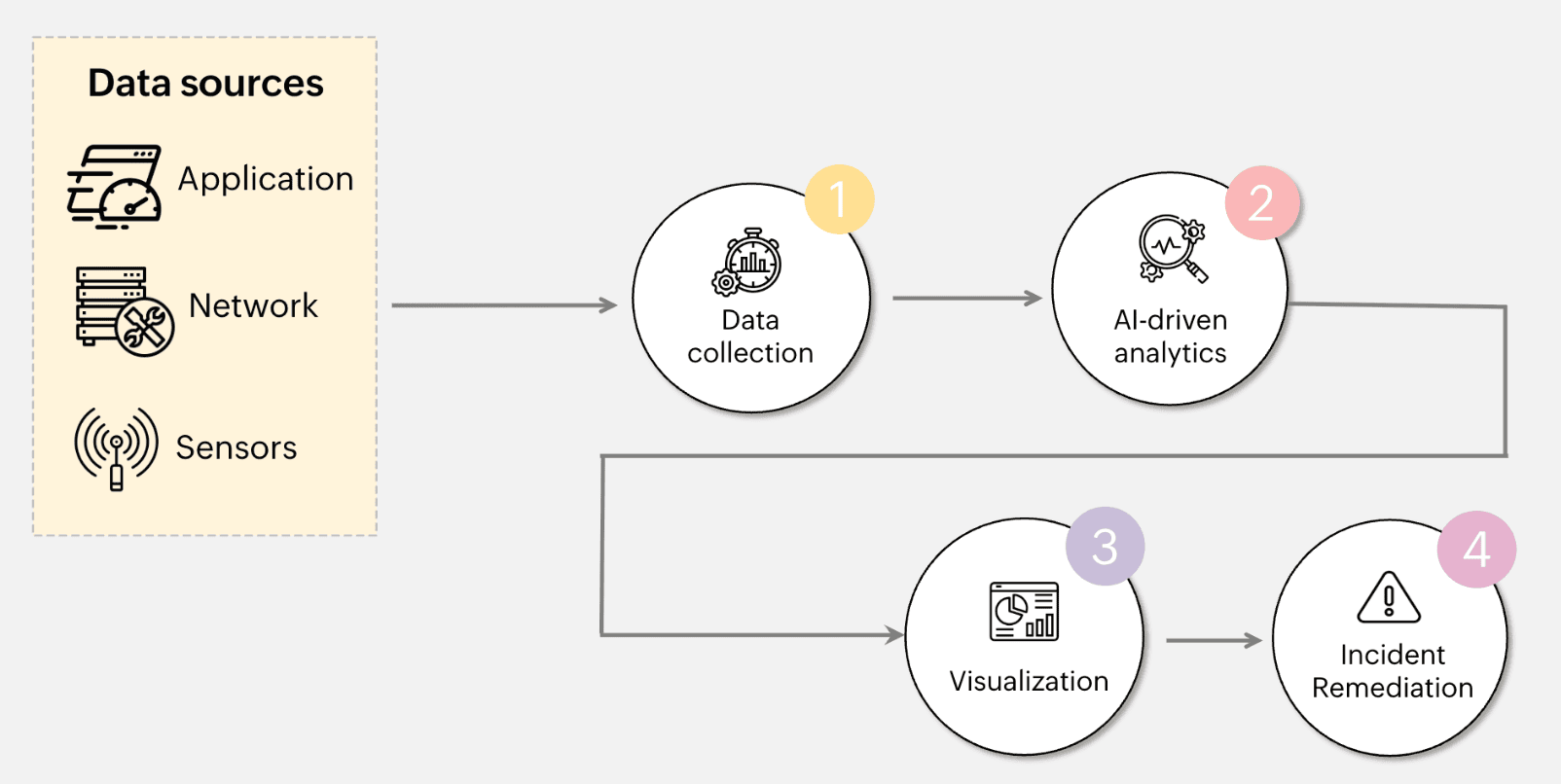
Many enterprises leverage DCIM software to unify these functions, integrating monitoring with capacity planning, energy management, and automation by including these four data center monitoring stages:
- Data collection by gathering telemetry from devices, sensors, and applications across the infrastructure.
- Applying analytics to detect anomalies, performance bottlenecks, or compliance deviations.
- Delivering insights through dashboards, heat maps, and topology diagrams for quick decision-making.
- Triggering real-time alerts and automated responses such as failover, load balancing, or policy enforcement to maintain resilience.
Path ahead: Best practices for data center monitoring
As organizations strive to future-proof their data centers, best practices play a vital role in translating monitoring into measurable outcomes. Beyond reducing downtime and optimizing resource use, structured approaches ensure sustainable operations, regulatory alignment, and proactive capacity management. The following practices provide a clear roadmap to strengthen resilience and maximize ROI.
- Establish regular maintenance schedules for infrastructure health checks.
- Deploy intelligent alerting systems to minimize false positives and accelerate root cause analysis.
- Encourage cross-team collaboration between IT, facilities, and security teams.
- Adopt predictive maintenance strategies using AI/ML for anomaly detection.
Make your IT resilient with OpManager's data center monitoring
The global data center monitoring market is in a phase of rapid expansion, driven by the twin forces of digital transformation and AI adoption. As of this recent report by Grand View Research, the market stood at approximately USD 1.9 billion, with a projected compound annual growth rate (CAGR) of 19.3% from 2025 to 2033, reaching nearly USD 8.9 billion by 2033.
As IT ecosystems evolve, enterprises that embrace integrated data center monitoring with OpManager are better positioned to adapt, innovate, and thrive in an AI-driven future. By consolidating monitoring into a single platform, OpManager not only enhances resilience and efficiency but also ensures measurable returns on IT investments.
Discover how OpManager can transform your data center operations delivering the visibility, control, and assurance your business needs to stay ahead.
Download now and explore data center monitoring capabilities for free for 30-days or schedule a personalized demo with our product experts.