What birthright access is and how to use it to enforce least privilege
Birthright access refers to the predefined, minimum set of access rights a user should automatically receive when they join an organization or transition into a new role. It's not about giving users access to everything they might ever need—it's about giving them exactly what they need to start working and nothing more.
In identity and access management, birthright access is typically determined by user attributes such as department, job role, location, or employment type. Once these attributes are known, access decisions are no longer subjective. They are enforced through policy.
In most organizations, birthright access is implemented through automated user provisioning, where access is assigned based on identity data instead of manual requests. This shift from ticket-based access to policy-based provisioning is what makes birthright access scalable, predictable, and secure.
Why birthright access matters
Privilege creep begins with small exceptions. A new hire is given extra access to get working faster. A role change happens, but old permissions are never removed. Over time, users accumulate access that no longer matches their responsibilities. This is how privilege creep becomes normalized.
Birthright access breaks this pattern. By defining a clear baseline for each role, organizations ensure that access is consistent across users and aligned with current job needs. New hires become productive on day one, and access decisions no longer depend on who raised a request or who approved it.
More importantly, access becomes explainable. Every permission has a reason, and that reason is tied to policy.
Birthright access across the joiner, mover, leaver life cycle
Birthright access sits at the center of the identity life cycle.
When a user joins, birthright access ensures they receive baseline access immediately, without delays or follow-ups. When a user moves roles or departments, access is recalculated to match the new role. When a user leaves the organization, access is removed cleanly and consistently.
Without birthright access, life cycle management becomes reactive. With it, access changes are an automatic outcome of policy enforcement.
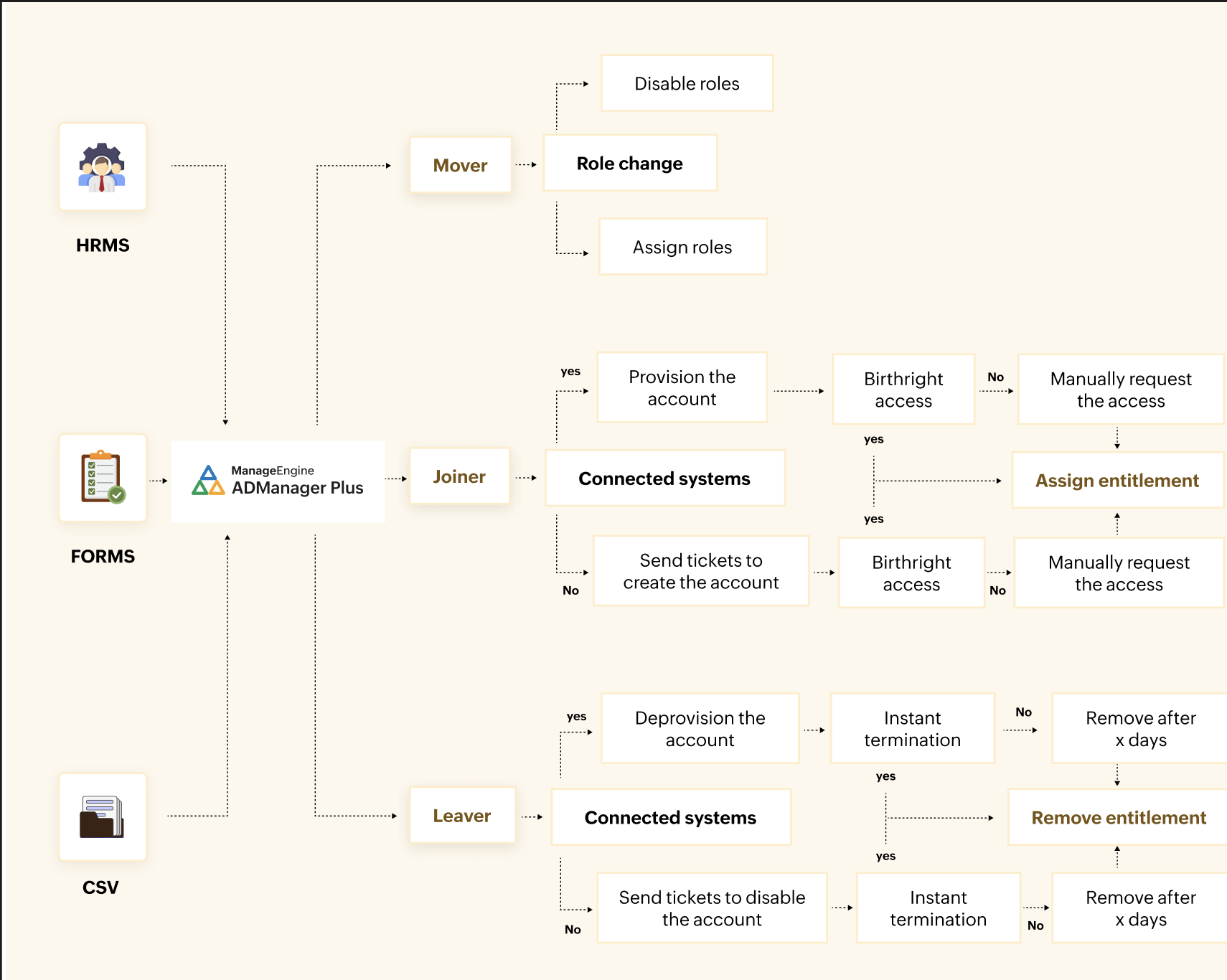 Birthright access provisioning explained
Birthright access provisioning is the process of automatically assigning access based on identity attributes and predefined rules.
When a user account is created or updated in Active Directory or synced from an authoritative source like HR, the system evaluates the provisioning rules. Based on those rules, the system assigns group memberships, application roles, and resource access without manual intervention.
This process is continuous, not one-time.
If a user moves from finance to HR, finance-related access is removed and HR access is granted automatically. The system recalculates access based on the user’s current attributes, not their past roles. That dynamic recalculation is what separates true birthright access provisioning from simple onboarding scripts.
Enforcing least privilege through birthright access
Birthright access enforces least privilege by design. Users start with only the minimum permissions required for their role, rather than being granted broad access that must be cleaned up later. Any additional access is intentional, justified, and visible.
However, access requirements evolve. Roles change, exceptions accumulate, and what was once appropriate may no longer be. This is why access certification remains essential. Periodic reviews validate that birthright access still aligns with policy, allowing organizations to catch over-privileged accounts early and maintain confidence in their access model without slowing down onboarding or role transitions.
Implementing birthright access with ADManager Plus
For organizations managing access through Active Directory, ADManager Plus provides the controls needed to implement and govern birthright access effectively.
Automatic provisioning and deprovisioning keep access aligned as users move through the joiner, mover, leaver life cycle. Role-based access control helps define baseline access for different user types. User creation templates ensure new accounts are created with the right attributes and group memberships.
Access certification and risk exposure management add a governance layer, helping organizations identify over-privileged accounts and validate that access remains appropriate over time.
Move from manual access chaos to policy-driven birthright access with ADManager Plus
Explore now