Integrate Applications Manager with OpsGenie
Integrating OpsGenie with Applications Manager brings a powerful synergy to your IT operations and event management strategy. This enables advanced alerting capabilities, ensuring that critical issues are detected and communicated promptly. By combining these strengths, it helps organizations enhance operational efficiency, improve event resolution, and maintain high service reliability.
Applications Manager can be integrated with OpsGenie using the custom integration option.
- Configuring OpsGenie
- Configuring Applications Manager
Configuring OpsGenie
- Login to OpsGenie: To activate integration in OpsGenie, login here.
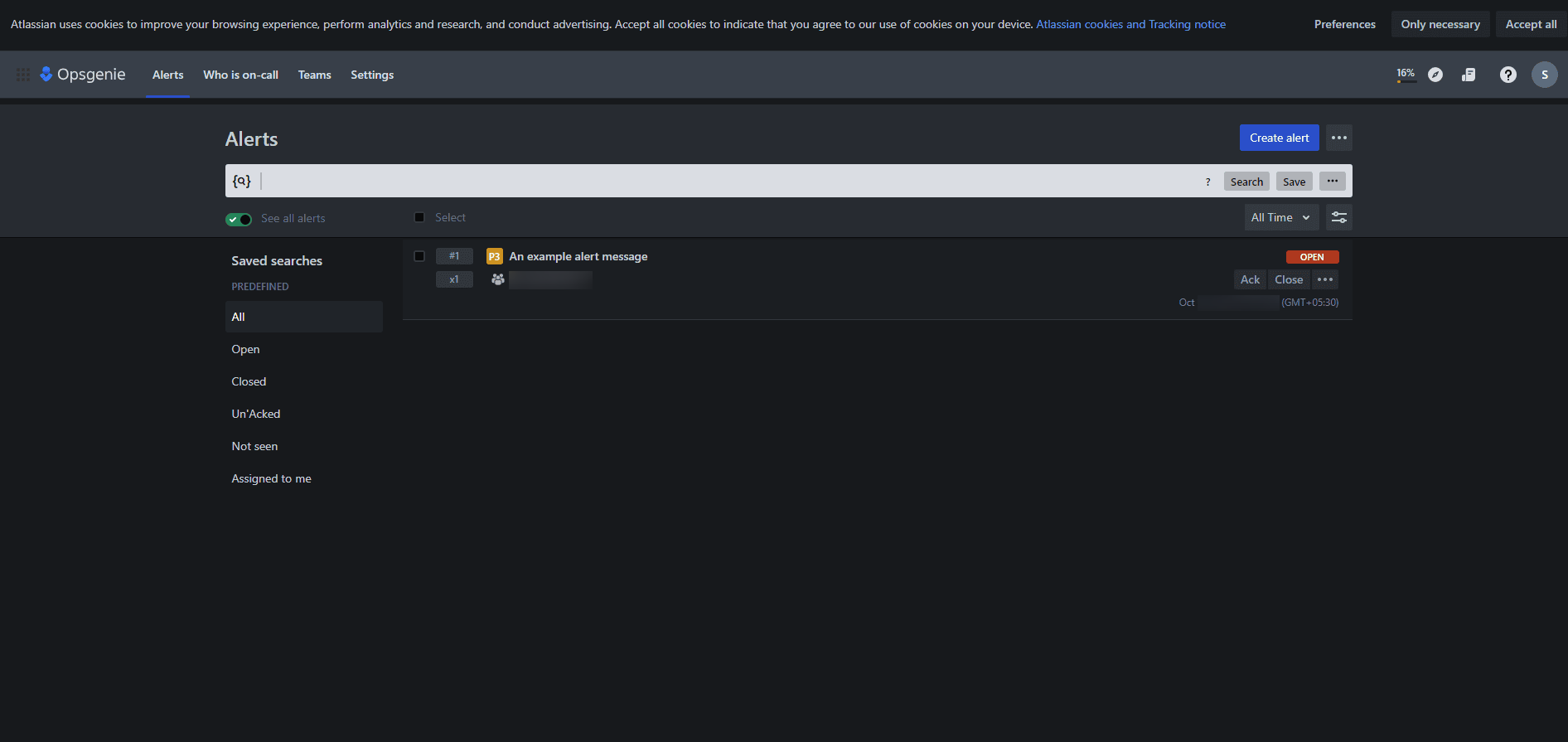
- Create a Team: Navigate to Teams > Add Team to create a new team. Once the team is created, you will be redirected to the team’s page.
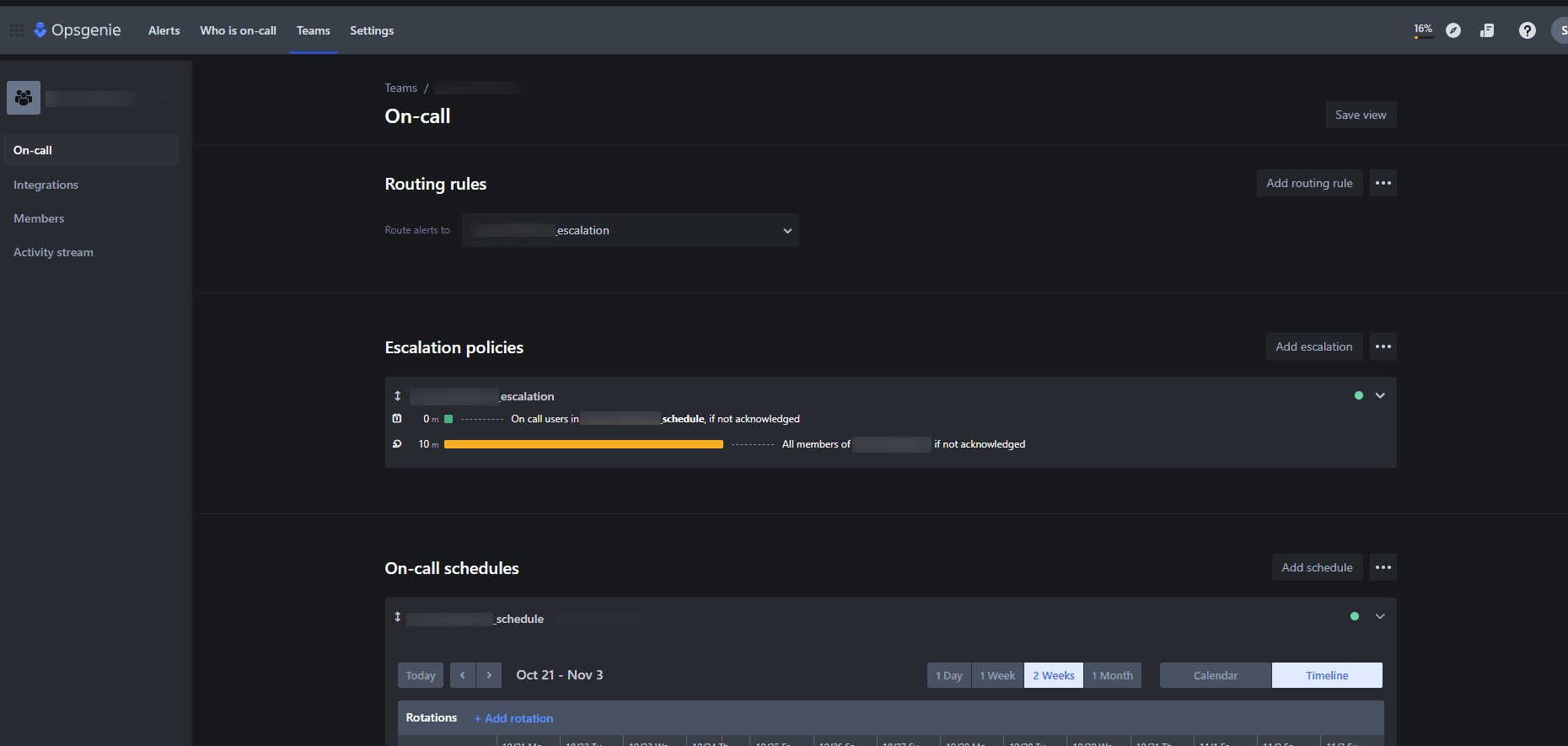
- Add an Integration: Click on Integrations > Add Integration to enable a new integration. A list of available integrations will be displayed.
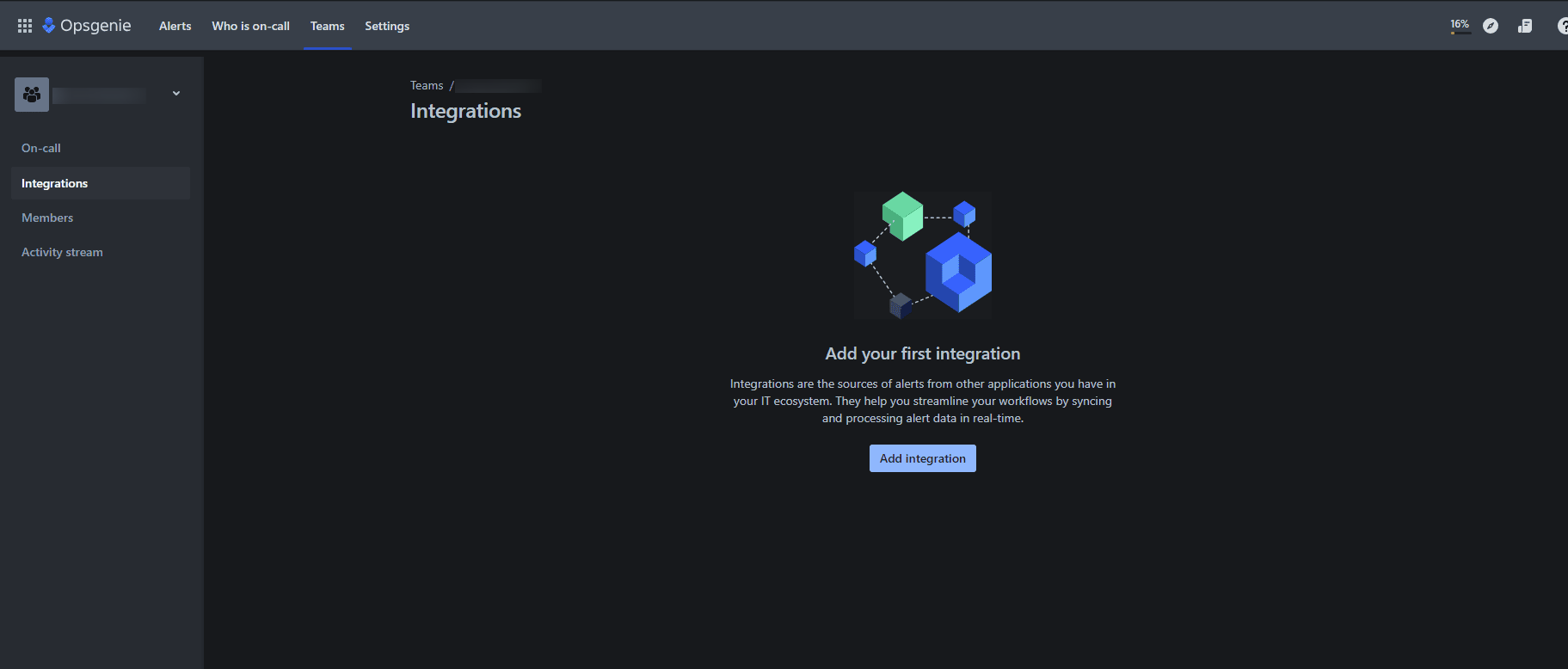
- Select API Integration: Choose the "API" integration to perform REST operations. Both free and paid options are available—select based on your requirements. Copy the API key.
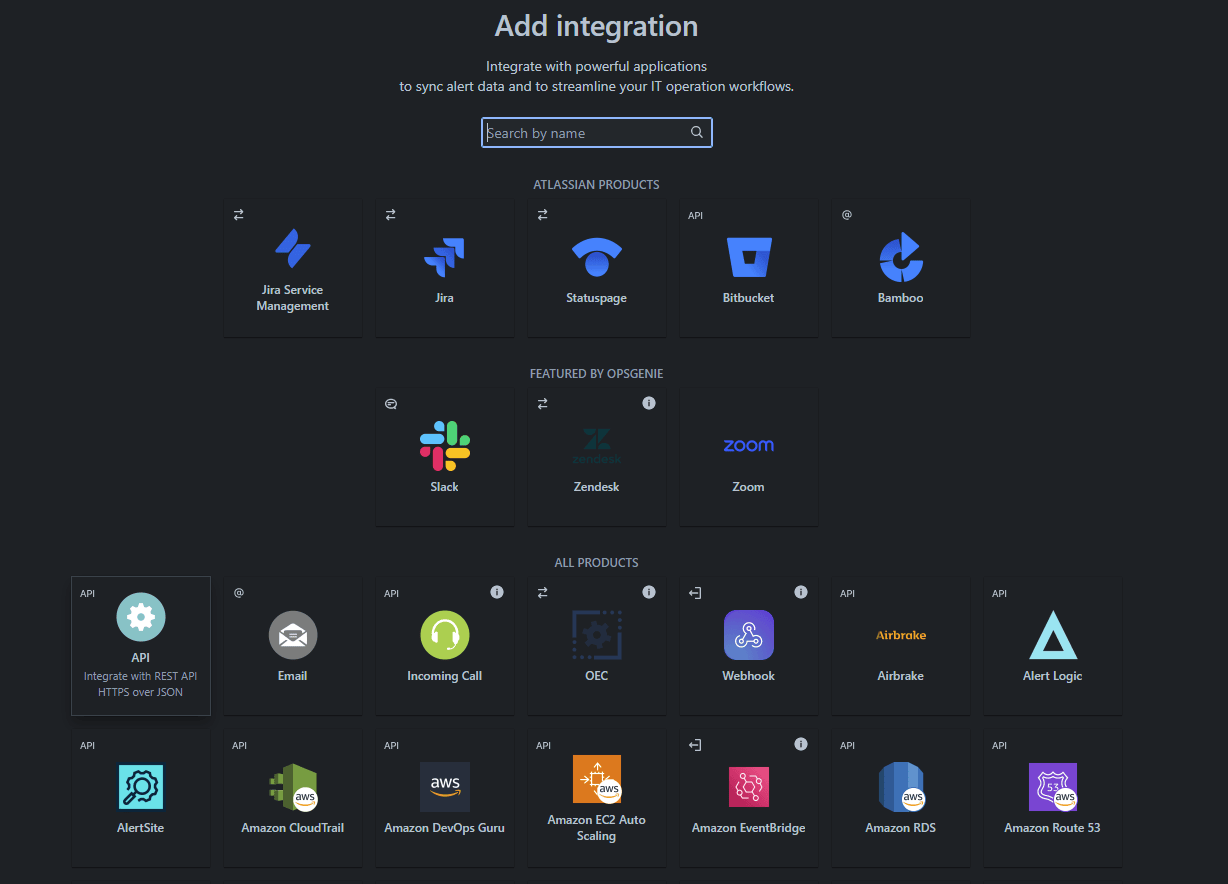
- Enable Access: Verify if access is enabled. If not, click Edit and enable access. Once created, you will receive integration settings, including the API key and other configuration details.
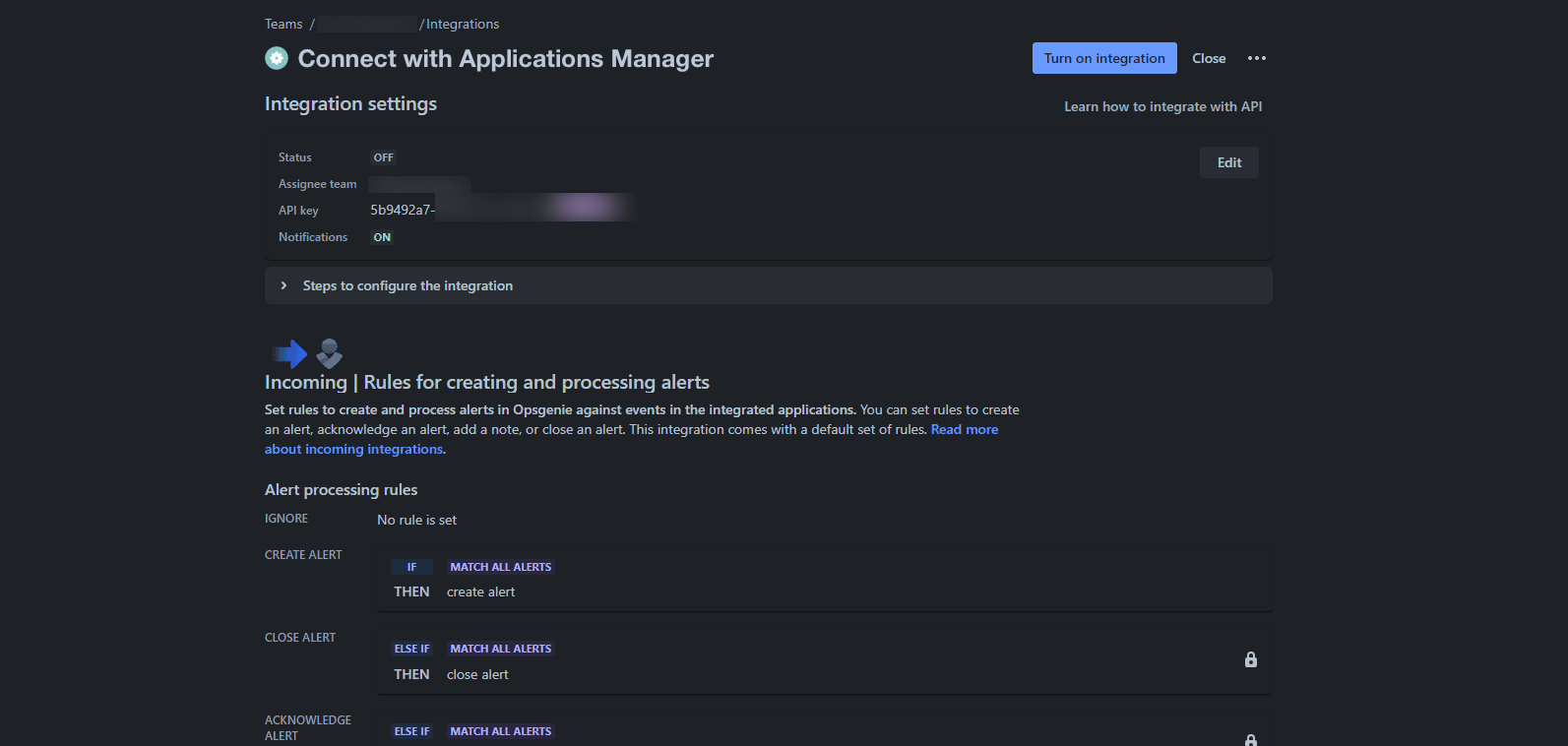
- Activate the Integration: Click Turn on Integration to activate it.
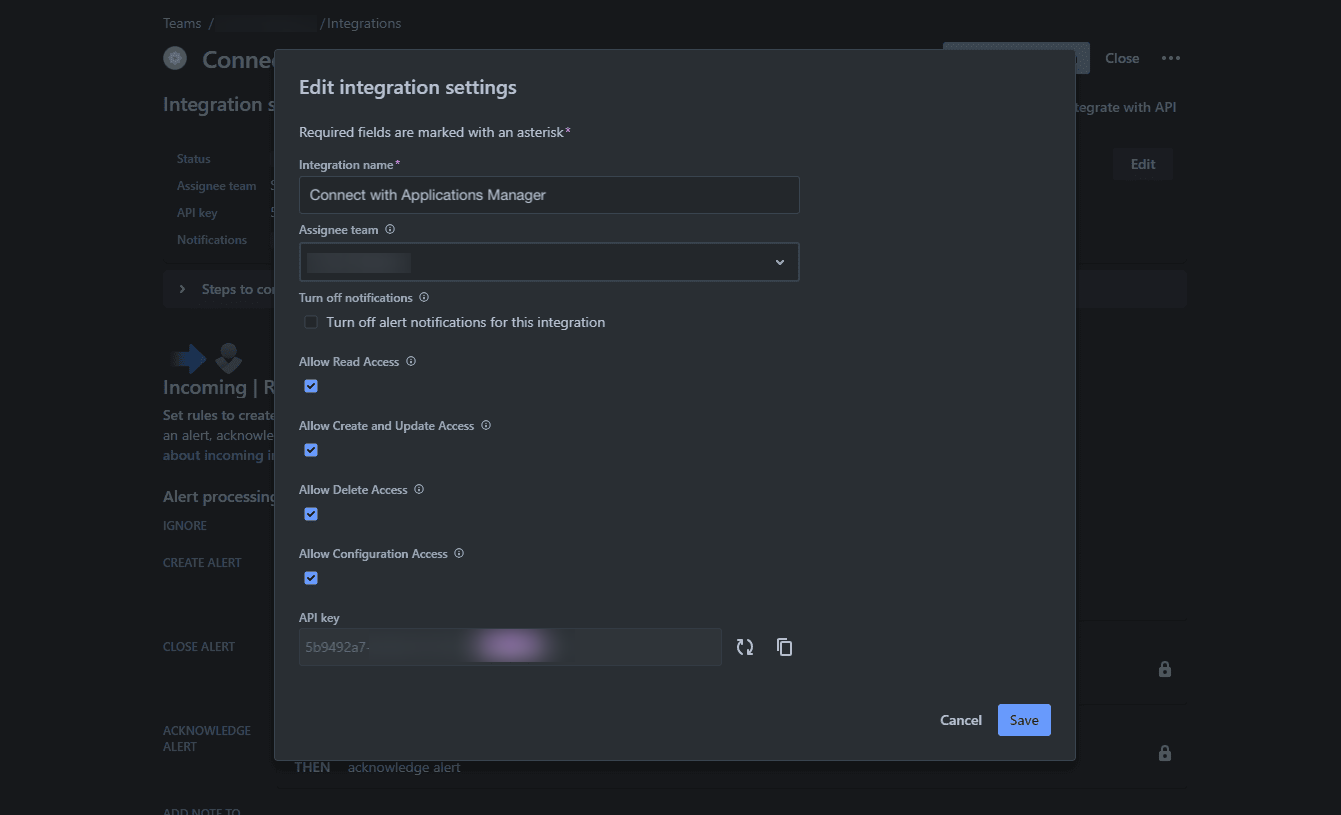
- Click Save.
Configuring Applications Manager
a. Add an Event in Applications Manager
- In Applications Manager, navigate to Settings > Integrations > Custom Integration.
- Enter the Integration Name and add a Decscription.
- Set up integration parameters
- Integration Type: Event Management
- API Endpoint: https://api.opsgenie.com/v2/alerts
- Method: POST
- Headers: Authorization: GenieKey eb2*****************************f56 {copied API Key from opsgenie}
- Payload Type: JSON
- Data Type: Raw
- Body Content:
{
"message": "$message",
"details": {
"displayname": "$displayName",
"Severity": "$stringseverity",
"Category": "$category"
}
}
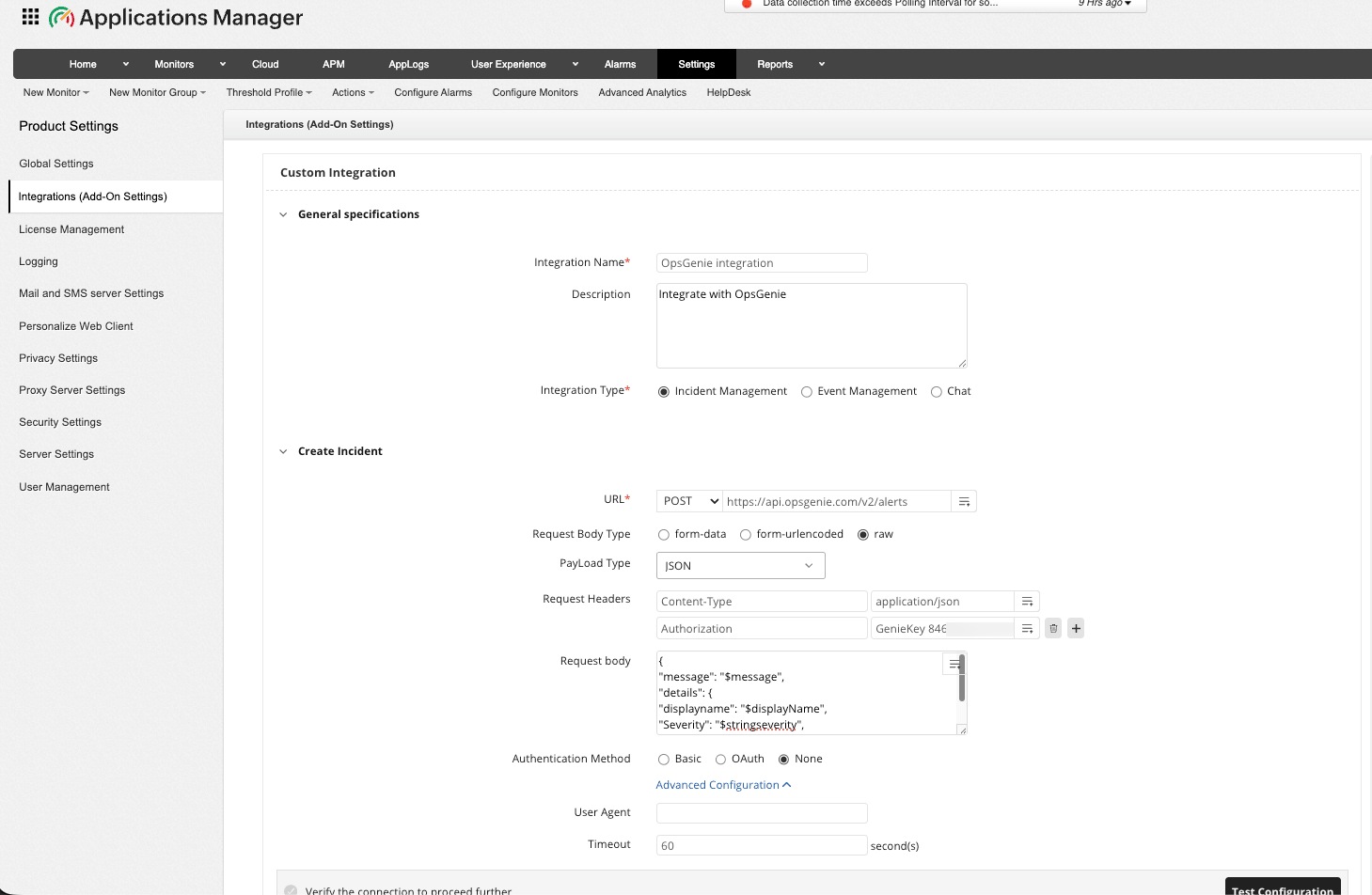
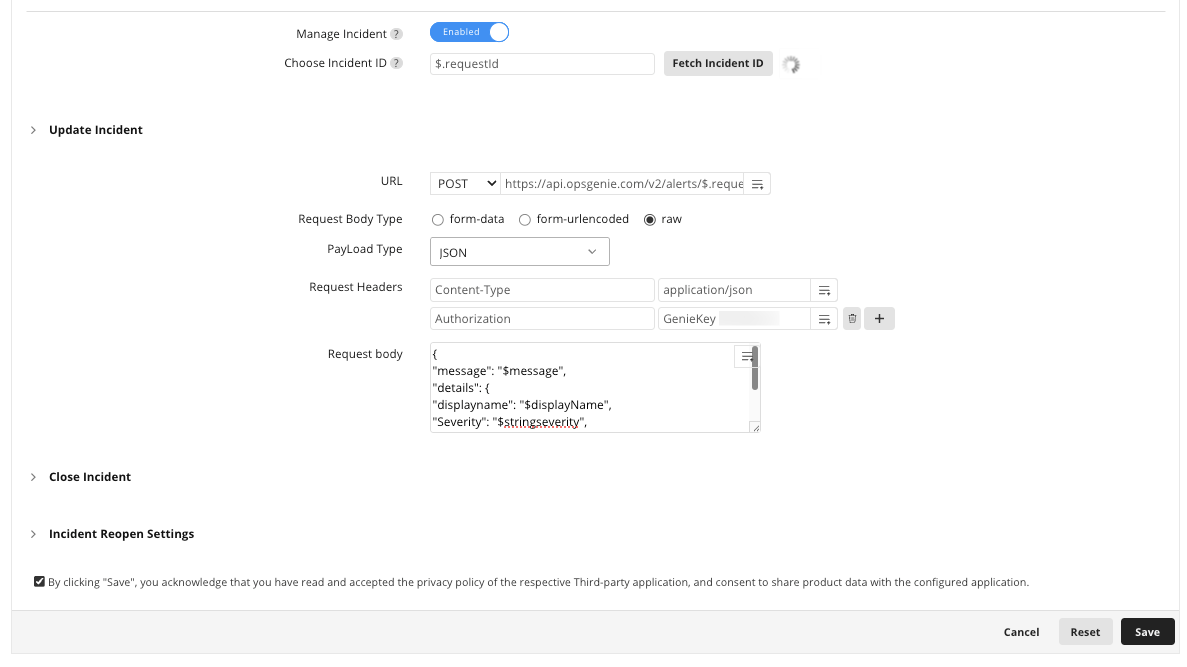
- Click Test Configuration to check the configuration. Once successful, select "Manage Events" to fetch the event ID. You will get a 'request_id', which can be used to acknowledge and close the particular event on the OpsGenie side.
b. Add Notes to an Event in Applications Manager
- API: https://api.opsgenie.com/v2/alerts/$requestId/notes
- Method: POST
- Headers: Authorization:GenieKey eb2*****************************f56 {copied API Key from opsgenie}
- Payload Type: JSON
- Data Type: Raw
- Body Content:
{
"message": "$message",
"details": {
"displayname": "$displayName",
"Severity": "$stringseverity",
"Category": "$category"
}
}
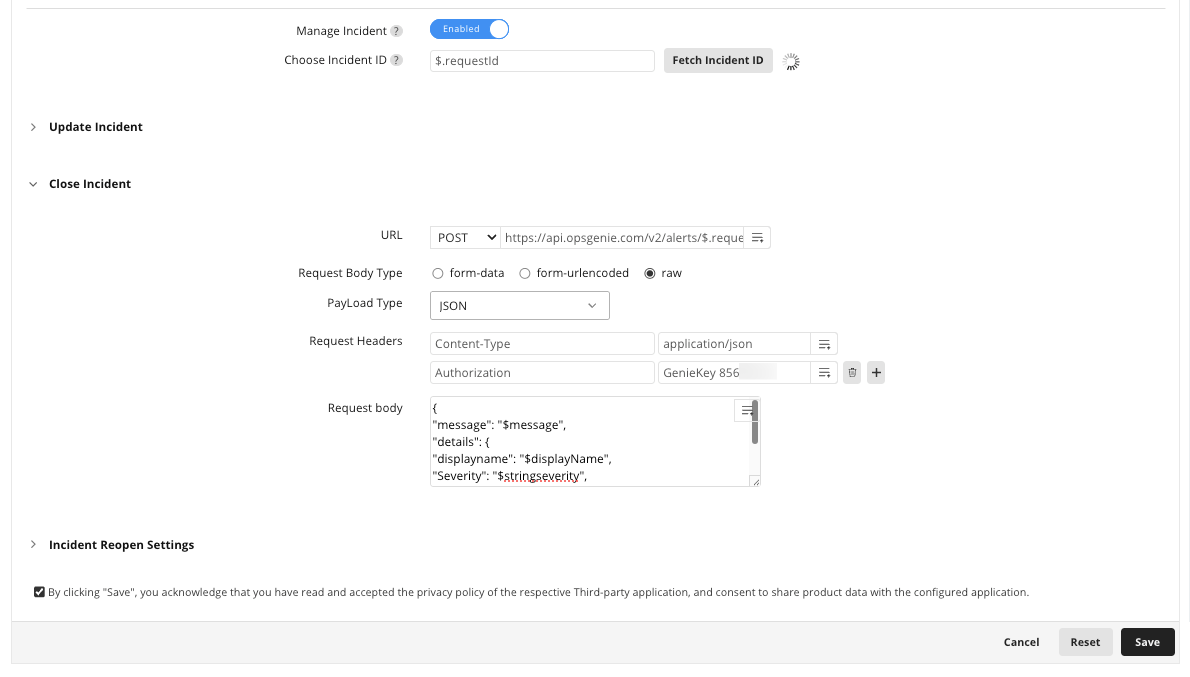
c. Close an Event in Applications Manager
- API: https://api.opsgenie.com/v2/alerts/$requestId/close
- Method: POST
- Headers: Authorization:GenieKey eb2*****************************f56 {copied API Key from opsgenie}
- Payload Type: JSON
- Data Type: Raw
- Body Content:
{
"message": "$message",
"details": {
"displayname": "$displayName",
"Severity": "$stringseverity",
"Category": "$category"
}
}
- Click Save to finalize the configuration.
Note: Refer to the OpsGenie Alert API documentation to check for Alerts API parameters.
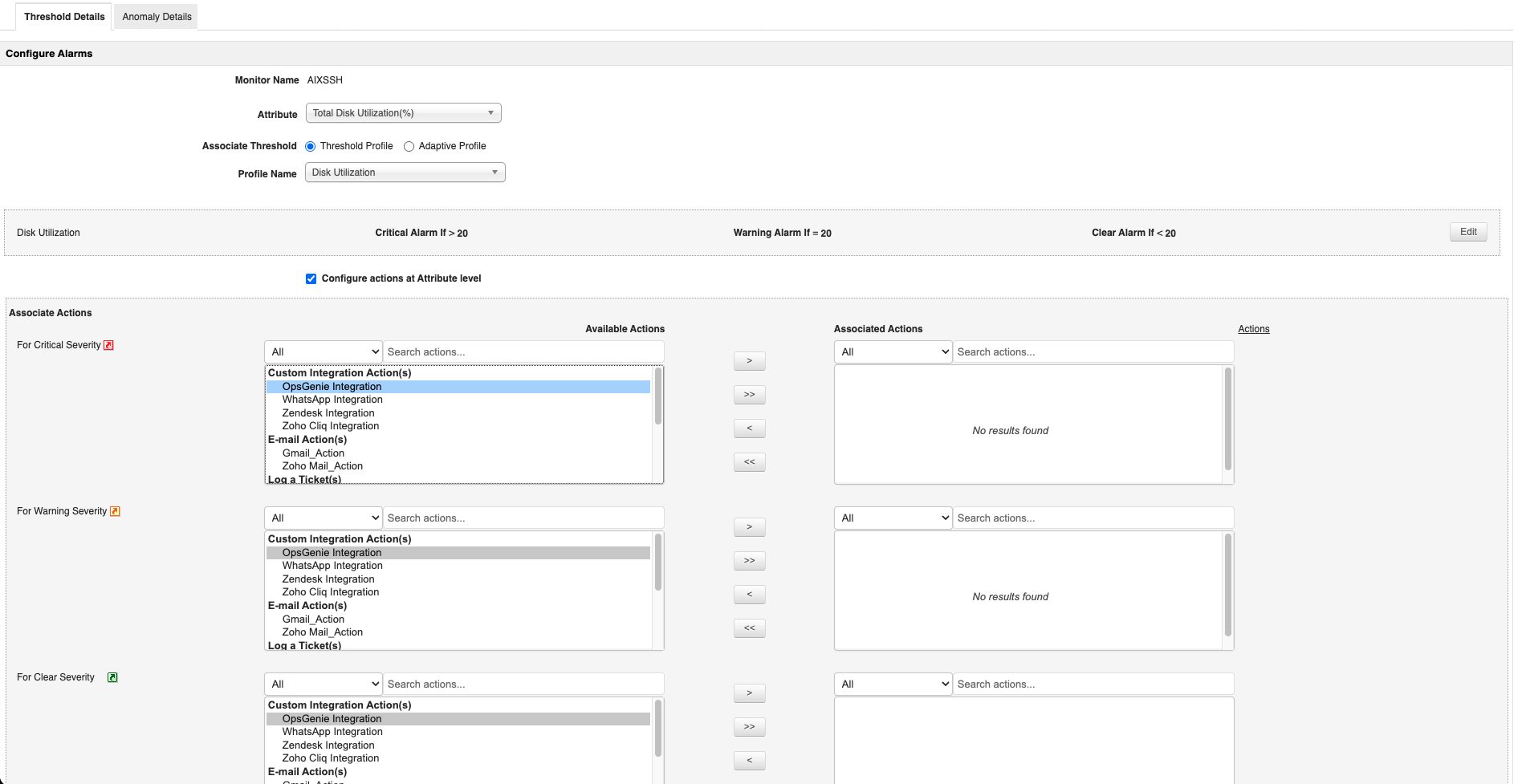
Now that Applications Manager has been integrated with OpsGenie, we have to associate actions for the same. Learn how to associate Custom integration actions

Verifying the Integration
Trigger a real-time alert in Applications Manager. Then, log in to your OpsGenie interface to verify the alert has been logged as an event.