Recover any BitLocker-encrypted Windows device without per-device recovery keys
In enterprise Windows environments, BitLocker recovery often depends on storing and retrieving a unique 48-digit recovery password for every device. When these passwords are missing, outdated, or inaccessible, recovery becomes time-consuming and can lead to an irrecoverable data loss event. As device counts grow, this approach creates operational risk that IT teams cannot afford. In today's enterprise environments, encryption is only as strong as your recovery strategy.
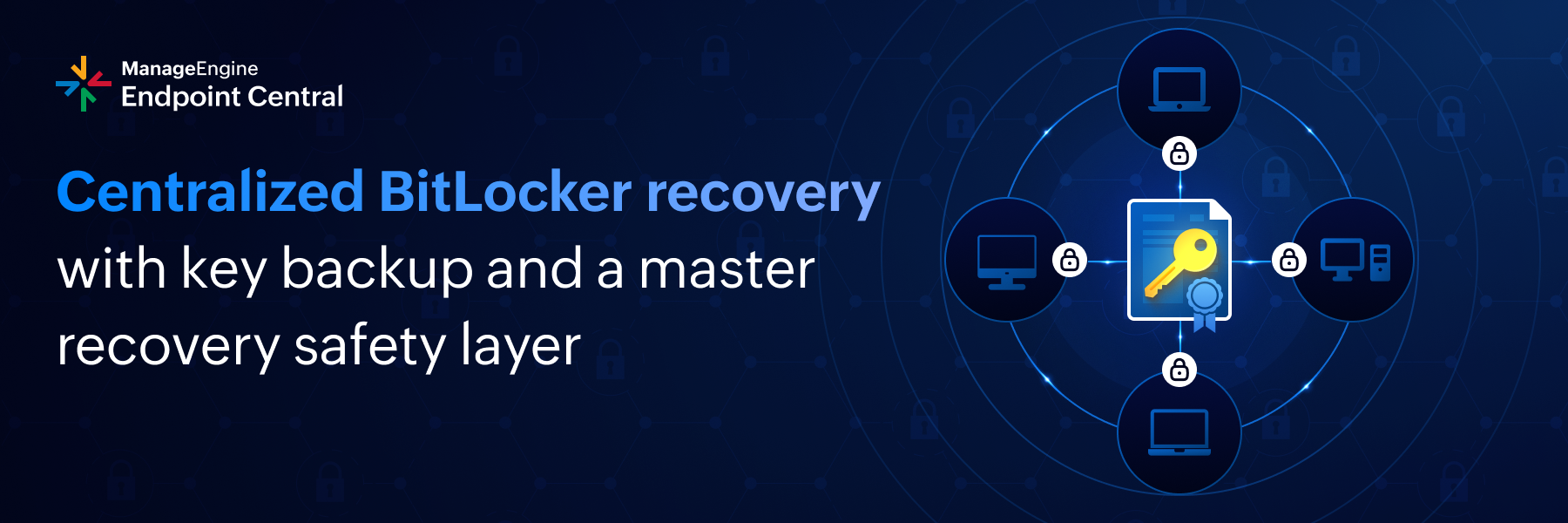
Endpoint Central addresses this challenge by enabling a centralized BitLocker recovery mechanism that works across all managed endpoints without relying on per-device recovery keys. It also stores the recovery keys of all endpoints, which can be retrieved by the administrator through the console, thus ensuring a double-backup strategy.
The enterprise problem with traditional BitLocker recovery
Per-device recovery keys may work in small environments, but they quickly become an operational burden as fleets grow. In modern IT environments, recovery is no longer a rare edge case. Hardware failures, OS corruption, employee exits, and compliance audits all require reliable, repeatable access to encrypted data. During critical incidents, searching for the correct recovery password wastes valuable time and increases downtime.
For organizations managing hundreds or thousands of Windows endpoints, BitLocker recovery needs to be centralized, predictable, and secure.
Centralized recovery using a master recovery key
BitLocker includes built-in support for certificate-based recovery through data recovery agents (DRA). This model replaces the need to manage recovery passwords on each device with a single, organization-controlled recovery certificate.
Using Endpoint Central, administrators generate a master recovery certificate pair. The public certificate is deployed to all managed Windows endpoints and added as a BitLocker recovery protector. The private certificate is securely retained by the organization and used only during recovery scenarios.
Once deployed, any BitLocker-encrypted drive that has received the public certificate can be unlocked using the private key, even if the device-specific recovery password is unavailable. Existing encryption remains unchanged, and no re-encryption is required.
The strategic value of a master recovery mechanism
Eliminates recovery chaos at scale
When recovery depends on individual keys, administrators lose time searching, validating, and escalating. A centralized recovery certificate ensures that any authorized recovery event is predictable and controlled, regardless of device ownership or user status.
Reduces operational risk
Lost recovery keys don’t just delay work; they can result in permanent data loss, failed audits, or regulatory exposure. A DRA-based model provides a built-in safety net without compromising encryption.
Improves security posture
A common misconception is that master keys reduce security. In reality:
- The private key is never deployed to endpoints.
- Access is tightly restricted to recovery personnel.
- Actions are deliberate, auditable, and offline-capable.
Enables true enterprise governance
Centralized recovery aligns with Zero Trust and least-privilege principles:
- End users don’t gain extra access.
- IT retains recovery authority.
- Key lifecycle management (rotation, revocation, redeployment) is possible without re-encrypting devices.
Take control of BitLocker recovery
Organizations that rely solely on per-device recovery passwords expose themselves to unnecessary risk. A master recovery key, deployed and managed through Endpoint Central, ensures that encrypted data remains recoverable under all circumstances.
Because in enterprise IT, the real question isn’t "Is the data encrypted?" It’s "Can we recover it reliably and securely?"
For detailed, step-by-step guidance on generating, deploying, and managing a master recovery key using Endpoint Central, refer to the complete how-to documentation here.