In today’s fast-paced digital workplace, devices and applications are no longer just tools—they’re the backbone of employee productivity. The performance and reliability of these endpoints directly shape how employees work, collaborate, and deliver results. To ensure peak efficiency, IT teams need more than traditional monitoring. They need DEX visibility: the ability to measure, analyze, and act on real experience data..
What is Digital Employee Experience (DEX)?
DEX is the practice of continuously measuring and improving how employees experience their digital workplace. It combines endpoint telemetry, analytics, and remediation to ensure devices, applications, and services perform seamlessly. By correlating system health with user experience, IT gains the context needed to deliver not just better uptime but a great employee experience.

Recognized in the 2026 Gartner® Magic Quadrant™ for Digital Employee Experience Management Tools
Why Digital Employee Experience (DEX) matters?
In hybrid and digital-first workplaces, employee productivity depends on seamless interactions with their devices, apps, and networks. Yet many IT teams only see part of the picture such as uptime, ticket volumes, or system health, while overlooking how those systems actually perform for employees.
That’s where DEX comes in. It helps IT move beyond reactive issue handling by:
- Uncovering hidden friction: Detect silent performance degradations like login delays or recurring crashes before they’re reported.
- Improving satisfaction & retention: A smoother digital workplace directly impacts employee morale, engagement, and overall business productivity.
- Reducing ticket volumes: Catch and resolve common issues automatically, minimizing disruptions and freeing up IT resources.
How DEX enhances Unified Endpoint Management(UEM)?
Traditiona l UEM ensures devices are managed, patched, and secured. DEX adds another layer namely experience intelligence, to turn UEM into a more proactive, outcome-driven platform:
- Context-rich monitoring: Correlates endpoint telemetry (CPU, memory, disk, crashes, login times, etc.) with real-time user-level insights.
- Root Cause Analysis (RCA): Goes beyond alerts by diagnosing the why behind issues, helping IT teams prioritize and resolve faster.
- Automated remediation workflows: Extends UEM controls with workflows that detect and fix issues in real time, before users are affected.
- Benchmarking & optimization: Tracks experience scores across devices, locations, or departments, helping IT continuously improve digital operations.
With DEX integrated into UEM, organizations gain a unified approach: managing endpoint compliance and security while ensuring every device delivers a reliable, frustration-free experience.
From Endpoint Management to Experience Management(UEM)
Endpoint Central moves from a device management and security platform to one that unifies monitoring, analytics, and remediation. With live telemetry, configurable thresholds, root cause analysis, and automated workflows, Endpoint Central helps IT move from reactive support to proactive experience management. The result? A workplace that’s reliable, secure, and optimized for productivity.
DEX in Endpoint Central: Core Capabilities
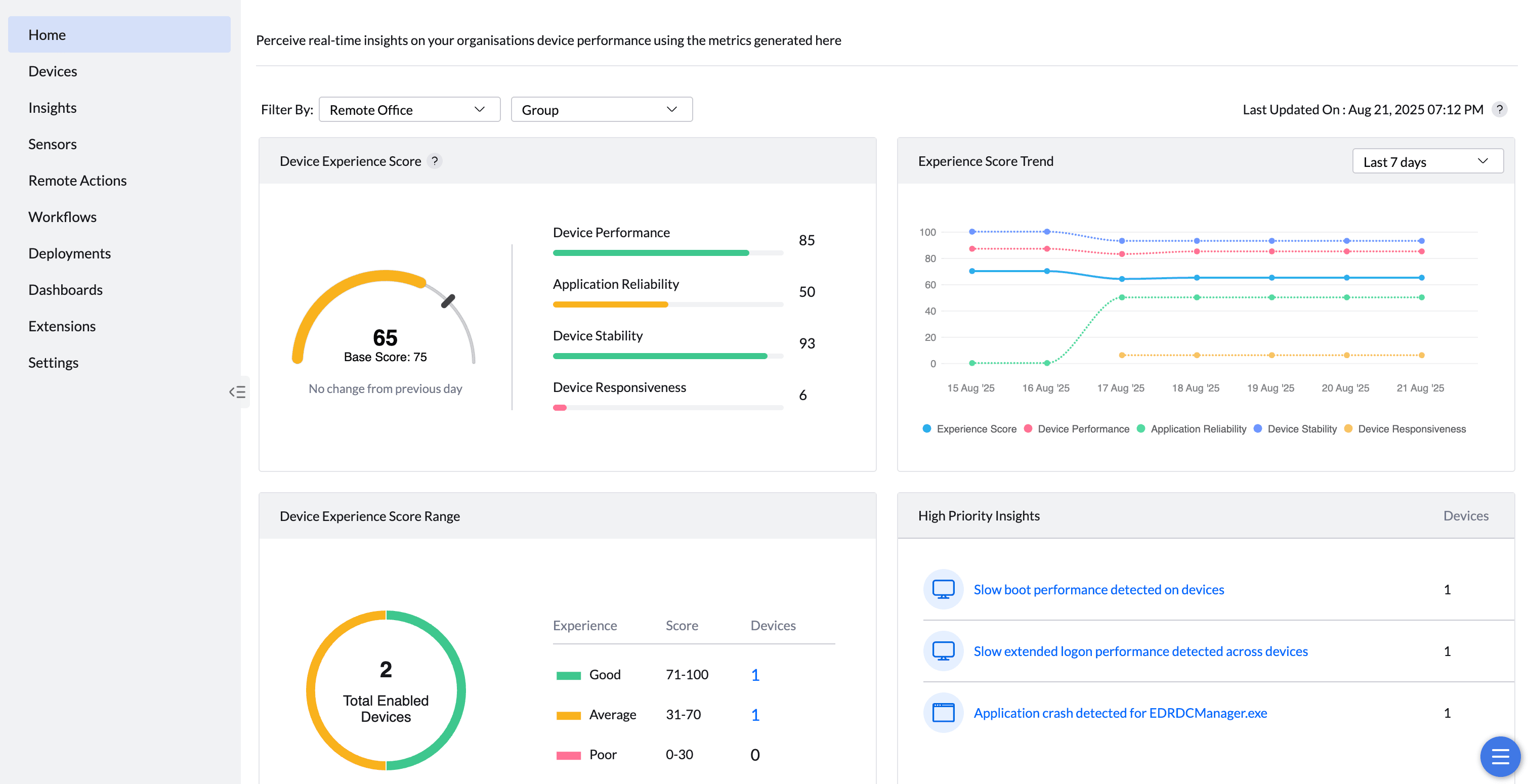
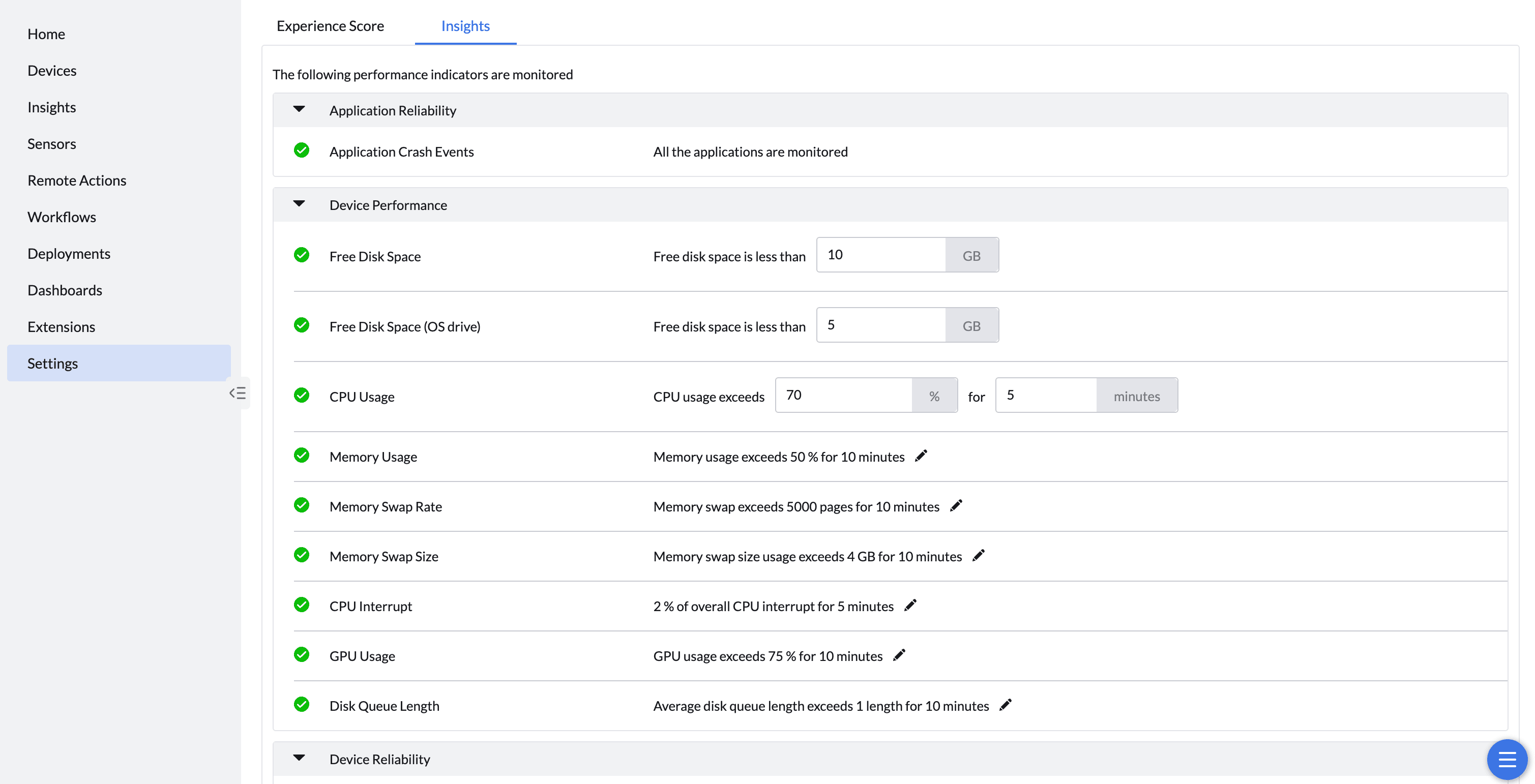
Experience Monitoring
Collect and analyze endpoint telemetry across CPU, memory, GPU, disk, battery health, boot time, logon time, crashes, and more. These metrics form the foundation for employee experience analytics, offering IT visibility into how devices perform in real time.
Root Cause Analysis (RCA)
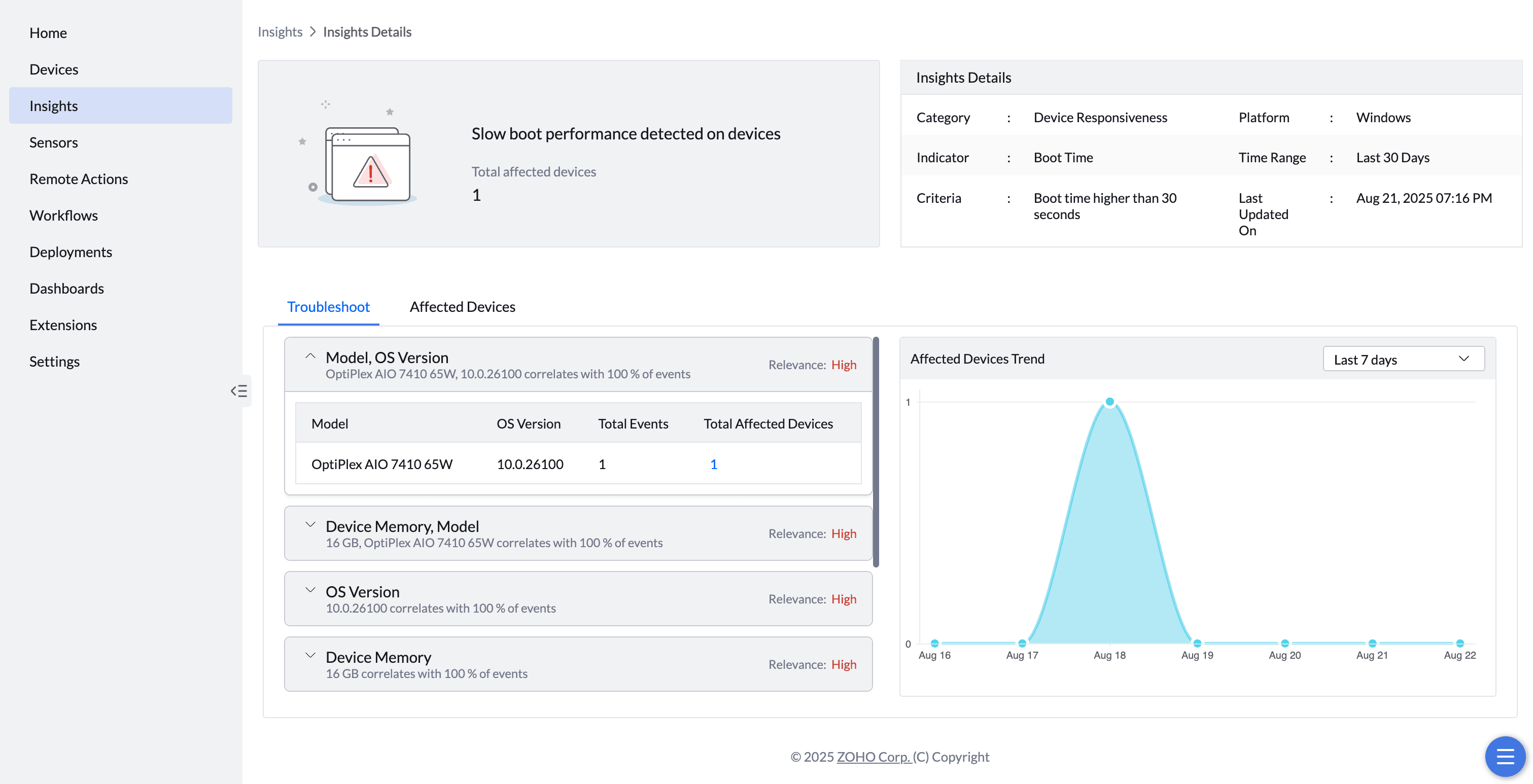
Go beyond alerts with built-in RCA. Correlate telemetry across devices, models, and applications to uncover the “why” behind issues. Smart grouping and prioritization ensure IT resolves what matters most, faster.
Automated Remediation Workflows
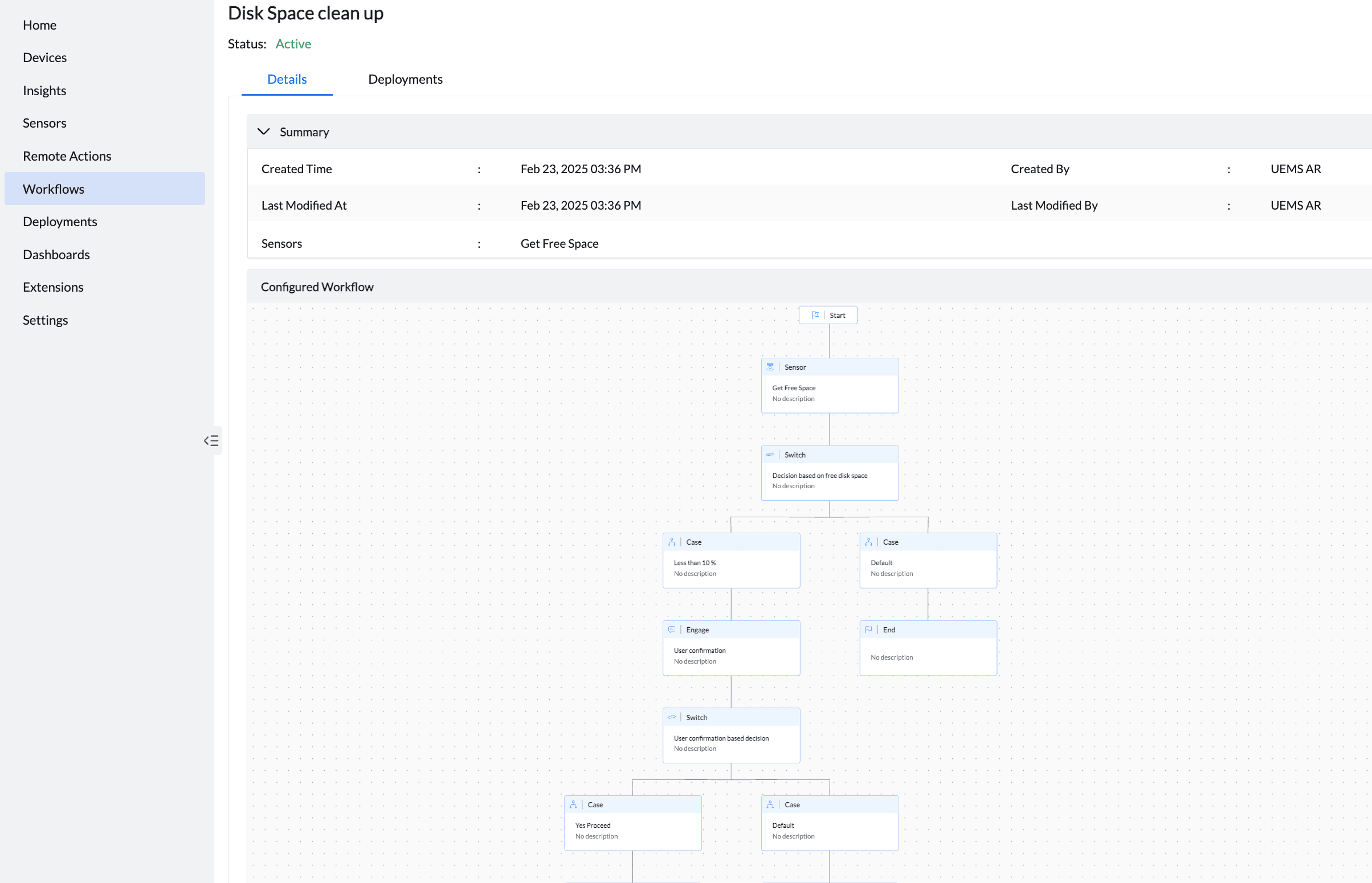
Resolve issues before they become tickets. Deploy standalone remediation scripts for quick fixes, or build no-code troubleshooting workflows that detect and remediate problems automatically across thousands of endpoints.
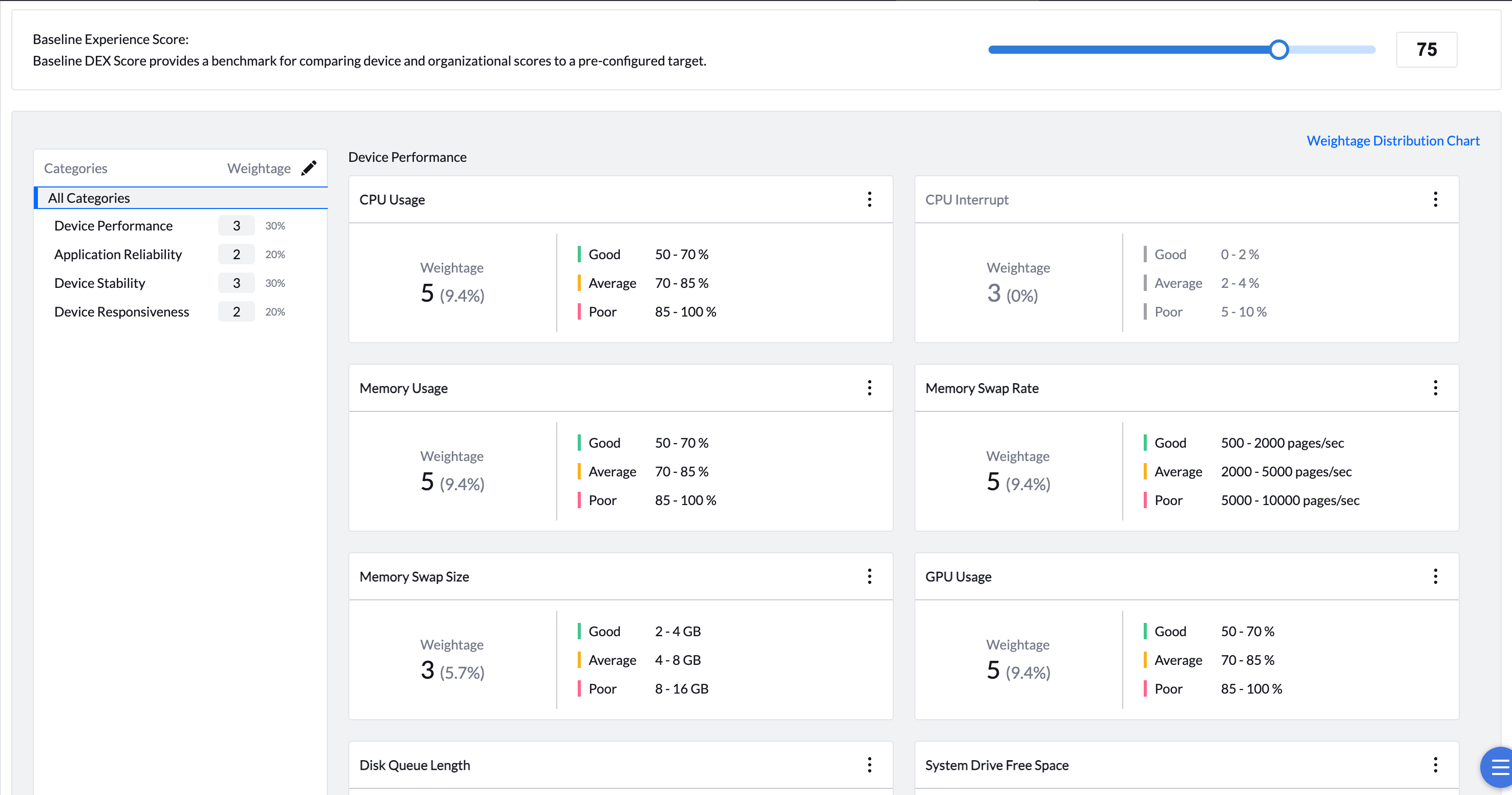
Benchmarking & Experience Scoring
Set baselines for digital experience across the organization. Compare device performance against these benchmarks to identify underperforming endpoints and make informed, data-driven decisions around upgrades, refresh cycles, or app rollouts.
Extensible Action Library
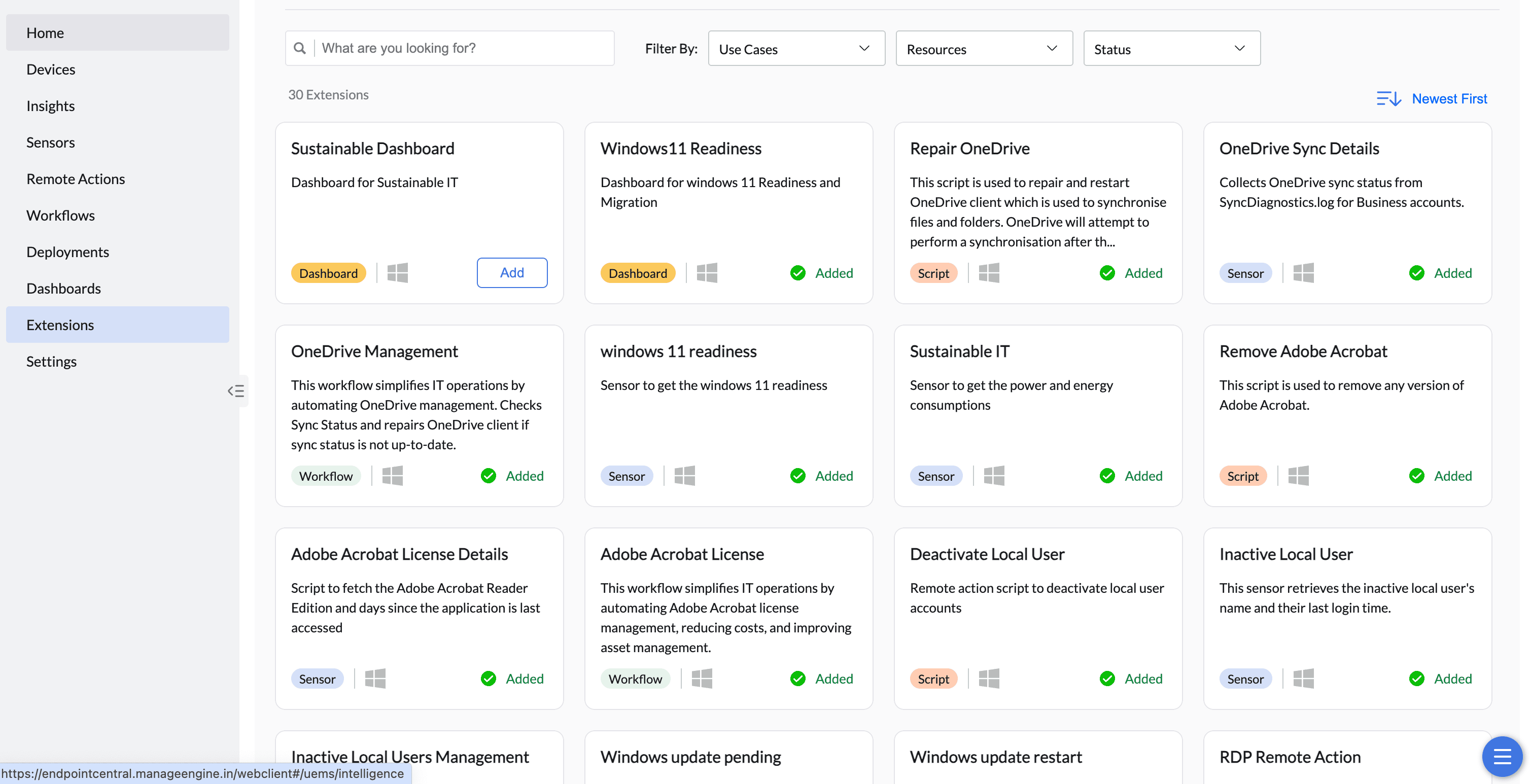
Leverage a library of pre-built collectors, remediation scripts, workflows, and dashboards—or extend it with your own. Tailor actions to your business environment and scale automation without complexity.
DEX in action: Example usecase
Imagine a critical business app slowing down for a department. Traditional monitoring flags CPU usage but stops short of explaining why. With DEX in Endpoint Central, telemetry correlates spikes to specific device models and app versions, RCA surfaces the root cause, and an automated remediation workflow fixes the issue fleet-wide, all before users recognize the slowdown and raise tickets for the same.
Why Choose Endpoint Central for DEX?
- Unified platform for management, security, and experience
- Real-time telemetry and analytics for proactive IT
- Faster diagnostics with root cause analysis
- Scalable automation through remediation workflows and action library
- Smarter planning with benchmarks and experience scores
Transform raw endpoint signals into actionable insights, deliver proactive IT support, and create a seamless digital experience for every employee.





Frequently Asked Questions
01. How does DEX improve endpoint management?
+-While Endpoint Central already manages, patches, and secures endpoints, DEX provides employee-centric insights - helping IT detect issues earlier, understand the root cause and fix them proactively.
Read more02. How are IT teams benefited by DEX?
+-DEX reduces ticket volumes, accelerates troubleshooting, improves productivity and enables proactive support by correlating system health with user experience and predicting issues before they halt your operations.
Read more03. How does DEX support automation in Endpoint Central?
+-DEX extends automation beyond endpoint management by using remediation workflows and pre-built scripts. It continuously monitors endpoints for performance issues (like login delays, app crashes, or high CPU usage) and can trigger automated fixes in real time, often before employees even notice. IT teams can also create no-code workflows to standardize responses across thousands of devices, reducing tickets and manual effort.
Read more04. How does DEX impact employees directly?
+-Employees experience fewer disruptions, faster response times, and smoother digital interactions - leading to higher satisfaction and better productivity.
Read more05. How does Endpoint Central differ from traditional endpoint management solutions?
+-Endpoint Central goes beyond basic management by providing live insights into devices and applications. Traditional solutions often offer reactive approaches, while Endpoint Central empowers organizations with proactive intelligence to optimize performance.
Read more06. How does Endpoint Central impact user productivity?
+-By continuously monitoring and optimizing endpoint performance, Endpoint Central minimizes downtime, reduces disruptions, and enhances overall user satisfaction. Our focus on experience metrics directly contributes to improved employee productivity.
Read more