Benefits of IP address management

Every device connected to a network, whether it’s a laptop, printer, IoT sensor, or virtual machine, relies on an IP address to communicate. As enterprises adopt cloud, multi-cloud, and hybrid environments, the number of IP-enabled endpoints has grown exponentially. What was once a straightforward task of tracking addresses in spreadsheets and multiple basic tools has now turned into a complex, high-stakes process.

This is where streamlined IP address management (IPAM) becomes essential. IPAM doesn’t just help allocate addresses; it provides cross-platform visibility, detects conflicts, and enables enterprises to plan for growth while maintaining compliance and security. In multi-cloud environments, where overlapping address spaces can easily lead to conflicts, IPAM acts as the single source of truth that keeps networks reliable and future-ready.

Understanding IP address management (IPAM)

IPAM is the process of tracking, managing, and optimizing the lifecycle of IP addresses within a network. It provides administrators with a centralized platform that integrates tightly with DNS and DHCP to form what’s known as DDI (DNS-DHCP-IPAM).

Instead of being just a “management tool,” IPAM serves as part of the network services layer, orchestrating how IP addresses are assigned, reserved, reclaimed, and monitored. At its core, IPAM tracks lifecycle states such as:

  • Used: allocated to a device in active use.
  • Reserved: earmarked for future use or critical systems.
  • Transient: previously assigned but not in active use.
  • Available: free for allocation.

By automating these processes, IPAM eliminates human error, accelerates provisioning, and improves overall visibility.

7 key benefits of modern IP address management

Below are some of the benefits of using a robust IPAM tool in your network.

1. Centralized visibility and simplified management

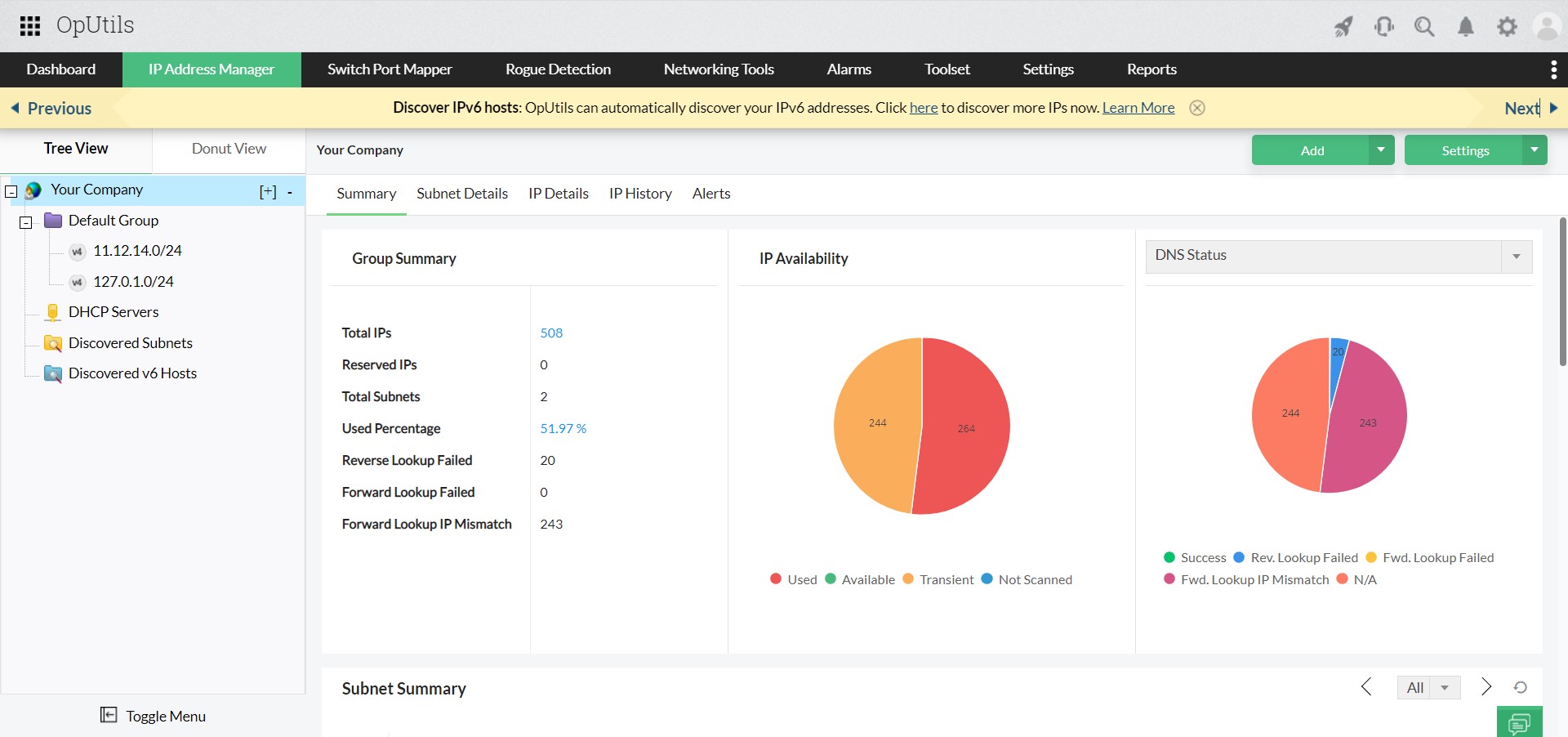
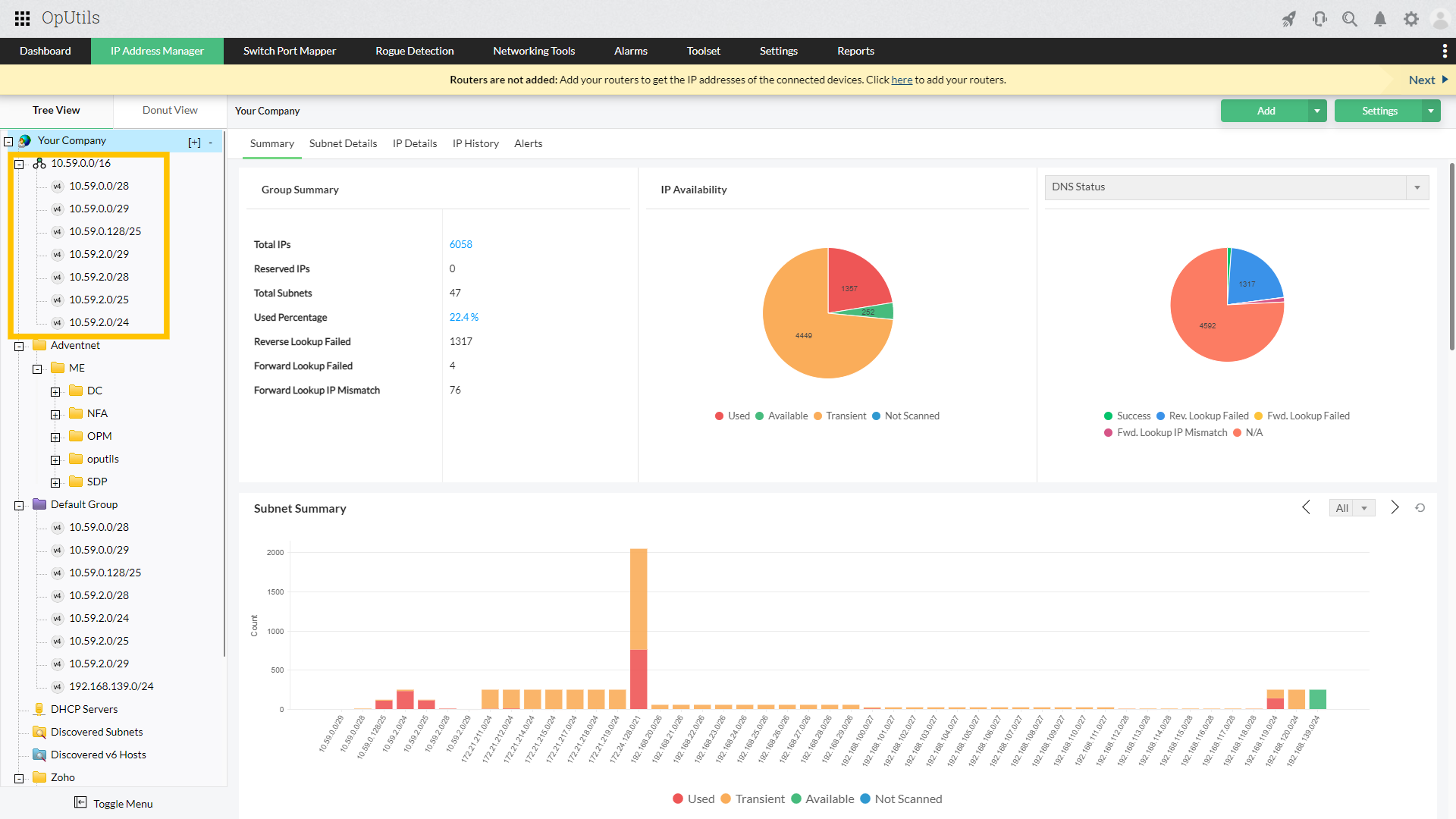
Traditional spreadsheets or siloed tools make it difficult to see the entire IP space at once. IPAM centralizes all IP address data into a single dashboard, providing:

  • Interactive subnets and VLAN tree views
  • Heat maps showing utilization patterns
  • Topology-aware visualizations for contextual awareness

This ensures administrators spend less time chasing conflicts and more time proactively managing resources.

2. Efficient resource allocation and capacity planning

Running out of IP addresses can paralyze business operations. IPAM prevents IP exhaustion by enabling:

  • Real-time utilization tracking helps the administrator with thresholds that warn admins before pools reach critical limits.
  • Automatic pool resizing reclaims unused addresses and adjusts pool sizes to match current usage.
  • Forecasting tools help in planning network expansion across on-prem, cloud, and hybrid setups.

This helps enterprises optimize capacity, reduce waste, and plan confidently for growth.

3. Dual-stack (IPv4 & IPv6) support and future-proofing

As organizations transition from IPv4 to IPv6, many operate in dual-stack environments. IPAM simplifies this by:

  • Managing both IPv4 and IPv6 simultaneously in one platform.
  • Mapping relationships between IPv4 and IPv6 assignments on the same host.
  • Supporting subnet discovery and allocation for large-scale IPv6 spaces.

This ensures enterprises are future-proofed without losing visibility into legacy systems.

4. Enhanced security and compliance

IPAM strengthens network security by monitoring and controlling how IPs are used. Key features of IPAM's role in maintaining security and regulatory compliance include:

  • Conflict detection helps identify duplicate or unauthorized IPs.
  • Rogue device identification enables spotting shadow IT or non-compliant endpoints.
  • Compliance alignment in IP address management enables organizations to maintain detailed logs and audit trails, supporting device traceability for GDPR, access logging for HIPAA in healthcare networks, and segmentation enforcement for PCI DSS in payment systems.
  • Threshold alerts can also detect unauthorized subnet growth, helping teams stop risks before they spread.

5. Faster troubleshooting and increased reliability

When downtime occurs, every second counts. IPAM accelerates troubleshooting with:

  • Automated conflict detection and resolution.
  • Integration with diagnostic tools like ping sweepers, DNS resolvers, and traceroute.
  • Real-time updates on IP state changes.

This reduces MTTR (mean time to resolution) and improves overall reliability.

6. Automation and DNS/DHCP integration

A major benefit of IPAM lies in automation. By working with DNS and DHCP, IPAM ensures:

  • Automatic IP assignment to devices.
  • Synchronized updates across DNS and DHCP.
  • Reduced configuration errors and manual overhead.

This integration streamlines operations, especially in dynamic environments with VMs, containers, and cloud workloads.

7. Reporting, alerts, and audit capabilities

Modern enterprises rely on IPAM for visibility into usage patterns and compliance.

  • Customizable reports on utilization trends.
  • Alerts for conflicts, threshold breaches, and policy violations.
  • Audit trails capturing every allocation, release, or modification.

These reports support compliance audits and help teams fine-tune capacity planning.

Challenges of IPAM and how to overcome them

While IPAM delivers clear benefits, enterprises often face challenges such as:

  • Manual processes: Relying on spreadsheets or static records makes IP tracking error-prone, time-consuming, and impossible to scale in dynamic networks.
  • Fragmented IP spaces: As organizations expand across multi-site, hybrid, and multi-cloud environments, visibility gets fragmented, leading to overlaps and blind spots.
  • Complexity of IPv6 adoption: The sheer size of IPv6 address space, combined with limited expertise, slows adoption and adds operational challenges.
  • Shadow IT and unmanaged devices: Unauthorized devices can consume IPs unnoticed, creating compliance risks and making it harder to maintain accurate records.
  • VLAN and subnet sprawl: Ad-hoc provisioning without clear planning results in inefficient subnet usage, wasted address space, and troubleshooting headaches.

The solution lies in leveraging automation, centralized DDI systems, role-based access controls, and clear IP policies. Regular audits and automated discovery scans also help identify unmanaged or duplicate allocations.

The practical benefits of IP address management

Example 1: Preventing downtime through proactive planning

Enterprises operating across multiple data centers often face overlapping address spaces. Implementing IPAM helps centralize visibility, eliminate conflicts between sites, and improve forecasting, thereby reducing the risk of costly outages caused by duplication.

Example 2: Strengthening compliance in healthcare

Healthcare organizations need to maintain strict compliance with regulations like HIPAA. IPAM provides audit trails for every IP allocation and integrates with NAC to strengthen access control for sensitive data. It also supports network segmentation for medical devices, helping align with standards such as PCI DSS.

Benefits of using OpUtils as an IPAM solution

IP address management has evolved into a critical layer of IT infrastructure. From preventing conflicts to enabling compliance, IPAM empowers enterprises to maintain reliable, secure, and scalable networks.

For organizations looking to simplify IP tracking, improve visibility, and prepare for the future, a solution like ManageEngine OpUtils offers the automation and intelligence needed to transform IP management from a reactive task into a strategic advantage.

1. Simplified dual-stack management: Instead of juggling separate tools for IPv4 and IPv6, OpUtils tracks both in one console. This ensures administrators can smoothly manage legacy systems while preparing for IPv6 growth.

2. Smarter subnet organization: With automated discovery, IT teams can eliminate manual subnet mapping and reduce routing complexity, making large networks far easier to scale.

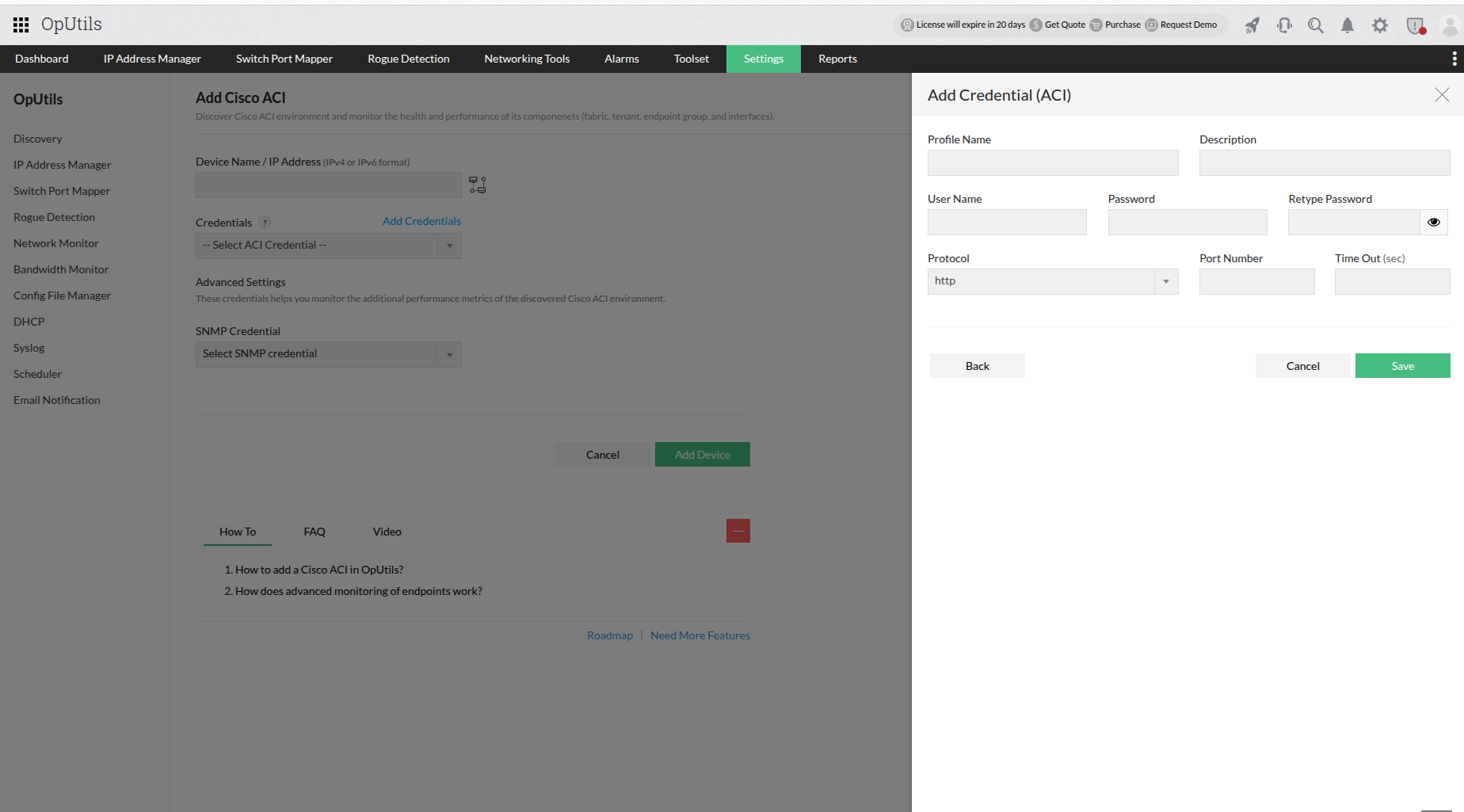
3. Real-time ACI fabric visibility: OpUtils integrates directly with Cisco ACI, giving administrators a live view of spine-leaf switches, VLANs, and endpoints.

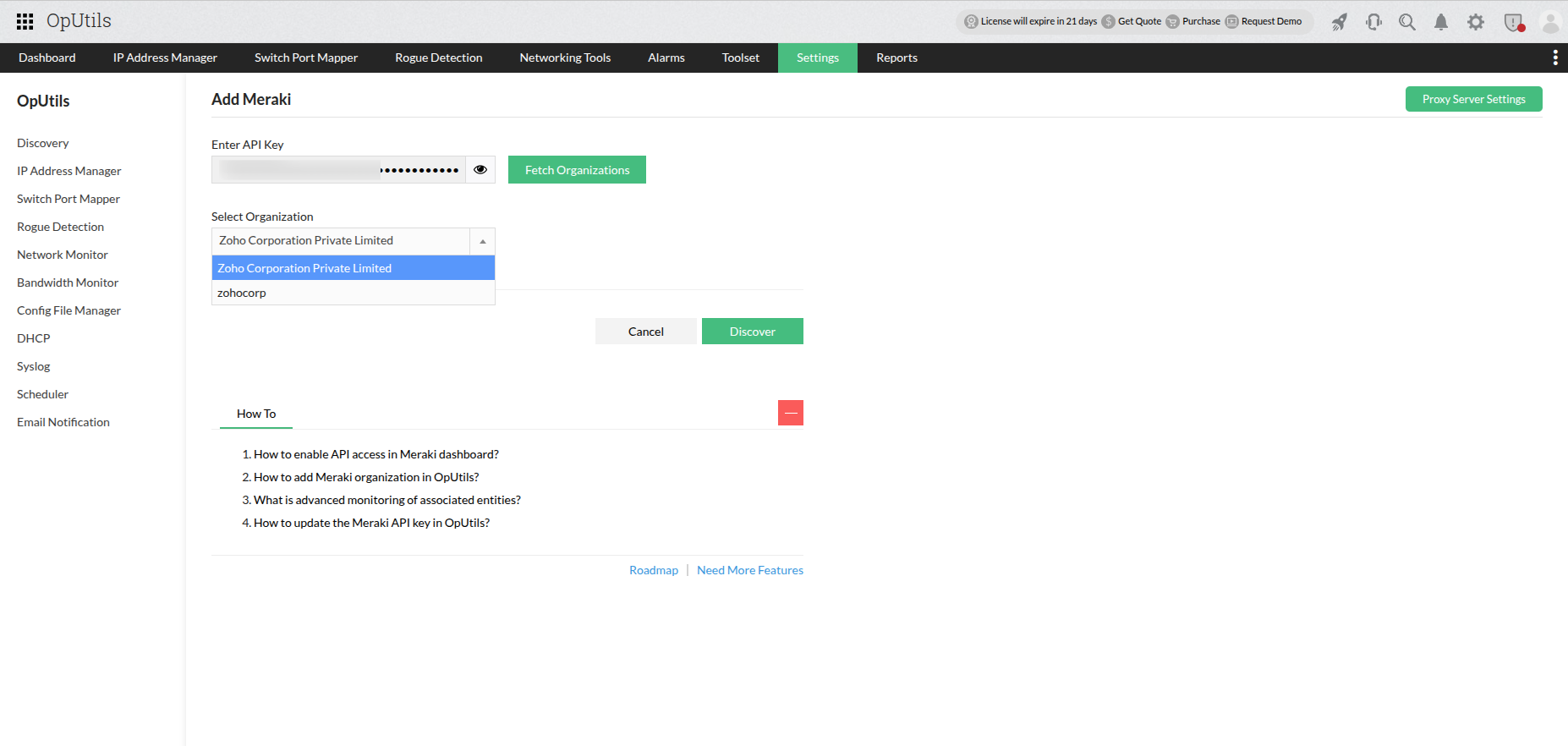
4. Streamlined Meraki management: By pulling data directly from Meraki dashboards, OpUtils helps multi-site enterprises with a centralized view of all subnets.

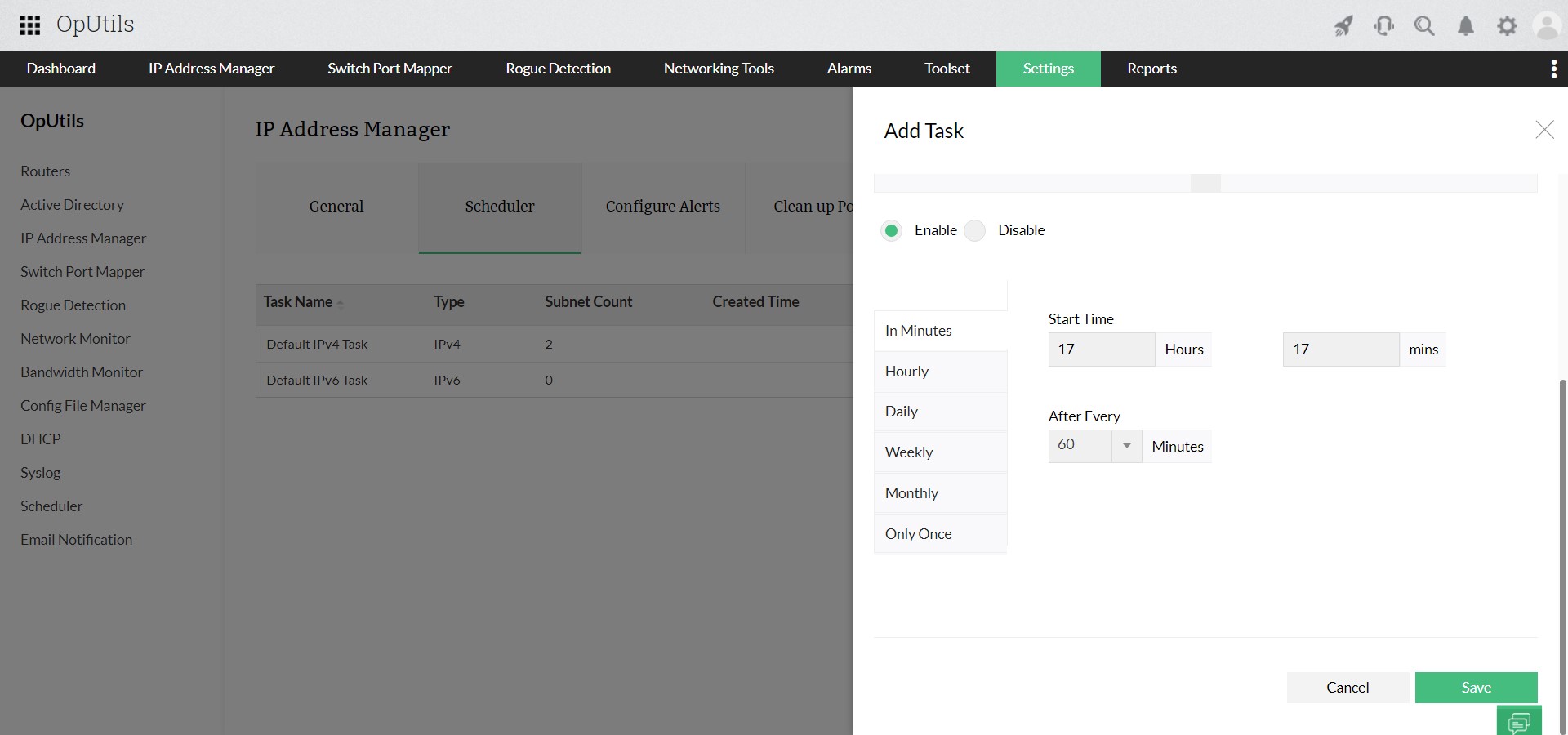
5. Always up-to-date IP records: Routine scheduled scans and instant on-demand checks mean admins are never working with stale IP data, reducing the risk of conflicts and downtime.

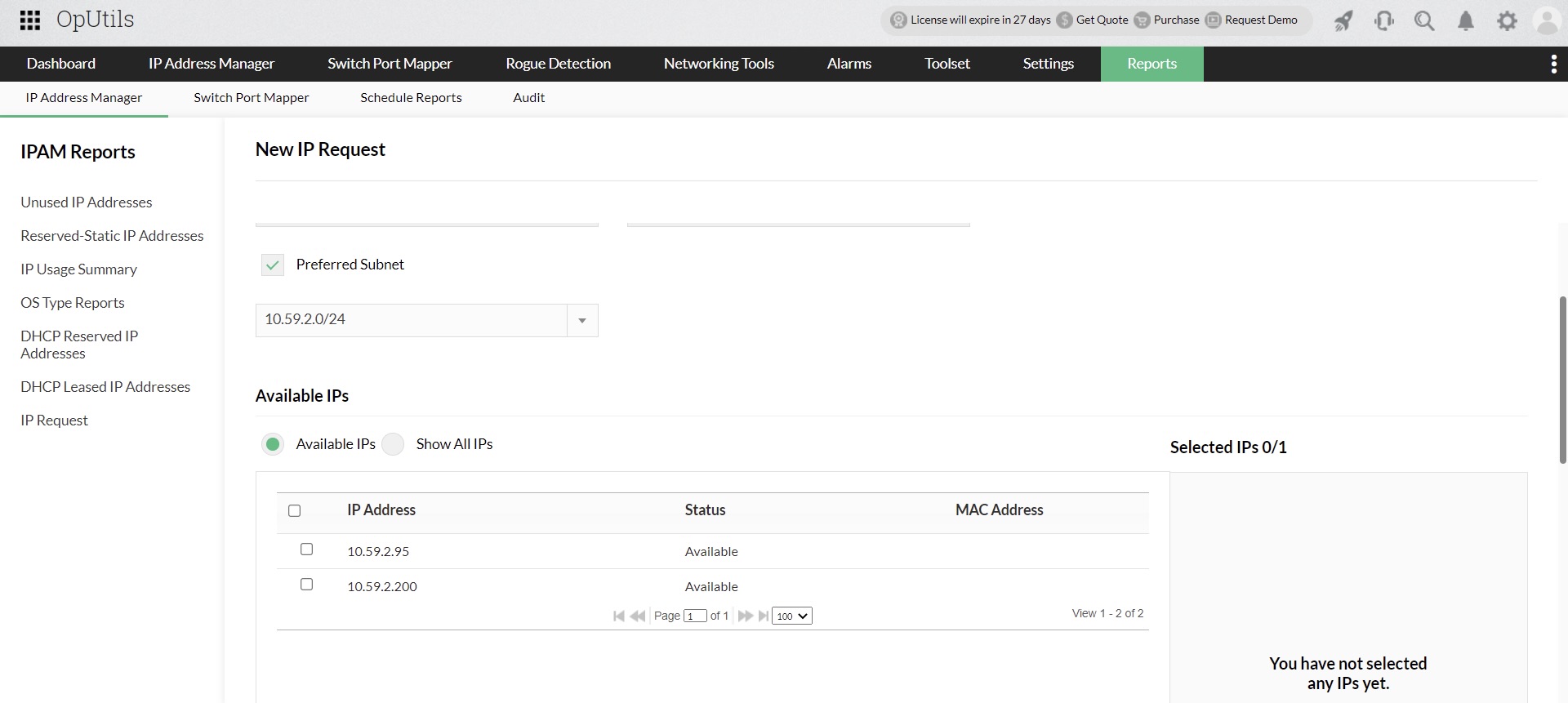
6. Controlled IP allocation: The built-in IP request workflow brings order to what is often a chaotic process, ensuring every assignment is approved, tracked, and audit-ready.

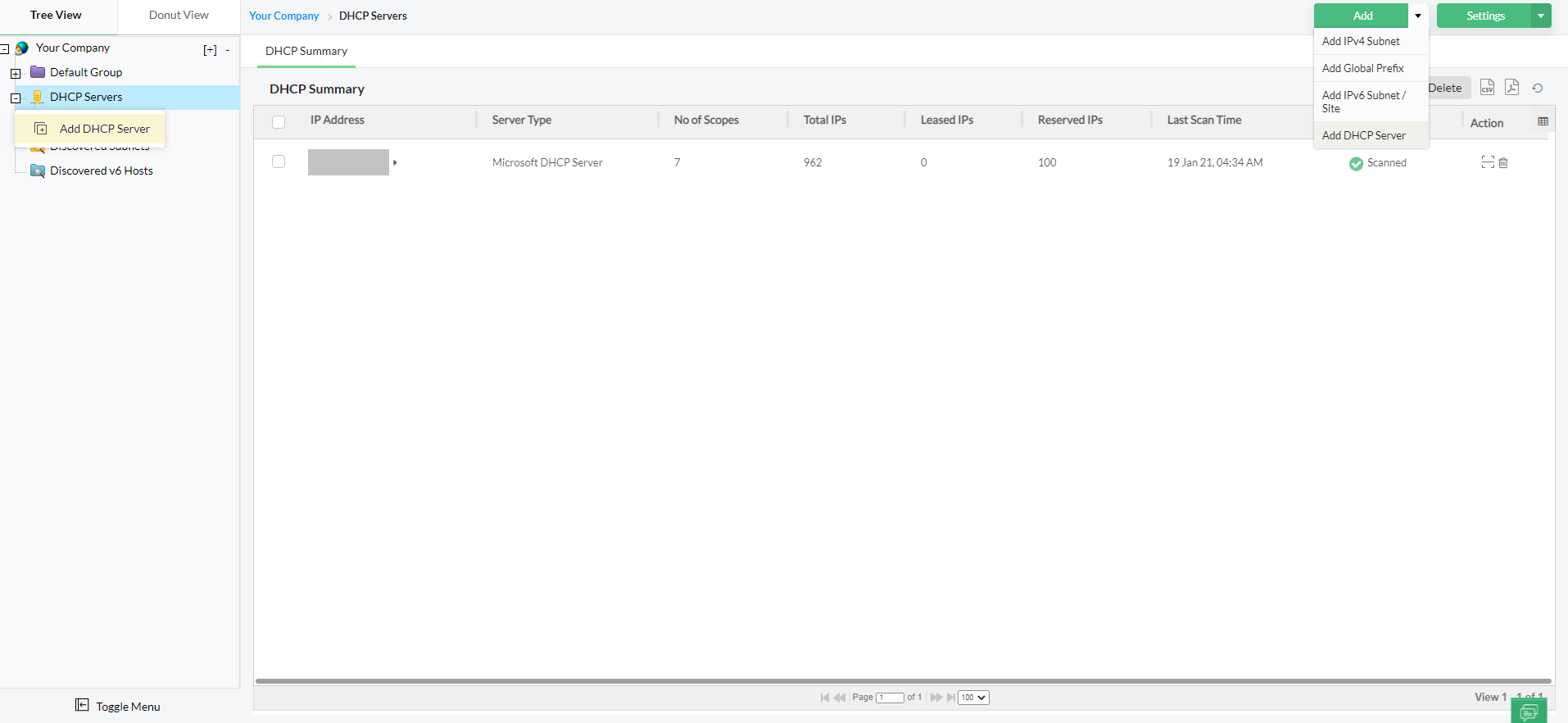
7. Conflict-free DHCP/DNS integration: With DHCP scope monitoring and DNS sync, OpUtils proactively flags pool exhaustion and prevents duplicate assignments before they cause outages.

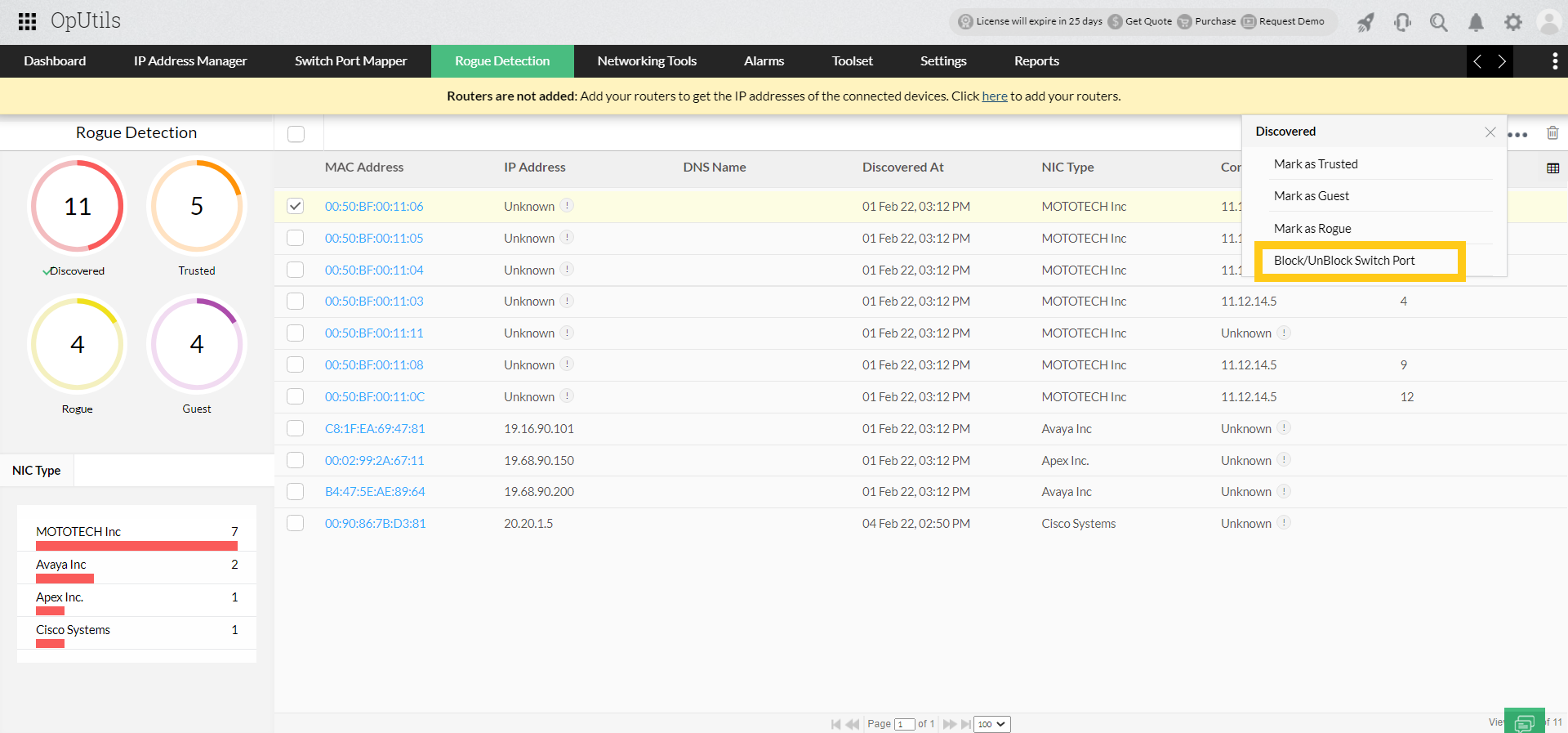
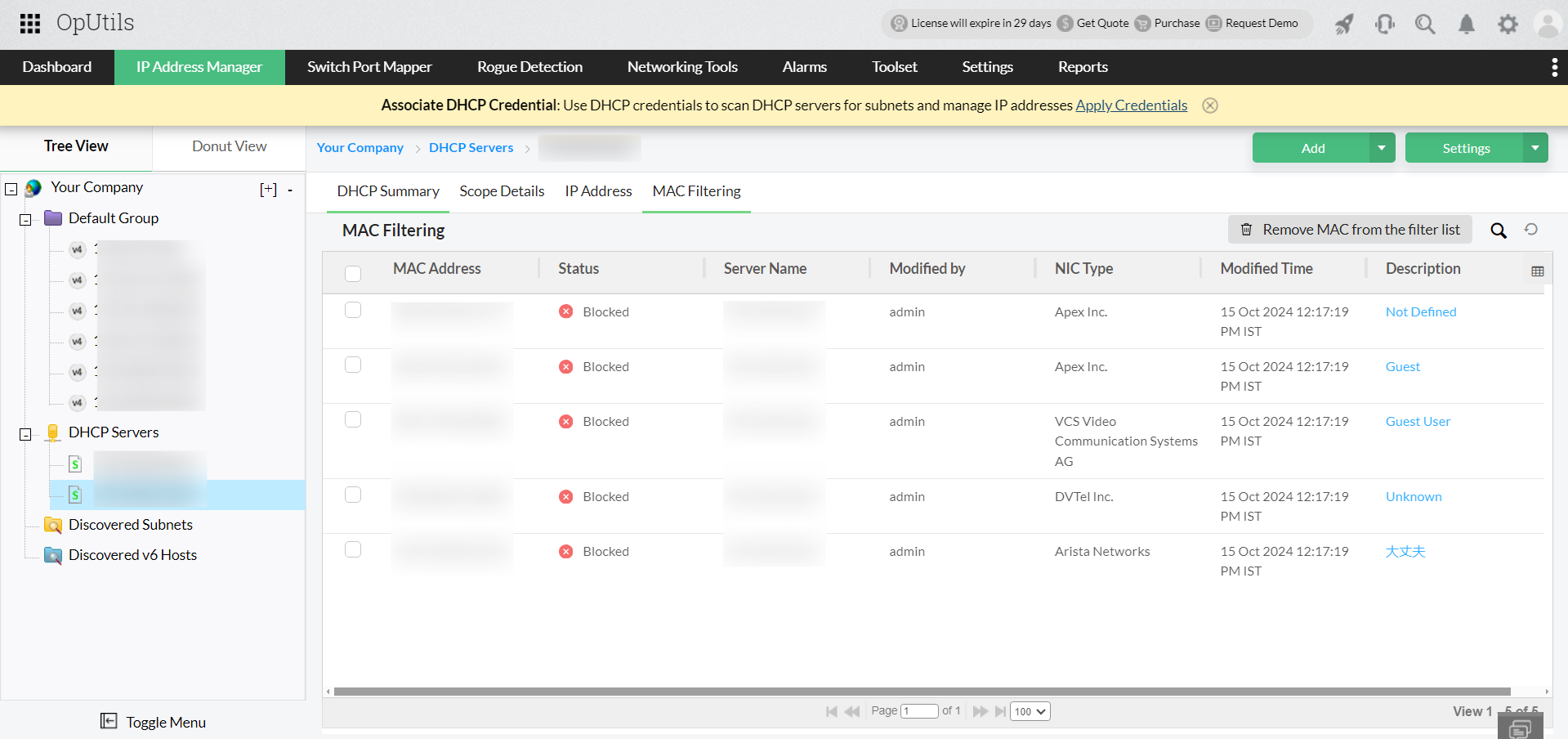
8. Stronger network security: Rogue device detection and MAC filtering help block shadow IT and unauthorized endpoints, closing a common gap in unmanaged IP spaces.

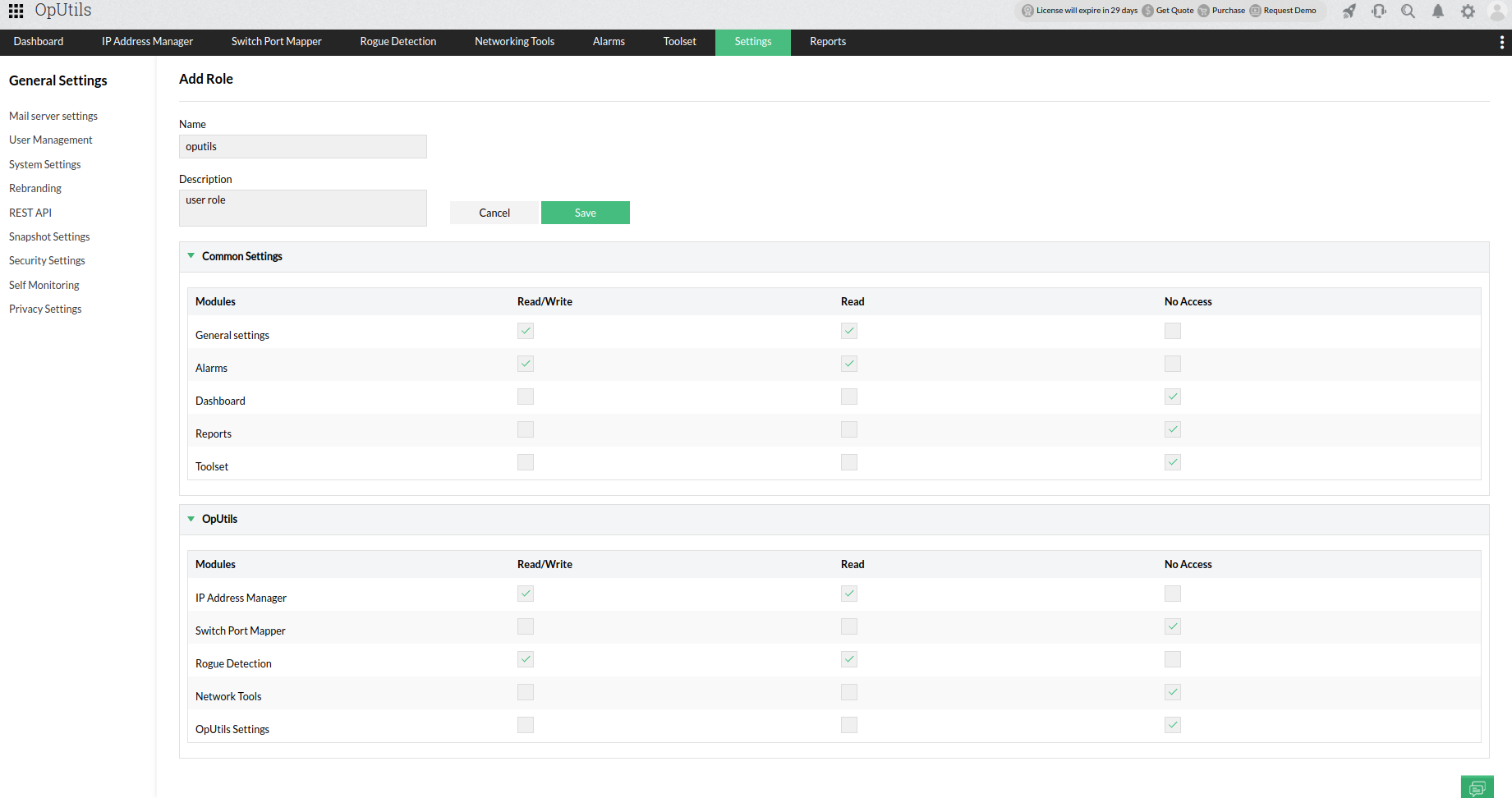
9. Secure role-based access: By assigning privileges based on role such as admin vs. technician, organizations reduce human error and ensure that only authorized staff can modify allocations.

10. Compliance-ready visibility: Every IP allocation is logged, with detailed audit trails and exportable reports that make it easier to demonstrate compliance with GDPR, HIPAA, or PCI DSS.

IPv4 and IPv6 subnet discovery
Supernet
Cisco ACI
Meraki
Scheduling IP scans
IP request
DHCP monitoring
Rogue device detection
MAC filtering
User management
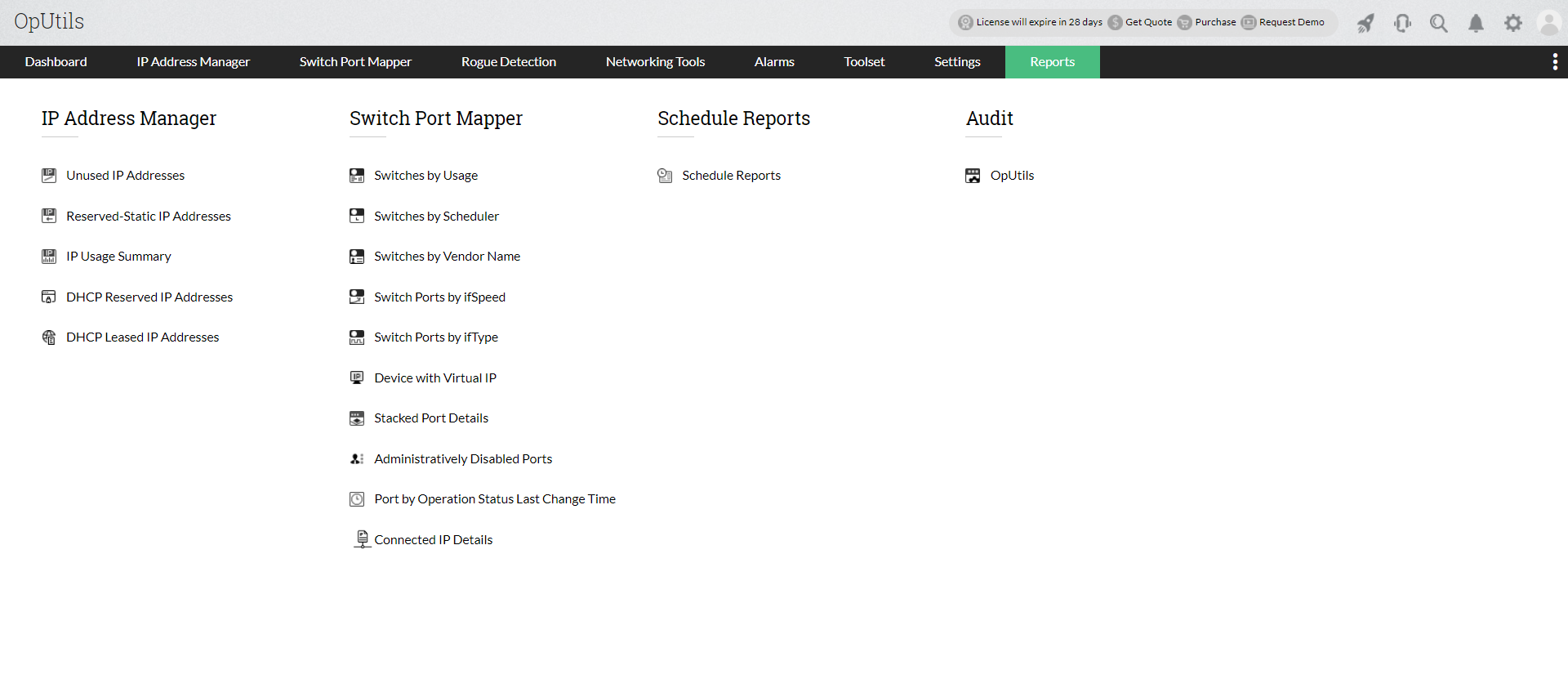
Reports


Try OpUtils for free for the next 30 days or schedule a personalized demo and we will connect you with the right product expert.
Start managing your IPs smarter. Not harder.

Try OpUtils for free today

IPAM Benefits