✕
Notification rules
Keep all stakeholders in the loop with instant and automated notifications.
Notification rules in an ITSM tool are designed to deliver relevant information and updates to users based on predefined rules. These notifications automatically trigger when specific events, such as a ticket escalation, a pending approval, or a service request status change, occur and are tailored to the recipient’s roles or current task.
Notification rules are essential because they ensure timely and accurate communication with the right people. They can be tailored to provide personalized updates at every step of ITSM processes. This keeps all stakeholders informed in real time about the latest developments on tickets, improving overall support experience and transparency.
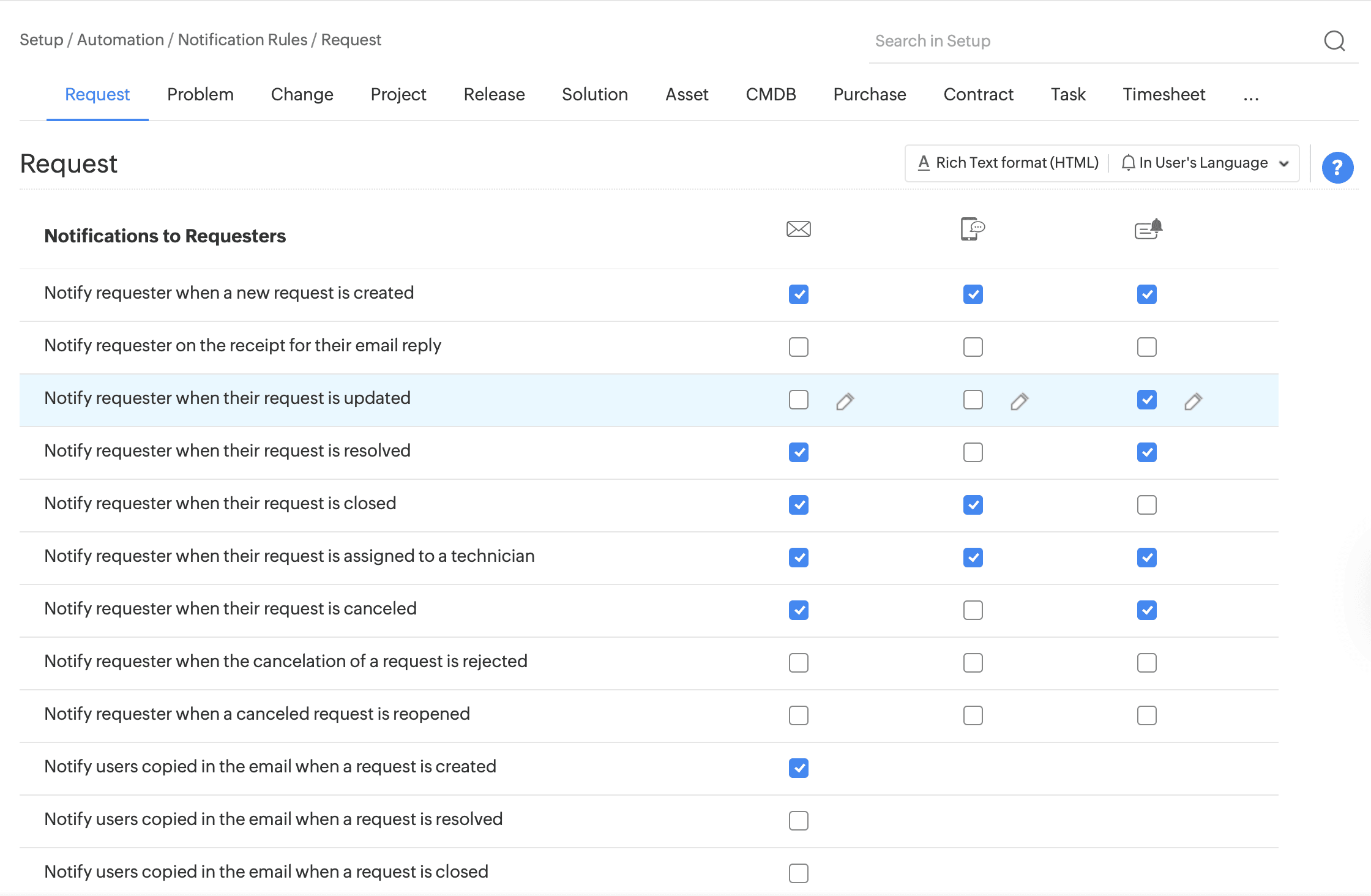
With ServiceDesk Plus MSP, you can send timely, personalized alerts for key IT events to relevant stakeholders. You can customize notification rules by module (requests, problems, tasks, etc.) and choose from a variety of automated alerts for both customers and IT staff. With fully customizable email templates, you can ensure professional, consistent communication at each stage of IT processes.