??? pgHead ???

Shadow IT is no longer a hidden side problem; it is now one of the biggest blind spots in SaaS-driven organizations. With teams adopting tools faster than IT teams can track, companies are losing visibility, control, and money.

This guide breaks down everything you need to discover, track, and eliminate shadow IT with practical workflows and actionable steps.

What is shadow IT discovery?

Shadow IT discovery is the process of identifying unauthorized or unapproved software, apps, and services used within an organization without IT team oversight.

Shadow IT includes:

  • SaaS tools purchased on personal cards.
  • Free tools used without approval.
  • AI tools and browser extensions.
  • Unsanctioned cloud storage or file sharing apps.

Example

A marketing team subscribes to an email automation tool without informing the IT team. That tool now stores customer data outside of approved systems, creating compliance and security risks.

Why shadow IT detection is critical

Shadow IT is not just an IT issue. It directly impacts security, compliance, costs, and operational efficiency.

Key statistics

  • Gartner forecasts that "75% of employees will acquire, modify, or create technology outside IT's visibility" by 2027, up from 41% in 2022.
  • Electro IQ estimates that shadow IT accounts for 30-40% of IT spending in large organizations.
  • Gartner indicated that 30% of SaaS spending is wasted on unused licenses and features.
  • A Gartner survey found that 69% of organizations suspect or have confirmed that their employees use prohibited public GenAI tools.
  • Gartner predicts that by 2030, over 40% of enterprises will face security or compliance incidents due to shadow AI, including risks like data exposure and IP loss.

What's at risk?

Risk area Impacts
Security Data breaches and unauthorized access
Compliance Violations of regulations such as the GDPR and SOC 2
Financial Duplicate tools and unused licenses
Operations Data silos and inefficiency

How shadow IT discovery works

Shadow IT discovery tools combine multiple data sources to uncover hidden applications and provide a complete view of SaaS usage across an organization.

The core workflow

1. Data collection

  • Network traffic logs: Captures domains accessed by employees to identify unknown or unapproved SaaS applications
  • SSO login activity: Tracks authentication events to understand which apps users are actively logging in to
  • Expense reports: Analyzes financial data to detect paid subscriptions that bypassed IT team approval
  • Browser usage: Monitors app access patterns through browser activity to uncover both free and paid tools

2. App identification

  • Matches domains and usage patterns to known SaaS tools
  • Uses databases of SaaS applications to accurately identify tools based on URLs, APIs, and usage behavior

3. Risk scoring

  • Evaluates apps based on the organization's compliance and security posture
  • Assigns risk levels by analyzing certifications, data handling practices, and known vulnerabilities

4. User mapping

  • Identifies who is using each tool
  • Links applications to specific users or teams to understand ownership, usage, and accountability

5. Reporting and alerts

  • Flags high-risk or noncompliant applications
  • Generates real-time alerts and dashboards to help IT teams take immediate action on risky tools

Key features to look for in a shadow IT discovery tool

  • Automated SaaS discovery

    Continuously scans for and detects new applications without requiring manual input or audits

  • Spending visibility

    Aggregates financial data from multiple sources to provide a clear view of SaaS spending across departments

  • User and license mapping

    Connects users to licenses and applications, helping you identify unused or duplicated subscriptions

  • Risk and compliance scoring

    Evaluates each application against security standards and compliance requirements to prioritize risks

  • SSO integrations

    Integrates with identity providers like Okta and Entra ID to track verified user access and improve control

  • Renewal tracking

    Monitors contract and subscription renewal dates to prevent unexpected charges and enable timely decisions

  • Usage analytics

    Analyzes engagement and activity levels to identify underutilized or redundant tools for optimization purposes

How to detect shadow IT in your organization: A step-by-step guide

Step 1: Audit all entry points

  • Finance systems (expenses, invoices, etc.): Review expense reports, invoices, and corporate card transactions to identify SaaS subscriptions purchased without the IT team's oversight.
  • IT systems (SSO and admin consoles): Analyze SSO logs and admin dashboards to track which applications employees are accessing through official systems.
  • Network logs: Monitor network traffic to uncover external SaaS domains and tools being accessed without approval.

Step 2: Identify all SaaS applications

  • Build a centralized list: Consolidate all discovered applications into a single inventory to establish a clear view of your SaaS stack.
  • Group tools by department: Categorize applications based on team usage to understand duplication and functional overlaps.

Step 3: Map users to applications

  • Identify active users: Determine which employees are actively using each application to assess relevance and dependency.
  • Detect duplicate tools: Identify multiple tools serving the same purpose across teams, which increases costs and complexity.

Step 4: Assess risk levels

  • Check compliance certifications: Verify whether applications meet standards like the GDPR, SOC 2, or ISO certifications.
  • Evaluate data sensitivity: Assess what type of data is being handled to determine the potential exposure and risk level.

Step 5: Categorize tools

  • Approved: Applications that meet security, compliance, and business requirements
  • Needs review: Tools that require further evaluation before being approved or removed
  • High-risk: Applications that pose security, compliance, or financial risks and require immediate action

Step 6: Take action

  • Consolidate overlapping tools: Reduce redundancy by standardizing on fewer approved applications.
  • Block unsafe applications: Restrict access to high-risk tools using IT policies and access controls.
  • Renegotiate contracts: Optimize SaaS spending by eliminating unused licenses and renegotiating vendor agreements.

Step 7: Set up continuous monitoring

  • Automate discovery: Use SaaS management tools to continuously track new applications and usage patterns.
  • Create alerts for new tools: Set up real-time alerts to notify IT teams whenever a new or unauthorized app is introduced.

Shadow IT discovery methods

1. Network traffic analysis

  • Tracks domains accessed by employees
  • Continuously monitors web traffic to identify unknown SaaS tools being accessed across the organization
  • Best for: Detecting unknown SaaS tools
  • Limitation: Lacks user-level clarity and context around usage

2. SSO and identity providers

  • Uses login activity data
  • Analyzes authentication logs from SSO systems to track which applications users are officially accessing
  • Best for: Verified and authenticated usage
  • Limitation: Misses applications that do not use SSO

3. Expense and finance analysis

  • Analyzes transactions
  • Reviews financial data such as invoices and card payments to identify paid SaaS subscriptions
  • Best for: Detecting paid SaaS tools
  • Limitation: Does not capture free or trial-based applications

4. Browser extensions and agents

  • Installed on devices
  • Uses endpoint-level monitoring to track all applications accessed through browsers and devices
  • Best for: Deep visibility into user behavior
  • Limitation: Requires deployment and user consent

5. SaaS management platforms

  • Combines multiple data sources
  • Aggregates data from SSO systems, finance systems, network logs, and endpoints to provide a unified view of SaaS usage
  • Best for: End-to-end visibility and centralized management
  • Limitation: Requires an initial setup and integration effort

Shadow IT vs. shadow AI

Aspect Shadow IT Shadow AI
Definition Unauthorized software usage Unauthorized AI tool usage
Examples CRM and project tools AI copilots and content tools
Risks Data leakage and compliance issues Exposure of sensitive data to models
Growth High Extremely rapid

Shadow AI adoption is accelerating faster due to easy access to GenAI tools without governance.

Common challenges in detecting shadow IT

A lack of centralized visibility

Organizations often lack a single source of truth, making it difficult to track all SaaS applications across departments.

Employees bypassing IT teams for speed

Teams adopt tools independently to move faster, unintentionally creating blind spots for IT and security teams.

Free tools not being captured in financial systems

Freemium and trial-based tools do not appear in expense data, making them harder to detect through traditional methods.

Duplicate tools across teams

Different teams often use multiple tools for the same function, increasing costs and operational complexity.

Resistance to governance policies

Employees may resist restrictions if policies slow them down or limit access to their preferred tools.

How to eliminate shadow IT

1. Build a SaaS governance framework

Define clear ownership, approval workflows, and usage policies to ensure all tools are vetted before adoption.

2. Educate employees

Train teams on the risks of shadow IT and guide them toward approved tools that meet their needs.

3. Centralize procurement

Route all SaaS purchases through IT or finance teams to maintain visibility and control over the tech stack.

4. Use a SaaS management platform

Implement tools that automate the discovery, tracking, and management of all SaaS applications in use.

5. Consolidate tools

Identify overlapping applications and standardize on a smaller approved set to reduce redundancy and costs.

6. Enforce access controls

Use SSO and role-based access to control who can access which tools and prevent unauthorized usage.

Key benefits of a shadow IT discovery tool

  • Cost savings

    Reduces SaaS waste by identifying unused licenses and eliminating duplicate tools, often saving up to 30% of spending

  • Improved security

    Minimizes the attack surface by identifying and removing unauthorized and high-risk applications

  • Better compliance

    Ensures all tools meet regulatory standards like the GDPR and SOC 2, helping you maintain audit readiness

  • Operational efficiency

    Streamlines workflows by reducing tool sprawl and standardizing on a common set of approved tools, ensuring teams work on the same platforms, share data seamlessly, and avoid fragmentation caused by multiple disconnected apps

  • Data visibility

    Centralizes application usage and data flows, giving IT teams full control and insight into the SaaS ecosystem

Best shadow IT discovery tools in 2026

1. ManageEngine SaaS Manager Plus

SaaS Manager Plus provides a strong discovery capability along with cost optimization and contract visibility, making it suitable for IT teams that want both control and financial insights. It integrates well with existing IT ecosystems and offers continuous monitoring of SaaS usage.

2. Zylo

Zylo focuses heavily on SaaS spending visibility and optimization, helping enterprises track licenses, reduce waste, and manage renewals effectively. It integrates with financial systems, SSO systems, and HR tools to build a complete SaaS inventory.

3. Torii

Torii offers strong automation and workflow capabilities, enabling teams to manage SaaS life cycle processes like onboarding, offboarding, and license allocation. It provides centralized visibility into SaaS usage and helps uncover shadow IT across departments.

4. BetterCloud

BetterCloud focuses on SaaS operations and governance, with powerful automation for enforcing security policies and managing user access. It also enables IT teams to take immediate action on shadow IT through automated remediation workflows.

5. Productiv

Productiv specializes in advanced usage analytics, enabling enterprises to understand how applications are used at a granular level. It combines usage data with contract insights to help enterprises optimize SaaS investments and improve decision-making.

How SaaS Manager Plus helps detect shadow IT

SaaS Manager Plus helps organizations identify, manage, and eliminate shadow IT by combining discovery, spending tracking, and governance into a single platform.
Key capabilities

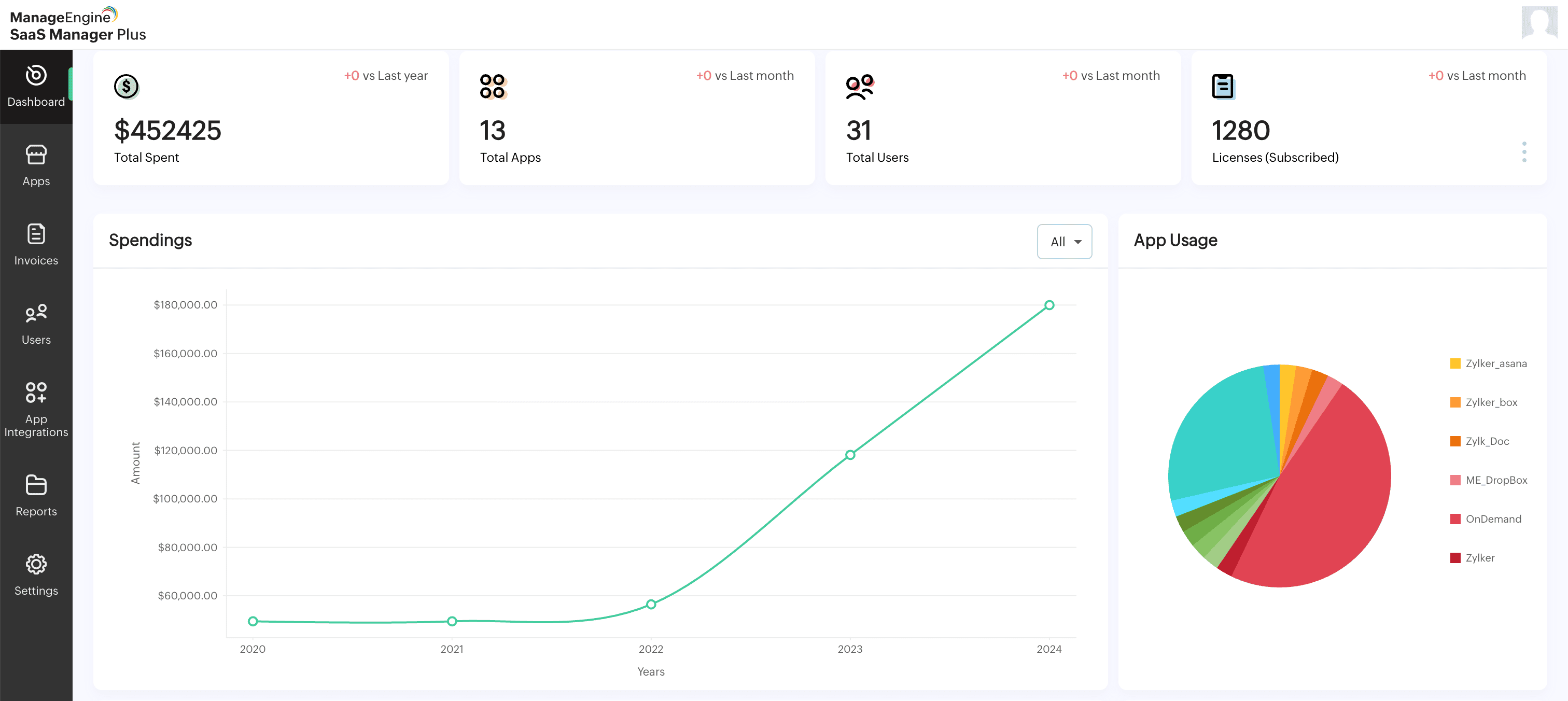
  • Automated SaaS discovery: Continuously scans your environment using SSO integrations and financial data to detect your SaaS ecosystem in real time

    Shadow IT Discovery

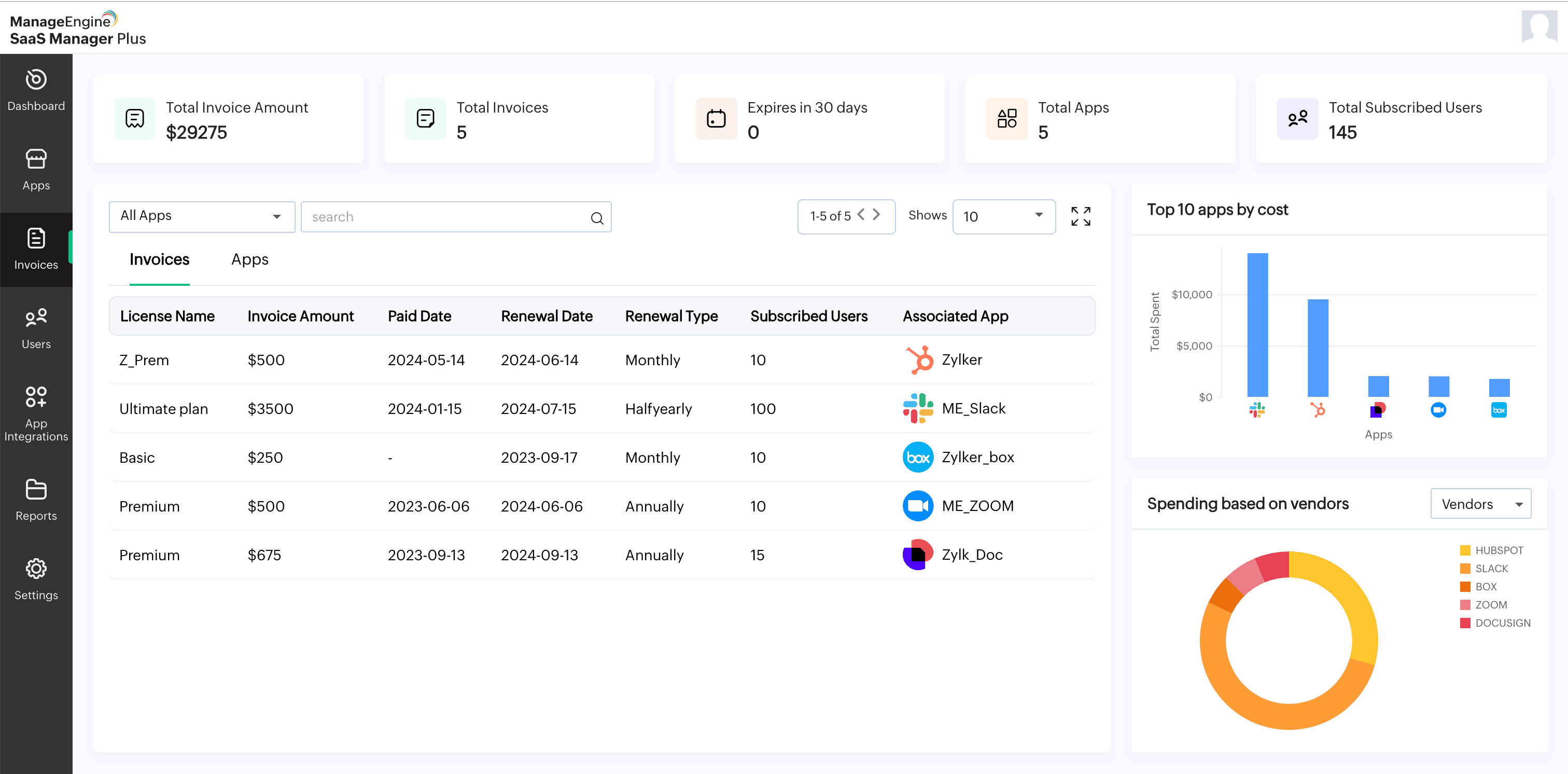
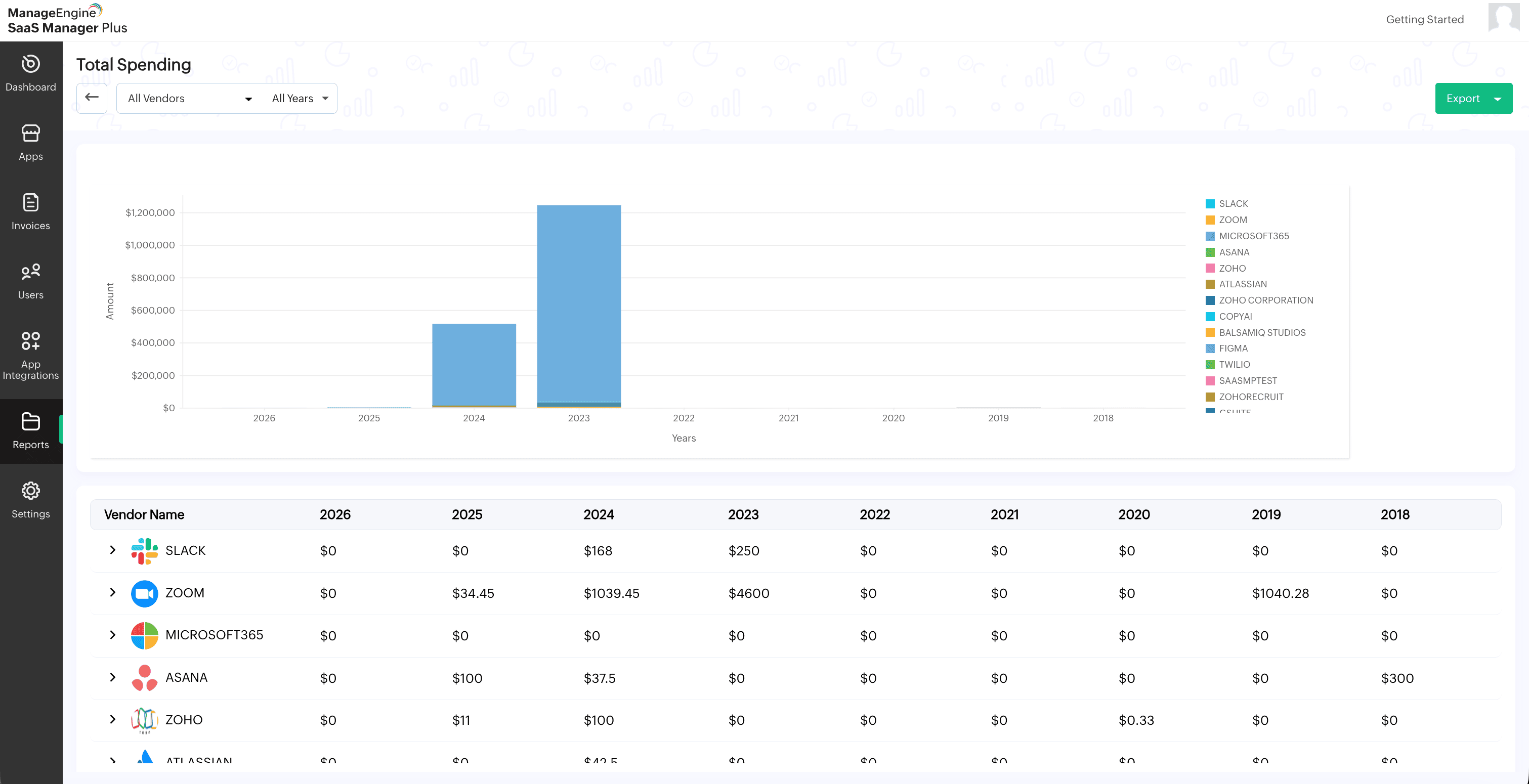
  • Comprehensive spending tracking: Tracks SaaS expenses across invoices, subscriptions, and vendors, giving finance and IT teams a unified view of total spending

    Shadow IT Discovery

  • User-level visibility: Maps users to applications and licenses, helping you identify ownership, usage patterns, and access risks
  • License optimization: Identifies unused or underutilized licenses, enabling teams to reduce waste and reallocate resources efficiently
  • Renewal alerts: Tracks license timelines and sends alerts before renewals, helping you avoid unnecessary spending

    Shadow IT Discovery Tool

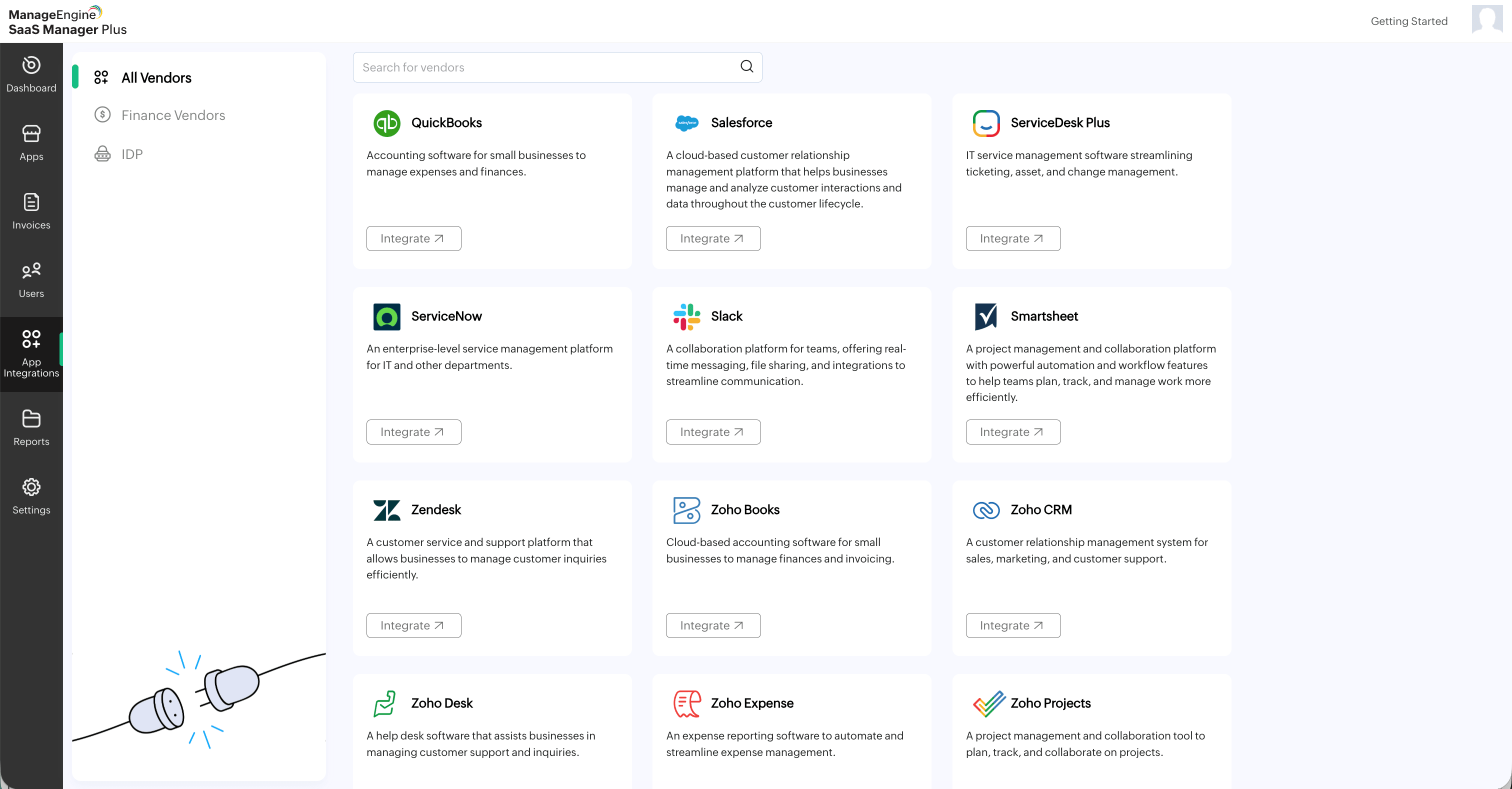
  • Tight integration with the Zoho and ManageEngine ecosystems: Works seamlessly with ServiceDesk Plus, and Zoho tools, like CRM, Books, and Desk, enabling faster remediation

    Shadow IT Detection

  • Expert insight

    Shadow IT often emerges from a simple problem: Teams want speed, but processes slow them down. The solution is not strict control; it is visibility combined with enablement.

    Organizations that succeed:

    • Provide approved alternatives.
    • Enable faster procurement.
    • Monitor continuously instead of reacting late.

Key takeaways

  • Shadow IT is widespread and often underestimated.
  • Detection requires combining multiple data sources.
  • Automation is critical for continuous visibility.
  • Eliminating shadow IT reduces both costs and risks.
  • SaaS management platforms provide the most complete solution.

If you do not know how many SaaS apps your teams are using today, you already have a shadow IT problem. Start by auditing your stack or use a SaaS management platform to automate discovery and take control before costs and risks escalate.