Ransomware is a sophisticated class of malware that encrypts data and holds it hostage until a ransom is paid. It commonly infiltrates organizations through phishing emails, compromised websites, and malicious extensions. By implementing proactive security measures and establishing a well-structured ransomware detection strategy, organizations can significantly reduce the risk of falling victim to these extortion-driven cyberattacks. The following best practices outline effective strategies for preventing ransomware infections and ensuring a swift and effective response in the event of an attack.
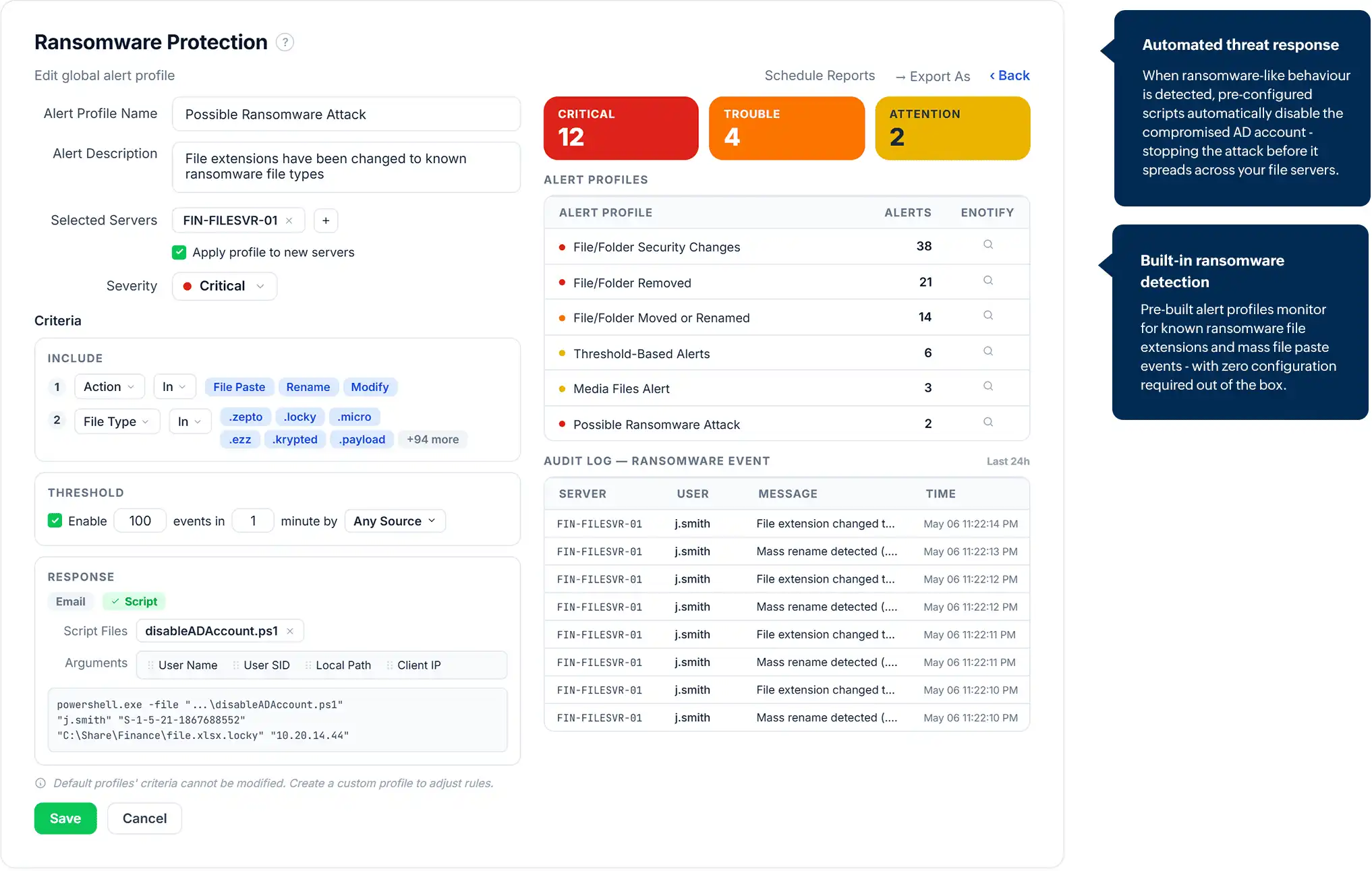
ManageEngine DataSecurity Plus is a unified data security posture management platform that helps secure your data across network servers, endpoint devices, and the cloud. With DataSecurity Plus, you can identify ransomware signatures and suspicious behaviors early on. Learn more about DataSecurity Plus' automated ransomware response mechanism.
Ransomware is a type of malware that encrypts files or locks systems and demands payment for their release. Attackers typically infiltrate systems through phishing emails, malicious downloads, or exploited vulnerabilities. Once inside, they encrypt files or threaten to leak stolen data unless a ransom is paid.
Most ransomware infections begin through phishing emails, malicious attachments, compromised websites, or exposed services like RDP. Attackers trick users into executing malware or exploit unpatched systems to gain access to the network.
Early detection usually relies on monitoring abnormal file activity, such as rapid file modifications, mass file renaming, or sudden extension changes. Security monitoring tools can identify these suspicious behaviors and trigger alerts before widespread encryption occurs.
The first step is containment. Disconnect infected systems from the network to stop the spread. Organizations should then investigate the source of the attack, restore data from backups, and follow their incident response plan.
Paying a ransom is risky and generally discouraged. There is no guarantee attackers will provide a working decryption key, and even if they do, files may still be corrupted or only partially restored.

