File transfers in the cloud are a significant security risk when not securely implemented and monitored. Unsecure uploads can result in severe vulnerabilities, such as remote code execution, malware distribution, and privilege escalation. Attackers can exploit these vulnerabilities to upload harmful scripts or executables to gain unauthorized access, steal sensitive data, and deliver malware. Such file upload vulnerabilities can be prevented if proper upload control measures are implemented.
Use our checklist to ensure secure file uploads and protect application integrity and user data.
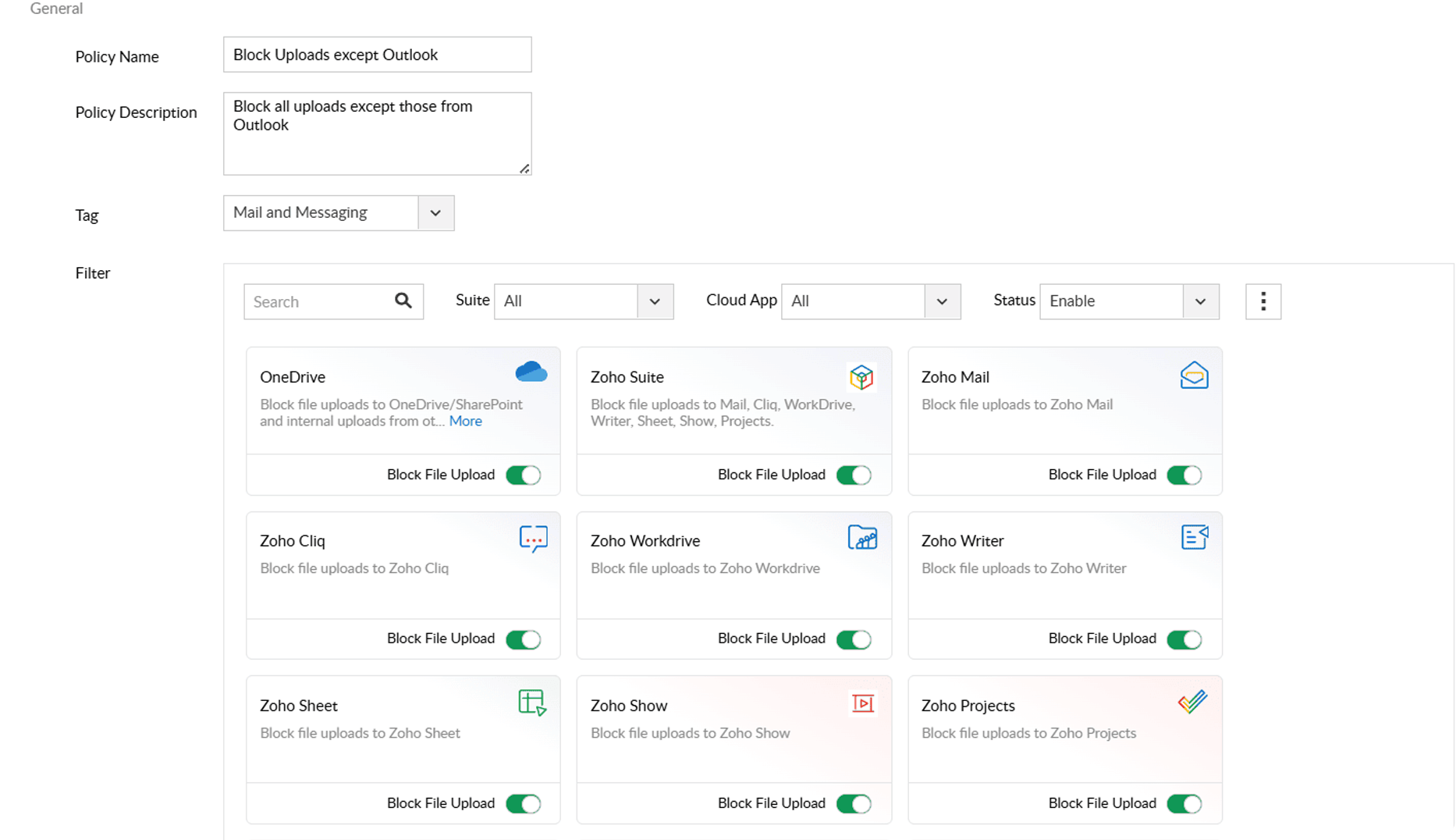
ManageEngine DataSecurity Plus is a unified data security posture management platform, that helps secure you data across network servers, endpoint devices, and the cloud. DataSecurity Plus' Cloud Protection module focuses on enforcing strict control measures over file transfers across the cloud, managing the use of cloud applications, and monitoring your organization's web traffic.
Ensuring file upload security is not just about protecting your IT infrastructure from cyberattacks and data loss, it's also about achieving compliance with various data protection laws like the GDPR and CIPA. With DataSecurity Plus's file upload control feature, you can do both.
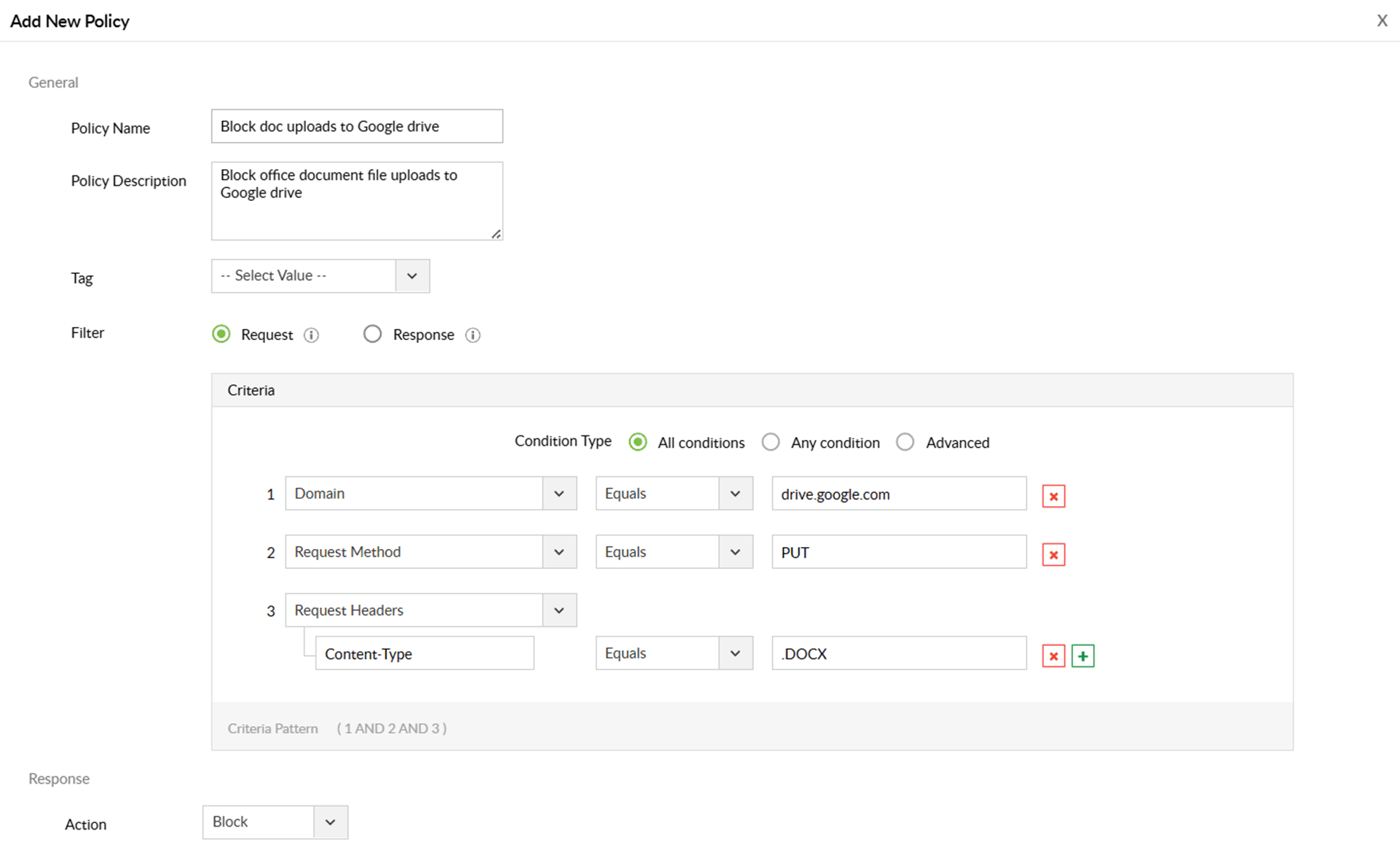
A file upload vulnerability occurs when upload attempts are handled improperly by a cloud application, enabling attackers to upload malicious files. These files might contain malware, scripts, or other harmful content that can lead to remote code execution, data breaches, or system compromise. Lack of proper file upload control allows this vulnerability to be exploited, causing a significant security risk.
Unrestricted file upload is a type of file upload security vulnerability where a cloud application allows users to upload files without any type of validation. When file metadata, file size, or content are not properly verified and controlled during file uploads, attackers can easily upload malicious files that can lead to severe security issues, including complete system takeover, overloading file systems, and cyberattacks. Unrestricted uploads can also lead to phishing attacks, where attackers upload deceptive files posing as legitimate content.
To restrict file upload types, follow these best practices:

