

Network Mapping
Automate network mapping; visualize and
pinpoint network outages and performance degradation
When the number of monitored devices increases and when companies expand to multiple locations, it becomes impractical to maintain a static network map. Further, referring to a fixed network diagram in the event of a network failure or performance degradation is highly complex and an unwholesome experience.
Automate network mapping
The IT network is forever dynamic; the static network maps often fail to capture the new changes in the network. When a network fault occurs, it becomes impossible to track the affected device or business service using the static network diagrams. With OpManager’s automatic network mapping, administrators can:

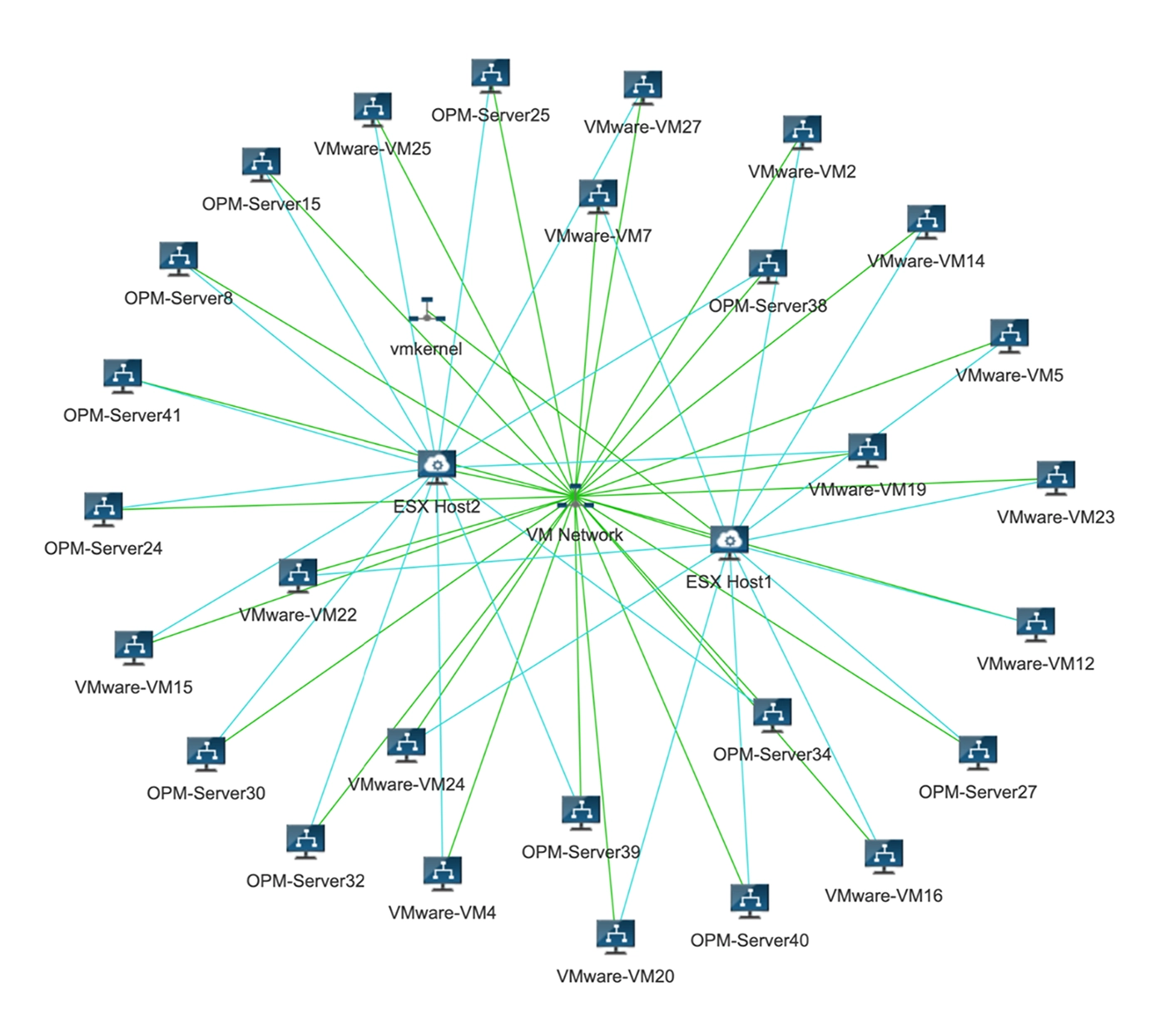
A sample radial tree network layout of an enterprise network.

Quickly create a network map layout by choosing the seed device and layout type. Sampling interval for periodic network scanning.

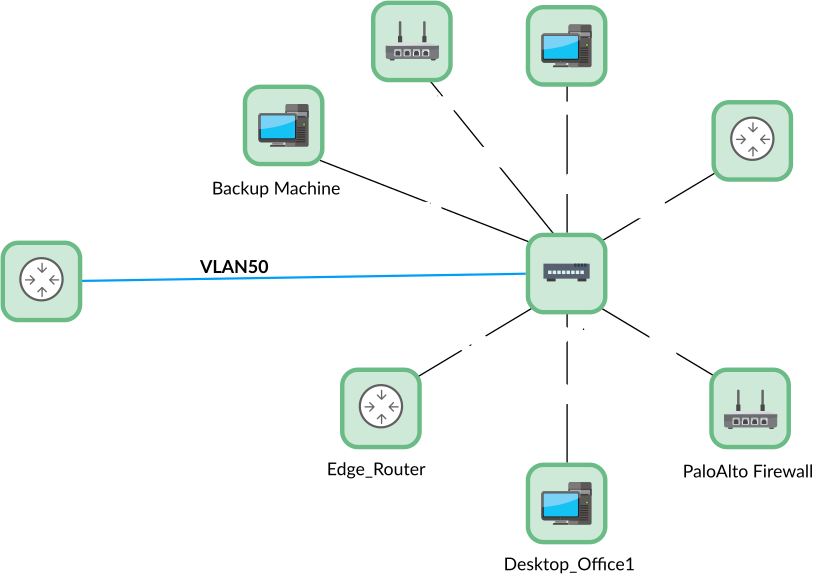
Another sample node link network layout.

A live layer 2 and layer 3 network map. Customize & export network maps to business views or even to Microsoft Visio.
- Visualize their complete IT infrastructure.
- Be assured of referring to the most up-to-date network maps, with periodic network scanning.
- Construct an easy-to-view network topology map that lets one choose the network’s seed device and preferred network layout type.
- Share network diagrams across peer groups in no time by exporting to Microsoft Visio.
Download Visio add-in:
The created network maps can be documented and shared by exporting them as XML files or to Microsoft Visio 2007.
Download Visio add-in:
Download this add-in (.Zip) for Microsoft Visio 2007. This add-in helps you export the network maps or business views from OpManager to Visio. Refer to the help documentation for details.
Pinpoint network outages and performance degradation at–a–glance
OpManager reflects the latest device and link status with color coded icons in the network maps, acting like a live Visio diagram that lets administrators:

A sample balloon tree network layout of an enterprise network.

Displays the live link status from the network maps view; Drill down to the problematic link in a single click to further isolate the root cause.

Network maps displaying the device status on mouse over: Quickly get to the faulty device from the network maps view.

A sample network layout with options to set a default view for particular network diagram (Check-box in the top right).
- Spot any network problems at-a-glimpse.
- Quickly drill down to the problematic device or to the link from the network maps.
- Understand relationship between the parent and the dependent devices.
- See the intensity of the network issue identified by faithfully reproducing the network layout.
- Prioritize network faults and start remediation actions.
Keep an eye on critical business services and custom device groups
It makes sense to group the devices that need special attention under one consolidated view even when they are spread across subnets. That’s exactly what OpManager’s custom maps or Business views section offers.
Learn more on OpManager’s capabilities on custom network maps and map maker tools.
OpManager’s
lets you group the devices based on the need. Further, one can add any background images, draw a live link between devices, export the custom maps to Microsoft Visio and even create a shortcut for a dependent business view in the parent business view. This helps to

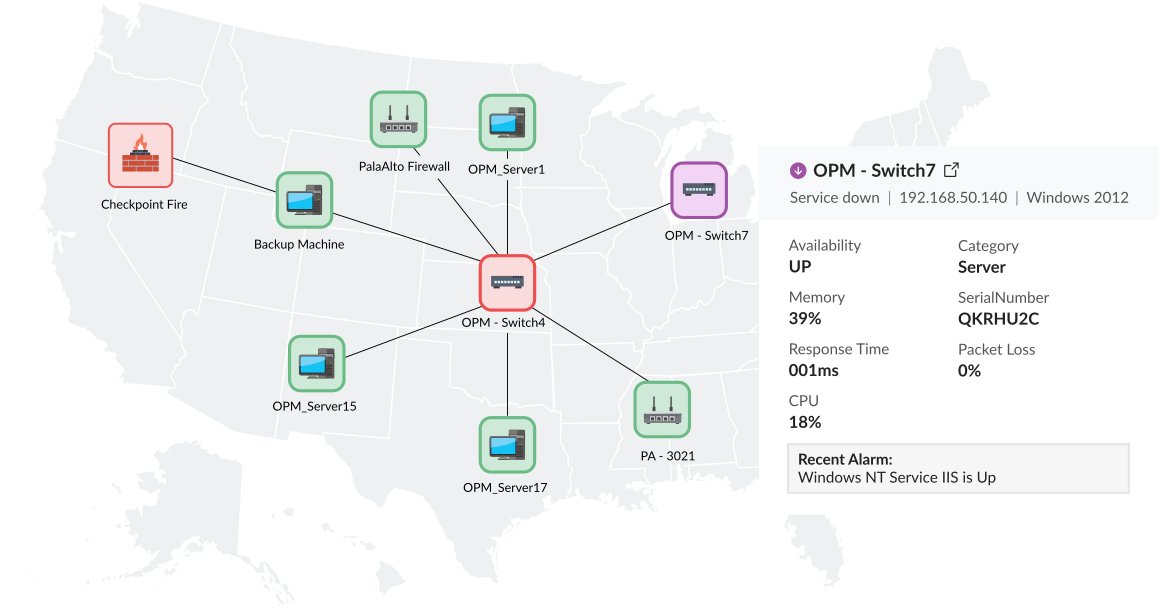
A custom geographic network map with a background image, connecting remote offices.

A custom logical network map with connections to DMZ, the datacenter server farm and the wireless zone.

Custom business service grouping: A custom grouping of devices which serve a common business service.

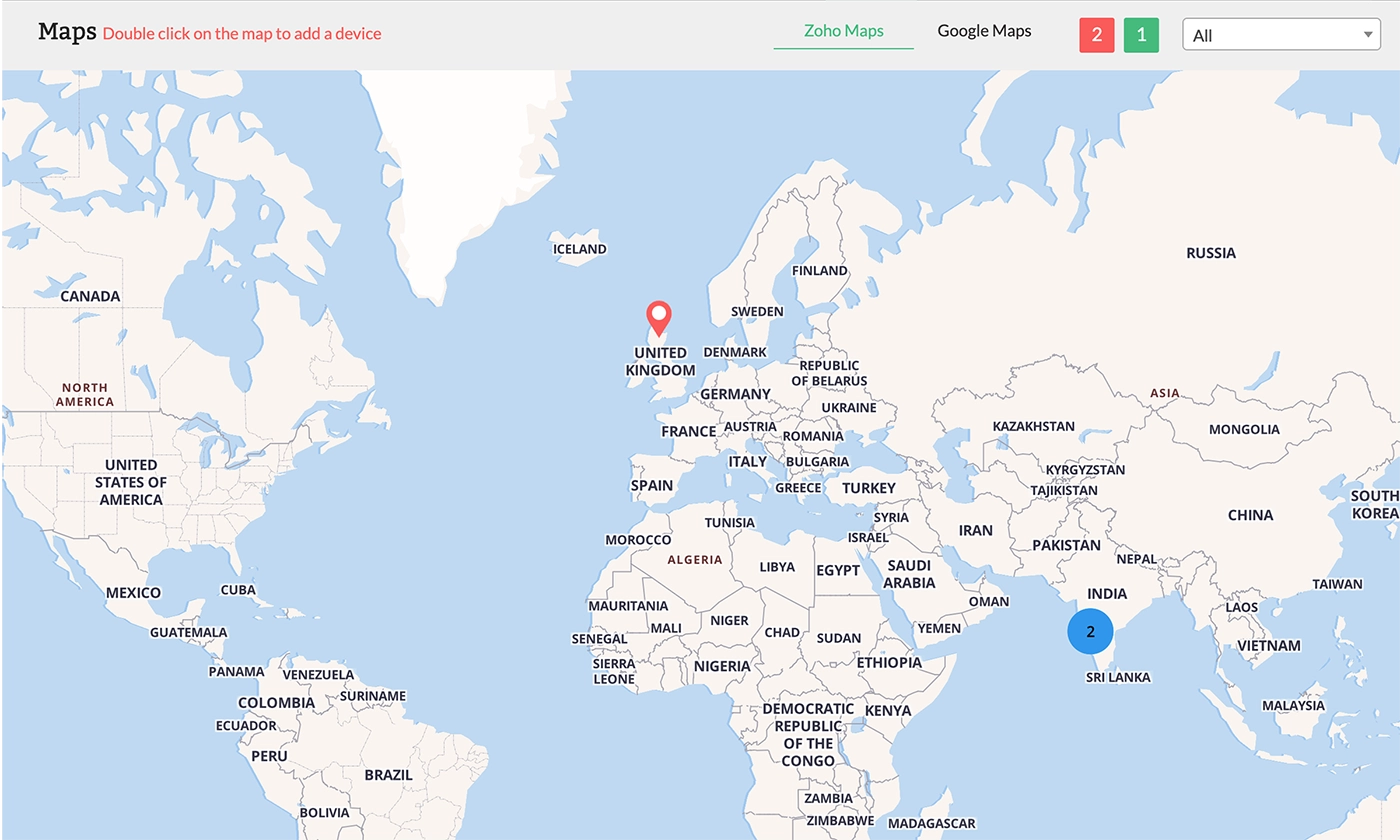
Infrastructure displayed over real-world Google maps with automatic device status propagation.

Physical location network view of how the devices are arranged on the Datacenter racks; helps you locate the device swiftly.

OpManager infrastructure maps: Automatic device grouping based on device type (Infrastructure view). Custom network maps (Business views) and Automatic L2/ L3 network maps (Network views)
- Proactively identify devices or business services that need immediate attention and start resolving the bottlenecks if any.
- Organize an enterprise network geographically.
- Find out not just the problematic device but also where it is located, visually.
- Create and share application or location specific network diagrams.