
What is ITSM?

Try ServiceDesk Plus Now

Written by: Bhuvaneshwari

Reviewed by: Siddharth

Last updated on: 19 January, 2026

Originally published on: 10 August, 2018

Introduction

Technology runs business, and IT runs technology.

In today's digital-first world, organizations of all sizes rely on technology to drive business value and maintain a competitive edge. But as systems grow more powerful, they also become more complex and vulnerable. The consequences are stark: a recent survey by ITIC shows that over 90% of mid-size and large enterprises now incur more than $300,000 in loses for every hour of downtime, while hidden operational inefficiencies can quietly consume up to 30% of annual revenue. These underscore both the risks of mismanaged IT and the opportunity for organizations that optimize their systems effectively.

So the stakes are clearly high:

  • A delayed response to a service issue can cost millions.
  • An unplanned system update can disrupt critical business operations.
  • A poorly handled onboarding request can slow down employee productivity from day one.
  • An untracked asset or configuration error can lead to shadow IT and unexpected costs.

This high-stakes environment demands an organized and structured method to handle IT services that IT service management (ITSM) effectively addresses.

ITSM serves as the fundamental operational framework that supports modern IT business processes beyond being a collection of best practices or another framework. ITSM helps orchestrate all IT processes behind the curtain, whether firefighting incidents, onboarding new employees, rolling out new software updates, or staying audit-ready, making sure nothing slips through the cracks or slows you down.

In this guide, we'll dive into the essentials of ITSM; decode its most valuable capabilities; quantify its indispensable value in today's digital economy; and show you how to harness it for for achieving IT excellence across IT, across teams, and across the enterprise.

Key takeaways:

This guide will equip readers with the knowledge to:

  • Align IT with business: Understand how ITSM helps organizations connect their IT services directly to their core business objectives.
  • Optimize operations: Learn best practices for streamlining ITSM workflows, enhancing efficiency, and significantly reducing costs.
  • Embrace innovation: Explore the transformative role of AI and automation in modern ITSM.
  • Enhance employee experience: Discover strategies to achieve true employee-centricity, boosting both satisfaction and productivity across the organization.
  • Drive continuous improvement: Adopt methodologies for ongoing evaluation and enhancement of IT services, ensuring perpetual evolution.

What is ITSM?

ITSM is strategic discipline that oversees the design, delivery, management, and continuous improvement of the IT services an organization provides to its end users.

At its core, ITSM is about meticulously aligning IT processes and services with overarching business objectives, thereby fostering organizational growth and enhancing resilience. This method transforms IT from being a reactive cost center into a proactive, value-generating business partner.

Gartner®, a leading authority in technology research, defines ITSM as "the collective policies and practices that ensure the right mix of people, processes, and technology come together to deliver IT services efficiently and effectively." And it defines ITSM platforms as "software that offers cohesive workflow management and automation for organizations to plan, deliver, support and improve integrated IT services," serving as a "system of record for ITSM practices."

ITSM integrates various critical processes designed to ensure efficient, reliable, and high-quality service delivery. Here are some of the core ITSM processes:

  • Service request management: Service request management handles routine user needs, like software access, password resets, or hardware upgrades, through standardized workflows. With service catalogs, self-service portals, and automation, IT teams can fulfill requests quickly and consistently, boosting user satisfaction while reducing repetitive workloads.
  • Incident management: Incident management focuses on the rapid restoration of services whenever an outage or disruption occurs. The primary goal is to minimize downtime and its impact on business operations. Effective incident management provides IT teams with structured workflows to log, categorize, prioritize, and resolve issues swiftly. By ensuring quick communication with end users and stakeholders, it helps maintain trust and reduces productivity loss. Modern ITSM tools enhance this process with automation, routing incidents to the right technicians and even suggesting resolutions through AI-driven insights.
  • Problem management While incident management addresses immediate issues, problem management digs deeper. Its purpose is to identify and analyze the root causes behind recurring incidents and implement long-term fixes. This involves trend analysis, proactive monitoring, and knowledge sharing so that similar problems don't resurface. By preventing repeat disruptions, problem management reduces the overall volume of incidents, lowers support costs, and improves service stability. A strong problem management practice transforms reactive firefighting into proactive IT service improvement.
  • Change management: Change management ensures that updates to the IT environment—whether adding, modifying, or removing infrastructure components—are carried out with minimal risk. This discipline provides governance over changes by requiring clear planning, approval workflows, testing, and communication. Structured change processes reduce unplanned outages and increase confidence in IT's ability to support business goals. From deploying a critical security patch to rolling out a new application, change management safeguards stability while enabling progress.
  • Knowledge management: Knowledge management empowers both end users and IT teams by centralizing solutions, best practices, and documentation. For employees, it offers self-service access to knowledge articles and FAQs, helping them resolve issues without waiting for IT support. For agents, it shortens resolution times by providing proven fixes at their fingertips. Over time, knowledge management fosters a culture of learning and continuous improvement, reducing ticket volumes while improving customer satisfaction. It is a critical enabler of faster, more consistent service delivery.
  • Asset management: Asset management gives organizations complete visibility and control over their IT assets throughout their life cycle, from procurement, assignment, and maintenance to disposal. By tracking hardware, software, licenses, and contracts in one place, IT teams can avoid overspending, ensure compliance, and maximize asset value. Asset management also enables better forecasting for future needs, supports audits with accurate data, and helps reduce risks such as unauthorized or underutilized software. In short, it ensures IT investments deliver the highest return.

Beyond core practices, ITSM also covers project, release, and configuration management. Its objective is simple: IT should operate as a service, prioritizing customer satisfaction and operational efficiency.

Understanding ITSM fundamentals

Before exploring where ITSM is headed, it's important to revisit the fundamentals. ITSM has grown from a set of structured IT support practices into a discipline that enables business agility, resilience, and user-centric experiences.

Yet, confusion often arises around its relationship with other methodologies and frameworks like ITIL®, DevOps, and AIOps. Clarifying these distinctions helps IT leaders choose the right approach for their organizations.

  • ITSM is the overarching discipline of managing IT services end to end—from design and delivery to improvement and retirement.
  • ITIL is the most widely adopted ITSM framework, offering best practices and guidance on how to implement ITSM effectively. ITIL 4, the latest version, emphasizes agility, value co-creation, and adaptability in modern IT environments.
  • DevOps focuses on collaboration between development and operations to accelerate delivery and improve quality through continuous integration and deployment. While ITSM defines what needs to be managed, DevOps influences how services are designed, built and delivered.
  • AIOps applies AI and machine learning to IT operations data, automating anomaly detection, correlation, and resolution to support proactive service management.

To operationalize these methodologies effectively, organizations often rely on established frameworks and standards that provide consistency, governance, and compliance.

Organizations often adopt industry frameworks and standards to ensure consistency and compliance in service delivery. The most influential ones include:

  • ITIL: Flexible and globally recognized, ITIL provides detailed best practices for service management. ITIL 4 integrates agile, DevOps, and digital transformation principles.
  • COBIT: A governance-oriented framework that focuses on aligning IT goals with business objectives, ensuring accountability and compliance.
  • ISO/IEC 20000: An international standard that certifies organizations for maintaining structured service management processes and continuous improvement.

Most organizations adopt a hybrid ITSM approach, blending frameworks to balance operational efficiency, regulatory compliance, and strategic agility. Combining methodological rigor with flexible processes and intelligent automation turns ITSM into a strategic enabler that delivers measurable business value. For example, a company might use ITIL for incident management discipline, DevOps for continuous delivery, and AIOps for predictive analytics.

How ITSM delivers tangible business value

Organizations need to expand their IT service capabilities because a basic help desk is not sufficient to meet their growing digital needs. To do that, they require an efficient, scalable, and secure service delivery framework, and that's where ITSM drives business value through operational execution.

Here's a summary of benefits:

  • Improved end-user experience: Self-service portals and AI-powered chatbots and contextual knowledge base suggestions allow users to resolve issues independently, which minimizes their need to contact the service desk, thus enhancing employee satisfaction levels.
  • Stronger compliance, risk mitigation, and security control: ITSM's structured processes for incidents, service requests, and changes ensure transparent, auditable operations; minimize errors; and help organizations meet security standards reliably.
  • Higher productivity through automation and knowledge management: IT teams can resolve issues faster by automating repetitive tasks and providing structured access to knowledge while dedicating time to strategic priorities.
  • Cost reduction and resource optimization: Automated ticket routing, SLA-based prioritization, and streamlined workflows reduce manual work, help cut operational costs, and eliminate duplication for more efficient resource use.

Lenskart, a leading retail brand in India with over 10,000 employees, transformed its IT service operations using ServiceDesk Plus and Endpoint Central. Before implementation, the company resolved about 75% of end-user queries. With ServiceDesk Plus, Lenskart achieved a 98.8% query resolution rate, dramatically improving response efficiency and prioritization.

The IT team highlights the platform's intuitive interface, seamless integrations, and ease of implementation, which allowed rapid adoption across the organization. Dedicated account management support from ManageEngine helped tailor solutions to Lenskart's specific needs, ensuring smooth operations. By leveraging ServiceDesk Plus, Lenskart enhanced employee experience, streamlined incident management, and significantly strengthened overall IT productivity.

View customer story

How AI and automation are redefining ITSM

ITSM has always been focused on structure and service. But today, it demands speed, intelligence, and scale. The traditional ticket-based model can't keep up with rising requests, hybrid work, skill gaps, and higher expectations. The modern service desks are smarter—with virtual agents that handle issues before they hit the queue, automation that completes tasks in seconds, and AI that uncovers hidden insights. In this new era, ITSM shifts from reactive firefighting to proactive, experience-driven service, generating positive experiences for users and teams. Here's how:

  • A faster, smarter way to manage incidents: AI accelerates ticket resolution through intelligent ticket classification and routing. Take anomaly detection, for example. Instead of waiting for users to report outages, AI algorithms in observability solutions flag irregularities in real time, shifting IT from firefighting to prevention. This means fewer escalations, faster SLAs, and more time for strategic work.
  • Virtual agents that elevate user experience: Modern chatbots powered by generative AI understand user intent, draw from knowledge bases, and resolve issues instantly. Users get quick, conversational support; agents handle fewer tickets; and your service desk stays available 24/7 without added headcount.
  • Automation that unlocks massive productivity gains: Think of automation as your digital workforce, handling everything from simple password resets to complex multi-stage approvals. Triggers, conditional logic, and workflow automations cut manual effort, reduce errors, and speed up turnaround, freeing teams to focus on innovation.
  • Root cause analysis that gets smarter over time: AI looks beyond symptoms to identify recurring issues by studying ticket patterns and configurations. This way, it pinpoints recurring issues, suggests fixes, and eliminates repetitive work, and improves accuracy over time as it learns from every interaction.
  • Contextual knowledge at the right moment: AI-powered knowledge systems find relevant articles and solutions automatically based on ticket history, keywords, or user profiles. This empowers your frontlines to stay free from work while giving your teams the power to handle tasks.
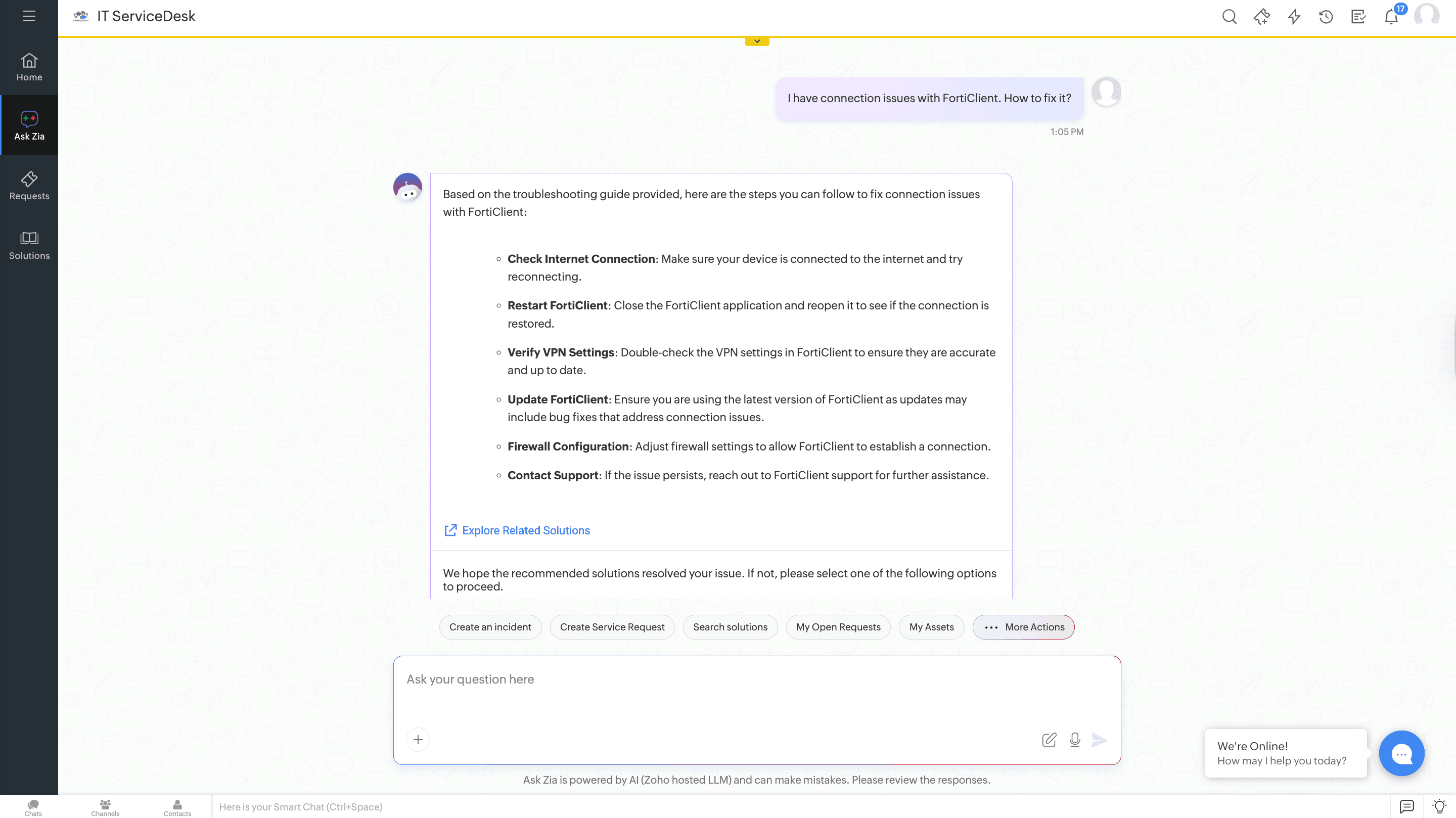
Ask Zia conversational AI chatbot in ServiceDesk Plus showing user query and AI response
Solution assistance through Ask Zia in ServiceDesk Plus

Choosing the right ITSM tool in 2025

The ITSM market in 2025 shows no signs of slowing down as new vendors emerge and traditional providers evolve through modernization and AI. But underneath all the noise, the fundamental truth remains that your ITSM solution should simplify operations instead of complicating them.

Here's what to look for when evaluating platforms in today's environment:

  • Modularity that grows with you: Choose a tool that lets you activate only the modules you need, like incident, problem, change, or asset management, and expand when the time is right. You shouldn't have to pay for features you're not ready to use.
  • AI that adds real value: Prioritize ITSM platforms providing AI solutions that allow quick deployment through virtual agents for user inquiries along with ticket auto-triage, sentiment analysis, and predictive suggestions for field technicians.
  • Low-code configuration and admin simplicity: A number of organizations have bought tools that are not even minimally configured. The most plausible reason for this is that the tools are complex and it requires a team of developers to configure. Your organization will achieve agility through drag-and-drop workflow builders and low-code customizations that avoid overwhelming you with complex code.
  • Strong integration ecosystem: A complete integration ecosystem should be present in your tool to support connections with identity providers (like Entra ID), endpoint managers (like Endpoint Central), communication tools (like Microsoft Teams), and business applications (like Workday or Zoho People).

Here's what to evaluate when comparing ITSM tools:

Feature category What to check Why it matters
Core modules Incidents, problems, changes, releases, assets, the CMDB Supports your ITIL-based processes
AI-enabled virtual agent Conversational assistance and contextual responses Delivers instant self-service, boosts user satisfaction, and reduces ticket volume
AI-powered ITSM Auto-triage, sentiment detection, content generation, workflow generation, and more Reduces manual effort and speeds up resolution
Automation Workflow builder, approvals, orchestrations, and escalations Helps you standardize and scale operations without technical complexity or professional coding
Self-service portal Branded portal, service catalog, and multi-department support Enhances user experience and reduces ticket load
Ease of setup No-code/low-code, templates, and sandbox Cuts onboarding time and lowers admin effort
Reporting and analytics Dashboards, SLA tracking, and KPI reports Enables better decision-making and governance
Integration support Native integrations, REST APIs, third-party connectors Ensures smooth cross-system workflows
Flexibility and pricing Modular plans and cloud/on-premises options Lets you adapt the tool to your organizational requirements

Why thousands of businesses trust ServiceDesk Plus to modernize their ITSM

ServiceDesk Plus is the AI-driven unified service management platform from ManageEngine, the enterprise IT management division of Zoho Corporation. Offering choices of both third-party and proprietary AI technologies including a native LLM, ServiceDesk Plus unlocks unparalleled efficiencies that help organizations design, manage, and deliver exceptional IT and business services.

ServiceDesk Plus combines ITSM essentials, asset management, and the CMDB with enterprise service management capabilities, providing a comprehensive platform for designing, managing, and delivering IT and business services.

Available both on-premises and as a SaaS solution, ServiceDesk Plus is an ideal choice for organizations looking for a value-oriented enterprise and ITSM platform that is secure and scalable.

Here's what sets it apart:

  • High-value AI capabilities for IT and enterprise service management are not paywalled behind add-ons but included within your subscription.
  • Powerful, modern ITIL workflows orchestrate enterprise and IT services from end to end.
  • From servers, networks, and switches to workstations and peripherals, it's your single system of record for the entire digital infrastructure.
  • Platform capabilities power up ServiceDesk Plus to digitize and optimize workplace service delivery.
  • ServiceDesk Plus integrates natively with every ManageEngine application and other third-party business apps as well.
Book a personalized demo

"The implementation has been a game-changer at Kuwait Telecommunications Company, enhancing workload visibility and reducing overall turnaround time and issue resolution for end users. Remarkably, over 90% of the customer issues were resolved within specified SLAs in the past year. We are convinced by and satisfied with the overall results we have achieved. This is a successful ITSM project—one we can claim as a benchmark in Kuwait."

— Head of customer support at stc Kuwait

View customer story

Five essentials for a successful ITSM rollout

The correct execution of an ITSM rollout will bring efficiency, transparency, and agility across your enterprise. The wrong approach will cause even top-notch tools to fail. The following five tips will assist you in moving beyond basic tool adoption to build an efficient and scalable service management practice.

  • Secure stakeholder buy-in early: Bring IT leaders, business heads, HR, and facilities teams together before implementation. When everyone grasps the why behind implementation, they will advocate for the how. Early stakeholder participation ensures that departmental goals align and helps identify hidden priorities while making the ITSM vision consistent throughout all departments.
  • Map your current processes: Don't digitize chaos. Service requests alongside incidents, changes, and assets need documentation of their current handling procedures. Identify gaps, redundancies, and bottlenecks. This process mapping gives you a real-world blueprint to reengineer workflows for efficiency, automate intelligently, and measure what matters.
  • Start small, then scale: Avoid project fatigue by automating a few high-impact areas first, like incident management or employee onboarding. Early wins build momentum and reduce resistance, paving the way for broader adoption.
  • Build automation into your foundation: Automation shouldn't be an afterthought. From day one, let your system route tickets based on skills or location, trigger SLA alerts, and handle routine tasks automatically. Free your teams to focus on complex, value-driven work. The main objective should be to allow your teams to dedicate their efforts toward critical matters.
  • Don't skip the service catalog: The service catalog serves as the face of modern service delivery. Structure it with clear categories, descriptions, approval flows, and SLAs. When employees know what to request and what to expect, satisfaction increases and help desk load drops.
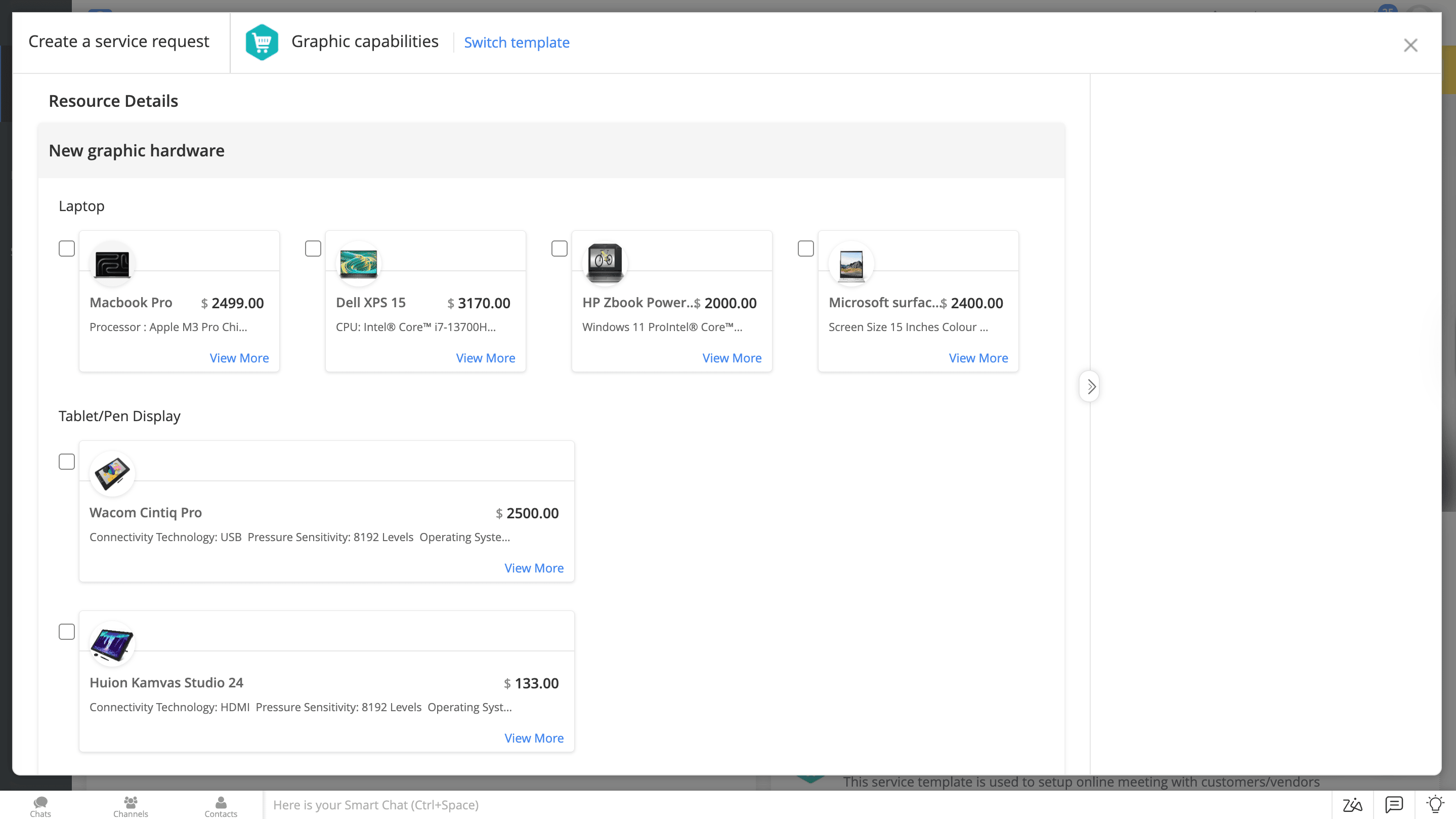
Service request template layout in ServiceDesk Plus showing structured categories, workflows, and automation for efficient ITSM rollout.
Service request template in ServiceDesk Plus

Overcoming common ITSM
implementation challenges

ITSM implementations often stall due to resistance, legacy systems, or lack of measurable progress. The good news? Most of these challenges are predictable and avoidable with the right plan.

Here's what to watch out for and how today's enterprise IT teams are navigating around them.

  • Integrating with legacy systems: Many teams still rely on outdated tools and workflows. Choose an ITSM platform that supports phased, modular integration. Begin with high-impact connections, like asset inventories or identity providers, and use native connectors or APIs to reduce complexity.
  • Managing change resistance: ITSM success depends as much on people as on technology. Involve stakeholders early to build ownership, not obligation. Deliver quick wins such as automated approvals or self-service forms, and tailor training to different roles to ease adoption.
  • Maintaining ROI: Without metrics, ITSM can seem like a cost center. Set baselines for SLAs, resolution times, and satisfaction before rollout. Use dashboards to automate reporting and link outcomes to business goals—less downtime, faster onboarding, and better audit readiness.

How ServiceDesk Plus helps teams clear these hurdles

ServiceDesk Plus is designed to help you move fast, stay flexible, and bring your teams along for the ride. Here's how:

  • Frictionless adoption: A clean UI and persona-based workspaces make it easy for users to get started—no steep learning curve.
  • Integration-ready: Native and third-party integrations with apps like Entra ID, Endpoint Central, and Analytics Plus reduce setup time and manual work.
  • Support that scales with you: From guided onboarding to in-product help, the team is built to support your rollout.

It's why thousands of businesses trust ServiceDesk Plus to drive real, lasting ITSM change.

Sign-up for a free, 30-day trial

Best practices in ITSM:
cultivating service excellence

To move ITSM from idea to actionable transformation, best practices must span people, processes, and technology. A continuous feedback loop refines these systems, ensuring agility and responsiveness to evolving business and technological needs. This foundation helps deliver exceptional service, enhance IT productivity, and future-proof business operations.

  • Prioritizing the end-user experience: Successful ITSM begins with anticipating end-user needs in the near future and the long term. Needless to say, today's end users expect seamless, consumer-like service experiences. Together, these mean that ITSM practices must be meticulously designed with the end user in mind: intuitive self-service portals, contextual request forms, transparent communication, and timely updates. Mapping user journeys helps eliminate delays and confusion, while personalized portals and chatbots ensure effortless, consistent interactions.
  • Invest in your IT team's growth: The level of skill and confidence within teams determines how quickly they resolve issues and adopt new technologies. Thus, organizations need to promote a certification culture, reward knowledge sharing, and value both technical and soft skills. Organizations must also focus on upskilling existing talent through education and AI-based knowledge distribution, because the IT skills gap demands these strategic solutions.
  • Put AI to work where it matters most: Strategic AI and ML adoption revolutionizes ITSM knowledge management. Generative AI builds dynamic knowledge bases that enhance self-service, automate updates, and organize content intelligently. AI-powered tools summarize tickets, provide real-time recommendations, and enable smart routing—driving efficiency without hiring more help. Gartner predicts that by 2027, generative AI will produce more IT support and knowledge articles than humans, underscoring its growing impact.
  • Ensuring continuous improvement through periodic evaluation: ITSM is an ongoing cycle, not a one-time setup. Regular assessments and feedback-driven reports uncover successes, bottlenecks, and recurring issues. Trend analysis helps identify root causes, improve service quality, and raise satisfaction levels. Iterative improvements ensure your ITSM framework stays aligned with evolving employee, team, and business needs.

Measuring ITSM success: Metrics and KPIs

ITSM maturity isn't measured by how many tickets are closed—it's about the value IT brings to the business. To demonstrate this impact, organizations need a balanced approach: tracking the right KPIs, assessing their ITSM maturity, and using analytics tools that turn insights into action.

Essential KPIs for continuous improvement

A well-rounded ITSM metrics strategy focuses on outcomes that matter to both users and the business. The following KPI categories provide a clear picture of service performance:

  • End-user satisfaction: Metrics like end user satisfaction rates and Net Promoter Score (NPS) capture how employees perceive the quality of IT support interactions and resolution effectiveness.
  • Operational efficiency: Indicators like average response time, incident resolution time, and SLA compliance show how reliably and quickly IT resolves issues.
  • Service quality and stability: Tracking recurring incidents, problem resolution rates, and change success rates helps IT teams reduce disruptions and prevent failures.

When monitored consistently, these KPIs highlight where processes break down, where automation can help, and how ITSM contributes to larger business goals.

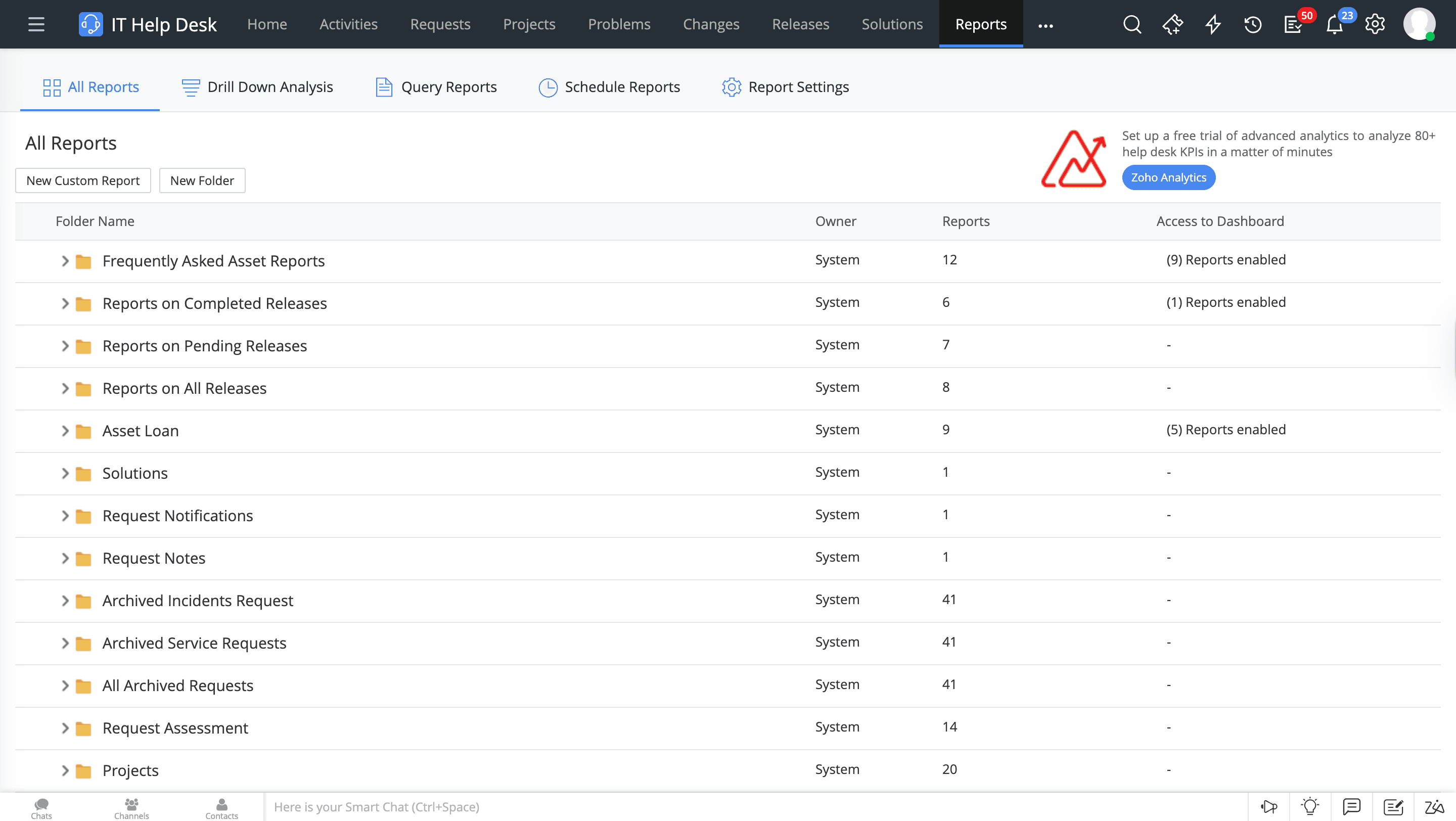
ServiceDesk Plus out-of-the-box ITSM reports dashboard with key performance metrics
Out-of-the-box reports in ServiceDesk Plus

ITSM maturity assessment framework

Measuring performance is just the first step. Organizations must also assess where their ITSM practice stands today and how it can progress. A maturity model provides this roadmap:

Maturity level Description Key characteristics Common challenges Next steps to advance
Level 1 – Initial (ad hoc) Services are delivered reactively, with little consistency. No formal processes and minimal documentation. High ticket volumes, poor visibility, and inconsistent user experience. Establish basic processes for incident, request, and change management. Centralize service delivery through a help desk.
Level 2 – Repeatable (defined processes) Basic processes are documented and repeatable but remain mostly manual. SLAs introduced, early reporting, and some workflow structure. Process silos, manual errors, and low adoption of tools. Automate routine tasks, deploy a self-service portal, and enforce SLA tracking.
Level 3 – Managed (standardized and automated) Processes are standardized across IT and are supported by ITSM tools. Automated ticket routing, dashboards for SLA monitoring, and service catalog usage. Underutilized automation and skill gaps. Expand automation, improve reporting, and integrate ITSM with adjacent business systems.
Level 4 – Quantitatively managed (data-driven) IT decisions are guided by analytics and predictive insights. Trend analysis, advanced dashboards, user sentiment tracking, and change success measurement. Difficulty aligning KPIs to business outcomes. Adopt predictive analytics, formalize problem management, and expand into enterprise service management (ESM).
Level 5 – Optimized (business-aligned and AI-enabled) ITSM is aligned with business goals, leveraging AI and automation for proactive support. Virtual agents, AI co-pilots, proactive monitoring, and continuous optimization. Governing AI ethics and scaling best practices enterprise-wide. Extend ESM capabilities, deploy AI responsibly, and build continuous feedback loops.

This model allows IT leaders to benchmark their current stage, anticipate the challenges ahead, and plan targeted initiatives for growth.

EnerSys, a global leader in stored energy systems and industrial technology solutions, revamped its IT service operations by implementing ServiceDesk Plus. Facing challenges like accurate request categorization, automated ticket dispatching, and technician assignment, EnerSys adopted ServiceDesk Plus to streamline workflows and improve operational efficiency.

The results were significant: the average resolution time per ticket dropped from 48 hours to just five–six hours, and the company achieved an impressive SLA compliance rate of 98.9%. By leveraging automated processes and structured ticket management, EnerSys achieved better service reliability, boosted IT team productivity, and ensured faster, more predictable support for end users.

View customer story

The future of ITSM and beyond: What's next?

ITSM extends its boundaries through technological developments while organizations push for agility and resilience, and user-focused service delivery that progresses from IT-centric reactive operations to business-wide proactive models. The path forward is shaped by the following developments.

AI-first service experiences

GenAI is changing how services are delivered and consumed. By analyzing tickets, knowledge bases, and logs, it provides contextual solutions, predicts issues, and enables proactive maintenance. Users can now resolve problems through conversational virtual agents, reducing human intervention.

For technicians, GenAI automates summaries, drafts responses, suggests fixes, and accelerates resolutions. Emerging agentic AI takes this further by autonomously planning and executing tasks like ticket management or patch deployment. As AI adoption grows, clear governance around ethics, privacy, and transparency will be crucial.

Curious about how IT leaders are adapting to AI agents? Our survey of 300 UK IT practitioners reveals the opportunities, challenges, and future impact. Explore the full findings here.

ITSM that spans departments

Service management practices no longer belong exclusively to IT. ESM extends ITSM principles across business functions such as HR, Facilities, Finance, and Legal, delivering standardized and automated service processes.

For example, HR can use an ITSM-based portal to manage employee onboarding and offboarding, ensuring new hires receive the right resources on day one. Facilities teams can process maintenance requests and track completion with the same workflows used for IT incidents.

ESM standardizes service delivery, breaks down silos, and gives employees a single access point for all requests. The result is stronger collaboration, streamlined operations, and a better employee experience, making ITSM the backbone of enterprise-wide service excellence.

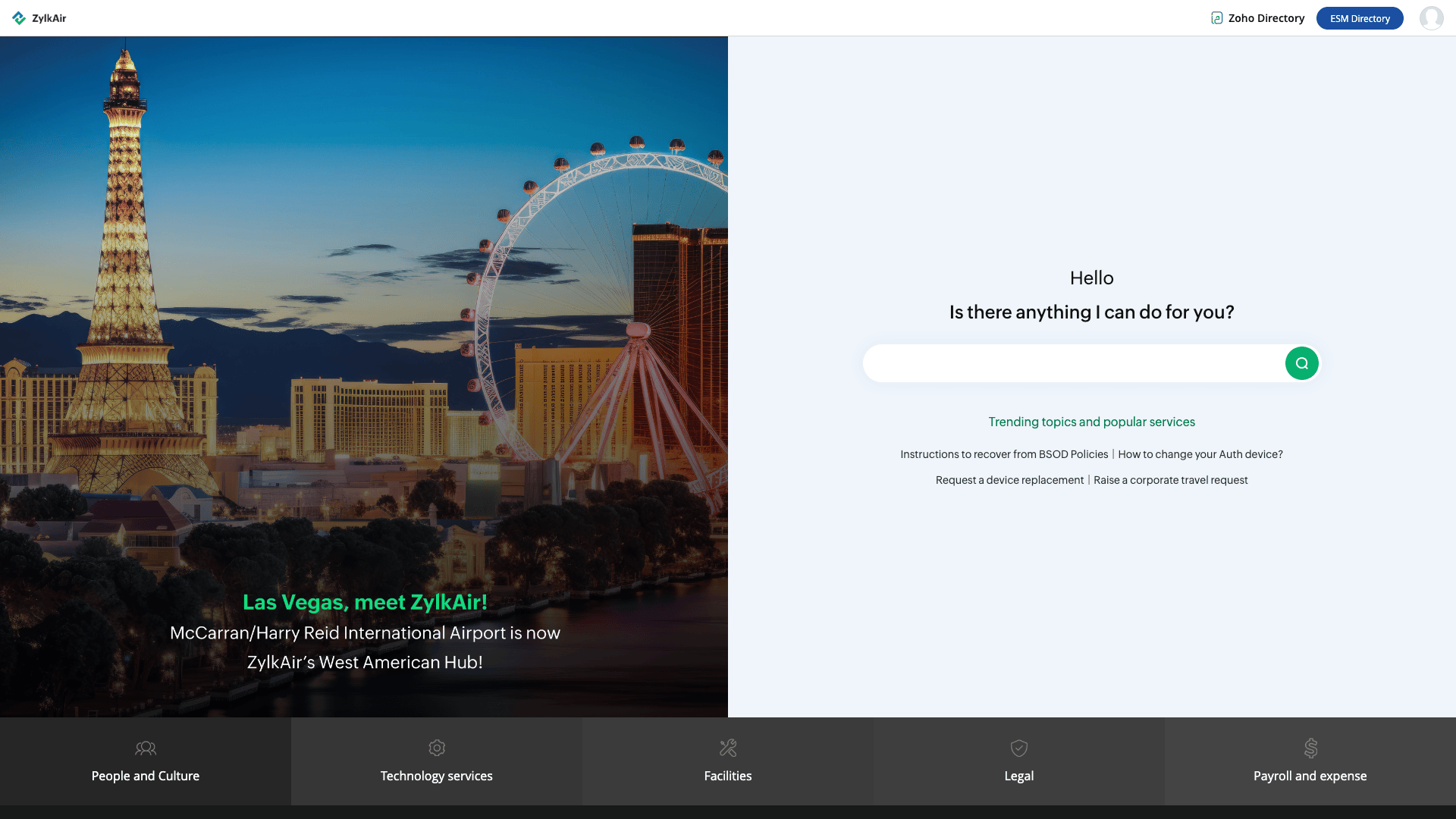
Custom ESM portal in ServiceDesk Plus showing unified access to HR, Facilities, Finance, Legal, and IT services through a centralized service portal
Custom ESM portal in ServiceDesk Plus

Contextual support powered by data

Predictive analytics and sentiment analysis are enabling proactive, personalized support. By studying usage patterns and service trends, IT teams can anticipate needs and address issues before they surface. Employees receive alerts and tailored knowledge articles in real time, while agents gain visibility into both operational and human factors behind metrics. The future service desk will blend automation, intelligence, and empathy, thus delivering exceptional value.

We see human-AI collaboration evolving into a symbiotic model—one where AI agents take over routine, repetitive tasks that can be automated, allowing employees to focus on the strategic, creative, and interpersonal aspects of their roles. This isn't about replacement; it's about augmentation. The goal is to empower people, not displace them.

— Rajesh Ganesan, CEO of Manageengine

source: financialexpress.com

Rajesh Ganesan

Reinventing service delivery with ITSM

The evolution of IT from back-office support to core business success driver demands more than process tweaks for ITSM to undergo complete service delivery transformation. Modern ITSM helps in this transformation by aligning strategic goals with operational activities, and promotes innovation and operational resilience at every level.

Organizations can transform IT into a strategic partner through proactive issue resolution, data-driven decision-making, and streamlined workflows that drive growth while ensuring continuity and improving user satisfaction. The combined advantages of integrated enterprise-wide ITSM lead to better ROI, optimized resources, reduced downtime, and stronger stakeholder trust.

The main objective of this transformation seeks to establish a future-proof base that allows IT to adapt and deliver measurable business value through ITSM.

ServiceDesk Plus allows you to operationalize these principles through its powerful, intuitive, and ready-to-deploy ITSM capabilities. See ServiceDesk Plus in action—start your free trial or book a personalized demo today.

Frequently asked questions

Expand all

1. What are the key differences between ITSM and ITIL®?

ITSM is the practice of designing, delivering, managing, and improving IT services. It’s a broad discipline that covers everything from incident response to asset management.

ITIL®, owned and governed by PeopleCert, is a structured framework of best practices within the bigger ITSM universe. It helps organizations implement ITSM in a consistent and effective way.

  • ITSM: What organizations do to plan, design, run, and improve IT services
  • ITIL: One of the guides they can follow to do it well

2. What are ITSM frameworks and how are they used?

ITSM frameworks are structured sets of best practices that help organizations design and run services effectively. The most widely used are:

  • ITIL: Comprehensive guidance for service management operations
  • COBIT: Governance and control of IT
  • ISO/IEC 20000: Certifiable standard for ITSM quality
  • DevOps: Culture and automation principles for high-velocity delivery

Organizations adopt these frameworks to standardize processes, ensure compliance, and build a shared language across teams.

3. Can ITSM improve organizational efficiency?

Yes. ITSM improves efficiency by:

  • Standardizing workflows like employee onboarding to minimize hand-offs and turnaround times, resulting in faster time to value for new hires.
  • Automating routine tasks such as triaging, routing or sending approvals to speed up response and resolution times.
  • Helping stay ahead of trends such as spotting SLA-violated tickets or identifying recurring issues, using dashboards and reports.
  • Improving cross-team collaboration and service consistency through well-defined service catalogs and workflows.
  • Reducing unplanned downtime through structured change and problem management practices.

When done well, ITSM transforms IT from a reactive function into a predictable, value-driven service organization.

4. How does AI work in ITSM?

AI enhances ITSM by serving as a contextual intelligence layer that analyzes incidents, automates multi-step workflows, and guides decision-making. Unlike basic automation, modern AI, like agentic AI, understands context, predicts outcomes, and performs coordinated actions autonomously. This turns reactive IT operations into proactive, value-driven services. Common applications include:

  • Conversational virtual agents that resolve routine issues instantly through an LLM-powered interface.
  • Generative AI for ticket summarization, resolution suggestions, and knowledge article creation.
  • Predictive analytics for intelligent triaging, routing, and forecasting of incidents and change risks.
  • Sentiment analysis to gauge end-user experience