

- Overview
- Configuration
PagerDuty
Secure and simplify PagerDuty logins with ADSelfService Plus
PagerDuty provides real-time incident management solutions to help businesses address IT disruptions promptly. Integrating ADSelfService Plus with PagerDuty enables secure single-click SSO, advanced authentication, and passwordless login, enhancing both security and user convenience.
Enable one-click access to PagerDuty through SSO
Simplify access with single-click login, allowing users to quickly access PagerDuty without login delays.
Enhanced security with advanced authentication
Protect PagerDuty access by implementing multi-factor authentication options like FIDO2 and biometrics, ensuring only authorized users can log in.
Simplified login with Passwordless authentication
Provide users with password-free login, reducing the hassle of password management and improving access convenience.
Configuring SAML SSO for PagerDuty
These steps will guide you through setting up the single sign-on functionality between ADSelfService Plus and PagerDuty.
Prerequisite
- Login to ADSelfService Plus as an administrator.
- Navigate to Configuration → Self-Service → Password Sync/Single Sign On → Add Application, and select PagerDuty from the applications displayed. Note:You can also find PagerDuty application that you need from the search bar located in the left pane or the alphabet wise navigation option in the right pane.
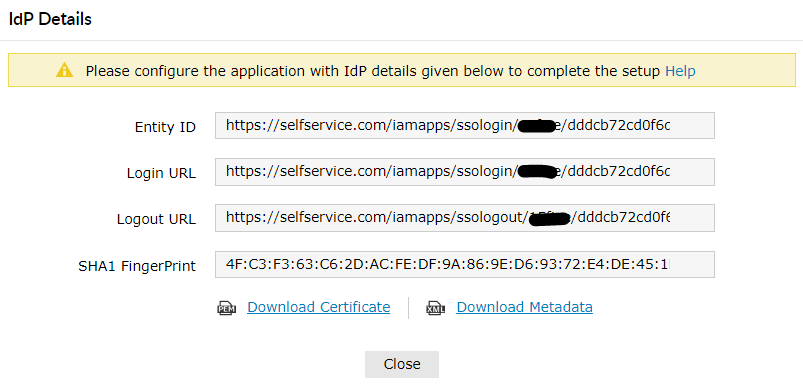
- Click IdP details in the top-right corner of the screen.
- In the pop-up that appears, copy the Login URL and download the SSO certificate by clicking on the Download SSO Certificate button.
PagerDuty (Service Provider) configuration steps
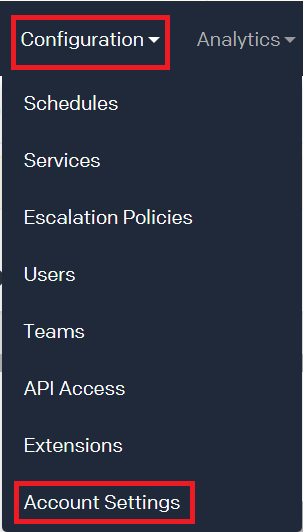
- Login to PagerDuty with an administrator’s credentials.
- Under Configuration, choose Account Settings
- Under Account details, choose Single sign-on.

- Check SAML. Open the downloaded SSO certificate as a text file. Copy and paste the content it in the X.509 Certificate text field.
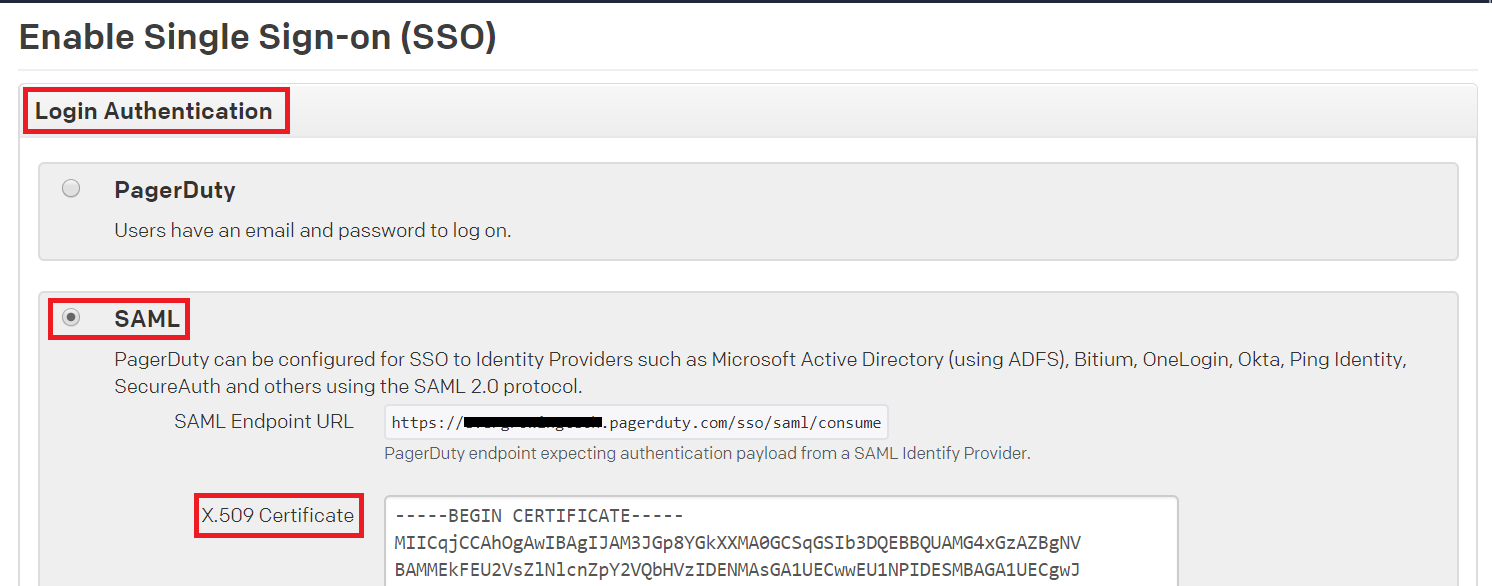
- Paste the Login URL and Logout URL, copied in Step 4 of Prerequisite, in the respective fields.
- You can enable auto-provisioning on first login.
- Click Save Changes.
ADSelfService Plus (Identity Provider) configuration steps
- Now, switch to ADSelfService Plus’ PagerDuty configuration page.
- Enter the Application Name and Description.
- In the Assign Policies field, select the policies for which SSO need to be enabled. Note: ADSelfService Plus allows you to create OU and group-based policies for your AD domains. To create a policy, go to Configuration → Self-Service → Policy Configuration → Add New Policy.
- Select Enable Single Sign-On.
- Enter the Domain Name of your PagerDuty account. For example, if you use johndoe@thinktodaytech.com to log in to PagerDuty, then thinktodaytech.com is the domain name.
- Enter the SP Identifier of your PagerDuty account in the SP Identifier field. For Eg: https://<sp_identifier>.pagerduty.com
- In the Name ID Format field, choose the format for the user login attribute value specific to the application. Note: Use Unspecified as the default option if you are unsure about the format of the login attribute value used by the application.
- Click Add Application.