Cybersecurity best practices for modern enterprises
Enterprise cybersecurity is no longer confined to a fixed network perimeter. Security teams now have to protect users, devices, applications, cloud services, and third-party access across increasingly distributed environments.
Attackers are also targeting identities, unpatched systems, exposed services, and gaps in visibility rather than relying on a single attack method. Cybersecurity therefore needs to be treated as an ongoing program, not a project that is completed once and revisited later. This guide covers practical cybersecurity best practices enterprises can use to reduce risk, improve resilience, and respond more effectively as their IT environments evolve.
What are cybersecurity best practices for modern enterprises?
Cybersecurity priorities vary by organization, depending on its systems, business risks, regulatory requirements, and security maturity. The following best practices provide a practical foundation for reducing risk across complex enterprise environments.
1. Maintain an accurate inventory of assets
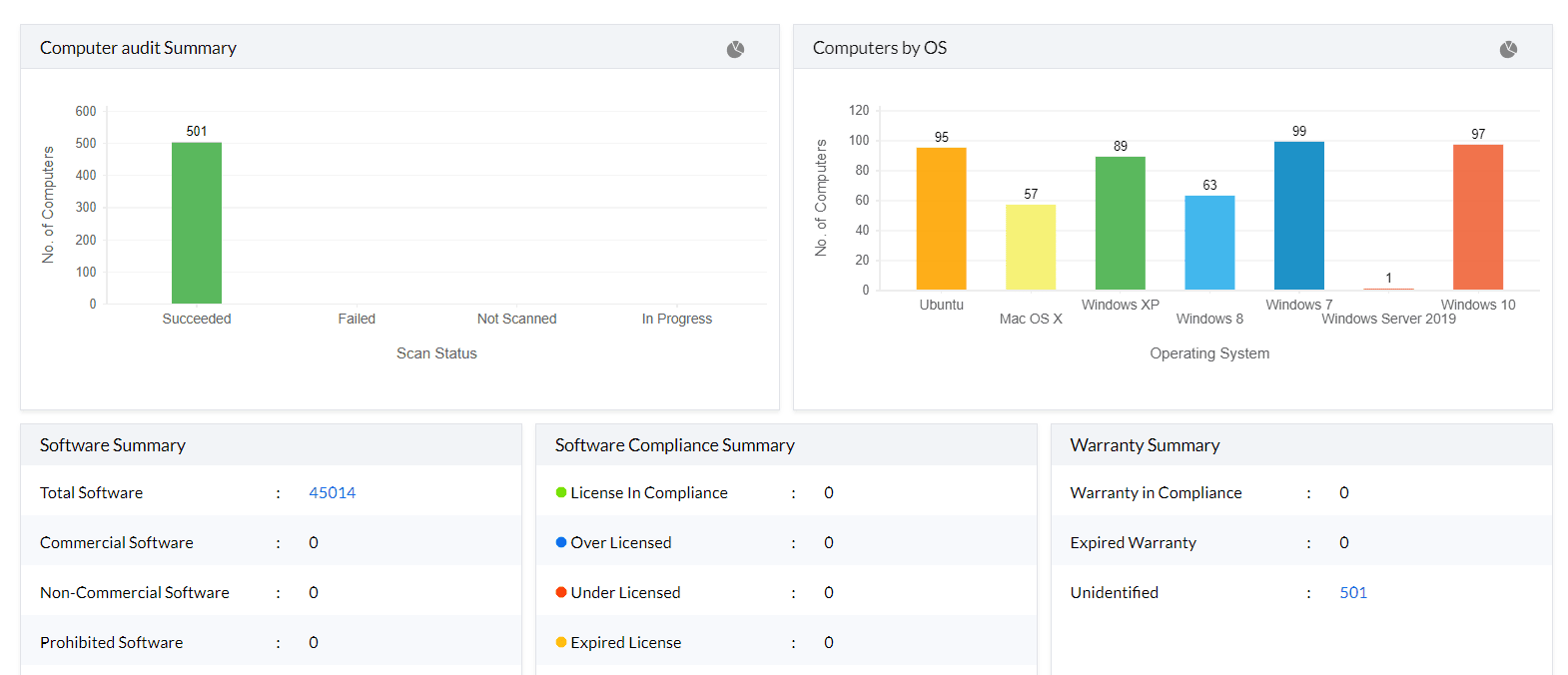
As the saying goes: You can't secure what you can't see. As enterprise environments expand, it becomes easier for unmanaged devices, forgotten applications, cloud resources, and unauthorized assets to fall outside normal security processes.
A reliable asset inventory should cover endpoints, servers, applications, user accounts, network devices, and cloud resources. It should also help teams identify which assets are business-critical, who owns them, and whether they are actively managed.
Keeping this inventory up to date gives security teams a clearer view of where risk exists and helps ensure that important assets are not missed during patching, monitoring, or incident response.
Key actions include:
Identify and track assets across on-premises and cloud environments.
Detect unmanaged or unauthorized devices and applications.
Classify assets based on business criticality.
Assign clear ownership for critical systems.
Review and update asset records continuously.
2. Assess and prioritize cyber risks
Not every security issue carries the same level of risk. A vulnerability on a business-critical server, for example, may require much faster action than the same issue on a system with limited exposure or impact.
Rather than treating every alert equally, organizations should consider factors such as how exposed an asset is, how likely a weakness is to be exploited, and what the business impact could be if that asset is compromised.
Key actions include:
Identify the systems and assets that are most critical to the business.
Evaluate risks based on exposure, exploitability, and potential impact.
Prioritize remediation for high-risk assets and vulnerabilities.
Define remediation timelines based on risk.
Reassess priorities as new vulnerabilities and threats emerge.
3. Strengthen identity and access security
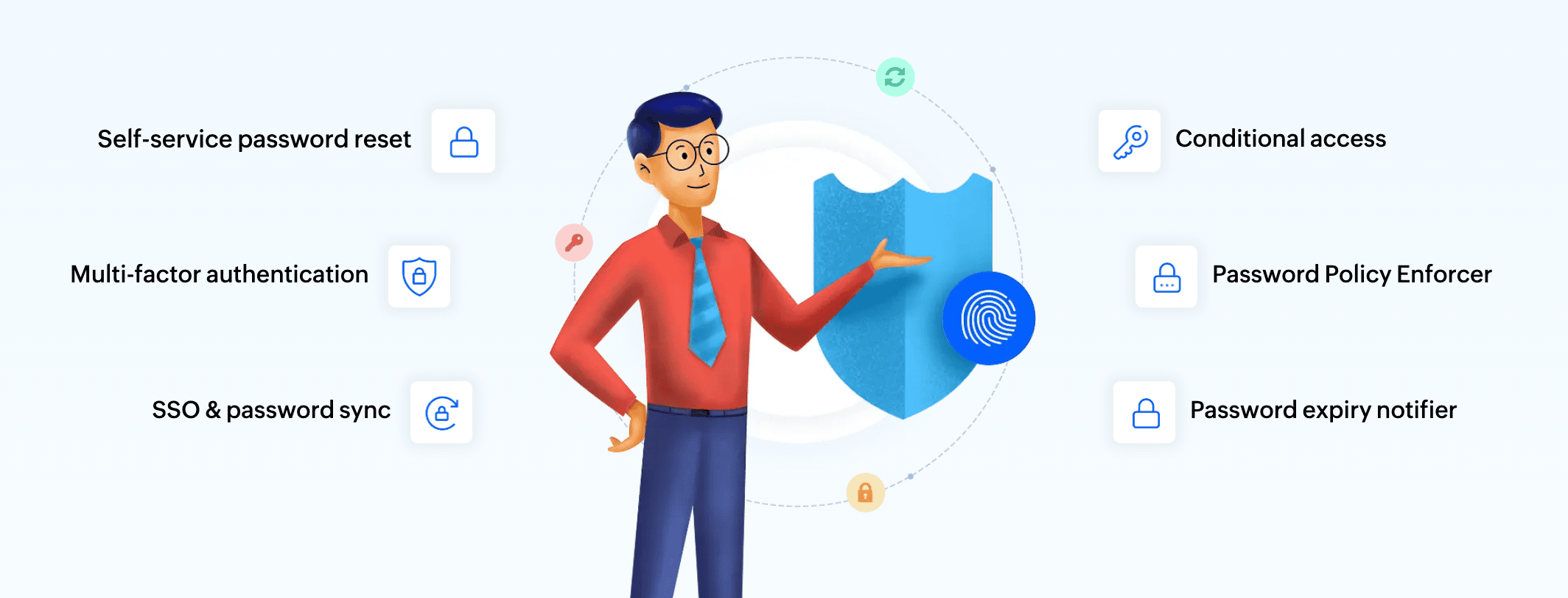
Many attacks begin with a compromised account rather than a direct attempt to break into a system. Once attackers gain access to valid credentials, excessive permissions or poorly controlled privileged accounts can make it easier for them to move further into the environment.
Organizations should limit access based on what users actually need to do their jobs. This includes enforcing stronger authentication, regularly reviewing permissions, and closely monitoring accounts with administrative or privileged access.
Key actions include:
Enforce multi-factor authentication (MFA) for sensitive systems and accounts.
Apply least-privilege and role-based access principles.
Review privileged accounts and permissions regularly.
Remove inactive, orphaned, or unnecessary accounts.
Monitor privileged access and high-risk account activity.
Automate provisioning and deprovisioning where possible.
4. Secure and continuously monitor endpoints
Endpoints give attackers a practical entry point because they sit directly between users, applications, credentials, and corporate data. Laptops, desktops, servers, and mobile devices therefore need to be secured and monitored throughout their life cycle, including when they operate outside the corporate network.
A strong endpoint security program should help teams maintain consistent configurations, keep software updated, detect suspicious activity, and control what users and applications can do on managed devices.
Key actions include:
Apply and maintain secure device configurations.
Keep operating systems and third-party applications updated.
Monitor endpoints for suspicious activity and indicators of compromise.
Identify and control unauthorized applications.
Restrict removable devices where necessary.
Maintain visibility over remote and mobile endpoints.
Define procedures to isolate and remediate compromised devices.
5. Implement risk-based vulnerability and patch management
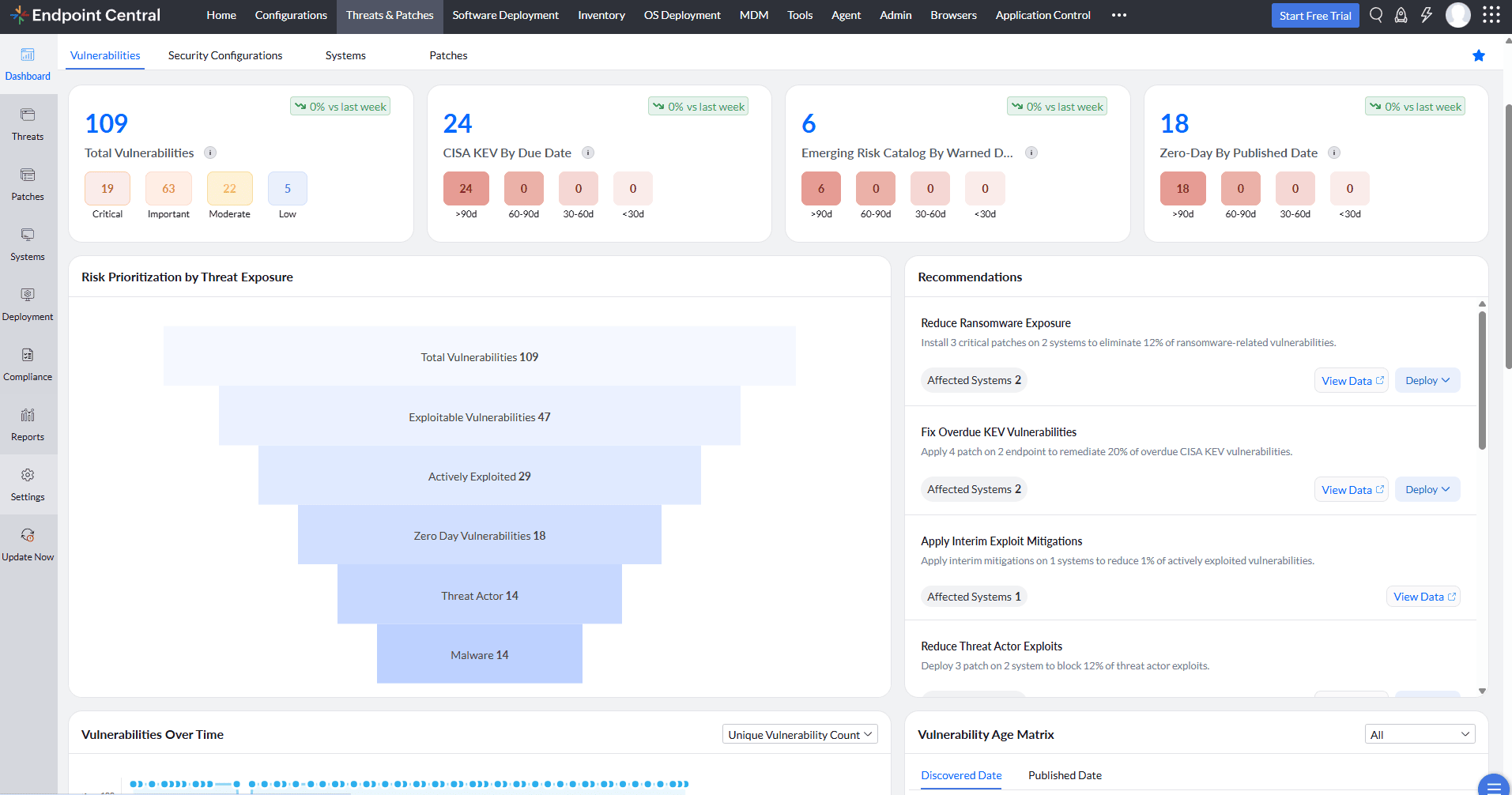
Vulnerability management should focus on more than finding as many issues as possible. In large environments, security teams may be dealing with thousands of findings at once, so the real challenge is deciding what needs attention first.
Severity scores such as CVSS are useful, but they should not be the only factor. Organizations should also consider whether a vulnerability is actively exploited, whether the affected system is internet-facing, how critical the asset is to the business, and whether a patch or other remediation is available.
Key actions include:
Continuously scan operating systems and third-party applications for vulnerabilities.
Prioritize remediation based on exploitability, exposure, severity, and asset criticality.
Patch high-risk vulnerabilities first, especially those that are actively exploited or internet-facing.
Test and deploy patches through a controlled process.
Verify remediation and track patch compliance over time.
6. Reduce the enterprise attack surface
As IT environments grow, so does the number of applications, accounts, services, ports, and devices that attackers could potentially target. Reducing the attack surface means limiting these unnecessary exposure points before they can be exploited.
This can involve removing unused software, disabling unnecessary services, restricting administrative privileges, securing internet-facing systems, and tightening configurations. Regular reviews are important because new exposures can appear as environments change.
Key actions include:
Remove unused applications, accounts, and services.
Review and secure internet-facing assets and open ports.
Apply secure configurations and correct configuration drift.
Limit administrative privileges and unnecessary access.
Use application controls to prevent unauthorized or high-risk software from running.
Segment critical systems where appropriate.
7. Centralize security monitoring and detection
Security events rarely happen in isolation. A suspicious login, an endpoint alert, and an unusual configuration change may look unrelated when viewed separately, but together they can reveal a larger attack.
Central monitoring helps security teams bring logs and security signals from identities, endpoints, applications, servers, network devices, and cloud platforms into one place. From there, related events can be correlated, enriched with threat intelligence, and investigated with more context.
Key actions include:
Collect security logs and telemetry from critical systems in one place.
Correlate related events instead of reviewing alerts in isolation.
Use behavioral analytics to detect unusual user and entity activity.
Enrich detections with threat intelligence and environmental context.
Prioritize high-risk alerts and define clear escalation procedures.
Retain searchable logs to support investigations and forensic analysis.
8. Protect sensitive data throughout its life cycle
Protecting sensitive data starts with knowing where it is stored and how it moves across the organization. Data can exist across endpoints, file servers, cloud applications, email, removable devices, and other storage locations, making consistent protection difficult without sufficient visibility.
Organizations should identify and classify sensitive information, understand who can access it, and monitor how it is used or transferred. Data loss prevention controls can then be applied based on the sensitivity of the data and the context in which it is being accessed or moved.
Key actions include:
Discover and classify sensitive data across relevant storage locations.
Review access permissions and limit unnecessary access to critical data.
Monitor sensitive data access and movement.
Control risky transfers through email, browsers, cloud applications, and removable devices.
Investigate unusual data activity and respond to potential exfiltration quickly.
Review data protection policies as business and regulatory requirements change.
9. Manage third-party and supply-chain risk
Vendors, contractors, cloud providers, and external software can all introduce risk into the environment. Even when an organization’s own controls are strong, a third party with excessive access or weak security practices can create another path to sensitive systems and data.
Third-party risk management should focus on both security posture and access. Organizations need to understand what vendors can reach, what data they handle, and whether that access is still necessary over time.
Key actions include:
Assess the security posture of critical vendors before onboarding.
Identify the systems and data each third party can access.
Limit third-party access to what is necessary.
Monitor privileged and remote vendor activity.
Review vendor access and security requirements periodically.
Revoke access promptly when a contract or business relationship ends.
Common cybersecurity risks and challenges
Modern enterprises face a mix of technical, operational, and human risks. Some threats target users directly, while others exploit weaknesses in software, identities, infrastructure, or third-party relationships.
Phishing and social engineering
Phishing remains one of the most common ways attackers gain initial access. Rather than exploiting a technical flaw, attackers target users with convincing emails, fake login pages, or messages designed to steal credentials or trigger an unsafe action.
The challenge is that these attacks continue to evolve. More convincing content, impersonation techniques, and AI-assisted scams can make malicious messages harder to distinguish from legitimate communication.
Ransomware and data extortion
Ransomware can disrupt operations by encrypting systems, but many attacks now also involve data theft. Attackers may exfiltrate sensitive information before encryption and use it as additional leverage.
This makes ransomware both an availability and data-protection problem. Organizations need to reduce initial access opportunities, limit lateral movement, maintain reliable backups, and be prepared to detect and contain suspicious activity quickly.
Identity compromise and excessive access
Stolen credentials, weak authentication, dormant accounts, and excessive privileges can give attackers legitimate-looking access to enterprise systems. The risk increases when privileged access is not regularly reviewed or when compromised accounts can move freely between systems. Strong authentication, least privilege, and continuous monitoring of high-risk accounts are therefore critical.
Insider risk
Insider incidents are not always malicious. Employees, contractors, or partners may expose data through mistakes, unsafe sharing, inappropriate access, or compromised accounts.
The challenge is identifying risky behavior without treating every unusual action as malicious. Organizations need enough visibility to detect anomalies while maintaining appropriate governance and access controls.
Unpatched vulnerabilities and outdated software
Known vulnerabilities remain a common entry point when patches are delayed or systems fall outside normal management processes. Attackers may also exploit software weaknesses to install or maintain backdoors, giving them persistent access even after the initial compromise.
Large enterprises may have thousands of endpoints, servers, and third-party applications to maintain, which makes patch management and risk-based prioritization essential. Security teams should focus first on vulnerabilities that are exploitable, exposed, and connected to critical assets.
Cloud and configuration risks
Cloud environments can introduce security gaps through misconfigured services, overly permissive access, exposed resources, or inconsistent security controls. Because cloud infrastructure can change quickly, configuration reviews and access controls need to keep pace with deployment rather than relying only on periodic audits.
Fragmented security visibility
Security information is often spread across endpoint tools, identity systems, cloud platforms, network devices, and applications. When these signals are reviewed separately, suspicious activity can be missed or investigated too slowly.
At the same time, too many disconnected alerts can contribute to breach fatigue, making it harder for teams to identify which warnings actually need immediate attention. Centralizing and correlating security data gives teams more context, reduces noise, and can help reveal attacks that would otherwise appear as isolated events.
How to measure cybersecurity effectiveness
Measuring cybersecurity comes down to whether security controls are actually reducing risk and helping teams respond more effectively. The most useful metrics are those that show where exposure is improving, where response is getting faster, and where gaps still remain.
A practical set of cybersecurity metrics can include:
Critical vulnerability remediation time: How quickly high-risk vulnerabilities are fixed.
Patch compliance rate: The percentage of systems that meet the organization’s patching requirements.
MFA coverage: The percentage of users and critical accounts protected by MFA.
Privileged account exposure: The number of excessive, inactive, or unnecessary privileged accounts.
Mean time to detect (MTTD): How long it takes to identify a security incident.
Mean time to repair (MTTR): How quickly teams contain, respond to, and resolve detected incidents.
Security monitoring coverage: The percentage of critical assets sending logs or telemetry to security monitoring systems.
Incident recurrence rate: How often similar incidents happen again after remediation.
Phishing simulation failure rate: The percentage of users who interact with simulated phishing attempts.
Incident response exercise completion rate: Whether planned tabletop exercises and response tests are being completed.
How ManageEngine supports enterprise cybersecurity
ManageEngine provides capabilities across identity and access management, endpoint security, vulnerability and patch management, security monitoring, privileged access, and data protection. These tools can help IT and security teams improve visibility, reduce exposure, and apply security controls more consistently across complex environments.
Together, these capabilities can support a more connected approach to prevention, detection, and response. Learn more about ManageEngine’s cybersecurity solutions.