The Death of the Search Bar
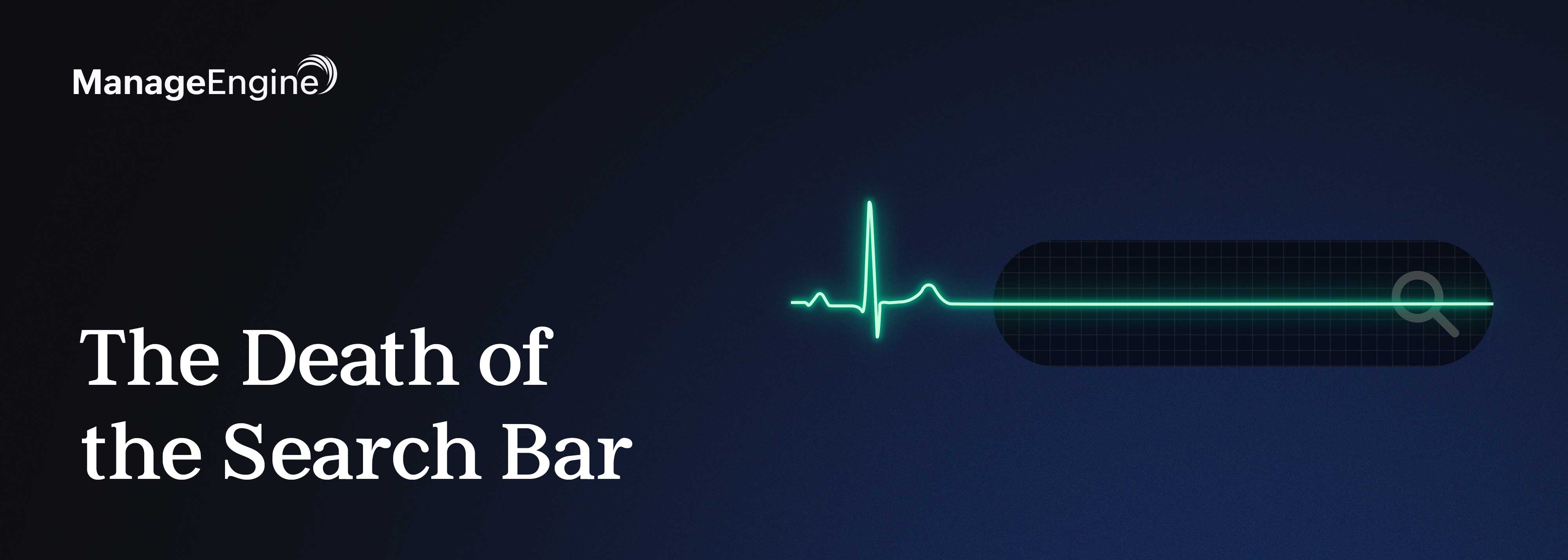
I don't remember the last time I actually searched for something. Not in the way I used to, anyway.
There was a time when having a question meant opening a search engine, typing a few words, staring at a page full of links, opening three or four of them, reading contradictory answers, deciding which one sounded believable, and eventually coming to a conclusion of my own.
Now, I just ask, "What's the best camera for beginners?"
"Why is my Wi-Fi suddenly slow?"
"Can I visit Japan in November?"
"Explain quantum computing like I'm five."
There is no scrolling. No ten blue links. No opening a suspiciously named website from 2014. No comparing five different opinions. Just a question and an answer. It is undeniably less effort. And yet, something about it feels a little strange.
For most of the internet's existence, the search engine didn't really answer our questions. It pointed us toward places where we might find the answer. We did the rest.
That distinction sounds insignificant now, but it changed the way an entire generation learned to navigate information.
If you wanted to know why the sky was blue, you searched for it. You might end up reading a science website, then clicking on something about atmospheric scattering, then somehow finding yourself reading about sunsets. You came looking for one answer and left knowing three things you never intended to learn. That was part of the fun. The internet was full of rabbit holes.
We used to search; now we ask
The search bar was never particularly glamorous. It was just a little box waiting for us to type something into it. But it taught us an important habit: don't expect the internet to think for you.
It gave you options. You had to decide which result looked credible. You had to notice when two websites disagreed. You had to figure out whether the person writing a blog knew what they were talking about. Sometimes you even had to read the entire article. It wasn't always efficient.
But perhaps inefficiency wasn't the only thing happening.
Today, AI-powered search is changing that experience. Instead of giving us a list of places to investigate, modern search tools can summarize information and put a seemingly definitive answer directly in front of us.
The answer is not always the interesting part
Think about the last time you got genuinely curious about something. Maybe you saw a strange building while travelling and wondered what it was. Maybe someone mentioned a word you'd never heard before. Maybe you wondered why airplanes leave white trails in the sky.
You search, then you click. Then you find something else.
Before you know it, you've spent twenty minutes learning about something that had absolutely nothing to do with what you were supposed to be doing. We've all done it. And we probably don't consider that wasted time. Because sometimes curiosity doesn't have a destination. AI, by design, is much better at giving curiosity a destination.
Ask a question and it tries to close the loop. Here's your answer. Done.
But what if the loop was the interesting part?
The internet used to surprise us
One of the strange things about search is that you never knew exactly what you were going to find.
You could search for a restaurant and discover an obscure food blog. Search for a historical event and find someone's personal account of living through it. Search for a movie and end up reading an argument between strangers about whether the ending made any sense. The search result was a doorway. AI is turning that doorway into a receptionist. Tell it what you want and it can gather information, summarize it, and hand you something that feels complete.
That is incredibly useful. But completeness can be a little dangerous when we're talking about curiosity. Because if the answer feels complete, we stop looking.
And perhaps that's one of the biggest differences between searching for information and receiving information.
When you search, you encounter things. When you ask an AI, you encounter a conclusion.
But what if the conclusion is wrong?
There's another reason the old-fashioned search process had an advantage: it made uncertainty visible. You could see ten results. One said one thing. Another said something completely different.
Using a chatbot's AI to search removes that ambiguity. It can take information from multiple sources and turn it into one neat response. That's convenient, but it also means that the uncertainty that existed between those sources may no longer be obvious.
And trust remains one of the biggest questions around AI-powered search. YouGov's 2026 research into online discovery found that AI assistants are becoming a larger part of how people find information, while trust continues to be a major factor in whether people rely on them.
The problem isn't that AI can't give us good answers. It can.
The problem is that a confident answer can feel more trustworthy than a collection of messy evidence. And sometimes, messy evidence is exactly what we need.
We may not be losing search; we may be losing the habit of looking
Calling this "the death of the search bar" might be dramatic. The search bar isn't going anywhere tomorrow.
People will still search for restaurants, products, directions, breaking news, and countless other things. In fact, research suggests people continue to use traditional search results even as AI becomes part of the search experience.
So perhaps the search bar isn't dying. Perhaps something more subtle is happening. We're changing what we expect from it. We no longer want the internet to show us where the answer is. We want it to give us the answer. And that sounds like progress because, in many ways, it is.
Nobody wants to spend an hour researching something that could be understood in two minutes. There is enormous value in having technology summarize complicated subjects, explain difficult concepts, and help us get unstuck.
The question isn't whether we should go back to a barrage of blue links to navigate. We shouldn't. The question is whether we should occasionally resist the temptation to stop there.
Because sometimes, the five minutes we spend reading beyond the answer are where the real learning happens.
Maybe we don't need fewer answers; maybe we need better questions
There is something almost poetic about what is happening to search. Search engines were built around a very human idea: "If I don't know, I will search for the answer."
AI is built around another: "If I don't know, I will ask for the answer."
Both are useful. But they create very different relationships with knowledge acquisition. The first asks us to explore. The second asks us to trust. Perhaps the future isn't about choosing between them; maybe we need both.
Let AI explain the complicated thing you don't understand. Let it summarize the 40-page report you don't have time to read. Let it help you get started when you're completely lost.
But every once in a while, don't ask for the answer. Search for it. Open the weird result. Read the badly designed website. Follow the link that has nothing to do with what you were originally looking for. Get distracted. Go down the rabbit hole. Because the internet was never just a giant answer machine. For a long time, it was a place where one question could lead to another, and another, and another. And maybe that's the part we shouldn't be too quick to automate.