Rogue DHCP server detection
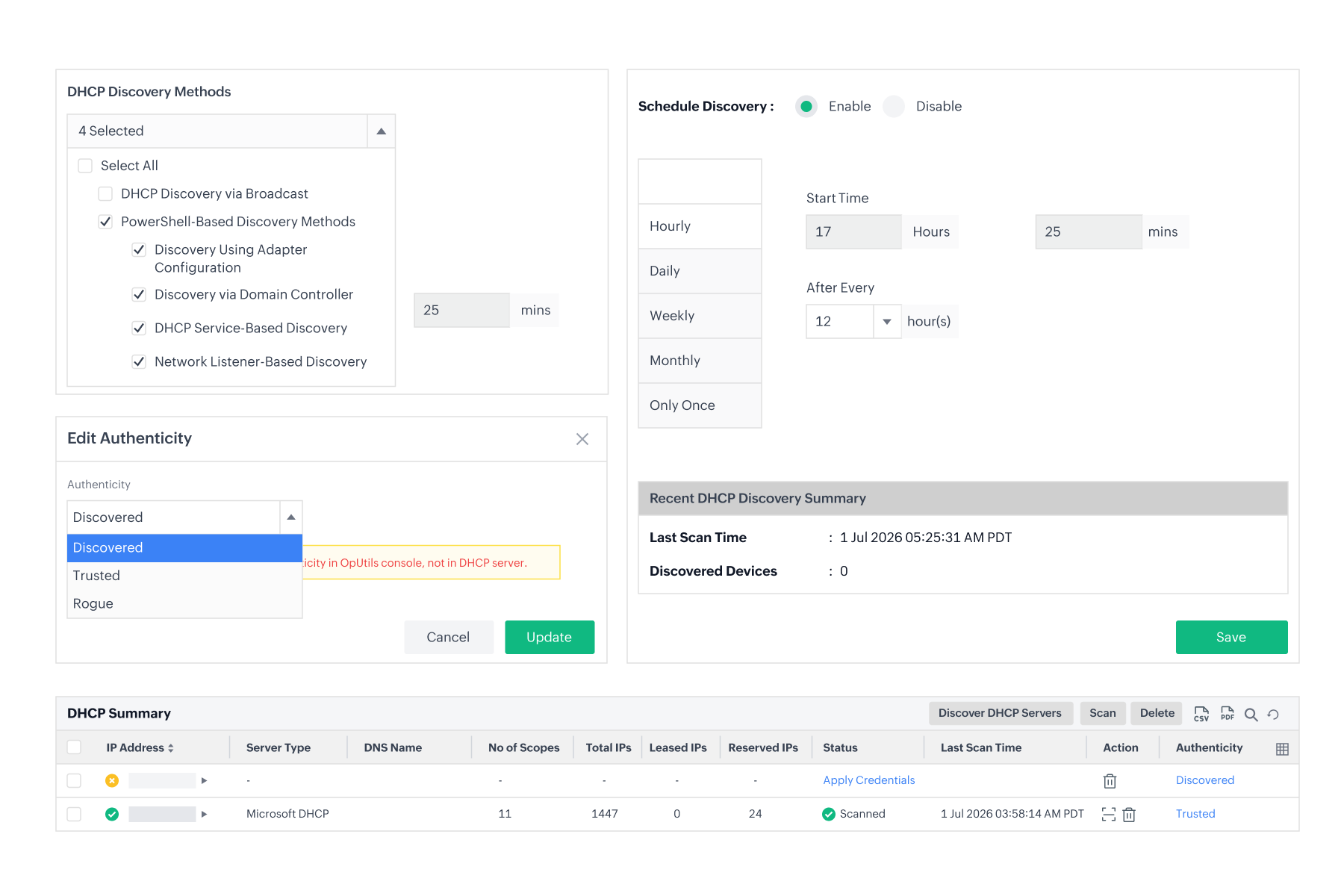
OpUtils' Rogue DHCP Discovery identifies authorized and rogue DHCP servers, helping detect unauthorized DHCP activity across your network proactively.
Rogue DHCP discovery in OpUtils
Unauthorized DHCP servers can assign incorrect IP addresses, gateways, and DNS settings, causing IP conflicts, connectivity issues, and rogue DHCP attacks. OpUtils' Rogue DHCP Discovery uses multiple discovery methods to identify authorized and rogue DHCP servers across your network from a centralized console, enabling administrators to detect unauthorized DHCP activity early and prevent service disruptions, IP conflicts, and security incidents.
Key capabilities of OpUtils' Rogue DHCP Discovery
Five discovery methods for comprehensive DHCP server detection
OpUtils uses five DHCP discovery methods to identify authorized and rogue DHCP servers across your network, providing comprehensive visibility to detect unauthorized DHCP activity before it impacts users.
- Broadcast-based discovery: Uses Nmap to send DHCP discovery packets and identifies servers responding with DHCP Offer and DHCP Acknowledge messages for fast, agentless DHCP server discovery.
- PowerShell-based discovery: Queries domain controllers, DHCP services, network adapter configurations, and live DHCP traffic to discover authorized and rogue DHCP servers across your Windows environment.
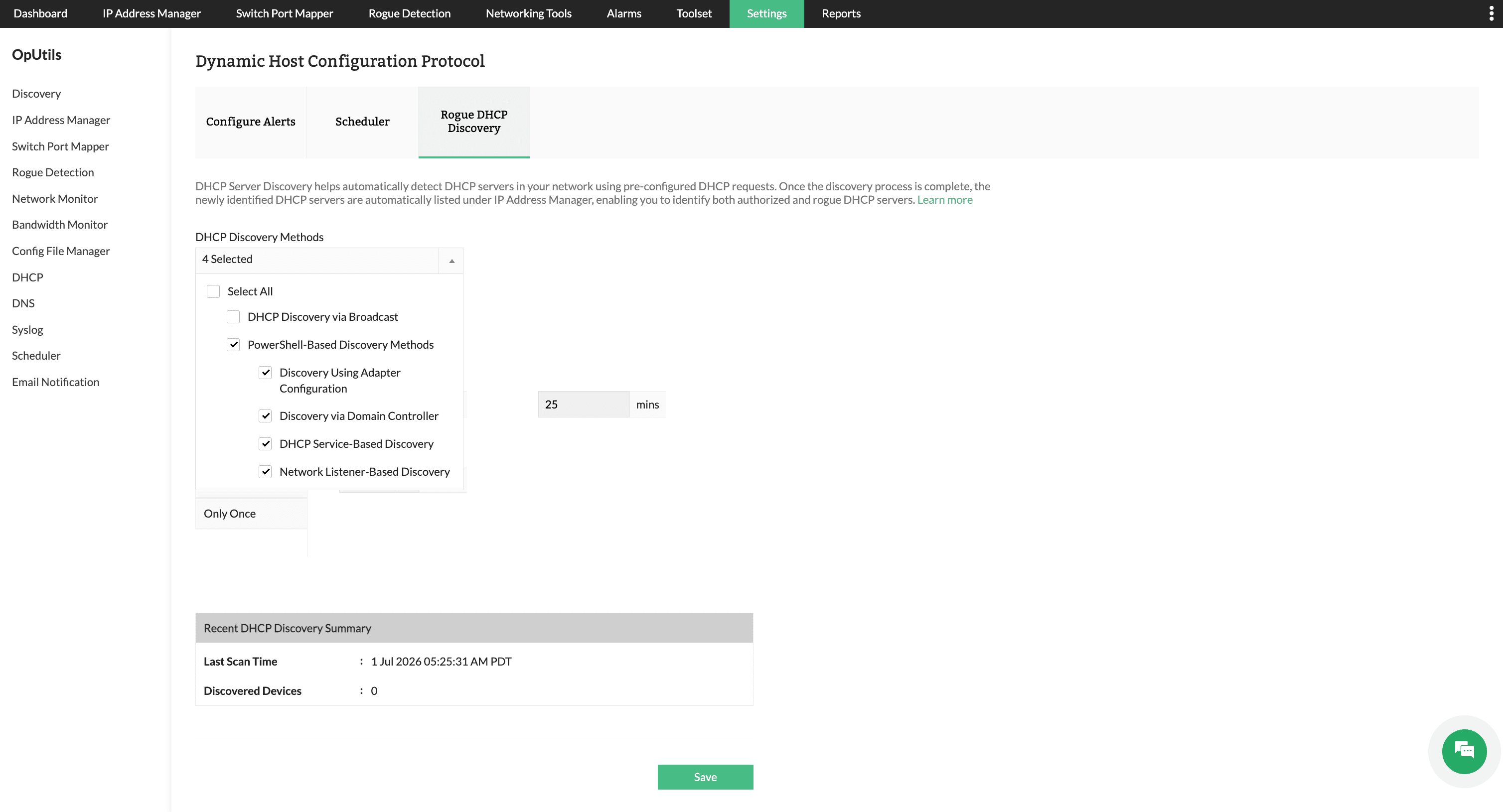
Centralized inventory of authorized and rogue DHCP servers
OpUtils consolidates authorized, newly discovered, and rogue DHCP servers into a centralized DHCP Summary page, displaying key server details, authenticity status, and scan results to help administrators quickly identify valid servers and detect unauthorized DHCP activity.
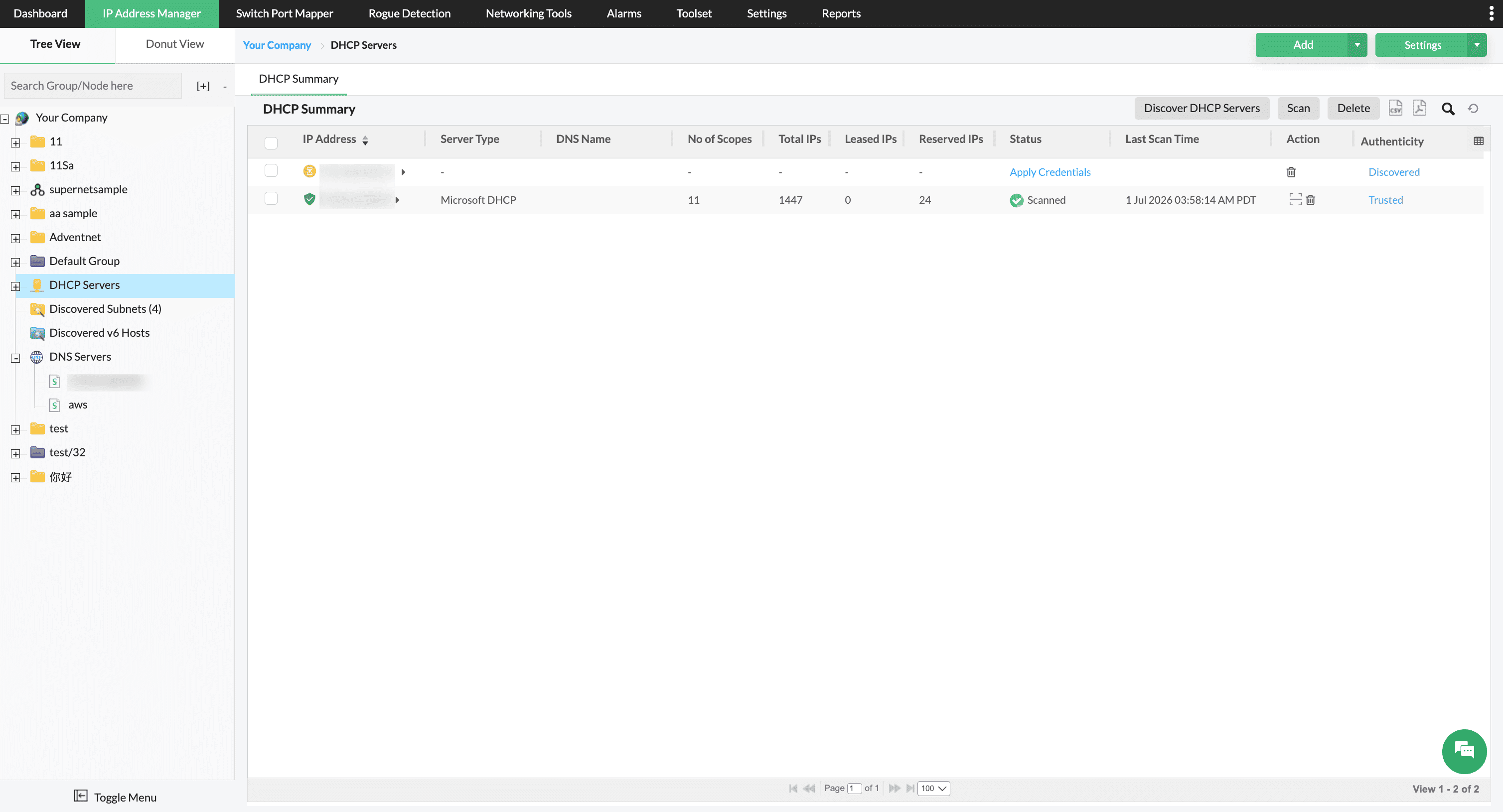
Classify discovered DHCP server as Trusted or Rogue
OpUtils lets administrators classify discovered DHCP servers as Trusted or Rogue, automatically trusting Active Directory servers while allowing manual classification, helping maintain an accurate DHCP inventory and quickly identify unauthorized DHCP servers across the network.
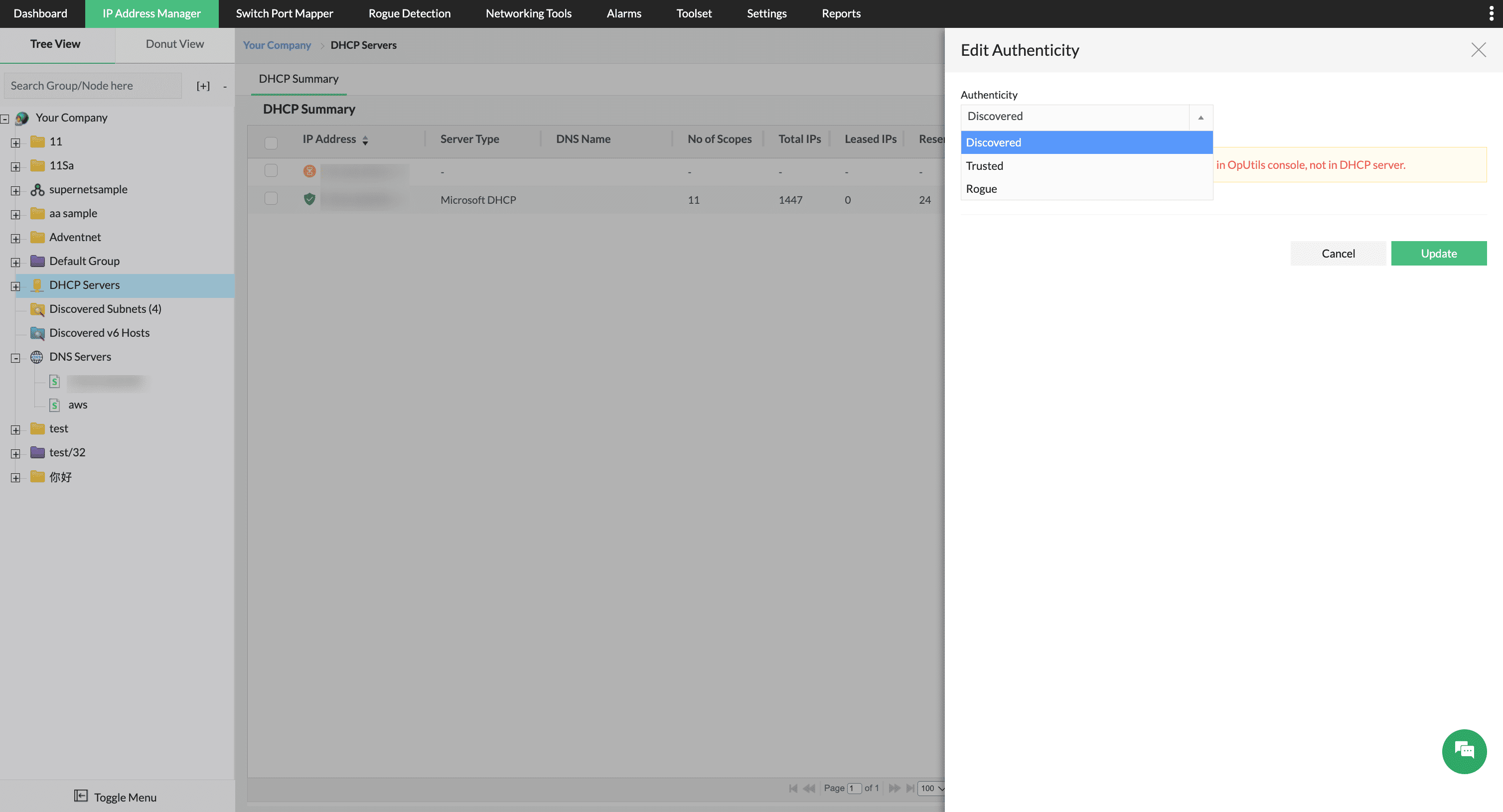
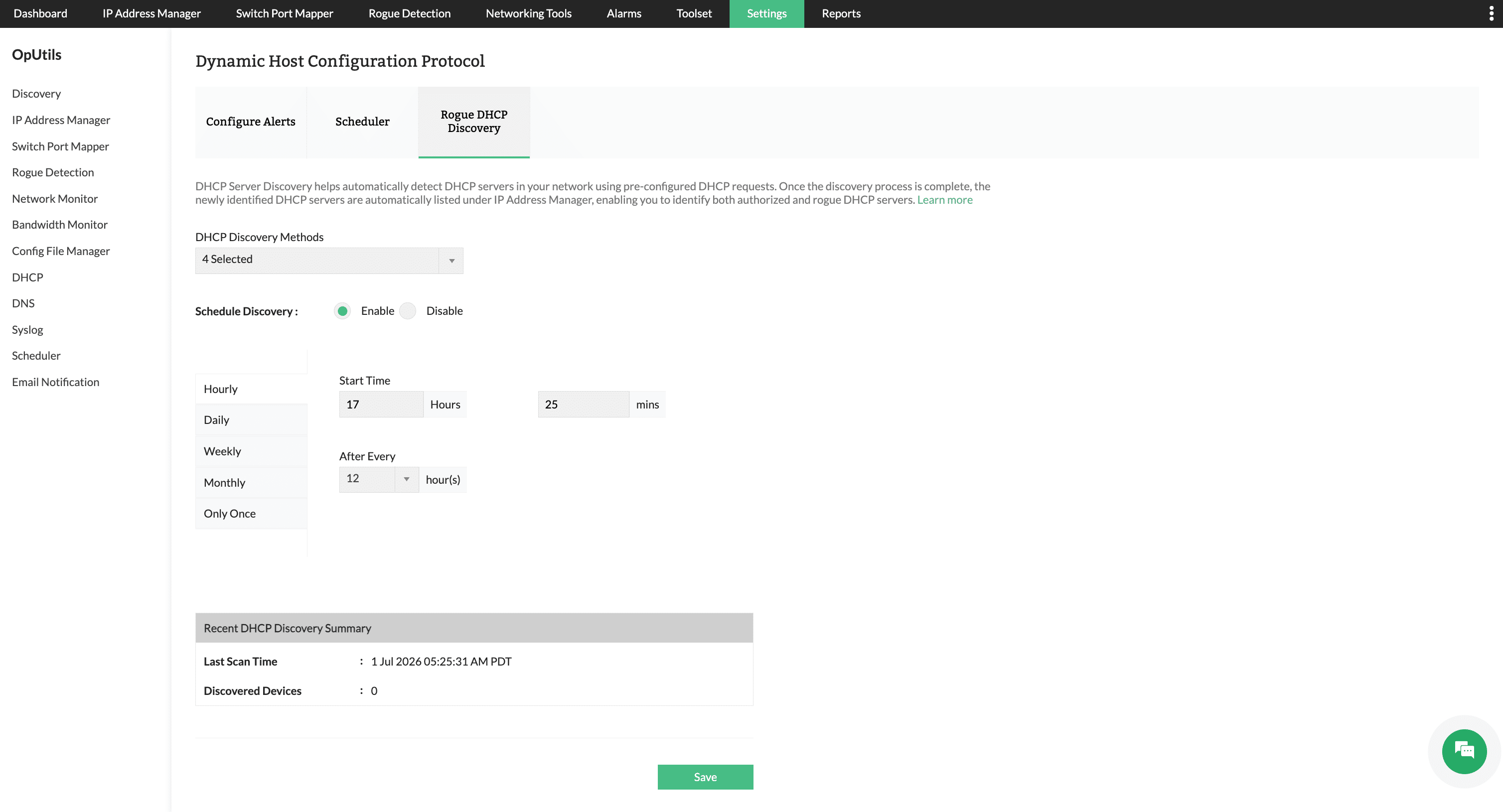
Schedule discovery to stay ahead of unauthorized DHCP server
Schedule recurring DHCP server discovery hourly, daily, weekly, monthly, or on custom intervals to continuously identify newly discovered and rogue DHCP servers, keeping your DHCP inventory updated and enabling early detection of unauthorized DHCP activity.
Frequently asked questions on Rogue DHCP discovery
Resources to dig deeper
Learn how IPAM is simplifying modern networking needs!
From mainframes to AI, networking has changed. Is your IPAM solution equipped to take on modern challenges?
Unlock more value with add-ons
Looking to go beyond DDI? OpUtils can be enhanced to monitor devices, analyze traffic, and deliver end-to-end observability across your IT infrastructure with compatible in-house add-ons.
Network monitoring
Correlate DDI data with real-time network performance metrics. Monitor device health, availability, and faults alongside IP, DNS, and DHCP context to resolve issues faster and maintain service reliability.
Try free trial →Bandwidth monitoring
Add traffic visibility to your DDI operations. Track how applications and devices consume bandwidth, detect abnormal flows, and link traffic patterns to IP addresses and network segments.
Infrastructure monitoring
Bring DDI, performance monitoring, flow analysis, firewall management, and application monitoring into a single operational view. Manage addressing, performance, security, and traffic together for complete end-to-end network observability.