ManageEngine OS Deployer is an enterprise-grade desktop imaging software that simplifies OS image creation, disk imaging, and OS deployment across local and branch offices. It enables IT teams to create a golden image that can be used to deploy OS across devices irrespective of their hardware model. It also reduces complexity and manual effort by automating driver management, reducing deployment time, and supporting bare metal imaging.
What is OS imaging?
OS imaging is the process of capturing the complete image of a target computer's operating system, hard disk partitions, drivers, system settings, applications, and configurations. This process is like creating a perfect copy of a fully configured machine that can be utilized to deploy OSs and set up any number of machines. This process enables IT teams to speed up deployments and reduce the effort and time spent on manually setting up devices. Instead of setting up devices one by one from scratch, an OS image can make the job easier by deploying a single image to hundreds of endpoints within a matter of minutes.
How does OS image creation work?
OS image creation involves capturing the OS image of a fully configured device called the golden image and choosing the right deployment and post-deployment template to deploy it across devices.
Here's how you can create & deploy an OS image:
- Choose a reference device to image
Choose a device that is fully configured with the required enterprise applications, security configurations, patches and drivers.
- Capture the OS image
With the help of a desktop imaging software, choose disk partitions and create an image of the configured system, including the software, drivers and settings.
- Store the image centrally
The created image can be stored in a centralized repository for future deployments.
- Maintain and update images
Update the master image occasionally with new applications, patches, and security updates to keep deployments up to date.
- Deploy the image when needed
Use the captured image to deploy new devices, perform hardware refreshes, or recover systems after failures.
Key Features of Desktop Imaging Software
Some of the key desktop imaging features of OS deployer include:
- Centralized OS image creation, customization and management
Create, store, organize, modify, and manage operating system images from a central console. This allows the IT teams to standardize and simplify OS image management.
- Hardware-independent image deployment
Deploy a single operating system image across devices with different hardware configurations, reducing the need to maintain multiple images.
- Live OS imaging
Capture operating system images without disrupting end users. Live imaging allows administrators to create up-to-date images while devices remain operational.
- Automated driver management
Automatically collect, manage, and deploy drivers during the imaging process to ensure hardware compatibility and reduce manual effort.
- Centralized image repository
Store OS images in a centralized repository for easy access, version control, and faster deployment across multiple locations.
- Image customization and maintenance
Update existing images with the latest applications, security patches, drivers, and configurations to keep deployments current.
Types of OS imaging available in OS Deployer
OS Deployer provides flexible OS imaging options to meet a variety of enterprise deployment needs. From live OS imaging to offline OS imaging, IT teams can choose the approach that best suits their environment and OS image creation requirements.
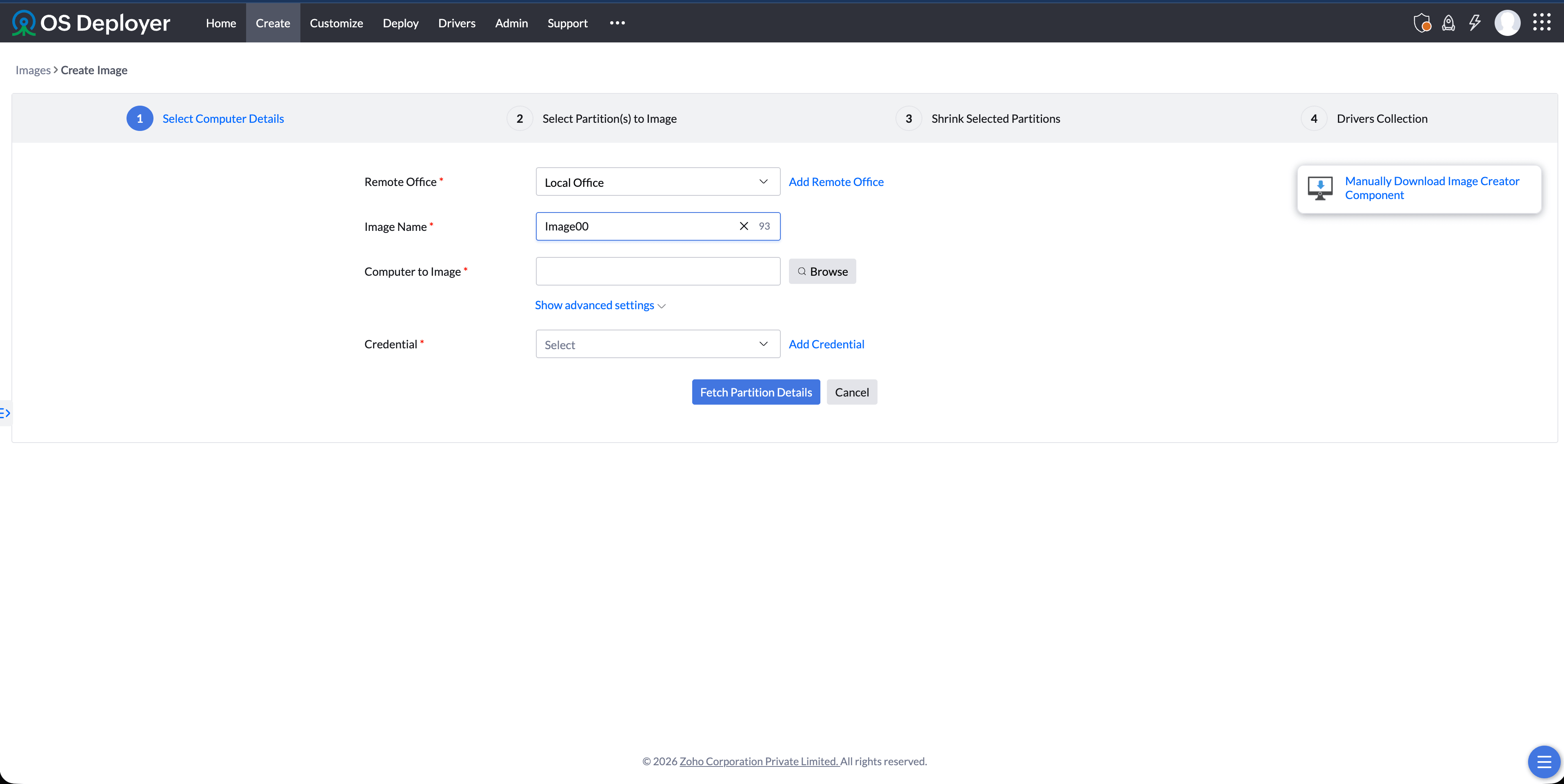
Online imaging
Captures an operating system image while the machine is actively running, minimizing downtime for users. This method is a perfect fit for environments where machine downtime is simply not an option.
Offline imaging
Captures an image when the device boots into a pre-installation environment, ensuring consistency and reducing conflicts from active processes. Offline imaging is best suited for after-hours maintenance windows, when it does not matter that the machine is temporarily out of reach.
Desktop Imaging Software for Enterprise OS Deployment
Large enterprise IT environments can be complex with machines spread across locations with multiple hardware models and strict deployment timelines. Manual deployment methods can become difficult, leading to configuration inconsistencies and increased manual effort.
ManageEngine OS Deployer is an OS imaging software designed to help enterprise IT teams automate and manage operating system deployments from a centralized console. IT administrators can create an OS image and deploy it to multiple computers across the organization, helping ensure consistent configurations and reducing the time required to configure new devices.
As an enterprise OS deployment solution, ManageEngine OS Deployer supports automated deployment workflows through deployment templates that include image partition details, domain configurations details, applications, and post-deployment user or security settings, while utilizing separate bootable media to complete the deployment.
Whether an organization is onboarding hundreds of new laptops, refreshing existing devices, or replacing aging hardware, centralized OS imaging provides a practical way to maintain consistency, reduce manual effort, and manage deployments across distributed environments.
Benefits of Using OS Image Creation Tools
- Faster provisioning
Reduce device setup time from hours to minutes by creating and deploying standardized operating system images across multiple computers.
- Consistent configurations
Ensure every device receives the same operating system, applications, settings, and security configurations with a single OS image.
- Less manual work
Automate OS deployment and eliminate repetitive setup tasks, helping IT teams reduce errors and save time.
- Easier hardware refreshes
Quickly deploy operating system images to new laptops and desktops during device replacement and migration projects.
- Scalability for large deployments
Use desktop imaging software to deploy images to multiple computers at the same time, making large-scale roll-outs faster and easier.
- Support for remote locations
Deploy operating system images to branch offices and remote users without requiring IT technicians to manually configure each device.
Flexible OS image creation for different deployment needs
With OS Deployer, IT teams can create operating system images based on their specific deployment requirements. Whether you need to capture a single partition, multiple partitions, or an entire disk, OS Deployer provides the flexibility to create images that suit different environments and use cases.
Flexible OS image creation
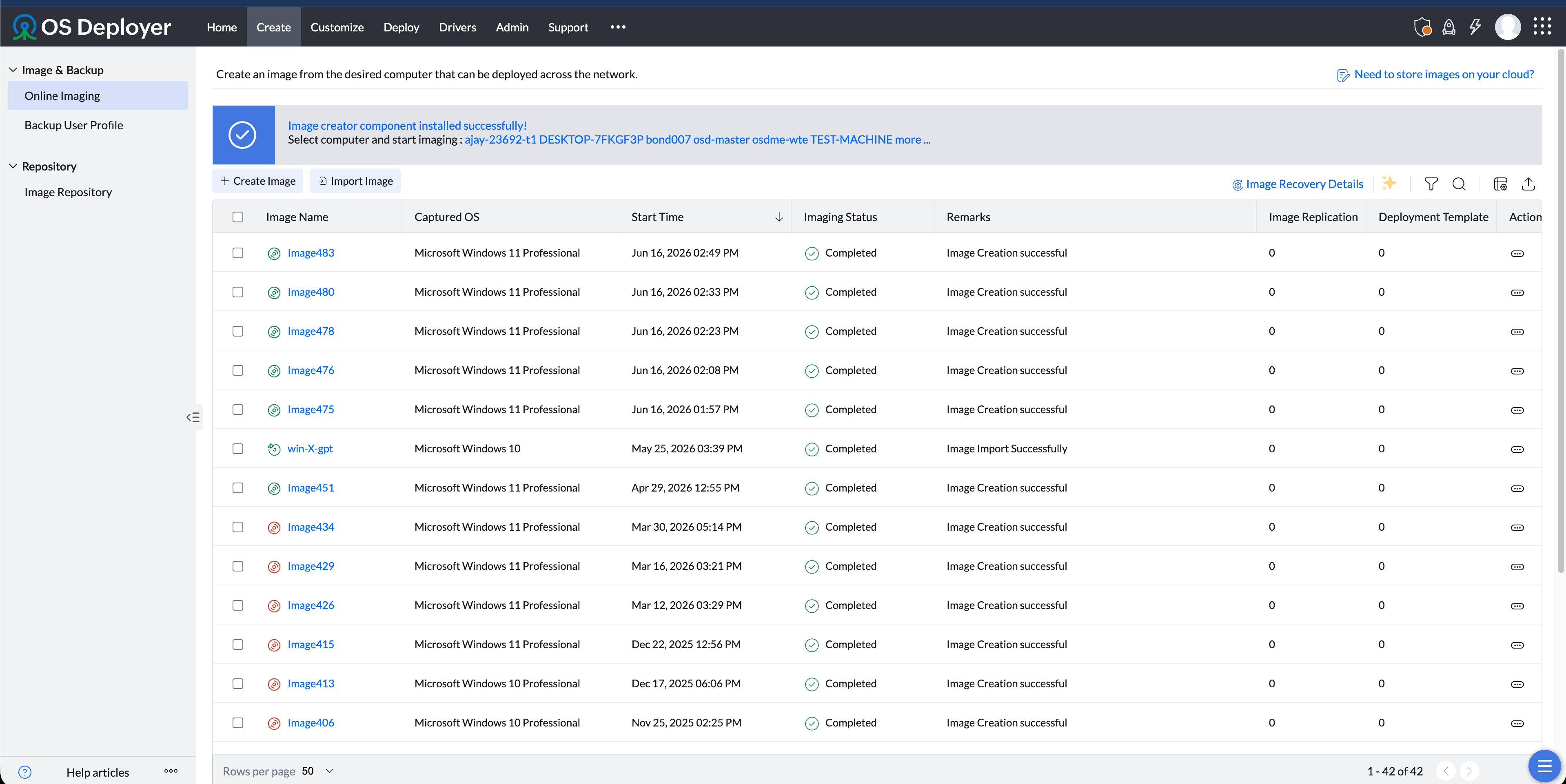
An OS image can include:
- A single partition from a source computer
- Multiple partitions from a source computer
- An entire hard disk, including its partitions
- Multiple hard disks from a single computer
- The operating system and its configurations
- Installed applications and software present on the source machine
- Device drivers collected during the imaging process
- User settings and system configurations stored on the source device
Frequently Asked Questions
01. What is the difference between online and offline OS imaging?
+-Online imaging captures the OS while the machine is still running. No reboot, no downtime. It is the faster option and works well when you need to image systems without pulling them out of service.
Offline imaging requires the machine to be shut down first. It then boots into the ManageEngine PE environment for the capture. This takes a bit more coordination but is a good choice for scheduled maintenance windows where the machine will already be unavailable.
Read more02. Why choose ManageEngine OS Deployer for desktop imaging?
+-OS Deployer covers the entire imaging process from a single console. You can capture images in online or offline mode, manage a central image repository, automate deployments to multiple machines, and handle driver collection without additional steps. It also supports hardware-independent deployment, so the same image works across your fleet regardless of device model.
Read more03. Can desktop imaging software deploy images to multiple computers?
+-Yes. With OS Deployer, you define the target machines and the image is pushed to all of them at once. Hardware differences between machines are not a barrier. Whether you are deploying to five computers or five hundred, the process stays the same.
Read more04. What is OS image creation?
+-OS image creation is the process of capturing a fully set-up operating system, including its settings, drivers, applications, and updates, into a single reusable file called an image. Instead of installing and configuring each computer by hand, you build one device exactly the way you want it, capture that setup as an image, and then deploy it to as many machines as you need. Every device ends up with the same standardized, ready-to-use environment, which saves hours of manual work and keeps your systems consistent.
Read more05. What are the common use cases of OS imaging?
+-OS imaging helps any time you need to set up or reset several devices to the same standard state. Common examples include:
- New employee device provisioning: Get laptops ready with the right OS, apps, and policies so new hires can start on day one.
- Hardware refresh projects: Apply one consistent image across new machines when replacing old hardware, instead of configuring each one by hand.
- OS migrations and upgrades: Move users to a new OS version using a tested image rather than upgrading devices one at a time.
- Disaster recovery and rebuilds: Restore a device to a clean, working state fast when it fails or gets infected.
- Role-based standardization: Keep separate images for teams like engineering, sales, or finance, each loaded with the tools that role needs.
Read more