
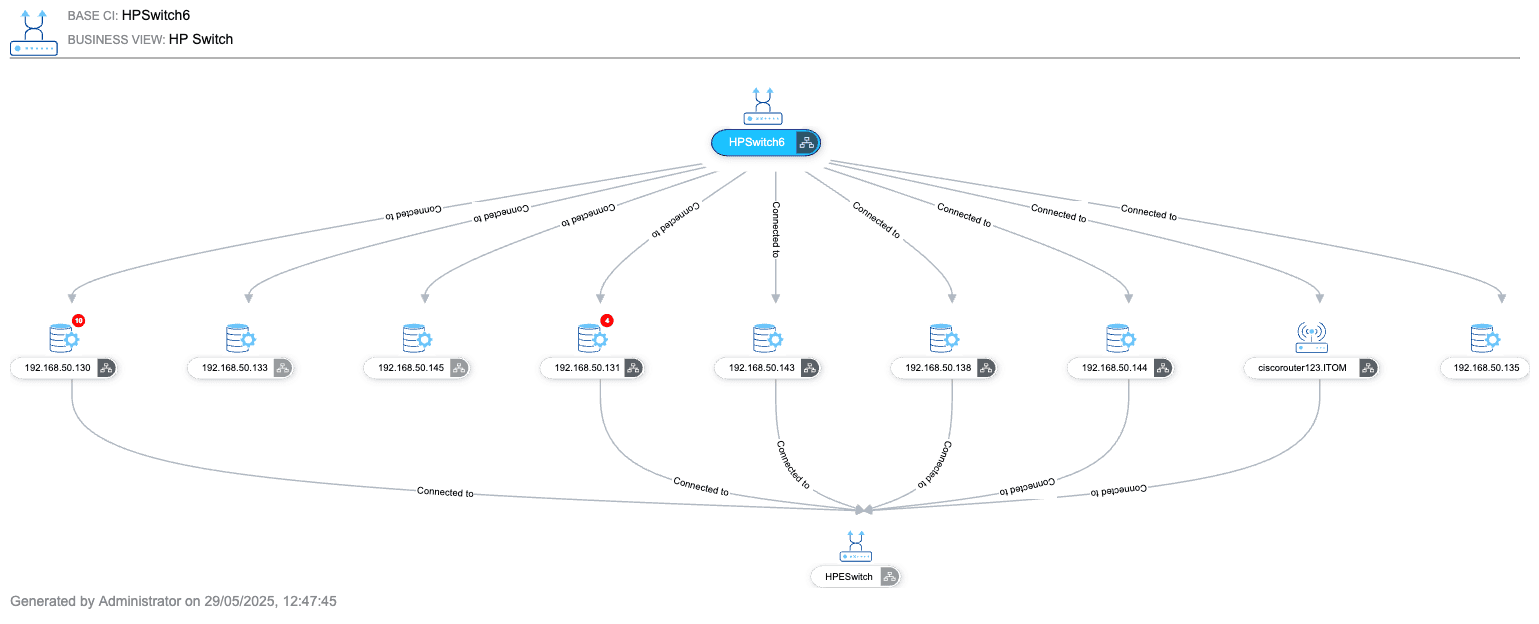

Visually map the relationships
and dependencies between CIs

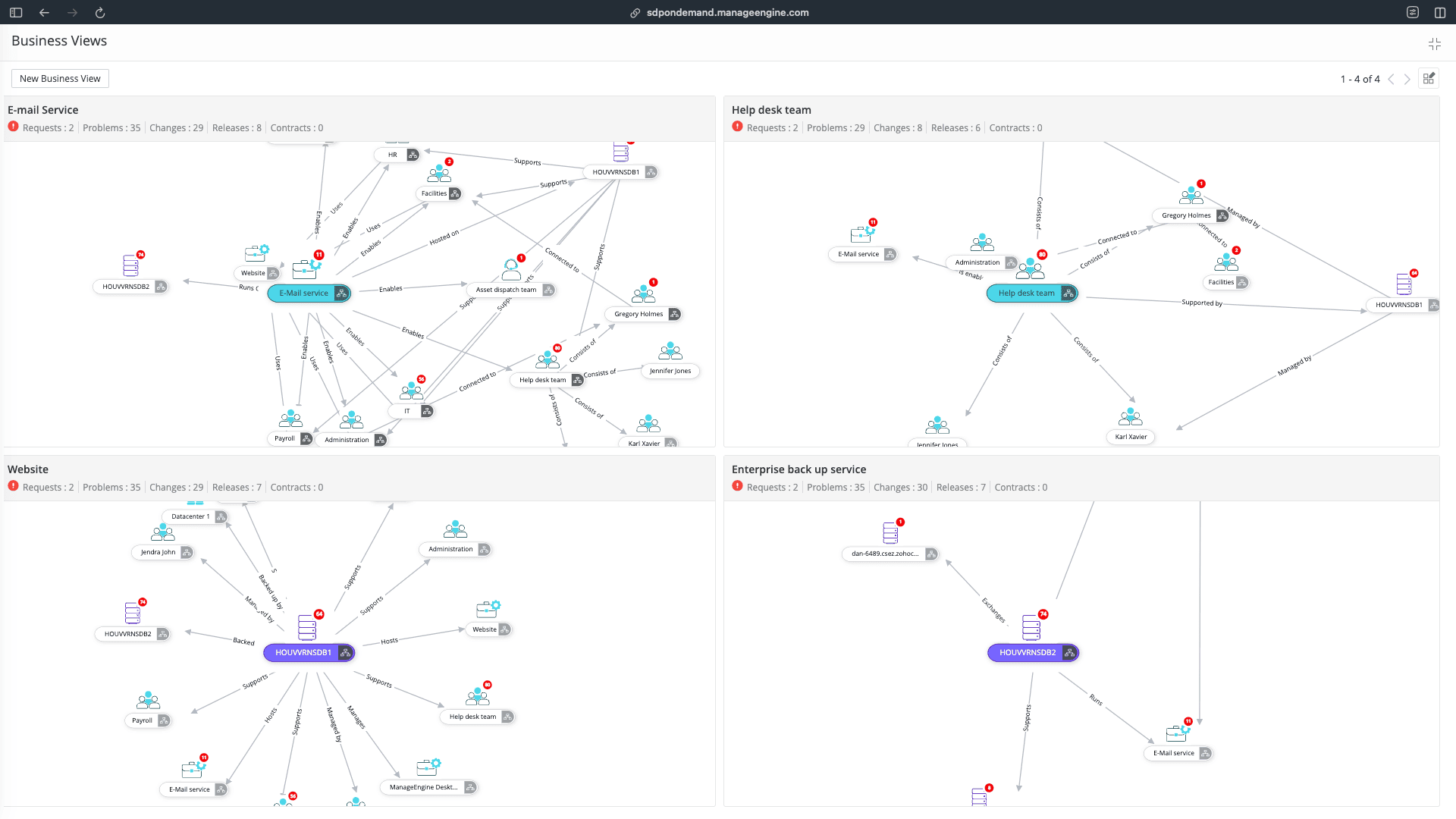
Schematically recreate your IT infrastructure component dependencies on a drag-and-drop canvas, defining custom relationships between CIs. Organize service-specific segments of the infrastructure into distinct business views for quick and easy reference.

Support ITSM practices with
contextual configuration data

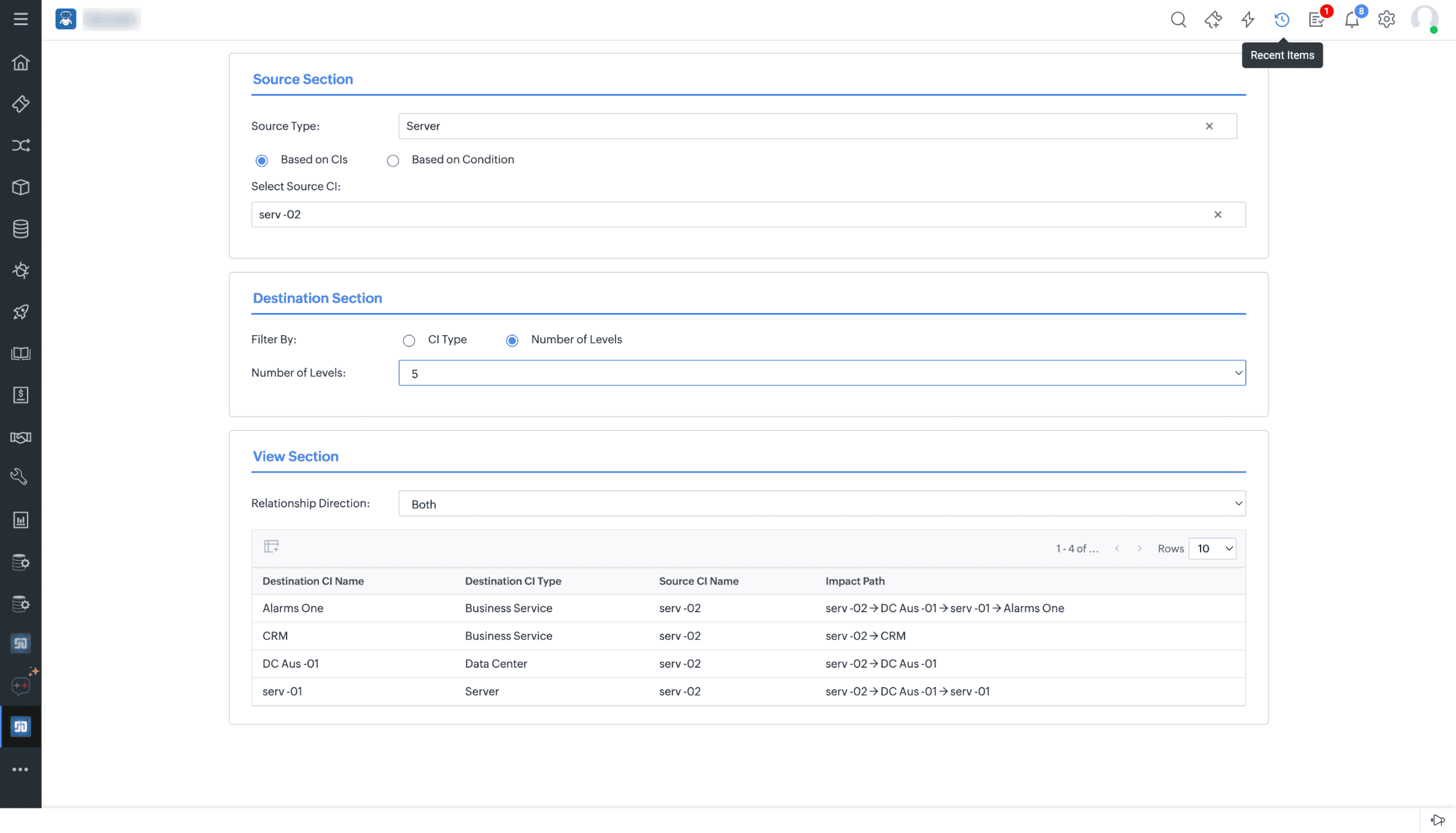
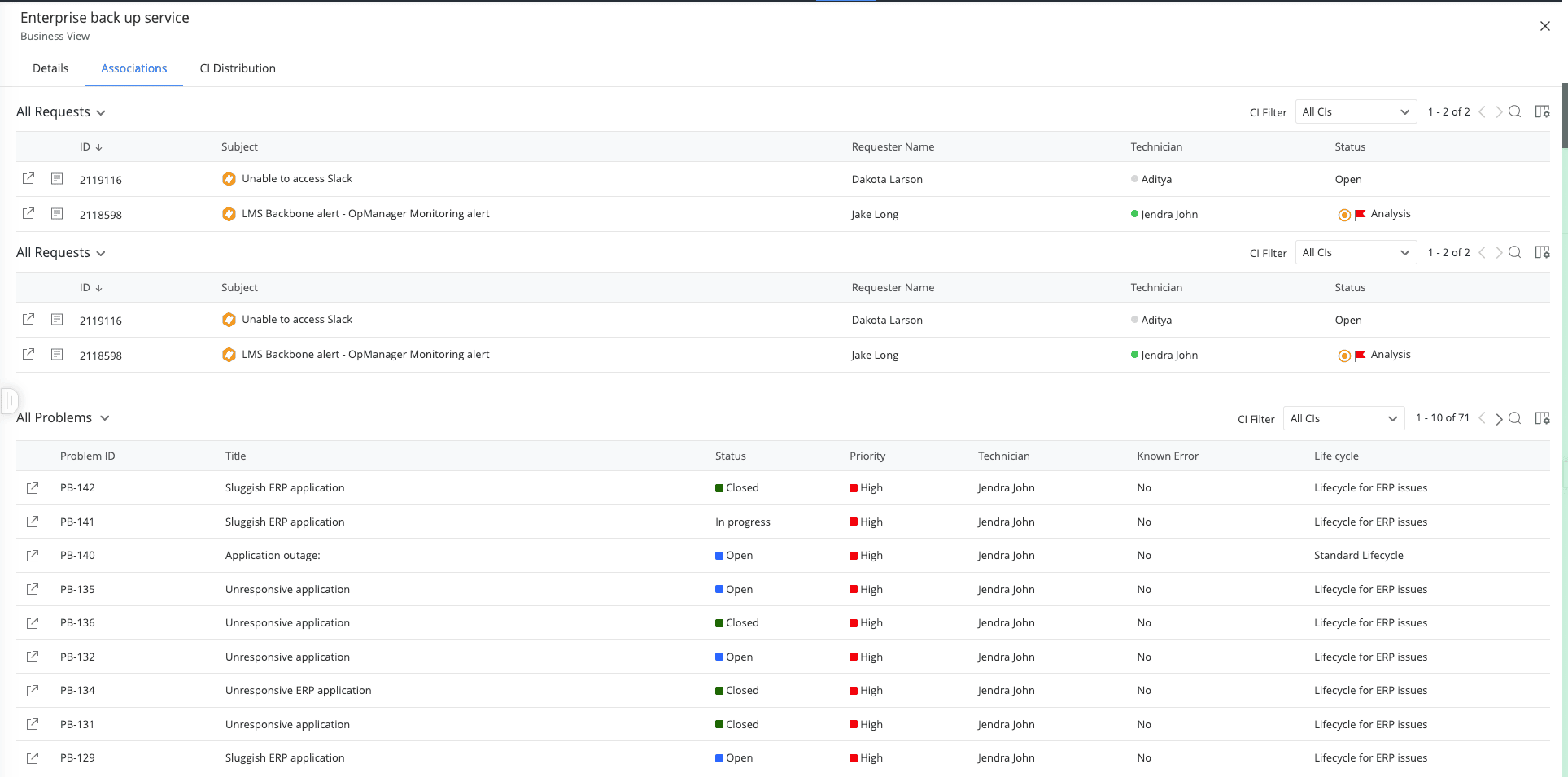
Gain clarity and make decisions faster by leaning on your CMDB data for managing incidents, problems, changes, projects, and releases. When CIs are associated with any ITSM process, stakeholders can effortlessly view the infrastructure dependency map in a single click.

Configuration Management Database (CMDB) software
Track which CIs are associated across incidents, service requests, changes, problems, and releases.

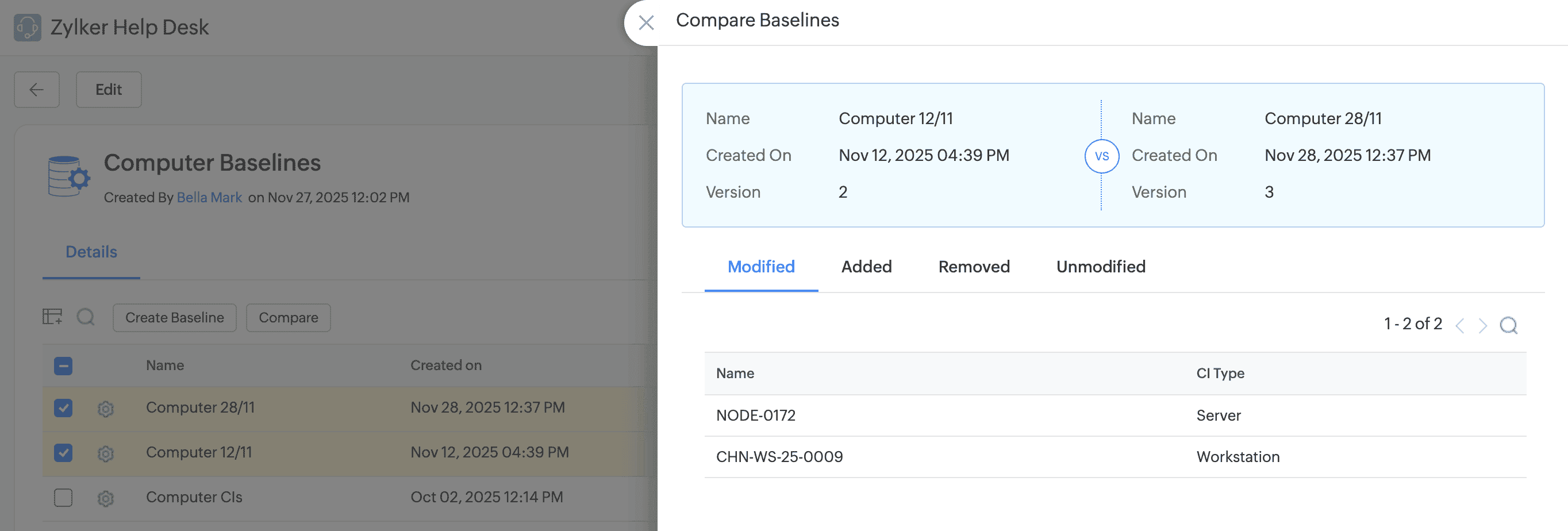
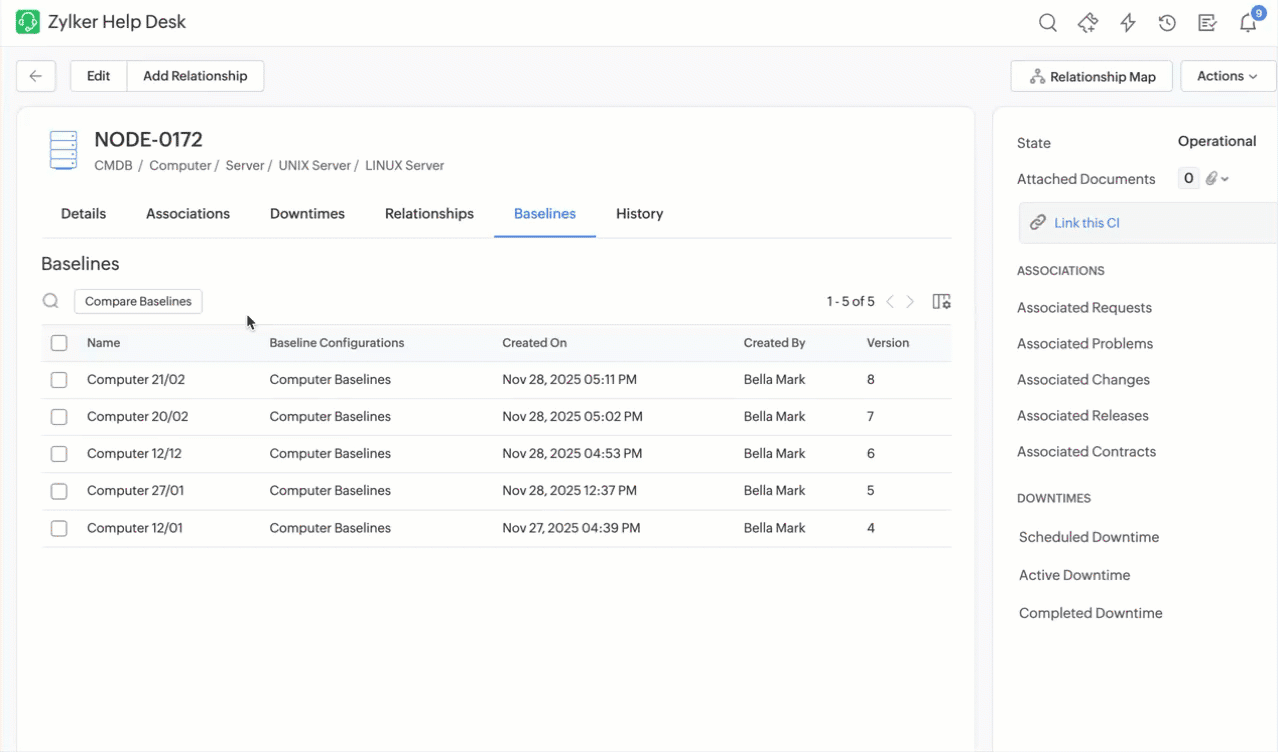
Baseline your CMDB to detect configuration drift

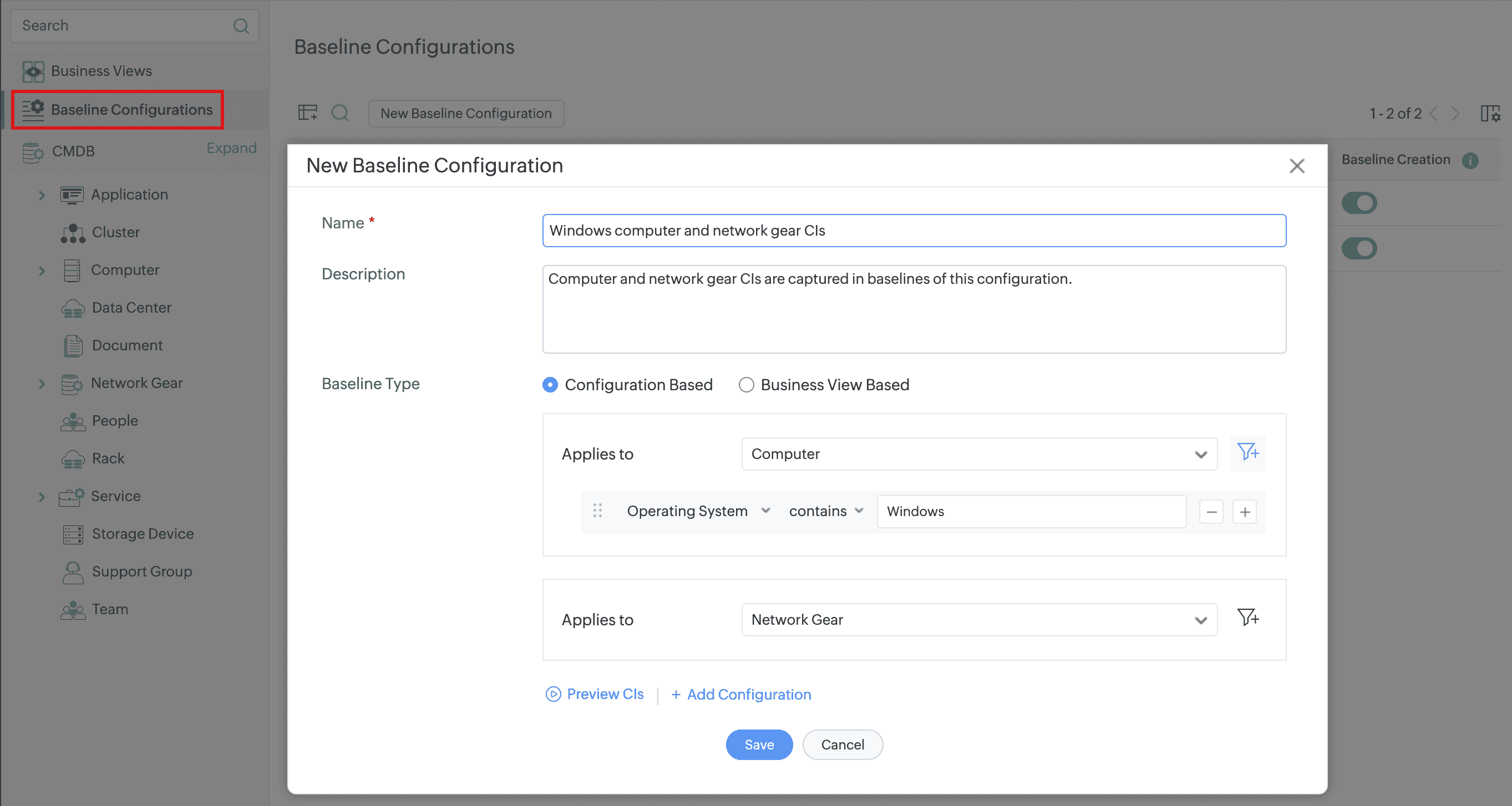
Capture versioned snapshots of CIs across different points in time using CMDB Baselines to detect configuration drift, perform audits, and comply with regulations.

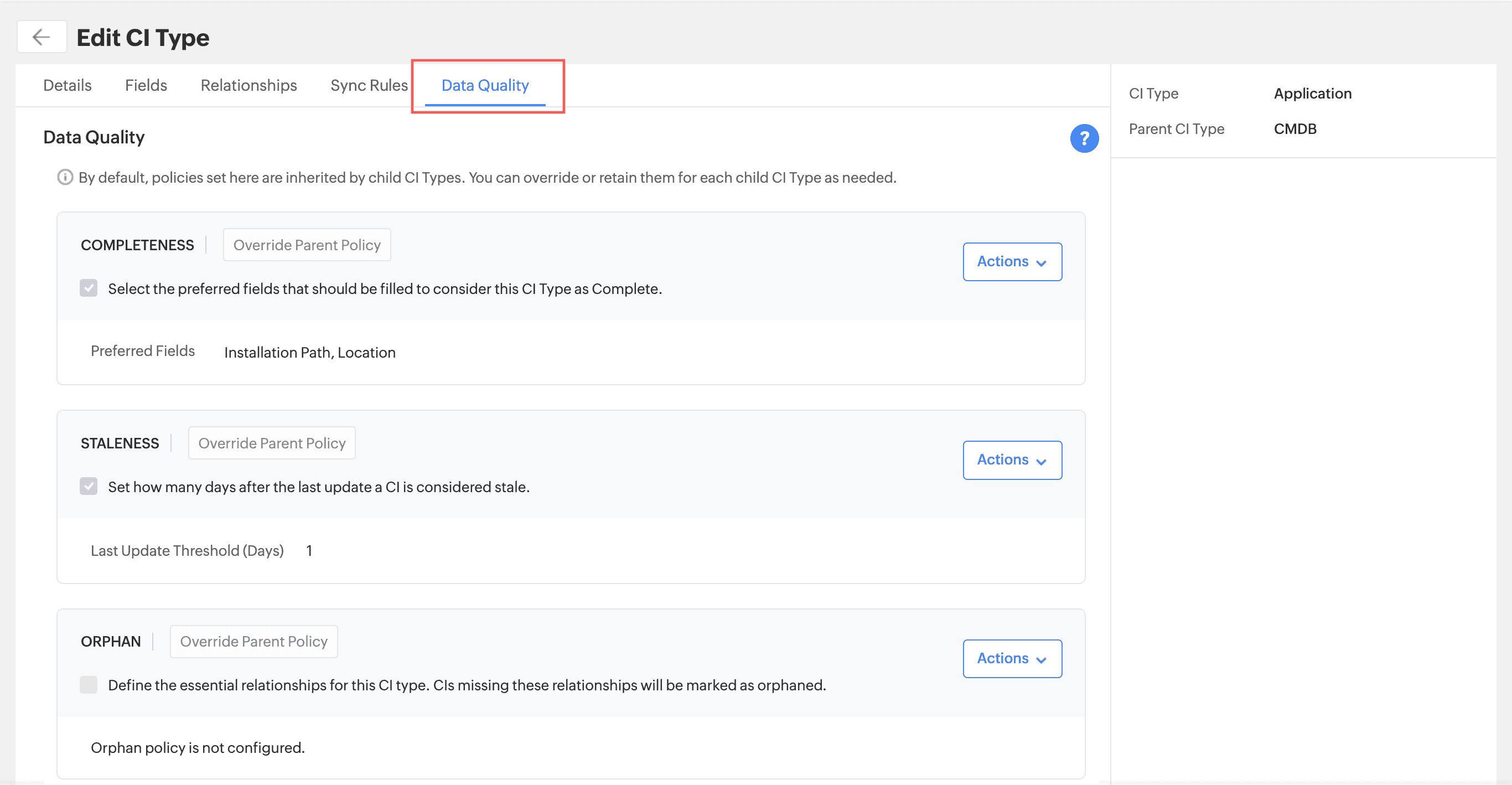
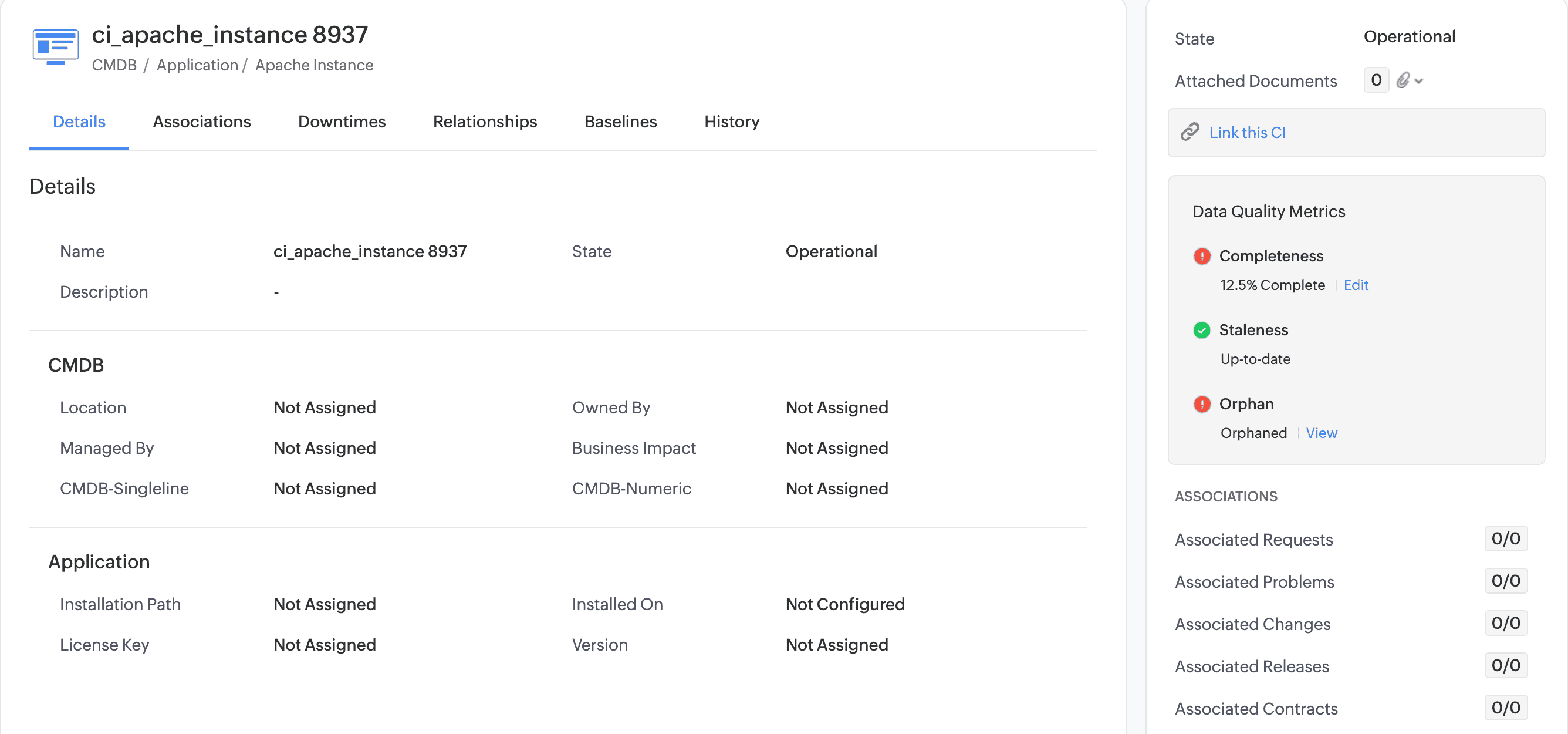
Track CI data decay to keep your single source of truth trustworthy

Set up CMDB data quality policies to track incomplete, stale, and orphaned CIs. Configure the required fields for completeness, the duration for staleness, and essential relationships. Gain context at a glance within CI views on data quality metrics to ensure you have the complete picture.

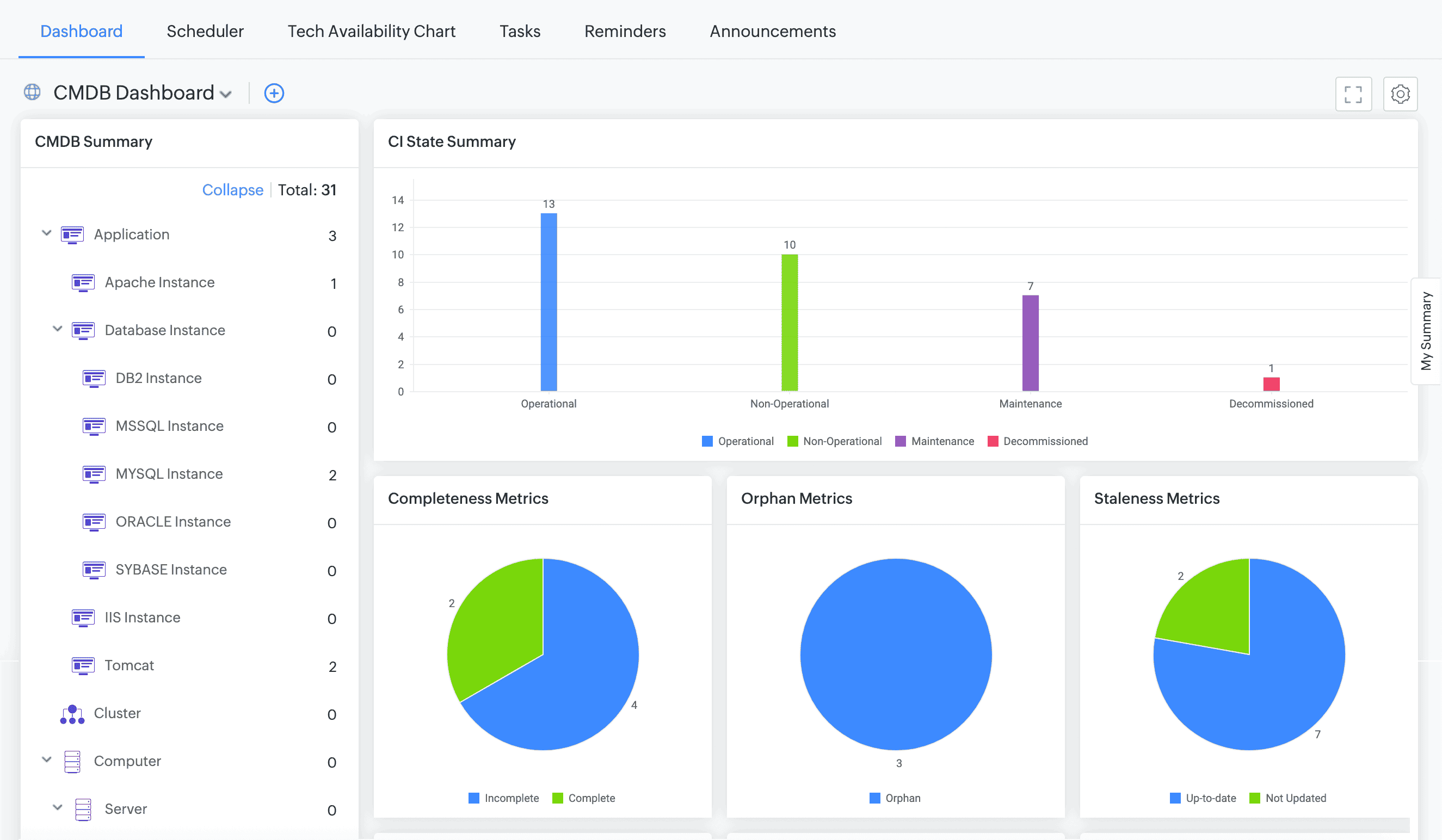
Stay on top of CMDB health with a dedicated dashboard

Track CI counts by state, monitor data quality metrics like completeness, staleness, and orphaned CIs, and see how CIs connect to your ITSM practices, all from a single CMDB dashboard.

CMDB Dashboard showing CI state summary and data quality metric charts
The CMDB Dashboard surfaces CI counts by status, data quality metrics by CI type, and CI associations with other modules in a single view.

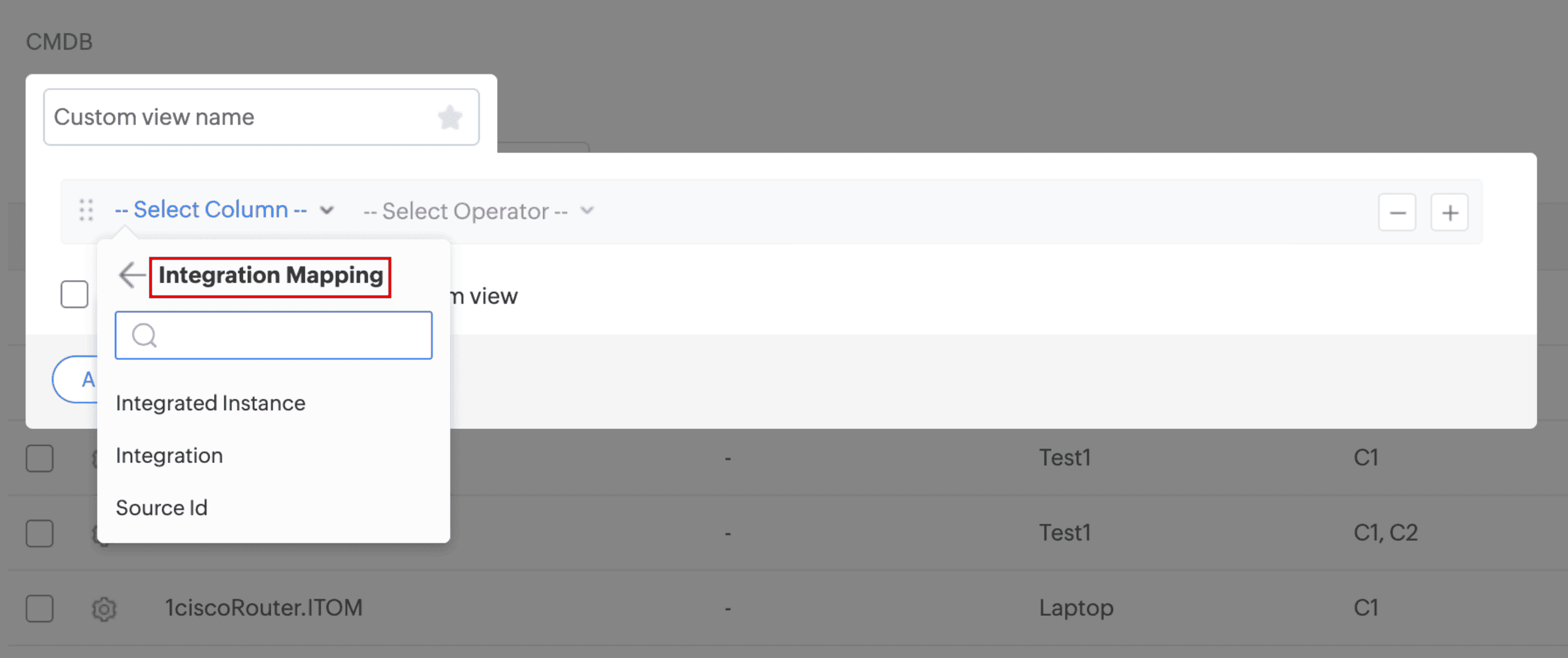
Track every CI back to its source with Integration Mapping

Gain insights on where you import CIs and ingest CI data from for ManageEngine applications, down to the instance. Use it to filter out your CIs in custom views, making it easier to drill down the source of your CIs and track CI duplication with ease.

Custom CMDB list view with Integration Mapping filter options highlighted
Integration Mapping criteria in a custom CMDB list view, scoping CIs by their source integration.

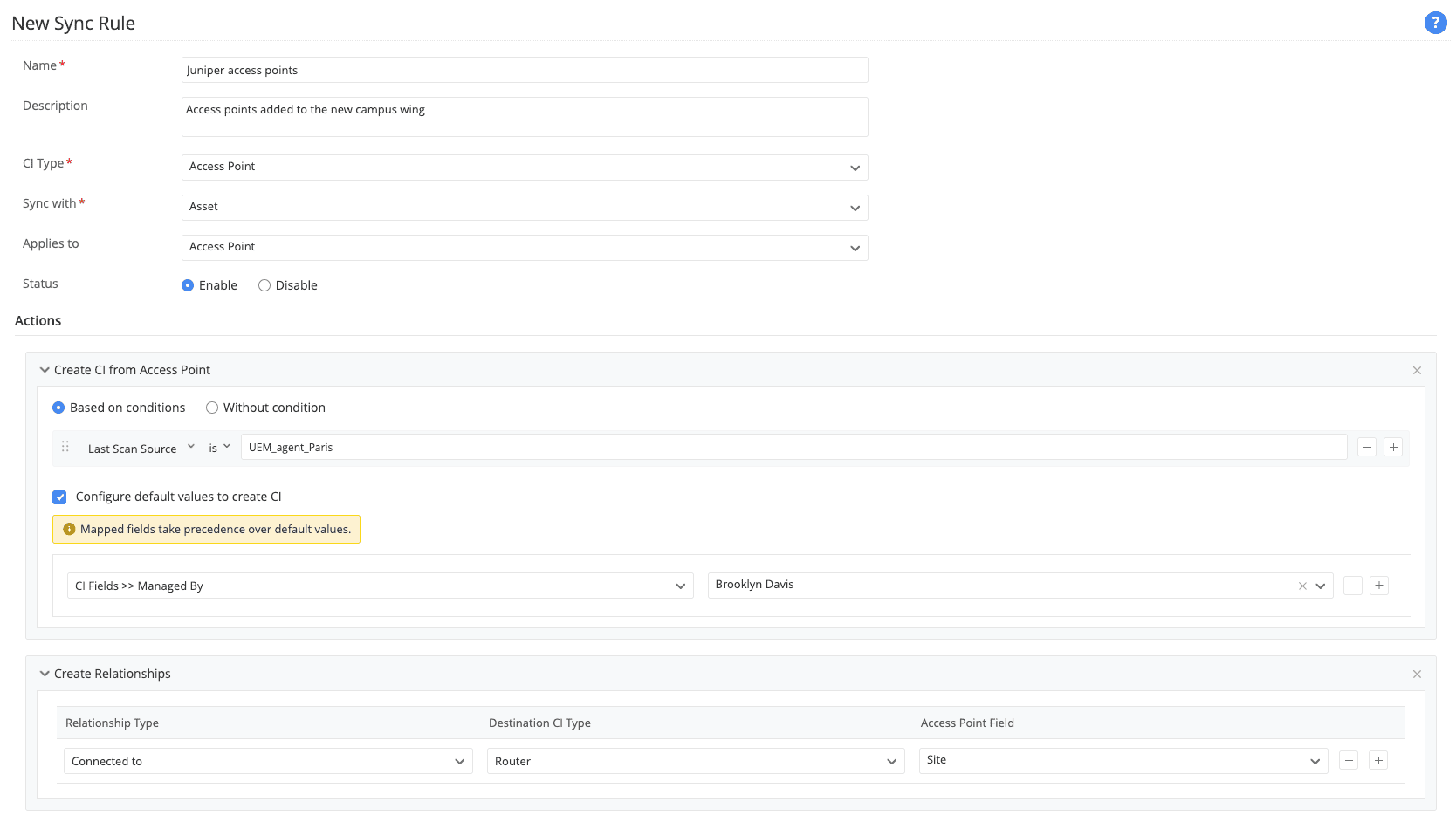
Auto-sync newly discovered assets in the CMDB

Keep your CMDB up to date as new components are added to the infrastructure. Auto-sync newly added assets as CIs using predefined sync rules, identifier rules, and field mappings that prevent duplicate assets and CIs.

New Sync Rule screen with conditions and automated CI relationship creation
Set up condition-based automations to sync assets as CIs and create CI relationships.

Automatically discover Layer 2 devices
and application dependencies

Automatically sync the CMDB with Layer 2 network devices, applications, and their interdependencies through integrations with ManageEngine's full-stack observability suite for a real-time, accurate view of the entire IT environment.

ServiceDesk Plus built-in CMDB
Get a bird's eye view of your Layer 2 devices, applications, and track their dependencies with ease.

Connect the CMDB with full-stack observability solutions to populate CI information and relationships

Integrate with a range of IT monitoring and observability tools and populate ServiceDesk Plus' CMDB with CIs fetched from both ManageEngine and third-party observability tools. Learn more about ServiceDesk Plus' integrations here.

Task allocation template
CMDB with full-stack observability solutions

Frequently asked questions

Expand all

1. What is a configuration management database (CMDB) in ITIL?

A CMDB is a centralized repository that maintains up-to-date information about an organization's IT infrastructure and its interdependencies. These dependencies can include IT assets, departments, and the personnel responsible for managing them.

2. What is a CI in CMDB?

3. How does a CMDB improve ITSM?

4. How do you build a CMDB?

5. What are the must-have CMDB capabilities in an ITSM platform?

Let's support faster, easier, and together