Even though thwarting security breach attempts is the primary goal for a security administrator, the real challenge is closing the gap on spotting different types of indicators of compromise. Traditional threat detection methods can pick up on known threats, but unknown threats might slip through the cracks if there's no readily available information on them.
Therefore, while deciding on a detecting strategy for your organization, it is important to keep in mind both known and unknown threats. With Log360's user and entity behavior analytics module (UEBA), which analyzes user behavior, you can track anomalous activities by suspicious users and entities, assign risk scores, and get alerted about anomalous activities in real time, reducing the dwell time of attackers lurking in your environment.
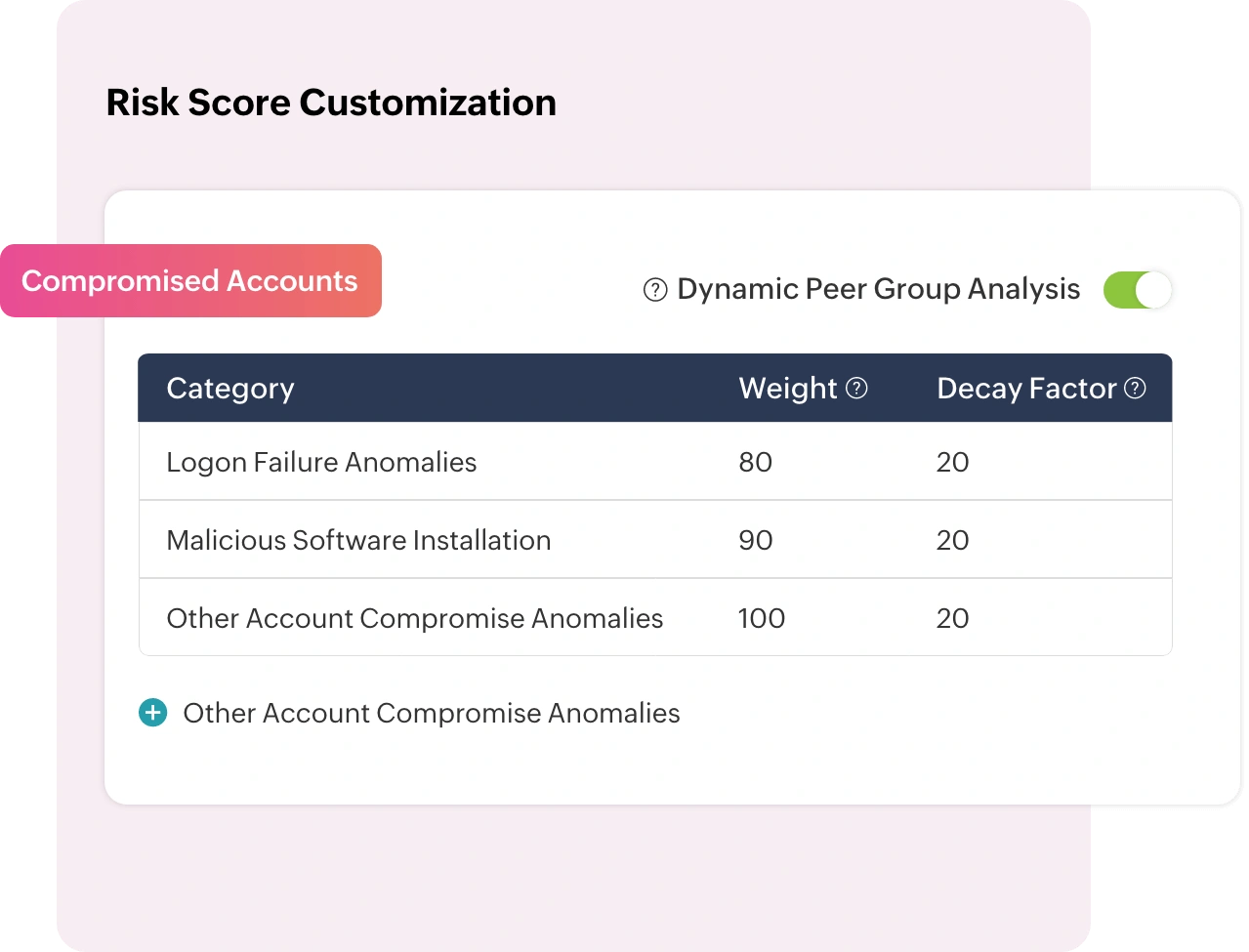
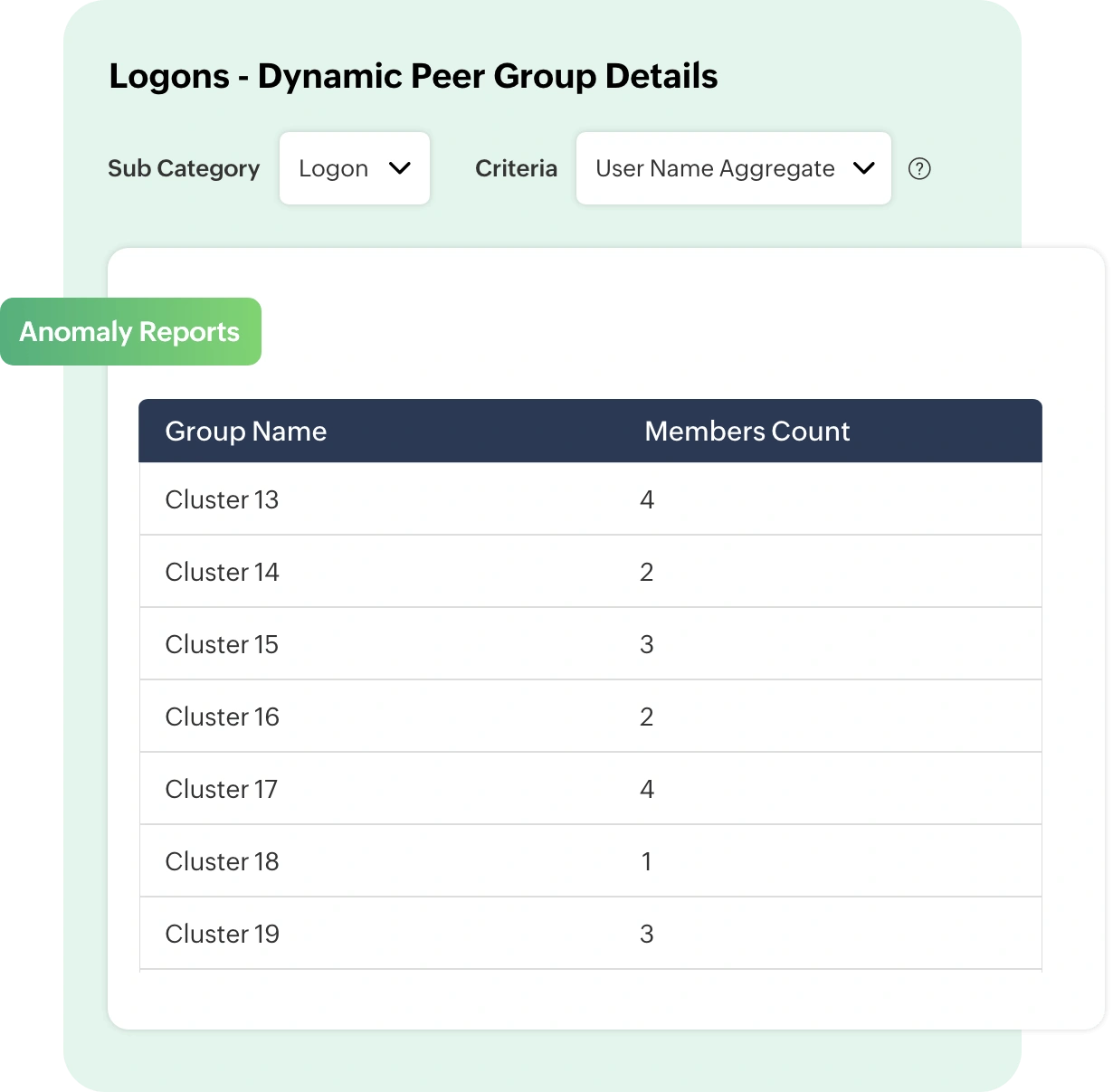
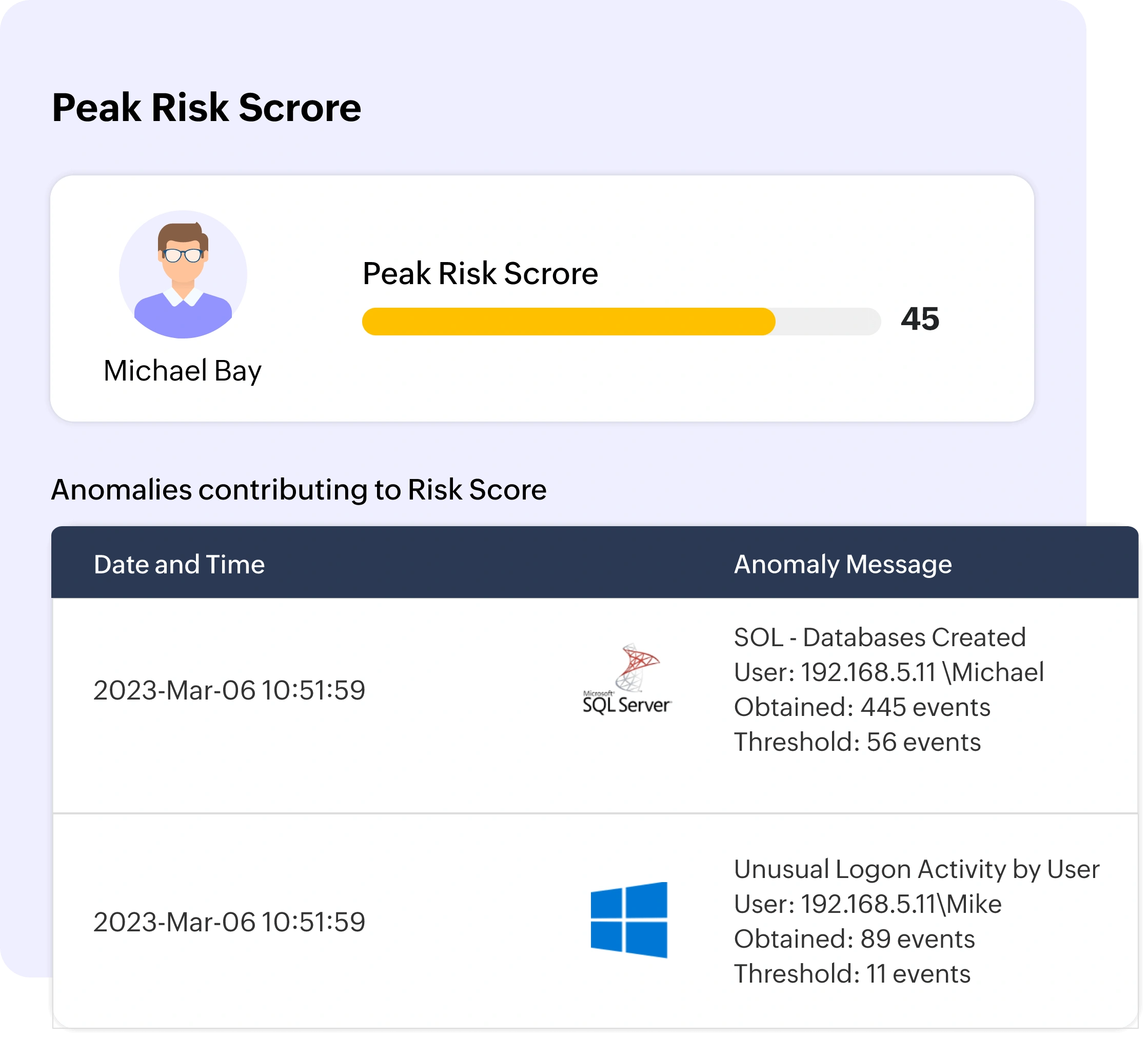
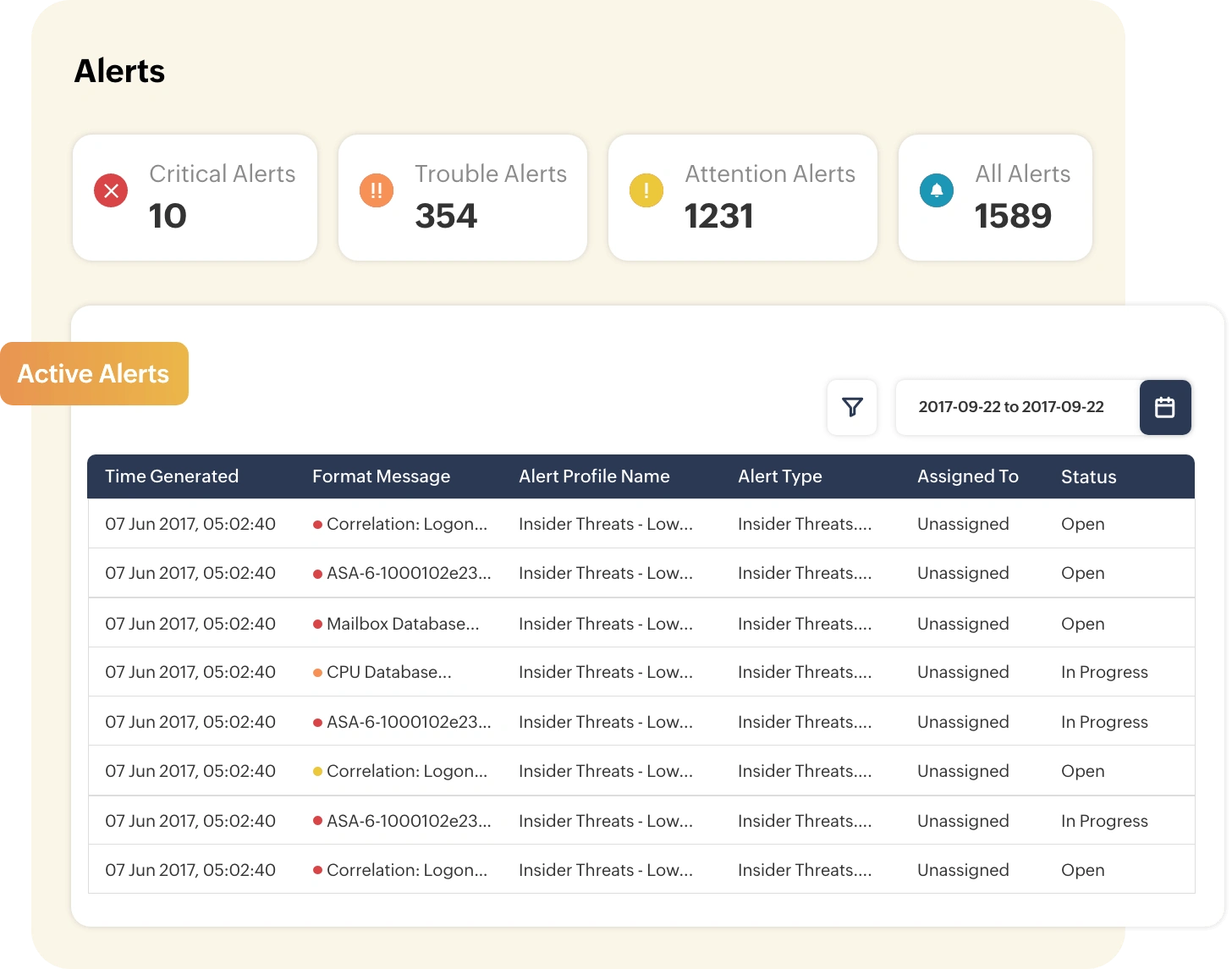
Spot suspicious anomalies in your network by constantly monitoring the behavior of users and entities.
Any deviation from usual behavior will trigger an anomaly, thereby alerting you to unusual security threats in the network.
With Log360's workflow management, you can automate your response to security threats, instantly stopping cyberattacks that involve insider threats, compromised accounts, data exfiltration attempts, and more.
We wanted to make sure that one, we can check the box for different security features that our clients are looking for us to have, and two, we improve our security so that we can harden our security footprint.
Carter Ledyard
The drill-down options and visual dashboards make threat investigation much faster and easier. It’s a truly user-friendly solution.
Sundaram Business Services
Log360 helped detect insider threats, unusual login patterns, privilege escalations, and potential data exfiltration attempts in real time.
CIO, Northtown Automotive Companies
Before Log360, we were missing a centralized view of our entire infrastructure. Now, we can quickly detect potential threats and respond before they escalate.
ECSO 911
Use Log360's UEBA to establish behavior baselines, detect anomalous activity, assess risk, and uncover threats that traditional detection methods can miss.