Leverage an enterprise low-code platform to make your apps stand out
Customize the look and logic of your apps to align perfectly with your goals, offering tailored functionality and a seamless user experience.
ManageEngine AppCreator empowers IT teams to rapidly deploy enterprise-grade custom apps using its visual builders and other low-code capabilities. Its powerful point-and-click workflow automation engine enables enterprises to automate their processes swiftly and efficiently.
Download AppCreator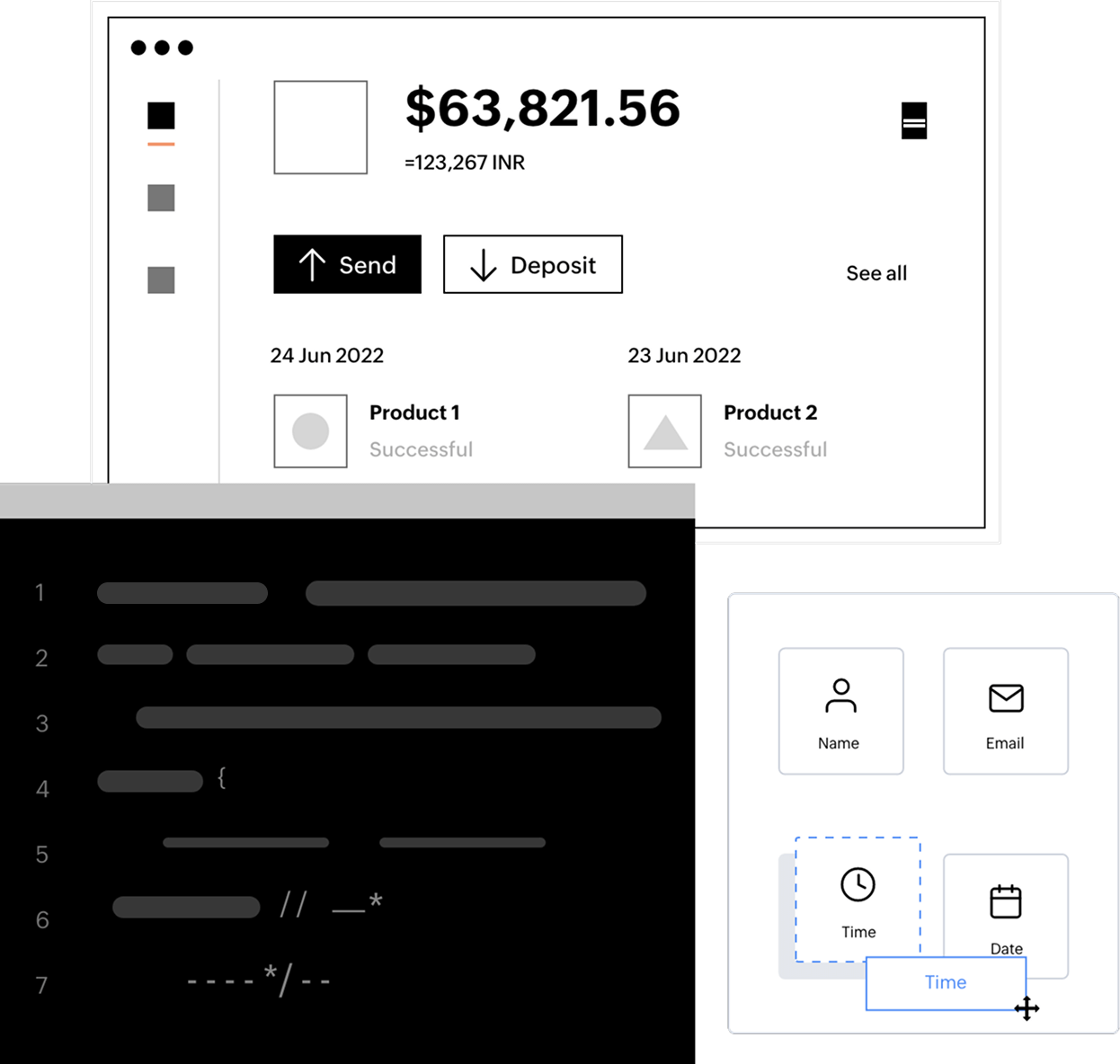
An enterprise low-code platform allows users to build and deploy apps quickly using visual tools, minimizing coding and enabling both technical and non-technical users to create powerful solutions. AppCreator enables you to rapidly create enterprise-grade apps through its drag-and-drop visual development interface and intuitive workflow capabilities.
As enterprises handle large amounts of sensitive information, ensuring compliance with data protection regulations like the GDPR and HIPAA while securing data against breaches is critical. This challenge involves safeguarding data across multiple platforms while managing access controls and encryption standards.
As organizations grow, their technical infrastructure must scale efficiently, handling increased traffic and resource demands while maintaining performance, flexibility, and responsiveness.
Seamlessly integrating legacy systems with newer technologies is a frequent challenge. This can lead to data silos, inefficiencies, and increased complexity, as older platforms may not support modern APIs or integration protocols.
Rapidly increasing business demands combined with ad hoc internal IT requirements increase the backlog of IT tasks significantly. With a limited number of developers, enterprise IT teams find it extremely difficult to deliver consistently on all fronts.
Import data from different sources and convert them into apps with a few clicks. You can import from spreadsheets as well as from Microsoft Access, FileMaker, and many other database file types. Collect over 30 types of data with AppCreator's advanced forms, including barcodes, locations, and more.
Power your apps with AI to detect languages, analyze trends, predict sales, read emotions, identify objects, and more, without human intervention.
Set up personalized email notifications to communicate more effectively with your users. Choose a striking design from prebuilt templates for pages essential to a customer’s life cycle, like login, signup, and reset password pages.
Establish AppCreator portals to simplify the way line-of-business apps are shared and used by people outside the organization. Through roles and permissions, control who sees what, define a detailed data access hierarchy, and keep track of changes made to your apps.
Customize the look and logic of your apps to align perfectly with your goals, offering tailored functionality and a seamless user experience.
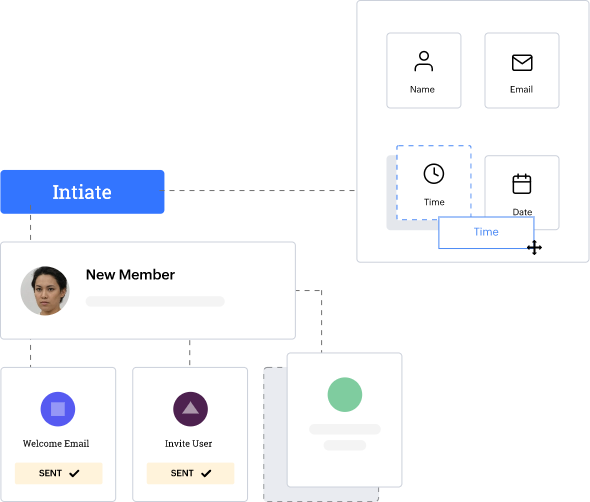
Embrace a rich ecosystem of intuitive visual builders, ready-to-use code snippets, form and report templates, and built-in connectors help you roll out apps faster.
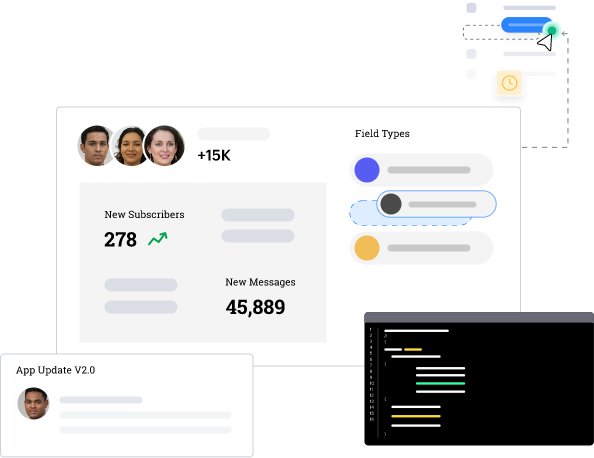

Get completely customizable iOS and Android versions of your apps automatically—with no additional programming or effort required.
Save time and effort when compared to traditional development methods. Low-code is easy to deploy and requires minimal programming expertise.
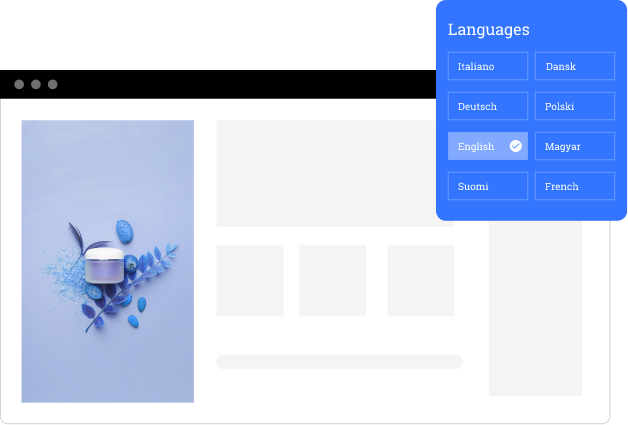
Cater to a global audience with ease thanks to the platform’s multilingual capabilities. Every app built with AppCreator is automatically translated into a browser’s default language.
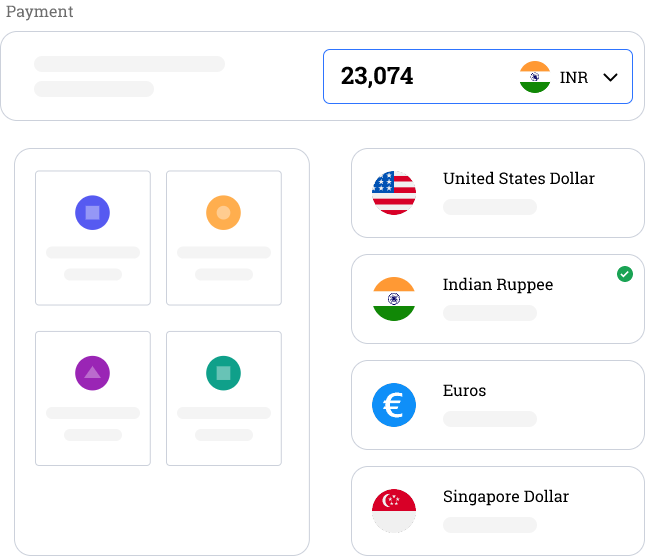
Accept payments in any currency and consolidate financial data across your enterprise’s various locations.
Low-code platforms allow developers to build apps in a fraction of the time by using visual interfaces, drag-and-drop features, and reusable components, significantly speeding up the app life cycle from design to deployment.
With reduced reliance on highly specialized coding skills, enterprises can cut down on labor costs and reduce time spent on bug fixing and updates. Fewer developers are needed and maintenance is simpler, lowering long-term expenses.
Low-code platforms offer significant flexibility, allowing organizations to quickly adapt to market or internal changes and make updates to apps built on these platforms. This eliminates the need for a complete redevelopment, saving time and resources.
Non-technical business users, like department managers or analysts, can create or modify apps using the simple drag-and-drop functionality. This democratizes app development and speeds up innovation by enabling those closest to business problems to contribute directly.
Low-code platforms provide prebuilt connectors, custom connectors, and APIs to integrate with and extend legacy and contemporary tech deployments. This makes them suitable for rapid digital transformation in enterprises.
Low-code platforms are subject to stringent security tests at the platform level to ensure that applications developed on them are inherently secure. This eliminates the need to dedicate specialized effort to ensuring application security, which saves time and money.

Repetitive IT processes such as incident management, asset tracking, and employee onboarding and offboarding can be seamlessly automated with a low-code application platform (LCAP). This improves organizational productivity and efficiency.

Most LCAPs can deploy all the native mobile versions of an application simultaneously. Field service management operations benefit greatly from this because personnel in the field can access data and conduct operations from the comfort of their handhelds.

Robust GRC frameworks can be developed on LCAPs in a fraction of the time when compared to traditional approaches. This enables enterprises to govern effectively, mitigate risks smoothly, and comply with global regulations seamlessly.

Customer portals are a great way for enterprises to provide their stakeholders with access to applications and data. On most low-code platforms, portals have role-based access and can be fully customized, enabling enterprises to provide a smooth digital experience through them.
ManageEngine AppCreator is a user-friendly low-code platform that empowers both technical and non-technical users to rapidly build secure, scalable, and customizable enterprise apps. With strong integration capabilities, the platform enhances productivity and ensures seamless collaboration across teams, making it ideal for enterprise needs.
An enterprise low-code platform should include an intuitive visual development interface, multi-device compatibility, seamless integrations, scalability, strong security, and customizable workflows to streamline app development.
Enterprise low-code platforms can be used to create various apps such as CRM systems, employee portals, data dashboards, BPM apps, and approval apps, among many others.
Unlike traditional development, enterprise low-code platforms enable faster app creation with minimal coding using visual interfaces, templates, and pre-built components. This reduces time, cost, and complexity during the building process.
AppCreator prioritizes security with features like role-based access control and data encryption, ensuring only authorized users can access sensitive data. The platform supports compliance with regulations such as the GDPR, HIPAA, and the CCPA by safeguarding PII and ePHI information. AppCreator is backed by global certifications like ISO/IEC 27001 and SOC 2 Type II, among others.
Yes. Low-code platforms are designed to enable the development of custom, enterprise-grade applications with complicated process flows. The complex application infrastructure is abstracted away, empowering enterprise IT teams to focus on innovation instead of being encumbered with the technicalities of application development.
Yes, LCAPs like AppCreator provide RESTful APIs and custom connectors to smoothly integrate with legacy and new tech.
Yes, most LCAPs provide logs and audit trails through which IT admins can monitor apps throughout the entire app development life cycle.