CloudSpend in 2025: Making cloud cost management easier at scale
In 2025, cloud environments became more distributed, and cloud costs followed suit. Managing spend across multiple providers, teams, and business units required a more deliberate, governed approach, when visibility alone was no longer enough. Organizations needed clearer ownership, better structure, and tools that could scale alongside their cloud usage.
CloudSpend spent the year addressing this shift, introducing capabilities that moved cloud cost management from isolated reporting to a more connected, scalable practice. The releases throughout 2025 focused on simplifying complexity, strengthening governance, and bringing cost insights closer to everyday workflows. Here’s a look at how CloudSpend evolved over the year.
Bringing order to cloud spend across customers and teams
Multi-portal support for MSPs and enterprises
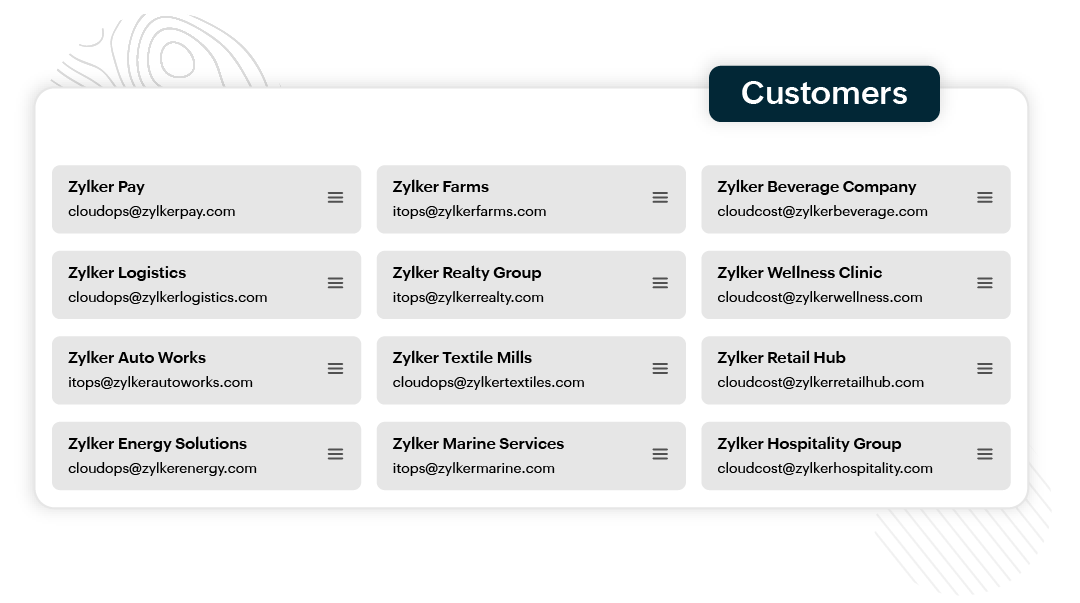
CloudSpend introduced a native multi-portal architecture designed to support both MSPs and large enterprises. This model allows organizations to structure cloud cost visibility in a way that mirrors how their business actually operates, without compromising control or governance.
For MSPs, Customer Portals enable the creation of fully branded environments for each customer. Customers sign in through a custom domain and view only their own cost data, while MSPs manage access, billing, and settings centrally from a single master account. This simplifies customer management and removes the need to juggle multiple tools or logins.
For enterprises, Workspaces provide isolated environments for teams, departments, or projects. Each Workspace maintains its own cost accounts, budgets, anomaly detection, reports, and permissions, ensuring clean separation and reducing the risk of data overlap.
Together, this multi-portal setup enables centralized management, consistent branding, and scalable cost governance, making it easier for organizations to grow without adding operational complexity.
Improving governance and reducing cloud cost risks
Governance checks for compliance visibility
CloudSpend introduced Governance Checks to help teams identify cloud resources that don’t meet internal standards. Instead of discovering issues after costs spiral or audits fail, teams can now continuously monitor compliance gaps and take corrective action early.
This helped organizations maintain cleaner environments and avoid unnecessary cost and risk.
Tagging Compliance for better cost hygiene
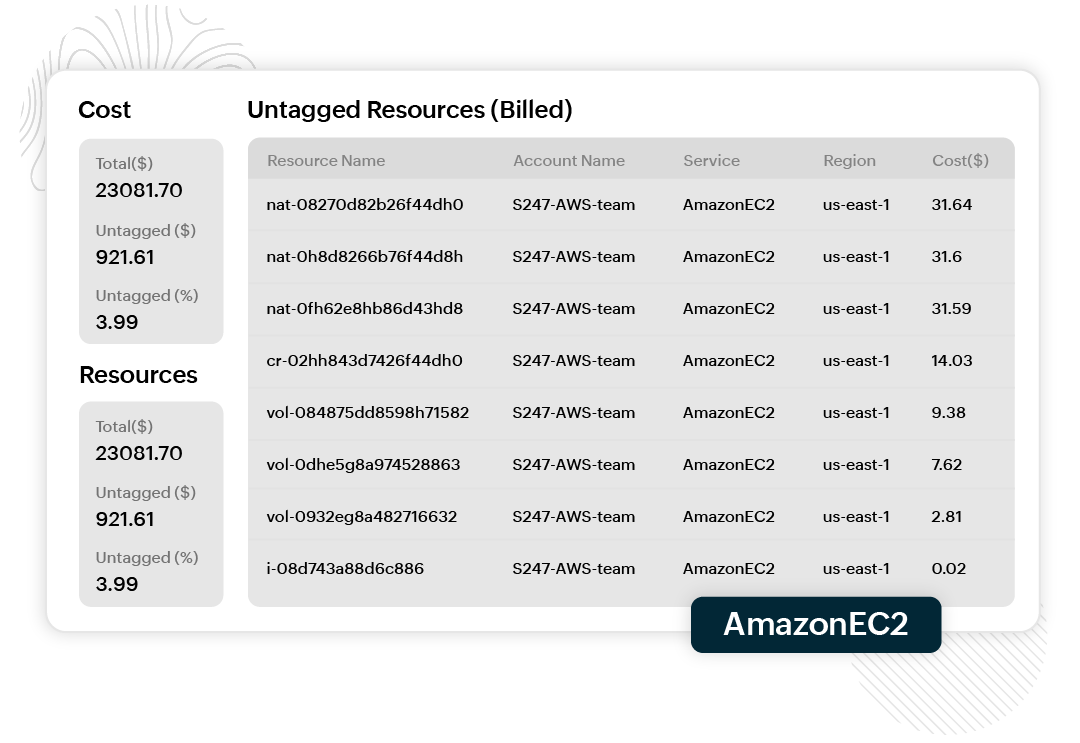
Tagging remains one of the most critical foundations of FinOps, and also one of the hardest to enforce. With Tagging Compliance reports, CloudSpend made it easier to monitor tagging standards across accounts, generate compliance reports automatically, and track improvements over time.
This significantly improved cost allocation accuracy and reporting reliability.
Role-based access control for secure collaboration
As more stakeholders became involved in cost management, access control became essential. RBAC allowed organizations to assign precise permissions, ensuring users only see or modify what they’re responsible for.
This strengthened security while enabling smoother collaboration between finance, engineering, and operations teams.
Turning cloud cost questions into AI insights
AI assistant access through Zoho MCP integration
CloudSpend now supports AI-driven cost exploration through Zoho’s Model Context Protocol (MCP). Using MCP-enabled clients, users can query cloud cost data conversationally without navigating the CloudSpend interface. The MCP server connects AI assistants to CloudSpend APIs, enabling account-level insights such as cost trends, spend breakdowns, anomalies, resource details, and tagging information.
Currently supporting the Accounts module, this integration brings faster, more intuitive access to cloud cost insights directly into everyday workflows.
Driving accountability with deeper cost visibility
Cost allocation reporting
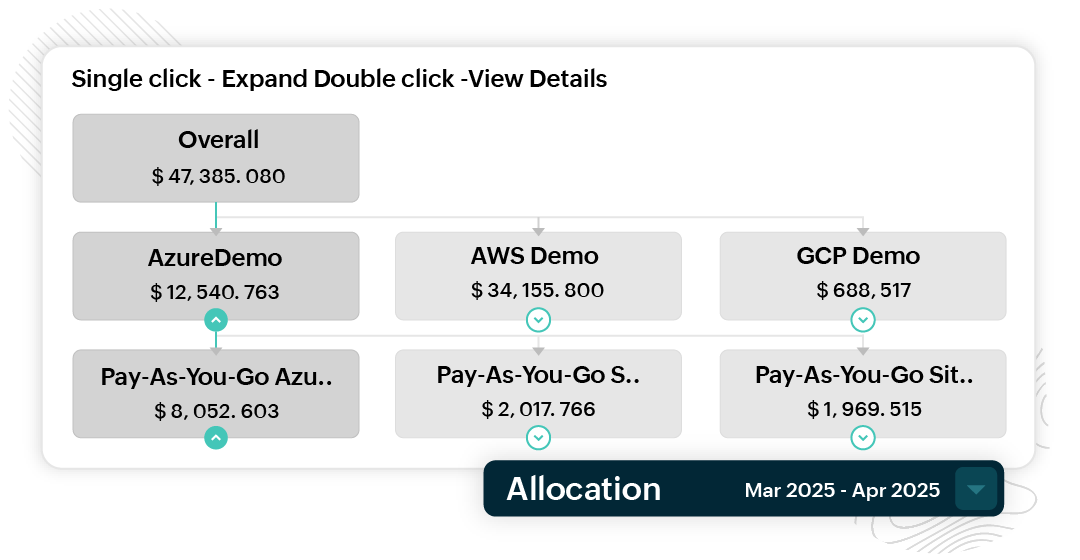
The Cost Allocation report gave organizations a clearer picture of where cloud spend actually goes: across teams, projects, services, and tags. This helped finance teams implement chargeback or showback models and gave engineering teams better visibility into the cost impact of their decisions.
It became a key step toward more mature FinOps practices.
Turning AWS spend into actionable savings
EC2 optimization with right-sizing insights
CloudSpend introduced detailed EC2 optimization insights with its EC2 Optimizer Report to help teams identify underutilized instances and evaluate right-sizing options. By combining utilization data with cost comparisons, teams could make informed decisions instead of relying on guesswork.
This translated directly into more confident optimization actions and measurable savings.
Smarter AWS Reservation management
With the AWS Reservations report, teams gained a clearer view of reservation utilization and coverage. This helped identify unused or underused commitments and supported better planning for future reservations, reducing waste while maximizing long-term savings.
Enhancing Azure cost efficiency and planning
Azure Reservation insights
Azure Reservation reporting gave teams visibility into how effectively their reserved capacity was being used. With clearer coverage data, organizations could align reservations more closely with real workloads and avoid overcommittment.
Expanded Azure best practice recommendations
CloudSpend added and refined best practice checks across key Azure services such as virtual machines, load balancers, and scale sets. These recommendations helped teams improve not just cost efficiency, but also performance and reliability.
Expanding optimization coverage across GCP
Throughout the year, CloudSpend significantly expanded best practice coverage for GCP services, including Compute Engine, Cloud SQL, Kubernetes, Cloud Run, Filestore, Cloud DNS, and Managed Instance Groups.
These updates ensured GCP users had access to timely, actionable recommendations to manage cost, availability, and security more effectively.
A strong foundation for what comes next
2025 strengthened CloudSpend across every layer: scalability, governance, intelligence, and optimization. Each release was designed to help organizations move toward clearer accountability, better decision-making, and sustainable control over cloud spending.
As CloudSpend moves into 2026, the focus shifts toward deeper intelligence and greater automation. Upcoming enhancements include:
- Provider-driven recommendations and optimizations, helping teams act faster on insights surfaced directly from cloud platforms
- New capabilities around unit cost analytics and unit economics that will enable more granular evaluation of cloud spend, supporting more accurate budgeting and clearer measurement of efficiency and profitability.
- Automated onboarding will streamline how users, accounts, and resources are set up, reducing manual effort and accelerating time to value.
None of this would be possible without our community. We’re grateful for the continued feedback, insights, and trust from our customers and partners, which play a key role in shaping how CloudSpend evolves.
With this strong foundation in place, CloudSpend will continue supporting modern FinOps teams with smarter automation, deeper financial intelligence, and scalable governance. As we head into the new year, we wish you a joyful holiday season and a successful year ahead.
For the latest features, enhancements, and improvements, keep an eye on our What’s New page. For deeper insights, refer to our documentation or schedule a CloudSpend demo to see these capabilities in action.