- What is crypto agility?
- Why is crypto agility essential?
- Great, but is crypto agility an urgent priority?
- Key steps to achieving cryptographic agility
- Certificate management challenges
- Implementing crypto agility
- How to choose the right certificate management solution
- The benefits of implementing crypto agility
- The challenges involved in implementing crypto agility
What is crypto agility?
Cryptographic agility is the ability of an organization's systems, applications, and infrastructure to adapt their cryptographic mechanisms quickly and efficiently, without major outages. This includes quickly adapting all their cryptographic algorithms, keys, and protocols. By doing so, organizations can proactively mitigate risks associated with outdated or compromised cryptography, effectively address newly discovered vulnerabilities or future threats like quantum computing, and ensure continued compliance and data security.
Why is crypto agility essential?
Cryptographic standards emerged in the 1970s, establishing early algorithms for symmetric-key encryption, digital signatures, and hashing. Over the following decades, there was widespread adoption of standards like RSA, AES, and ECC. Public key infrastructure (PKI) later brought these algorithms into business systems in the form of SSL/TLS certificates, powering online safety.
This adoption, however, hasn't been without its fair share of issues though. Standards like DES, MD5, and SHA-1, once considered strong, were eventually weakened by advancing technology and computing power, forcing complex and costly migrations.
Today's critical public-key algorithms such as RSA and ECC, which act as the backbone of current-day online communication and data security, face a similar future due to the anticipated capabilities of quantum computers. This is feasible because quantum computers running Shor's algorithm can efficiently solve the hard mathematical problems (like factoring large numbers) that make RSA and ECC secure for classical computers. This imminent threat necessitates the transition to post-quantum cryptography (PQC), making cryptographic agility essential for managing this migration and future algorithm replacements without disrupting security or operations.
Quantum threats and the mandates
Alongside persistent conventional threats, looming quantum threats such as "Harvest Now, Decrypt Later" make quantum computing a present-day risk for crucial data. Malicious actors capture currently encrypted data with the intent to decrypt it once sufficiently powerful quantum computers are available. To mitigate such threats, NIST finalized the key PQC standards in August 2024, and set the 2030/2035 phase-out dates. These PQC standards are quantum resistant and offer more protection. Nonetheless, these pressing quantum concerns and corresponding global mandates make cryptographic agility a necessity.
Great, but is crypto agility an urgent priority?
It's more urgent than you think it is. While it may seem that there's enough time, migrating entire enterprises to PQC is not a simple patch. It's a complex, resource-intensive exercise, often estimated to take 5-10 years or longer for large enterprises. The major roadblock is the organizational inertia and unpreparedness for the gruesome PQC transition that involves deep system inventories, dependency mapping, and overcoming significant technical debt in legacy systems. Delaying the development of crypto agility means attempting this difficult, potentially disruptive migration under a time crunch later.
When you factor in the security vulnerabilities, mandates, and internal delays, the actual time left is much shorter than it looks. That's why it's crucial to build crypto agility when there's still time to deal with such concerns.
Key steps to achieving cryptographic agility
Organizations must ensure that their systems support multiple cryptographic options and can be engineered to incorporate new ones as needed to achieve cryptographic agility. This transition must occur without downtime to applications, compromising compatibility, or requiring intense manual intervention. To ensure this, enterprises must take a cautious, robust approach to becoming crypto agile.
No crypto agility without essentials
There are two prerequisites to becoming a crypto agile organization: cryptographic inventory and org-wide governance policies.
01. Cryptographic inventory
Ensure you have an up to date record of every crypto asset in your organization, including keys, certificates, libraries, and algorithms. You need complete visibility into what you manage and where they're deployed. A successful transition is heavily reliant on the comprehensiveness of this layer.
02. Org-wide governance
When you have complete visibility into your cryptographic assets, it's important to frame comprehensive, org-wide policies that establish the acceptable use, required configurations, modification procedures, and eventual retirement of cryptographic mechanisms. This framework defines clear roles and responsibilities for cryptographic management across the organization and ensures internal consistency.
Implementing crypto agility
Once the prerequisites are sorted, you can follow the below-mentioned technical capabilities required for true crypto agility.
01. Flexibility with cryptographic libraries and APIs
Avoiding hard coded algorithm choices in applications is crucial for enabling flexible transitions later. Utilize cryptographic libraries designed to support a range of algorithms and protocols, allowing developers to easily swap or add new cryptographic primitives without extensive code refactoring. Additionally, employ APIs so that applications aren't tied to specific algorithms, simplifying backend cryptographic changes.
02. Agile public key infrastructure management
Start by automating the complete life cycle of all digital certificates that are part of your PKI. This involves automating every step in the discovery, issuance, renewal, provisioning, and revocation process of every certificate (TLS/SSL, code signing, S/MIME, etc.) managed. By doing so, you can swiftly update your certificates in no time and avoid costly outages. This will also pave the way for a streamlined integration with every security and IT management tool in your organization.
03. Policy automation
An important aspect of crypto agility is to speed up response times significantly and reduce the potential for human error. In such cases, manual management is a nightmare in complex environments. Empowering teams from across divisions with the right technology and policies that are capable of automatically detecting cryptographic usage, assessing compliance against defined policies, enforcing required configurations, and triggering changes (alerts, renewals, revocations) to existing cryptography on cue is crucial. This makes the transition effective in reality. Audit your tech stack to identify gaps in existing tools that could derail progress and have them updated.
04. Audit every change
Implement capabilities to track and audit all significant changes to the cryptographic landscape. When multiple changes, such as key rotations, certificate renewals, algorithm swaps, and policy changes happen, having comprehensive audits is essential for compliance, troubleshooting, and change validation.
Last mile improvements
Once you're closer to the finishing line, implement these last mile actions to close out the transition effectively.
01. Create a playbook
Provide and enforce specific guidance on preferred algorithms and minimum parameter strengths for your teams. For example, avoid weak or deprecated algorithms, supplement RSA with ECC where appropriate, use minimum RSA key lengths like 3072 or higher, and use specific secure hash algorithms like SHA-256/SHA-3. This should act as a playbook for all teams to refer to and adopt. Ensure this playbook is reviewed and updated quarterly, or as and when changes happen.
02. Educate the personnel
Getting everyone on board is the most important step. From your security teams to IT staff and other relevant stakeholders, educate everyone on the organization's crypto agile policies and standards. Train them to avoid falling prey to the risks of non-compliance and the potential impacts from quantum threats.
03. Vendor selection and relationship
Choose vendors who suit your organization's crypto-agility-friendly policies. Be it vendors, resellers, or partners, you will have to efficiently communicate your organization's cryptographic policies with every entity involved. Enforce compliance and ensure vendors provide timely security updates or patches. If required, include crypto requirements in contracts.
04. Emergency response
Establish concrete backup plans and prearranged agreements with alternate vendors for critical cryptographic infrastructure, particularly Certificate Authorities (CAs). This provides resilience against the failure or compromise of a primary cryptographic service provider in case of adversities. Test the ability to perform a rapid CA migration and adopt vendor-neutral certificate life cycle management solutions.
The benefits of implementing crypto agility
Organizations experience tangible benefits when they implement crypto agility in the right fashion. These benefits are the most impactful:
Reduced risk exposure: Gain the ability to quickly swap cryptographic algorithms when vulnerabilities arise or standards change, significantly shrinking the time systems are vulnerable to attacks.
Minimize response time: Quickly replace outdated or compromised cryptography with stronger alternatives. This improves response times and encourages proactive threat mitigation practices.
Compliance-friendly approach: Easily meet and adapt to evolving industry regulations and standards that demand better crypto management and responsiveness.
Improve operational efficiency: Automate cryptographic tasks like key rotation, certificate management, and others easily. This will further reduce administrative overheads and minimize human errors.
The challenges involved in implementing crypto agility
The transition to obtaining cryptographic agility isn't without challenges. In fact, as previously discussed, it can take years to complete the transition effectively.
01. The start from scratch
Several organizations may have to start their journey towards crypto agility from the very beginning. This is relevant to enterprises that lack the basic visibility into their cryptographic assets. Not knowing the specific algorithms, key lengths, certificates, and protocols in use is a major derailing factor. This could also be the reason several organizations face the inertia to make the transition.
02. Complexity of the project
Supporting a diverse array of cryptographic algorithms, protocols, and standards across different systems is challenging, to say the least. Ensuring seamless interoperability while managing these varied cryptographic elements adds another layer of difficulty. Additionally, if legacy systems are involved, bringing them up to speed would be a herculean task.
03. High-cost initiative
The complexity of cryptographic migrations inevitably drives up the costs involved. Since each necessary cryptographic update demands extensive planning, testing, and implementation efforts, manual migrations can cause a strain on the budget for organizations. This is another reason why automation is a key factor in achieving crypto agility.
04. Skill gap
The complexity of these transitions calls for expertise. There's often a shortage of personnel possessing the specialized knowledge and expertise required for advanced cryptography and its agile management. This could derail existing transition plans and further delay the adoption of crypto agility.
While these challenges may sound concerning, the financial impact of downtime and non-compliance, and the convenience of post-crypto agility make the transition well worth it.
Take the first step today
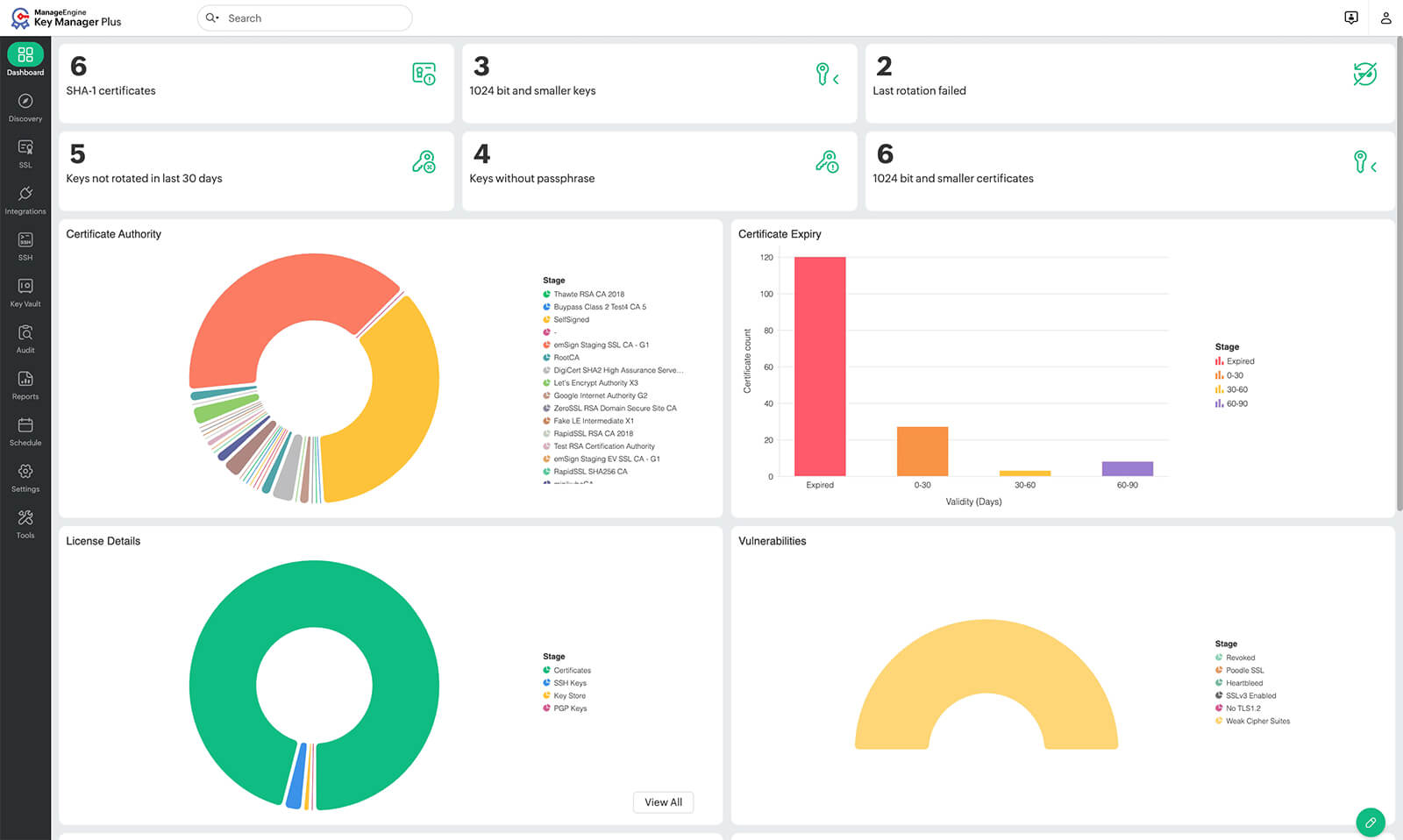
The first step in transitioning to a crypto agile environment is figuring out visibility and management of all your cryptographic assets. Start by automating the life cycle of your public key certificates with Key Manager Plus. ManageEngine Key Manager Plus automates certificate life cycle management and offers hassle-free life cycle management of other cryptographic keys.
Try Key Manager PlusFree personalized demo